Aperçu en situation
 Partager
 Partager
 Détails
 Guide imprimable

 Télécharger
 Articles similaires
 Radiographie
 Voir le diaporama
 Statistiques
Leda et le Cygne
 Huile sur panneau
- Renaissance
 1510
1510- Renaissance
 69.0 x 73.0 cm
 Afficher la suite
Giclées et impressions d'art
Impressions giclées ou sur toile de qualité musée, avec une production rapide et des finitions au choix. ( Acheter la peinture faite à la main Passer au format image numérique)




P118B €10

P118H €10

P118W €10

P438Z €10

P508JH €12

P508YH €12

P805H €10

P805Z €10

P919BZ €10

P919G €10

P919XJ €10

P959ZH €10

P968JZ €12

W106C €8

W218G €10

W218JH €8

W218Y €10

W307PJ €10

W316G €10

W316PJ €8

W316Y €10

W398PJ €8

W4111J €10

W500HY €15

W500JH €15

W692G €12

W849H €8

W940BG €15

W953PJ €8




Choisissez parmi nos formats prédéfinis qui respectent les proportions originales de l’œuvre.

Saisissez la largeur et la hauteur souhaitées pour qu'elles s'adaptent à votre cadre ou à votre mur. Une impression ne peut être que découpée, elle ne peut jamais être agrandie au-delà de l'image originale ; ainsi, un format de forme différente entraînera la perte d'une partie de l'image. Nous vous envoyons une maquette numérique pour approbation avant toute impression. L'image présentée sur cette page ne montre pas le recadrage réel — seule la maquette le permet.
Livraison dans le monde entier () en 2 semaines au lieu des 4/5 semaines habituelles. (24 octobre)

Livraison express gratuite dans le monde entier

Toile de lin de haute qualité

Assurance transport complète

Garantie de remboursement des droits de douane

Garantie de fidélité des couleurs

Garantie de retour de 100 jours (uniquement en cas de défaut)

Garantie de remboursement à 100%

Tarifs dégressifs sur quantité
 L'option verre n'est disponible que pour les dimensions inférieures à 110 cm.

Leda et le Cygne
Giclées et impressions d'art
Format de la reproduction
-


Prix total final
€ 70
A Myth Made Visible: Exploring Leonardo da Vinci’s *Leda and the Swan*
Leonardo da Vinci's *Leda and the Swan*, created around 1510, remains one of the most captivating and elusive works attributed to the Renaissance master. Though the original painting is lost – tragically destroyed centuries ago – its legacy endures through numerous copies and preparatory drawings, allowing us to glimpse Da Vinci’s genius in depicting a pivotal moment from Greek mythology. This artwork embodies the High Renaissance ideals of beauty, harmony, and intellectual curiosity, inviting viewers into a world where myth and reality intertwine. It's a testament to Da Vinci's unparalleled ability to transform legend into visual splendor.The Story Unveiled: Mythological Context
The painting illustrates the tale of Leda, Queen of Sparta, seduced by Zeus who transformed himself into a magnificent swan to approach her. This union resulted in two sets of offspring: Helen and Polydeuces (Castor and Pollux) – children of Zeus – and Clytemnestra and Castor – children of her husband, Tyndareus. The myth is rich with symbolism relating to power, desire, fate, and the complexities of lineage. Da Vinci doesn’t merely illustrate a story; he delves into its psychological and emotional core. The narrative speaks to universal themes of love, vulnerability, and divine intervention—concepts that resonated deeply within Renaissance thought.A Masterclass in Renaissance Technique
Da Vinci's approach to *Leda and the Swan* showcases his unparalleled technical skill. He employed sfumato, a technique characterized by subtle gradations of light and shadow, creating an ethereal softness that blurs lines and evokes a sense of mystery. The composition is meticulously balanced, with figures arranged in a harmonious pyramidal structure. His mastery of *chiaroscuro* – the dramatic contrast between light and dark – lends volume and realism to the forms, emphasizing the sensuality of Leda and the graceful power of the swan. Though only known through copies, these reveal Da Vinci’s layering technique, building depth and luminosity with thin glazes of oil paint. This painstaking process ensured that every detail—from the delicate feathers of the swan to the subtle blush on Leda's skin—was rendered with exquisite precision.Symbolism & Interpretation
Beyond its narrative, *Leda and the Swan* is laden with symbolic meaning. The swan itself represents both beauty and aggression, embodying Zeus’s dual nature as a god capable of both tenderness and force. Leda’s pose – often depicted as slightly yielding yet dignified – suggests a complex emotional response to the encounter. The presence of eggs, or newly hatched children, symbolizes fertility, renewal, and the unfolding of destiny. Some interpretations suggest the scene alludes to the inherent duality within human nature—the tension between reason and passion, control and surrender. Da Vinci’s genius lies in his ability to convey these profound ideas through visual imagery, prompting viewers to contemplate the mysteries of existence.Historical Significance & Artistic Legacy
*Leda and the Swan* exemplifies the Renaissance fascination with classical antiquity and its humanist themes. Da Vinci's exploration of mythological subjects reflects a broader cultural shift towards celebrating human potential and intellectual inquiry. The work’s influence can be seen in subsequent artistic depictions of the Leda myth, inspiring generations of artists to grapple with its complex themes. It stands as a testament to Da Vinci’s innovative spirit and his ability to elevate traditional narratives through masterful technique and profound psychological insight. Its enduring beauty continues to captivate audiences centuries later—a timeless masterpiece that embodies the very essence of Renaissance art.- Style: High Renaissance
- Medium: Oil on Panel (original), reproductions available on canvas or panel
- Dimensions: 69 x 73 cm (original)
- Current Location of Copies: Galleria Borghese (Rome), Wilton House (England), Uffizi Gallery (Florence) among others.
The Enigma of Genius: Leonardo da Vinci’s Life and Legacy
Leonardo di ser Piero da Vinci, born in 1452 near the Tuscan village of Vinci, remains arguably the most universally recognized figure of the Renaissance—a true polymath whose insatiable curiosity propelled him across disciplines, leaving an indelible mark on art, science, and engineering. His very name has become synonymous with genius, a testament to his extraordinary breadth of talent and visionary thinking. Born out of wedlock to Piero da Vinci, a notary, and Caterina, a peasant woman, Leonardo’s early life was unconventional, yet provided him with access to both the practical world and an appreciation for nature that would profoundly shape his artistic vision. He received a basic education in reading, writing, and arithmetic, but it was his apprenticeship under Andrea del Verrocchio in Florence that truly ignited his creative spark. Within Verrocchio’s workshop, Leonardo wasn't merely learning to paint or sculpt;
Questions et réponses
Quelle couleur domine la composition de «Leda et le Cygne» de Léonard de Vinci ?
La couleur dominante de «Leda et le Cygne» de Léonard de Vinci est le Brun rosé (#bf9c78).
Quelle est la date de création de «Leda et le Cygne» de Léonard de Vinci ?
«Leda et le Cygne» date de 1510. Cette date inscrit l'œuvre dans la carrière de Léonard de Vinci ainsi que dans son époque.
À quel mouvement artistique appartient «Leda et le Cygne» de Léonard de Vinci ?
Le mouvement associé à «Leda et le Cygne» de Léonard de Vinci est Renaissance. Cette classification situe l'œuvre parmi des artistes et des œuvres d'art apparentés.
Biographie de l'artiste
Leonardo da Vinci : Vie et Héritage
Jeunesse et Apprentissage (1452-1482)
Léonard de Vinci, dit ser Piero da Vinci (15 avril 1452 – 2 mai 1519) est né hors mariage près de Vinci, dans la République florentine. Son éducation précoce comprenait la lecture, l'écriture et l'arithmétique, bien que l'enseignement formel du latin ait eu lieu plus tard. À quatorze ans, il a commencé un apprentissage auprès d’Andrea del Verrocchio, un artiste florentin de premier plan. Cette formation immersive lui a permis de découvrir la peinture, la sculpture et les arts mécaniques – posant ainsi les bases de son génie multifacette.
Première Période Milanaise (1482-1499)
En 1482, Léonard est entré au service de Ludovico Sforza, duc de Milan. Il n’était pas seulement un artiste ; il fonctionnait également en tant qu'ingénieur, architecte et sculpteur pour la cour. Cette période a vu lui concevoir des fortifications militaires, des décors de scène élaborés et des sculptures (nombreuses sont restées inachevées). Une commande monumentale de cette époque est La Cène, une fresque peinte dans la réfectoire du monastère de Santa Maria delle Grazie – un ouvrage qui a profondément influencé l'art occidental.
Retour à Florence et Chef-d’œuvre de la Renaissance (1500-1506)
Suite à l'invasion française de Milan en 1499, Léonard est retourné à Florence pendant une période d'apogée du développement artistique. Bien qu'il ait produit moins d'œuvres que précédemment, leur impact a été immense. Cette ère a vu le début des travaux sur La Joconde (Mona Lisa), probablement le tableau le plus célèbre au monde, et l'affinage de ses techniques.
Années Ultérieures et Mécénat Français (1506-1519)
Les dernières années de Léonard ont été marquées par des voyages entre Florence, Milan et Rome, recherché pour son expertise mais souvent laissant les projets inachevés. En 1516, il a accepté l'invitation du roi Francis I à vivre et travailler au Château du Clos Lucé près d’Amboise en France. Il est décédé là-bas en 1519, laissant derrière lui un vaste héritage d'exploration artistique et scientifique.
Influences et Développement Artistique
- Ses influences précoces comprenaient son maître Verrocchio et la tradition artistique florentine plus large.
- Un vif intérêt pour l'observation l'a poussé à étudier méticuleusement le monde naturel.
- Il s’est éloigné de l'iconographie religieuse traditionnelle, favorisant des représentations réalistes des émotions humaines et de l'anatomie.
- Son développement du sfumato – une technique utilisant des nuances subtiles de lumière et d'ombre pour créer des contours flous et une perspective atmosphérique – a révolutionné la peinture et a contribué de manière significative à son style caractéristique.
Réalisations Majeures
- Peinture : La Joconde, La Cène, Vierge de la Rocke, Annonciation
- Dessin et Croquis : Études anatomiques étendues, conceptions d'ingénierie (machines volantes, armes), illustrations botaniques
- Science et Ingénierie : Travail pionnier sur l’anatomie, l'optique, la hydraulique, la géologie et la cartographie. Conceptualisation d'inventions bien en avance sur leur temps.
Signification Historique
L'impact de Léonard da Vinci sur l'histoire de l'art est immeasurable. Ses peintures sont célébrées pour leur réalisme, leur profondeur psychologique et leurs techniques innovantes. Il a élevé le statut des artistes de simples artisans qualifiés à des figures intellectuelles. Au-delà de ses réalisations artistiques, ses investigations scientifiques et ses inventions ont anticipé de nombreuses découvertes modernes. Il reste un symbole de la curiosité humaine, de la créativité et de la poursuite du savoir – une véritable incarnation de l'esprit de la Renaissance. Son héritage continue d’inspirer émerveillement et fascination des siècles après sa mort, consolidant ainsi son rang parmi les figures les plus remarquables de l'histoire.
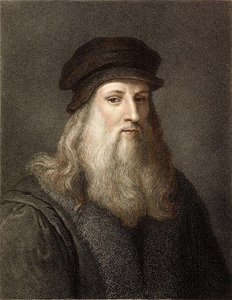
Léonard de Vinci
1452 - 1519 , Italie
En bref
- Artistes Influents: ['Andrea del Verrocchio']
- Date De Décès: 2 mai 1519
- Date De Naissance: 15 avril 1452
- Lieu De Naissance: Vicence, Italie
- Mouvement Artistique: Renaissance italienne
- Nationalité: Italienne
- Nom Complet: Léonard de Vinci
- Œuvres Notables:
- La Joconde
- Le Déclin de l'Empire Romain
- Vierge des Rocs
- La Cène
Articles connexes
Léonard de Vinci : Les 25 Chefs-d'Œuvre Incontournables pour Décorer Votre Intérieur
Plongez dans l'univers de Léonard de Vinci avec les 25 œuvres incontournables du génie italien. Découvrez l'histoire, les techniques et l'émotion derrière la Mona Lisa, La Cène et bien d'autres chefs-d'œuvre Renaissance. Reproductions haute qualité sur OriginalUniqueArt.com.
Renaissance Humaniste : 10 Chefs-d'œuvre Révolutionnaires pour Votre Intérieur
Plongez au cœur de la Renaissance humaniste avec 10 chefs-d'œuvre exceptionnels : Léonard de Vinci, Michel-Ange et plus encore. Découvrez l'histoire, les techniques et le symbolisme de ces peintures iconiques. Trouvez votre reproduction d'art idéale sur OriginalUniqueArt.com !
Uffizi : Les 25 Chefs-d'Œuvre Incontournables pour Embellir Votre Intérieur
Plongez au cœur de la Galerie des Offices à Florence ! Découvrez les 25 chefs-d'œuvre incontournables de Botticelli, Léonard de Vinci et autres maîtres italiens. Inspirez votre décoration avec l'art Renaissance : reproductions de qualité muséale sur OriginalUniqueArt.com
Léonard de Vinci : Synthèse Renaissance de l'Art, de la Science et de l'Observation Humaine – Une Réinterprétation pour le Collectionneur
Explorez l'univers de Léonard de Vinci avec notre analyse approfondie pour collectionneurs avertis. Découvrez ses techniques, son héritage et les clés d'un investissement art réussi. Expertise & authenticité garanties.

Les 25 Chefs-d'œuvre du Louvre : Voyage au Cœur de l'Art et de la Décoration
Plongez au cœur du Louvre avec les 25 œuvres incontournables : Mona Lisa, Venus de Milo et bien plus. Découvrez l'histoire fascinante des artistes, leurs techniques et trouvez l'inspiration déco idéale. Reproductions tableaux de qualité musée sur OriginalUniqueArt.com