

 Aperçu en situation
 Partager
 Partager
 Détails

 Télécharger
 Articles similaires
 Radiographie
 Voir le diaporama
 Statistiques
People
 Acrylic
- WallArt
- Minimalist Abstract Expression
 2003
2003 101.0 x 102.0 cm
 Musée d'art moderne de Buenos Aires
 Afficher la suite
Reproduction à l'huile faite à la main
Huile sur toile peinte à la main, avec cadre et dimensions personnalisés, réalisée sur commande par nos artistes. ( Passer au format impression Passer au format image numérique)




P118B $10

P118H $10

P118W $10

P438Z $10

P508JH $12

P508YH $12

P805H $10

P805Z $10

P919BZ $10

P919G $10

P919XJ $10

P959ZH $10

P968JZ $12

W106C $8

W218G $10

W218JH $8

W218Y $10

W307PJ $10

W316G $10

W316PJ $8

W316Y $10

W398PJ $8

W4111J $10

W500HY $15

W500JH $15

W692G $12

W849H $8

W940BG $15

W953PJ $8




Choisissez parmi nos formats prédéfinis qui respectent les proportions originales de l’œuvre.

Vous pouvez saisir vos propres dimensions pour l'adapter à un cadre ou à un espace spécifique. Si la taille sélectionnée ne correspond pas aux proportions de l'image d'origine, nous recadrerons l'œuvre ou prolongerons la peinture avec des éléments peints à la main supplémentaires. Une maquette numérique vous sera envoyée pour approbation avant le début de la production.
Veuillez noter que l'aperçu à l'écran ne reflète pas le recadrage ou l'extension réels. Seule la maquette montrera fidèlement la composition finale.
Bien que des tailles personnalisées soient disponibles, nous vous recommandons de sélectionner une dimension dans la liste prédéfinie afin de préserver les proportions d'origine.
Après la commande, l’équipe OriginalUniqueArt.com contactera le client par e-mail pour recueillir ses instructions et lui fournira une maquette d’aperçu
Livraison dans le monde entier () en 3 à 4 semaines au lieu des 5 semaines habituelles. (13 septembre). Aucun compromis sur la qualité.

Livraison express gratuite dans le monde entier

Toile de lin de haute qualité

Assurance transport complète

Garantie de remboursement des droits de douane

Garantie de fidélité des couleurs

Garantie de retour de 100 jours (uniquement en cas de défaut)

Garantie de remboursement à 100%

Tarifs dégressifs sur quantité
 L'option verre n'est disponible que pour les dimensions inférieures à 110 cm.

People
Technique de reproduction
Format de la reproduction
-


Prix total final
$ 300
A Dense Tapestry of Circles: Exploring León David Ferrari’s “People”
León David Ferrari (1920 – 2013), an Argentine conceptual artist whose career spanned decades of artistic activism and profound reflection, bequeathed to the art world a singular vision—one that interrogated societal norms through meticulously crafted visual language. His work consistently challenged established ideologies, mirroring his unwavering commitment to social justice and intellectual freedom. Ferrari’s oeuvre is characterized by its confrontational spirit and its ability to provoke contemplation on complex themes of identity and power dynamics.Subject Matter and Conceptual Resonance
“People,” created in 2003, eschews traditional representational imagery entirely. Instead, it presents a field of densely packed dark circles against a muted grey backdrop—a deceptively simple composition that belies its considerable conceptual depth. The title itself is deliberately ambiguous, prompting viewers to consider the circles as symbolic representations of individuals or perhaps as metaphors for collective consciousness. Ferrari’s intention wasn't merely to depict something tangible; he aimed to communicate an emotional response – a feeling of overwhelming presence and interconnectedness—a core concern that permeated much of his artistic practice.Style and Technique: Minimalism Embodied
Ferrari’s stylistic approach aligns perfectly with the tenets of minimalism, prioritizing form over content and reducing visual elements to their bare essentials. The artwork exemplifies this aesthetic through its painstaking execution – a technique rooted in pointillism but devoid of chromatic vibrancy. Utilizing graphite pencils or ink pens on paper or canvas, Ferrari meticulously applied countless small circles across the surface, achieving an astonishing level of textural complexity despite the apparent simplicity of the method. This deliberate repetition underscores the artist’s fascination with patterns and their capacity to convey profound ideas.Historical Context: Argentina Under Dictatorship
Ferrari's artistic output was inextricably linked to the turbulent political landscape of Argentina during his lifetime, particularly the repressive military dictatorship that gripped the nation from 1976 to 1983. His art served as a powerful tool for resistance against censorship and oppression—a visual declaration of defiance against authoritarian rule. Pieces like “Western and Christian Civilization,” featuring the crucified Christ atop an American fighter jet, directly confronted governmental propaganda and questioned prevailing moral values. This engagement with political discourse solidified Ferrari’s reputation as a courageous voice advocating for artistic freedom and social reform.Symbolism: Density and Discomfort
The overwhelming density of circles within “People” contributes significantly to its symbolic weight. The repetition evokes feelings of anonymity, confinement, and perhaps even unease—themes that resonate deeply with Ferrari's broader critique of societal structures. Furthermore, the lack of perspective diminishes any illusion of depth, reinforcing the artwork’s flatness and emphasizing the importance of visual texture as a conduit for emotional expression. It invites viewers to consider not just what is seen but how it feels – prompting introspection on issues of isolation and collective responsibility.Emotional Impact: A Quiet Confrontation
Ultimately, “People” transcends mere visual decoration; it delivers a subtle yet potent emotional punch. Ferrari’s masterful manipulation of form and texture compels contemplation on fundamental questions about human existence and the role of art in challenging accepted beliefs. The artwork's understated elegance serves as a reminder that profound artistic statements can emerge from seemingly unassuming compositions—a testament to Ferrari’s enduring legacy as an artist who dared to confront uncomfortable truths with unwavering conviction.Biographie de l'artiste
A Life Marked by Protest and Artistic Expression
León David Ferrari, Argentine conceptual artist, left an indelible mark on the art world with his provocative works that challenged the status quo. Born in Buenos Aires, Argentina, on September 3, 1920, Ferrari’s life was a testament to the power of artistic expression as a form of dissent. From early influences rooted in European Surrealism and Expressionism to his unwavering commitment to social justice, Ferrari's journey embodies the spirit of avant-garde art.Early Life and Artistic Beginnings
Ferrari’s formative years were shaped by the turbulent political landscape of Argentina during the 1950s. Witnessing firsthand the repressive policies of the military dictatorship fueled a deep conviction that art could serve as a vehicle for resistance. He began his artistic explorations with meticulous oil paintings on paper, reflecting a preoccupation with formal experimentation and exploring the boundaries between representation and abstraction. His initial works were marked by a rejection of traditional aesthetics, prioritizing conceptual ideas over visual realism—a characteristic that would define his entire oeuvre.Notable Works and Exhibitions
Ferrari gained international recognition for his groundbreaking piece “São Paulo Association Award,” which cemented his reputation as a pioneer of Conceptual Art. This monumental sculpture, crafted from reclaimed materials, powerfully conveyed a critique of consumer culture and the dehumanizing effects of industrialization. Furthermore, his series "Untitled (Paper)" showcased his mastery of printmaking techniques, utilizing paper as a medium to explore themes of materiality and process. His artistic vision extended beyond individual artworks; he actively engaged in collaborative projects with fellow artists, fostering dialogue and promoting collective action.Influences and Artistic Development
Ferrari’s artistic trajectory was profoundly impacted by the legacy of European masters such as Marcel Duchamp and Yves Klein. Duchamp's conceptual approach—challenging notions of originality and authorship—served as an inspiration for Ferrari's own explorations into the realm of ideas. Similarly, Klein’s use of monochrome color and geometric abstraction encouraged Ferrari to embrace simplicity and purity in his artistic language. Throughout his career, he consistently pushed boundaries, experimenting with diverse mediums and techniques while maintaining a steadfast dedication to conveying complex social and political messages.Legacy and Historical Significance
León David Ferrari's enduring influence on contemporary art is undeniable. His uncompromising stance against injustice and his unwavering belief in the transformative potential of artistic expression continue to resonate with artists and audiences alike. Recognized for his contribution to Argentine art history, Ferrari’s work stands as a symbol of intellectual courage and artistic integrity—a reminder that art can serve as a catalyst for social change and a beacon of creative innovation. His legacy resides not only in his celebrated artworks but also in the spirit of questioning and challenging established norms that he instilled within generations of artists.
León David Ferrari
1920 - 2013 , Argentine
En bref
- Artistic Movement Or Style: Conceptual Art
- Artists Or Movements Influenced By This Artist:
- Minimalism
- Neo-Expressionism
- Artists Who Influenced This Artist:
- Marcel Duchamp
- Yves Klein
- Date Of Birth: Septembre 3, 1920
- Date Of Death: Juillet 25, 2013
- Full Name: León David Ferrari
- Nationality: Argentine
- Notable Artworks:
- São Paulo Association Award
- Untitled (Paper)
- Western and Christian Civilization
- Place Of Birth: Buenos Aires, Argentine
Articles similaires

The Soul of Color: A Journey into the Emotional Resonance of Lyrical Abstraction
Embark on a cultural journey through Lyrical Abstraction. Explore how masters like Kandinsky used color and motion to translate emotion into visual poetry. Discover the profound beauty of abstract expressionism and learn to curate emotional resonance in your own art collection.

Abstraction Géométrique : Les 10 Chefs-d'œuvre qui ont Marqué l'Histoire de l'Art
Plongez au cœur de l'abstraction géométrique avec OriginalUniqueArt.com ! Découvrez les 10 œuvres majeures de Mondrian, Malevitch et Kandinsky qui ont révolutionné l'art moderne. Inspirez votre décoration intérieure avec des reproductions de tableaux exceptionnelles. Explorez la collection en ligne !

Expressionnisme Abstrait : Les 10 Chefs-d'Œuvre Incontournables pour Décorer avec Art et Histoire
Plongez au cœur de l'Expressionnisme Abstrait avec ! Découvrez les 10 œuvres majeures de Pollock, Rothko et De Kooning. Histoire, techniques & inspiration déco. Explorez la collection complète en ligne.

Kandinsky : Les 25 Œuvres Maîtresses d'un Pionnier de l'Art Abstrait | OriginalUniqueArt
Plongez dans l'univers vibrant de Kandinsky ! Découvrez les 25 œuvres majeures du pionnier de l'art abstrait. Explorez son expressionnisme, ses couleurs audacieuses et l'histoire fascinante derrière chaque tableau. Reproductions d'exception sur OriginalUniqueArt.com.
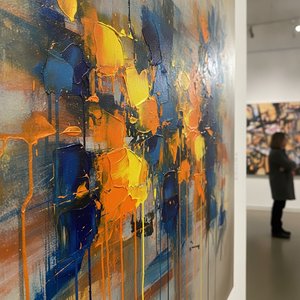
Beyond the Lines: Mastering the High-Impact World of Contemporary Abstraction
Master the high-impact world of contemporary abstraction. Discover how bold colors, textures, and modern movements like Abstract Expressionism can transform your space with premium, high-energy art curated for the design-conscious professional.

