
 Aperçu en situation
 Envoyer
 Partager
 Détails de l'œuvre
 Guide
Guide

 Télécharger l'image
 Articles similaires
 Radiographie
 Diaporama
 Q&A
Q&A Statistiques
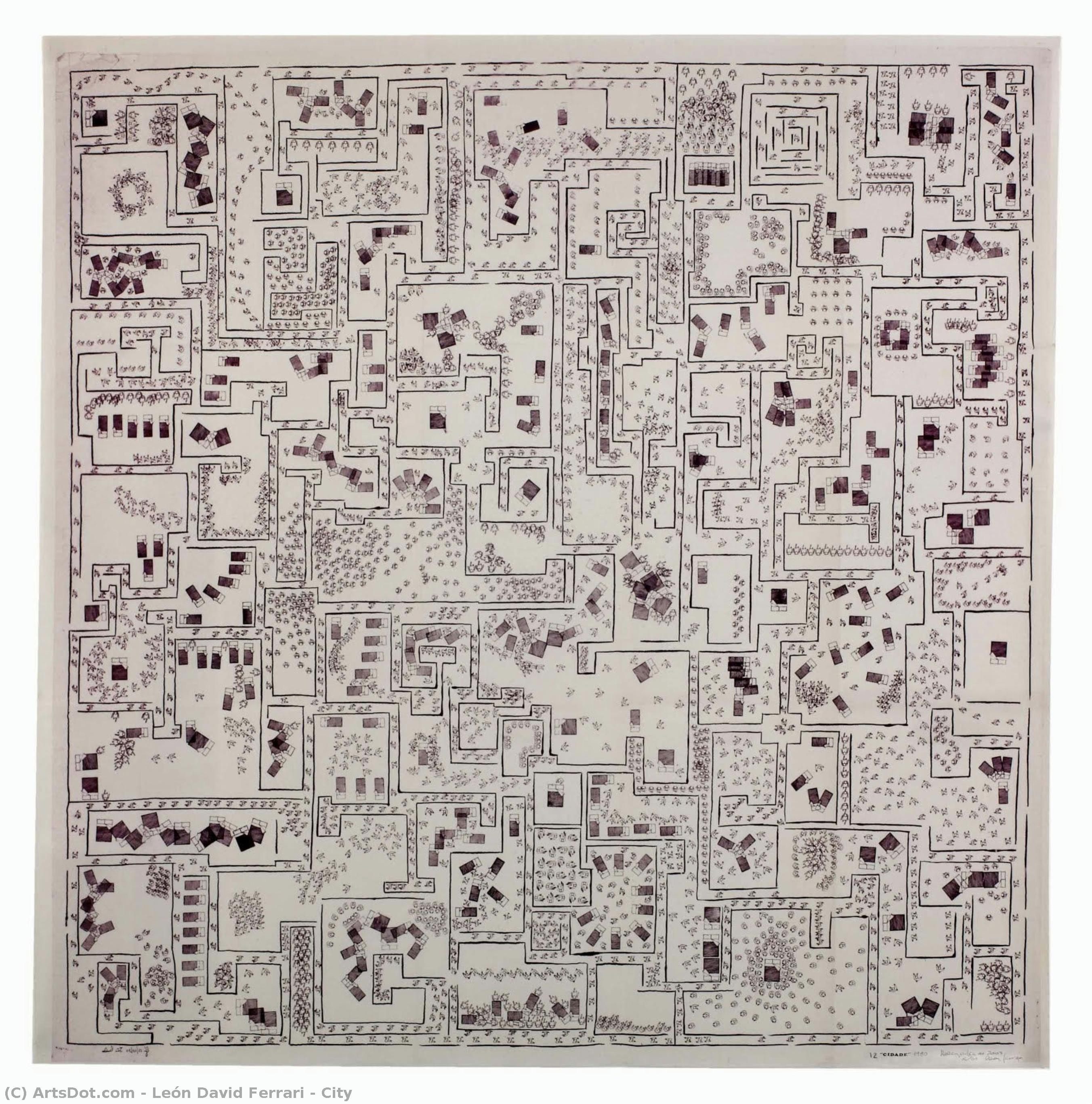
City
 Ink On Paper
- Abstract Architectural Expression
 2003
2003- Modern
 100.0 x 100.0 cm
 Musée d'art moderne de Buenos Aires
 Lire la suite
L’œuvre d'art présentée sur cette page est protégée par le droit d'auteur, ce qui signifie que nous ne pouvons légalement créer ou vendre de reproduction identique. Cette protection est appliquée en vertu d'accords internationaux tels que la Convention de Berne et par les lois nationales, notamment celles énoncées par le Loi américaine sur le droit d'auteur - Titre 17.
En tant qu'alternative respectueuse et légale, nous proposons des œuvres d'art personnalisées, peintes à la main et inspirées de l'original. Nos artistes talentueux et professionnels étudient avec soin le style, l'ambiance et l'essence artistique de l'œuvre originale pour créer une pièce nouvelle et unique qui évoque la même émotion — tout en restant une création originale en soi.
Cette méthode est pleinement conforme aux réglementations sur le droit d'auteur car elle ne repose pas sur la copie ou la duplication de l'œuvre protégée. Il s'agit plutôt d'une réinterprétation créative — une nouvelle peinture qui s'inspire de l'original sans pour autant lui être identique.
Reproduction à l'huile faite à la main
Huile sur toile peinte à la main, avec cadre et dimensions personnalisés, réalisée sur commande par nos artistes. ( Passer au format impression Passer au format numérique)




P118B €10

P118H €10

P118W €10

P438Z €10

P508JH €12

P508YH €12

P805H €10

P805Z €10

P919BZ €10

P919G €10

P919XJ €10

P959ZH €10

P968JZ €12

W106C €8

W218G €10

W218JH €8

W218Y €10

W307PJ €10

W316G €10

W316PJ €8

W316Y €10

W398PJ €8

W4111J €10

W500HY €15

W500JH €15

W692G €12

W849H €8

W940BG €15

W953PJ €8




Choisissez parmi nos formats prédéfinis qui respectent les proportions originales de l’œuvre.

Saisissez la largeur et la hauteur souhaitées, pour s'adapter à votre cadre ou à votre mur. Cette œuvre est peinte à la main ; ainsi, pour un format de forme différente, l'artiste peut peindre un peu plus autour du tableau ou réduire légèrement les bords — c'est vous qui choisissez. Nous vous envoyons une maquette numérique pour approbation avant que la peinture ne commence. L'image présentée sur cette page ne reflète pas le résultat réel — seule la maquette le fait.
Après la commande, l’équipe OriginalUniqueArt.com contactera le client par e-mail pour recueillir ses instructions et lui fournira une maquette d’aperçu
Livraison dans le monde entier () en 3 à 4 semaines au lieu des 5 semaines habituelles. (28 octobre). Aucun compromis sur la qualité.

Livraison express gratuite dans le monde entier

Toile de lin de qualité supérieure

Assurance transport complète

Garantie de remboursement des droits de douane

Garantie de fidélité des couleurs

Politique de retour de 100 jours (uniquement en cas de défaut)

Garantie de remboursement à 100%

Offre de tarifs dégressifs
 L'option verre n'est disponible que pour les dimensions inférieures à 110 cm.

City
Technique de reproduction
Format de la reproduction
-


Prix total
€ 264
León David Ferrari’s “City”: A Labyrinth of Protest and Urban Anxiety
León David Ferrari's "City," completed in 2003, is more than just a depiction of an urban landscape; it’s a potent visual statement born from a lifetime dedicated to challenging societal norms. Executed on paper – likely through meticulous graphite or charcoal work – this intricate black and white drawing embodies the artist’s deeply held convictions about power structures, religious hypocrisy, and the disorienting nature of modern life. Ferrari, a prominent figure in Argentine conceptual art, spent his career provoking dialogue with his often controversial works, and “City” stands as a testament to that enduring spirit. The sheer density of the composition, a maze-like arrangement of buildings and streets rendered with precise lines, immediately draws the viewer into a space of unsettling complexity – mirroring, perhaps, the anxieties inherent in navigating an increasingly impersonal urban environment.
A Technical Masterpiece: Line, Texture, and Monochromatic Drama
- Line Work: The artwork’s foundation lies in Ferrari's extraordinary control of line. Varying thicknesses create a dynamic visual texture, suggesting both the rigid order of urban planning and the chaotic sprawl of a city. These lines aren’t merely descriptive; they are actively employed to build tension and guide the viewer’s eye through the intricate composition.
- Monochromatic Palette: Ferrari's masterful use of black, white, and subtle grey amplifies the drawing’s emotional impact. The absence of color intensifies the sense of alienation and detachment, echoing themes prevalent in his earlier work. A carefully placed reddish-brown accentuates architectural details, adding a touch of dramatic emphasis without disrupting the overall monochrome mood.
- Texture & Technique: The smooth appearance belies the labor involved – layering and cross-hatching create subtle tonal variations, suggesting a dry medium like pen or pencil. This meticulous technique contributes to the artwork’s tactile quality, inviting close inspection and rewarding attentive viewing.
Symbolism Within the Structure: A Critique of Civilization
"City" operates on multiple symbolic levels. The overwhelmingly geometric composition – rectangles dominating the scene – can be interpreted as a critique of rigid societal structures and the dehumanizing effects of industrialization. The labyrinthine quality evokes feelings of disorientation, mirroring the experience of anonymity within a vast urban system. Ferrari’s earlier work frequently targeted religious institutions and political power, and “City” subtly continues this thread. The lack of a clear focal point forces the viewer to confront the overwhelming nature of the cityscape, prompting questions about individual agency and the impact of systems on human lives. The drawing's resemblance to an architectural diagram or even a complex machine further reinforces this sense of mechanical control.
Historical Context and Artistic Influence
Created in 2003, “City” represents the culmination of Ferrari’s lifelong artistic struggle against injustice and oppression. His earlier works, such as "Western and Christian Civilization," a shocking depiction of Christ crucified on an American fighter jet, established him as a provocative voice challenging dominant ideologies. This piece builds upon that legacy, employing a more restrained yet equally powerful visual language to convey his concerns about the direction of modern society. Ferrari’s influence extends beyond Argentina; he is recognized as a key figure in the development of conceptual art and its exploration of social and political themes through unconventional media.
Questions et réponses
Comment « City » s'inscrit-il dans les thèmes et le style de León David Ferrari ?
«City» partage avec les autres œuvres de León David Ferrari son style Abstract Architectural Expression ainsi que ses thèmes récurrents : dissent, protest, urban critique, religious satire, imperialism, architectural complexity, systemic, ferrari’s provocative statements.
Où et pour quel usage l'œuvre "City" est-elle recommandée ?
L'utilisation (Accent) et l'espace (Living Room) sont les deux recommandations enregistrées pour «City» de León David Ferrari.
Quelle est l'atmosphère de «City» de León David Ferrari ?
«City» dégage une atmosphère Serene.
Biographie de l'artiste
A Life Marked by Protest and Artistic Expression
León David Ferrari, Argentine conceptual artist, left an indelible mark on the art world with his provocative works that challenged the status quo. Born in Buenos Aires, Argentina, on September 3, 1920, Ferrari’s life was a testament to the power of artistic expression as a form of dissent. From early influences rooted in European Surrealism and Expressionism to his unwavering commitment to social justice, Ferrari's journey embodies the spirit of avant-garde art.Early Life and Artistic Beginnings
Ferrari’s formative years were shaped by the turbulent political landscape of Argentina during the 1950s. Witnessing firsthand the repressive policies of the military dictatorship fueled a deep conviction that art could serve as a vehicle for resistance. He began his artistic explorations with meticulous oil paintings on paper, reflecting a preoccupation with formal experimentation and exploring the boundaries between representation and abstraction. His initial works were marked by a rejection of traditional aesthetics, prioritizing conceptual ideas over visual realism—a characteristic that would define his entire oeuvre.Notable Works and Exhibitions
Ferrari gained international recognition for his groundbreaking piece “São Paulo Association Award,” which cemented his reputation as a pioneer of Conceptual Art. This monumental sculpture, crafted from reclaimed materials, powerfully conveyed a critique of consumer culture and the dehumanizing effects of industrialization. Furthermore, his series "Untitled (Paper)" showcased his mastery of printmaking techniques, utilizing paper as a medium to explore themes of materiality and process. His artistic vision extended beyond individual artworks; he actively engaged in collaborative projects with fellow artists, fostering dialogue and promoting collective action.Influences and Artistic Development
Ferrari’s artistic trajectory was profoundly impacted by the legacy of European masters such as Marcel Duchamp and Yves Klein. Duchamp's conceptual approach—challenging notions of originality and authorship—served as an inspiration for Ferrari's own explorations into the realm of ideas. Similarly, Klein’s use of monochrome color and geometric abstraction encouraged Ferrari to embrace simplicity and purity in his artistic language. Throughout his career, he consistently pushed boundaries, experimenting with diverse mediums and techniques while maintaining a steadfast dedication to conveying complex social and political messages.Legacy and Historical Significance
León David Ferrari's enduring influence on contemporary art is undeniable. His uncompromising stance against injustice and his unwavering belief in the transformative potential of artistic expression continue to resonate with artists and audiences alike. Recognized for his contribution to Argentine art history, Ferrari’s work stands as a symbol of intellectual courage and artistic integrity—a reminder that art can serve as a catalyst for social change and a beacon of creative innovation. His legacy resides not only in his celebrated artworks but also in the spirit of questioning and challenging established norms that he instilled within generations of artists.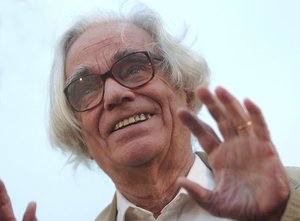
León David Ferrari
1920 - 2013 , Argentine
L'essentiel de l'artiste
- Artistic Movement Or Style: Conceptual Art
- Artists Or Movements Influenced By This Artist:
- Minimalism
- Neo-Expressionism
- Artists Who Influenced This Artist:
- Marcel Duchamp
- Yves Klein
- Date Of Birth: Septembre 3, 1920
- Date Of Death: Juillet 25, 2013
- Full Name: León David Ferrari
- Nationality: Argentine
- Notable Artworks:
- São Paulo Association Award
- Untitled (Paper)
- Western and Christian Civilization
- Place Of Birth: Buenos Aires, Argentine
Articles connexes

Expressionnisme Abstrait : Les 10 Chefs-d'Œuvre Incontournables pour Décorer avec Art et Histoire
Plongez au cœur de l'Expressionnisme Abstrait avec ! Découvrez les 10 œuvres majeures de Pollock, Rothko et De Kooning. Histoire, techniques & inspiration déco. Explorez la collection complète en ligne.

Blancs Sublimes : Les 10 Chefs-d'œuvre de la Peinture Révélés par
Plongez dans l'univers fascinant des 10 plus beaux tableaux blancs de l'histoire de l'art ! Découvrez Monet, Whistler, Kandinsky et d'autres maîtres. Inspirez votre décoration intérieure avec : reproductions de qualité muséale en ligne.

Les 10 Chefs-d'œuvre Noirs : Peintures Célèbres et Décoration d'Intérieur
Plongez dans l'univers fascinant des 10 plus beaux tableaux noirs de l'histoire de l'art. Découvrez les secrets de Goya, Manet, Rothko et autres maîtres. Inspirez votre décoration intérieure avec !

Kandinsky : Les 25 Œuvres Maîtresses d'un Pionnier de l'Art Abstrait | OriginalUniqueArt
Plongez dans l'univers vibrant de Kandinsky ! Découvrez les 25 œuvres majeures du pionnier de l'art abstrait. Explorez son expressionnisme, ses couleurs audacieuses et l'histoire fascinante derrière chaque tableau. Reproductions d'exception sur OriginalUniqueArt.com.
Kazimir Malevich : Les 25 Œuvres Maîtresses du Suprématisme pour une Décoration d'Exception
Plongez dans l'univers révolutionnaire de Kazimir Malevich ! Découvrez les 25 œuvres clés du Suprématisme, de 'Carré Noir' à 'Blanc sur Blanc'. Inspirez votre décoration intérieure avec des reproductions d'art exceptionnelles. Explorez la collection complète sur OriginalUniqueArt.com.

