

 Aperçu en situation
 Partager
 Partager
 Détails
 Guide imprimable

 Télécharger
 Articles similaires
 Radiographie
 Voir le diaporama
 Statistiques
Façade


 Afficher la suite
Giclées et impressions d'art
Impressions giclées ou sur toile de qualité musée, avec une production rapide et des finitions au choix. ( Acheter la peinture faite à la main Passer au format image numérique)




P118B €10

P118H €10

P118W €10

P438Z €10

P508JH €12

P508YH €12

P805H €10

P805Z €10

P919BZ €10

P919G €10

P919XJ €10

P959ZH €10

P968JZ €12

W106C €8

W218G €10

W218JH €8

W218Y €10

W307PJ €10

W316G €10

W316PJ €8

W316Y €10

W398PJ €8

W4111J €10

W500HY €15

W500JH €15

W692G €12

W849H €8

W940BG €15

W953PJ €8




Choisissez parmi nos formats prédéfinis qui respectent les proportions originales de l’œuvre.

Saisissez la largeur et la hauteur souhaitées pour qu'elles s'adaptent à votre cadre ou à votre mur. Une impression ne peut être que découpée, elle ne peut jamais être agrandie au-delà de l'image originale ; ainsi, un format de forme différente entraînera la perte d'une partie de l'image. Nous vous envoyons une maquette numérique pour approbation avant toute impression. L'image présentée sur cette page ne montre pas le recadrage réel — seule la maquette le permet.
Livraison dans le monde entier () en 2 semaines au lieu des 4/5 semaines habituelles. (22 octobre)

Livraison express gratuite dans le monde entier

Toile de lin de haute qualité

Assurance transport complète

Garantie de remboursement des droits de douane

Garantie de fidélité des couleurs

Garantie de retour de 100 jours (uniquement en cas de défaut)

Garantie de remboursement à 100%

Tarifs dégressifs sur quantité
 L'option verre n'est disponible que pour les dimensions inférieures à 110 cm.

Façade
Giclées et impressions d'art
Format de la reproduction
-


Prix total final
€ 70
Leon Battista Alberti’s ‘Façade’: A Symphony of Geometry and Faith
The image before us – Leon Battista Alberti's “Façade” – isn’t merely a depiction of a building; it’s a carefully constructed meditation on order, proportion, and the very essence of Renaissance humanism. Captured against the clear azure of an Italian sky, the Basilica di San Lorenzo in Florence unfolds as a testament to Alberti’s revolutionary approach to architecture. This is not simply a façade, but a deliberate orchestration of geometric forms, a visual embodiment of classical ideals translated into a distinctly Florentine expression. The photograph itself captures a moment of serene clarity, highlighting the building's imposing presence and intricate detailing – a scene that speaks volumes about the ambition and intellectual fervor of the era.
Alberti’s design represents a pivotal shift in architectural thought. Departing from the Gothic style prevalent at the time, he championed a return to the principles articulated by Vitruvius centuries earlier. His meticulous study of Roman ruins fueled his desire to rediscover and re-interpret classical harmony. The façade's dominant feature – its striking geometric patterns – isn’t haphazard decoration; it’s a system meticulously designed to create an illusion of infinite space, drawing the eye upwards towards the heavens. This deliberate manipulation of perspective was groundbreaking for its time, demonstrating Alberti’s mastery of mathematical principles and his profound understanding of how visual perception works.
The Architect as Universal Man
Leon Battista Alberti himself embodies the Renaissance ideal of the “universal man,” a figure skilled in multiple disciplines. Born in Genoa in 1404, he was a polymath – an architect, writer, mathematician, humanist, and even a cryptographer. His life’s work reflects this breadth of interests, seamlessly blending artistic creation with scholarly inquiry. The "Façade" is not just the product of an architect's skill; it’s a manifestation of Alberti’s deep engagement with philosophy, mathematics, and classical literature. He believed that architecture should be informed by reason and beauty, reflecting the inherent order of the universe.
Born out of wedlock to Lorenzo di Benedetto Alberti, a Florentine exiled from his home city, this early experience may have fostered in him a sense of independence and a drive to prove himself through intellectual achievement. His formative years unfolded amidst the rigorous academic environments of Padua and Bologna, where he immersed himself in the study of classical texts and developed his theoretical framework for architecture. Alberti’s meticulous approach to design is evident in every carefully placed element of the façade – from the precise arrangement of arches to the intricate detailing of the columns.
Symbolism and Spiritual Resonance
Beyond its purely aesthetic qualities, “Façade” carries a profound symbolic weight. The Basilica di San Lorenzo was originally dedicated to Saint Lawrence, a Roman martyr known for his generosity and compassion. The building’s geometric forms and harmonious proportions are intended to evoke a sense of spiritual elevation, reflecting the ideals of Christian faith. The use of light and shadow further enhances this effect, creating a dynamic interplay between the interior space and the exterior world. The façade isn't simply a decorative element; it’s a visual representation of the relationship between humanity and the divine.
The intricate geometric patterns – particularly the repeating motifs – can be interpreted as symbols of order, harmony, and eternity. They represent Alberti’s belief that the universe is governed by mathematical principles, and that architecture should reflect this underlying order. The building's design invites contemplation and encourages viewers to consider their place within the larger context of existence.
A Legacy in Stone and Light
Completed around 1458-70, “Façade” stands as a cornerstone of Renaissance architecture – a testament to Alberti’s genius and his enduring influence on subsequent generations of architects. Its principles continue to inform architectural design today, demonstrating the timelessness of its vision. The photograph captures not only the beauty of the building but also the spirit of innovation that defined the Renaissance era. Reproductions of this iconic façade offer a window into a world of classical ideals and artistic brilliance, inviting viewers to appreciate the power of architecture to inspire and uplift.
Questions et réponses
Quelle intensité lumineuse les couleurs de "Façade" semblent-elles refléter ?
Les couleurs de « Façade » présentent une luminance Luminosité douce.
Le droit d'auteur de «Façade» de Leon Battista Alberti autorise-t-il des reproductions ?
Le statut des droits d'auteur de «Façade» de Leon Battista Alberti est clair : l'œuvre est dans le dans le domaine public - ses droits d'auteur ont expiré. Sa présence au Santa Maria Novella ne modifie pas ce statut.
Quelle technique et quel style caractérisent «Façade» de Leon Battista Alberti ?
« Façade » est réalisé en Acrylique sur toile, dans le style leon battista alberti.
Biographie de l'artiste
Léon Battista Alberti : Un Polymathe de la Renaissance
- Né : 14 février 1404, Gênes
- Décédé : 25 avril 1472, Rome
- Nationalité : Italien
- Connu pour : Architecture, écriture, mathématiques, cryptographie, théorie de l'art.
Jeunesse et Formation
- Léon Battista Alberti est né à Gênes en 1404, fils d’un père florentin exilé, Lorenzo di Benedetto Alberti.
- Sa formation initiale a eu lieu à Padoue et Bologne, où il étudia le droit mais développa un vif intérêt pour les mathématiques.
- Il reçut une instruction en mathématiques de la part de son père et poursuivit plus tard ses études de manière indépendante, trouvant refuge dans ces disciplines face aux exigences des études juridiques.
- Vers 1424, Alberti écrivit sa première comédie, *Philodoxius*, témoignant d'un talent littéraire précoce.
- En 1431, il déménagea à Rome et entra au service de la cour papale, recevant les sacrements. Cette période lui permit d’étudier les ruines romaines antiques, ce qui influença profondément sa pensée architecturale.
Contributions Architecturales et Écrits
- Alberti est considéré comme une figure fondatrice de l'architecture de la Renaissance, principalement grâce à son traité *De re aedificatoria* (Sur l’Art de Construire), publié à titre posthume en 1485. Cet ouvrage s’inspirait largement des écrits de Vitruve mais intégrait les propres observations et innovations d'Alberti.
- Le traité exposait les principes de la conception classique, soulignant la proportion, la symétrie et l’harmonie. Il devint un pilier de l’enseignement architectural pendant des siècles.
- Des projets architecturaux notables attribués à Alberti comprennent la façade du Palazzo Rucellai à Florence (commencée en 1446), le Tempio Malatestiano à Rimini et les conceptions pour des églises à Mantoue, San Sebastiano et la Basilique Saint-André.
- Son travail sur Santa Maria Novella à Florence a démontré sa capacité à intégrer des éléments classiques dans des structures existantes.
Recherches Artistiques et Intellectuelles au-delà de l'Architecture
- Alberti était un véritable polymathe, excellant dans divers domaines au-delà de l’architecture. Il a apporté des contributions significatives à la théorie de l'art, en particulier concernant la perspective. Son traité *De pittura* (Sur la Peinture), écrit vers 1435 mais publié plus tard, a codifié les principes de la perspective linéaire, révolutionnant la représentation artistique.
- Il était également un mathématicien et un cryptographe habile, pionnier dans l'analyse fréquentielle en cryptographie.
- Ses intérêts s’étendaient à la linguistique, à la philosophie et même à la cosmologie. Il écrivit *De componendis cifris* (Sur la Composition de Chiffres), un ouvrage précoce sur la cryptographie, et collabora avec Paolo Toscanelli sur des études astronomiques.
- Il a rédigé *De statua* (Sur la Sculpture) qui explorait les principes de la sculpture.
Héritage et Importance Historique
- L'héritage de Léon Battista Alberti réside dans sa synthèse des connaissances classiques avec l’humanisme de la Renaissance, façonnant le paysage intellectuel et artistique de l’époque.
- Ses théories architecturales ont profondément influencé les générations futures d’architectes, établissant une base pour les principes de conception de la Renaissance qui se sont répandus dans toute l'Europe.
- En tant que théoricien et praticien, il a défendu la raison, la proportion et l’harmonie dans l’art et l’architecture, incarnant les idéaux de l’homme universel de la Renaissance.
- Son travail sur la perspective a fondamentalement changé la pratique artistique, permettant des représentations plus réalistes et convaincantes de l'espace.
- Giorgio Vasari a reconnu l'importance d'Alberti dans *Les Vies des Plus Excellents Peintres, Sculpteurs et Architectes*, consolidant ainsi sa place en tant que figure essentielle de l’histoire de l’art.

Leon Battista Alberti
1404 - 1472 , Italie
En bref
- Artistic Movement Or Style: Humanisme de la Renaissance
- Artists Or Movements Influenced By This Artist:
- Piero della Francesca
- Léonard de Vinci
- Artists Who Influenced This Artist:
- Vitruve
- Filippo Brunelleschi
- Date De Décès: 25 avril 1472
- Date De Naissance: 14 février 1404
- Full Name: Léon Battista Alberti
- Nationalité: Italienne
- Notable Artworks:
- Palazzo Rucellai
- Tempio Malatestiano
- Santa Maria Novella
- Place De Naissance: Gênes, Italie
Articles connexes
Fra Angelico : Les 25 Chefs-d'œuvre Incontournables pour une Décoration Spirituelle
Plongez dans l'univers spirituel de Fra Angelico avec les 25 œuvres incontournables du maître italien. Découvrez l'histoire, la technique et la beauté intemporelle de ses fresques Renaissance. Reproductions d'art exceptionnelles sur OriginalUniqueArt.com.
Uffizi : Les 25 Chefs-d'Œuvre Incontournables pour Embellir Votre Intérieur
Plongez au cœur de la Galerie des Offices à Florence ! Découvrez les 25 chefs-d'œuvre incontournables de Botticelli, Léonard de Vinci et autres maîtres italiens. Inspirez votre décoration avec l'art Renaissance : reproductions de qualité muséale sur OriginalUniqueArt.com
Giotto di Bondone : Les 25 Chefs-d'œuvre Incontournables pour Embellir Votre Intérieur
Plongez dans l'univers de Giotto di Bondone : découvrez les 25 fresques et chefs-d'œuvre qui ont révolutionné l'art médiéval italien. Explorez son style unique, ses couleurs vibrantes et l'histoire fascinante derrière chaque œuvre. Retrouvez des reproductions d'exception sur OriginalUniqueArt.com.
Proto-Renaissance : 10 Chefs-d'œuvre Révolutionnaires pour une Décoration d'Exception
Plongez au cœur de la Proto-Renaissance avec OriginalUniqueArt.com ! Découvrez 10 chefs-d'œuvre intemporels de Giotto, Cimabue et autres maîtres italiens. Retables gothiques, fresques émouvantes… Trouvez l’inspiration déco & achetez des reproductions d'art exceptionnelles. Explorez la collection sur OriginalUniqueArt
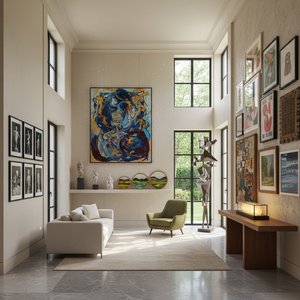
La Biennale de Venise : Top 25 des Œuvres Incontournables pour Décorer avec Art et Histoire
Plongez au cœur de la Biennale de Venise avec notre sélection des 25 œuvres incontournables. Découvrez l'histoire, les artistes et les mouvements qui ont façonné l'art contemporain italien. Trouvez l'inspiration déco et achetez des reproductions de tableaux haute qualité sur OriginalUniqueArt.com.


