
 Commander l'impression Commander la reproduction
 Partager
 Partager
 Détails de l'œuvre
 Ajouter aux favoris

 Télécharger
 Articles similaires
 Radiographie
 Diaporama
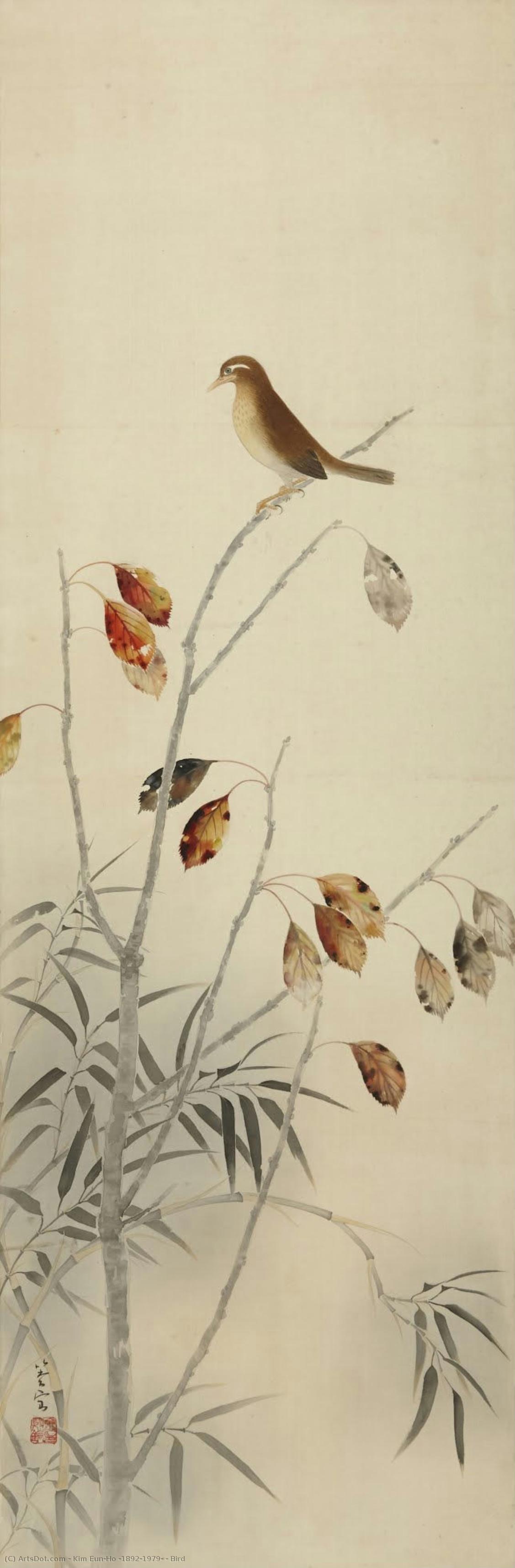
Bird
 1926
1926 130.0 x 43.0 cm
 Musée de l’Université des femmes Ewha
 Afficher la suite
Acquérez une image numérique haute résolution et améliorée, bien supérieure à l'aperçu en ligne.
Chaque fichier est méticuleusement préparé par nos spécialistes internes à l'aide d'outils avancés et d'une retouche manuelle experte. Nous garantissons que chaque image possède une clarté exceptionnelle, une précision des couleurs irréprochable et un niveau de détail fin.
Le fichier final est livré par e-mail sous 72 heures, optimisé pour une utilisation immédiate dans des contextes professionnels, éditoriaux et d'impression. Il offre la même qualité de confiance que celle utilisée par les plus grands studios de création, éditeurs et galeries.
Image numérique
Téléchargez un fichier haute résolution pour un usage personnel, l'impression et vos projets créatifs.
Inclus avec chaque achat d'image numérique
Livraison numérique experte, garantie.
En choisissant OriginalUniqueArt.com, vous n'obtenez pas seulement une simple image : vous recevez une œuvre numérique sublimée avec professionnalisme, conçue avec précision et accompagnée d'une garantie de satisfaction. Voici tout ce qui accompagne automatiquement votre commande :

Livraison rapide par e-mail
Votre fichier d'image numérique haute résolution vous sera envoyé par e-mail sous 72 heures après votre commande — prêt à un usage immédiat.

Fichier numérique optimisé par l'IA
Votre œuvre d'art bénéficie d'une optimisation professionnelle grâce à des outils d'IA avancés et une retouche manuelle, garantissant un niveau maximal de détail, de clarté et de fidélité chromatique.

Réexpédition gratuite à vie
Vous avez accidentellement supprimé ou perdu votre fichier ? Pas de panique — nous vous le renverrons gratuitement, quand vous le souhaitez.

Aucun frais de douane - À jamais
Profitez de votre œuvre d'art instantanément sans frais de douane ni de livraison — les téléchargements numériques sont toujours exonérés de taxes.

Garantie de fidélité des couleurs
Nous garantissons que votre image numérique reproduit les couleurs de l'original aussi fidèlement que possible grâce à des outils professionnels et une gestion rigoureuse des couleurs.

Garantie de satisfaction de 60 jours
Si vous n'êtes pas satisfait de votre image numérique, nous la réviserons ou vous rembourserons 100% sous 60 jours - sans poser de questions.

Garantie de remboursement à 100%
Pas satisfait ? Obtenez un remboursement intégral dans les 60 jours suivant la réception de votre fichier numérique — sans aucune question posée.

Réductions sur les commandes groupées
Achetez 3 images, économisez 10% - Achetez 5, économisez 15% - Achetez 10+, économisez 20%. Idéal pour les projets créatifs, les galeries et les agences.
Description du collectible
Biographie de l'artiste
Kim Eun-ho: Bridging Tradition and Modernity in Korean Painting
Kim Eun-ho (1892–1979) stands as a pivotal figure in the evolution of Korean painting, a master who skillfully navigated the complexities of tradition and modernity during a period of profound cultural transformation. Born in Incheon, Korea, his artistic journey was deeply intertwined with the tumultuous events of Japanese colonial rule and the subsequent struggle for independence. Eun-ho’s legacy isn't simply one of technical skill; it’s a testament to his ability to synthesize influences—particularly from Nihonga (Japanese painting) – while retaining a distinctly Korean sensibility, ultimately shaping the trajectory of Korean art in the 20th century.Early Life and Artistic Training
Eun-ho's early life was marked by both privilege and hardship. He received a solid education, initially studying calligraphy and then pursuing painting at the Kyongsong School of Calligraphy and Painting, an institution established to train Korean artists in the Western tradition. This school, under the guidance of Yun Yeong-gi, provided Eun-ho with a foundational understanding of artistic principles, but crucially, it also exposed him to the burgeoning influence of Nihonga – a style characterized by its emphasis on brushwork, atmospheric perspective, and a rejection of Western academic techniques. Following his graduation in 1915, he traveled to Tokyo, where he further honed his skills at the Tokyo School of Fine Arts, immersing himself in Japanese artistic practices and developing a deep appreciation for the nuances of Nihonga. This period was instrumental in shaping his distinctive style, blending Korean aesthetics with the meticulous techniques of his Japanese mentors.The Influence of Nihonga and the Joseon Art Exhibition
Eun-ho’s embrace of Nihonga proved to be a defining characteristic of his artistic career. He skillfully adopted its emphasis on direct brushwork, simplified forms, and a focus on capturing the essence of subjects rather than meticulously rendering every detail. This approach resonated deeply with Korean artists seeking to assert their own identity within the context of Japanese colonial rule. Crucially, Eun-ho’s work gained recognition through the prestigious Joseon Art Exhibition (Chōsen misul jeollamhoe), established by the Japanese government in 1922. This exhibition served as a key platform for showcasing Korean art and determining its official categorization – traditionally divided into ‘Oriental’ (Dongyanghwa) and ‘Western’ styles. Eun-ho's consistent inclusion in this exhibition, particularly within the Dongyanghwa section, solidified his position as a leading figure in the Korean art world and provided him with invaluable exposure. However, it also highlighted the inherent complexities of navigating an artistic landscape shaped by colonial control.Subject Matter and Artistic Style: Women, Nature, and Symbolism
Eun-ho’s paintings frequently centered on themes of femininity, domesticity, and the natural world. He was particularly renowned for his depictions of women – often portrayed in serene, contemplative poses, engaged in everyday activities such as raising children or tending to their gardens. These images weren't simply portraits; they were imbued with a sense of quiet dignity and timeless beauty, reflecting a traditional Korean ideal of womanhood. Alongside these intimate scenes, Eun-ho also produced landscapes that captured the essence of Korea’s diverse scenery – mountains, rivers, and forests rendered with a delicate balance of color and brushwork. His style was characterized by its subtle gradations of tone, meticulous attention to detail, and a masterful command of ink and color. He frequently employed a muted palette, creating an atmosphere of tranquility and introspection.Postwar Recognition and Legacy
Following Korea’s liberation in 1945, Eun-ho continued to paint, adapting his style to reflect the changing political and social landscape. He became a significant influence on subsequent generations of Korean artists, particularly those who sought to establish a distinctly “Korean” artistic identity. His work was exhibited both domestically and internationally, earning him recognition as one of Korea’s most important painters. Despite controversies surrounding some of his earlier works produced during the colonial period – specifically paintings that glorified Japanese imperialism – Eun-ho's contributions to Korean painting remain undeniable. He demonstrated a remarkable ability to synthesize diverse influences, creating a body of work that is both deeply rooted in tradition and remarkably forward-looking. Kim Eun-ho’s legacy endures as a testament to the power of art to transcend political boundaries and express universal human experiences. His paintings continue to be studied and admired for their beauty, technical skill, and profound cultural significance.
kim eun-ho (1892-1979)
1892 - 1979 , South Korea
Informations clés
- Artistic Movement Or Style: Nihonga, Eastern painting
- Artists Or Movements Influenced By This Artist: ['Japanese nihonga']
- Artists Who Influenced This Artist:
- Yun Yeong-gi
- Kim Ki-chang
- Date Of Birth: June 24, 1892
- Date Of Death: February 7, 1979
- Full Name: Kim Eun-ho
- Nationality: Korean
- Notable Artworks:
- Bird
- White Crane Mural
- Place Of Birth: Haksan-ri, Incheon, Korea

