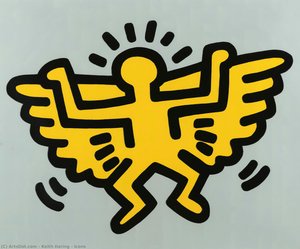
Aperçu en situation
 Partager
 Partager
 Détails
 Guide imprimable

 Télécharger
 Articles similaires
 Radiographie
 Voir le diaporama
 Statistiques
Sans titre
 Crayon
- Art mural
- Réalisme contemporain
 1982
1982- Contemporain
 1705.0 x 182.0 cm
 MoMA - Museum of Modern Art
 Afficher la suite
L’œuvre d'art présentée sur cette page est protégée par le droit d'auteur, ce qui signifie que nous ne pouvons légalement créer ou vendre de reproduction identique. Cette protection est appliquée en vertu d'accords internationaux tels que la Convention de Berne et par les lois nationales, notamment celles énoncées par le Loi américaine sur le droit d'auteur - Titre 17.
Cette méthode est pleinement conforme aux réglementations sur le droit d'auteur car elle ne repose pas sur la copie ou la duplication de l'œuvre protégée. Il s'agit plutôt d'une réinterprétation créative — une nouvelle peinture qui s'inspire de l'original sans pour autant lui être identique.
Giclées et impressions d'art
Impressions giclées ou sur toile de qualité musée, avec une production rapide et des finitions au choix. ( Acheter la peinture faite à la main Passer au format image numérique)




P118B €10

P118H €10

P118W €10

P438Z €10

P508JH €12

P508YH €12

P805H €10

P805Z €10

P919BZ €10

P919G €10

P919XJ €10

P959ZH €10

P968JZ €12

W106C €8

W218G €10

W218JH €8

W218Y €10

W307PJ €10

W316G €10

W316PJ €8

W316Y €10

W398PJ €8

W4111J €10

W500HY €15

W500JH €15

W692G €12

W849H €8

W940BG €15

W953PJ €8




Choisissez parmi nos formats prédéfinis qui respectent les proportions originales de l’œuvre.

Saisissez la largeur et la hauteur souhaitées pour qu'elles s'adaptent à votre cadre ou à votre mur. Une impression ne peut être que découpée, elle ne peut jamais être agrandie au-delà de l'image originale ; ainsi, un format de forme différente entraînera la perte d'une partie de l'image. Nous vous envoyons une maquette numérique pour approbation avant toute impression. L'image présentée sur cette page ne montre pas le recadrage réel — seule la maquette le permet.
Livraison dans le monde entier () en 2 semaines au lieu des 4/5 semaines habituelles. (23 octobre)

Livraison express gratuite dans le monde entier

Toile de lin de haute qualité

Assurance transport complète

Garantie de remboursement des droits de douane

Garantie de fidélité des couleurs

Garantie de retour de 100 jours (uniquement en cas de défaut)

Garantie de remboursement à 100%

Tarifs dégressifs sur quantité
 L'option verre n'est disponible que pour les dimensions inférieures à 110 cm.

Sans titre
Giclées et impressions d'art
Format de la reproduction
-


Prix total final
€ 70
Une symphonie de résilience : l'univers vibrant de Keith Haring
Au cœur des années 1980, dans l'effervescence et les turbulences sociales de New York, un nouveau langage visuel a émergé de l'ombre des stations de métro. Keith Haring, artiste dont le nom est devenu synonyme d'une révolution culturelle, possédait la capacité unique de transformer la rudesse de la vie urbaine en une célébration rayonnante de l'humanité. Son œuvre, souvent caractérisée par sa vitalité rythmique et son charme accessible, transcende la simple décoration ; elle constitue un dialogue profond entre l'artiste et l'âme collective. Rencontrer une pièce telle que ses œuvres sans titre de 1982, c'est pénétrer dans un monde où des contours noirs et audacieux dansent sur des champs de couleurs vibrantes, créant un sentiment de mouvement qui semble à la fois spontané et méticuleusement orchestré.
La technique derrière la maîtrise de Haring réside dans sa capacité à marier l'immédiateté brute du street art avec la composition sophistiquée des beaux-arts. En utilisant des techniques de dessin — souvent le crayon sur papier ou des pigments éclatants sur de vastes surfaces — il a atteint une esthétique emblématique définie par des formes iconiques et simplifiées. Ces figures, dépouillées de tout détail superflu, deviennent des symboles universels capables de communiquer des émotions complexes à travers les barrières linguistiques et culturelles. Pour le collectionneur averti ou le décorateur d'intérieur, ces œuvres offrent bien plus qu'un simple élément visuel frappant ; elles constituent une ancre rythmique pour un espace, injectant une énergie cinétique et une sophistication moderne capables de transformer une pièce minimaliste en une galerie de pensée contemporaine.
Symbolisme et pouls de la vie
Au-delà de la joie superficielle de ses palettes lumineuses — rouges riches, jaunes ensoleillés et bleus profonds — les compositions de Haring sont imprégnées de récits symboliques profonds. Son œuvre explore fréquemment les thèmes de la fertilité, de la protection et de la force communautaire. On peut y observer le motif récurrent du « radiant baby » (bébé rayonnant), une figure qui sert d'emblème d'espoir, de renaissance et de lumière éternelle de la vie, même dans les moments les plus sombres. Dans ses œuvres murales monumentales, telles que la légendaire Tower, nous voyons ce symbolisme atteindre son apogée à travers la représentation de la résilience maternelle, où des figures enceintes et des nourrissons rampants créent une tapisserie de continuité et de soin.
Cette couche de signification apporte une profondeur émotionnelle qui rend son travail particulièrement fascinant pour ceux qui rechercheent un art doté d'une âme. L'interaction entre les figures — des adultes protégeant des enfants, ou des groupes se déplaçant selon des motifs synchronisés — évoque notre responsabilité partagée envers autrui. En intégrant une reproduction de haute qualité de l'œuvre de Haring dans un environnement soigneusement choisi, on ne se contente pas d'accrocher un tableau ; on invite une conversation sur la justice sociale, la solidarité et le triomphe de l'esprit humain. C'est un art de l'optimisme, conçu pour rappeler au spectateur que, même au milieu des complexités de l'ère moderne, il existe un lien fondamental et indéfectible entre nous tous.
Un héritage durable pour les espaces modernes
Pour l'amateur d'art ou le professionnel de la décoration, le travail de Haring représente une intersection parfaite entre importance historique et attrait esthétique intemporel. Sa capacité à combler le fossé entre la sous-culture du graffiti underground et les salles prestigieuses d'institutions comme le Museum of Modern Art (MoMA) garantit que son imagerie reste à l'avant-garde du design contemporain. La clarté graphique de ses lignes rend ses pièces exceptionnellement polyvalentes, leur permettant de s'harmoniser aussi bien avec des lofts industriels avant-gardistes qu'avec des intérieurs classiques plus traditionnels.
Investir dans une reproduction d'un art aussi emblématique permet de préserver cet héritage vibrant au sein de la sphère privée. Qu'il s'agisse des motifs complexes d'un dessin sans titre ou du récit puissant d'une fresque à grande échelle, ces pièces servent de points focaux puissants qui captivent l'attention et inspirent l'émerveillement. Elles sont bien plus que des choix esthétiques ; elles sont des hommages à un artiste qui nous a appris à trouver la beauté dans le mouvement, à trouver l'espoir dans la lutte, et à percevoir le potentiel rayonnant dans chaque ligne tracée sur la toile de nos vies.
Questions et réponses
Où puis-je acheter une image numérique de «Sans titre» de Keith Haring ?
Pour obtenir un fichier numérique de «Sans titre» de Keith Haring, commandez un téléchargement d'image numérique haute résolution sur sa page Image numérique.
Quelle émotion l'œuvre Réalisme contemporain «Sans titre» dégage-t-elle ?
«Sans titre» dégage une tonalité émotionnelle Réflexif au sein du mouvement Réalisme contemporain.
Quelle est la technique et la date de création de «Sans titre» de Keith Haring ?
«Sans titre» a été réalisé en 1982, en Crayon.
Biographie de l'artiste
**Premières années et influences**
Keith Allen Haring, un artiste et militant social américain, est né le 4 mai 1958 à Reading, en Pennsylvanie. Son enfance a été marquée par un vif intérêt pour l'art, influencé par son père, Allan Haring, ingénieur et caricaturiste amateur. La fascination de Keith pour l’art a été davantage nourrie par les dessins animés de Walt Disney, Dr. Seuss, Charles Schulz et les personnages des Looney Tunes.**Parcours artistique**
Après une brève période d'études en art commercial à la Ivy School of Professional Art de Pittsburgh (1976-1978), Haring s’est désillusionné face à l’approche conventionnelle de l’art. Inspiré par "The Art Spirit" de Robert Henri (1923), il a décidé de se concentrer sur son propre style unique, qui deviendrait un langage visuel du XXe siècle.**New York et l'ascension vers la gloire**
À la fin des années 1970, Haring a déménagé à New York City, où il est devenu une figure clé de la scène artistique underground. Son travail, caractérisé par des lignes audacieuses, des couleurs vives et des figures dynamiques, a commencé à véhiculer de forts messages de vie et d'unité. C’est durant cette période que son symbole emblématique, le "Radiant Baby", est né, devenant synonyme du style de Haring.- Untitled (235), un exemple typique du style pop art de Haring, peut être trouvé sur OriginalUniqueArt.
- Son implication dans la culture urbaine new-yorkaise des années 1980 a conduit à de nombreuses œuvres publiques, dont "Crack Is Wack" (1986), visible depuis le FDR Drive de New York.
- Son association avec Andy Warhol, comme on peut le voir dans "Andy Mouse", a marqué un élément significatif de son succès ultérieur.
**Reconnaissance internationale et activisme**
Dans les années 1980, Haring s'est fait connaître à l’échelle internationale, avec des œuvres telles que The Story of Red and Blue (collection Nakamura Keith Haring, Hokuto, Japon), visible sur OriginalUniqueArt. Son activisme s'est étendu à la conception d’une affiche pour l’Afrique du Sud libre en 1985 et à la peinture d’une section du mur de Berlin en 1986.**Héritage**
L'héritage de Keith Haring ne se limite pas à son art ; il s'étend à son influence sur l'activisme social et le langage visuel du XXe siècle. Son travail continue d’inspirer, avec les dessins de plans (collection Nakamura Keith Haring, Hokuto, Japon) témoignant de son impact durable.- Pour en savoir plus sur la vie et l'œuvre de Haring, visitez la page OriginalUniqueArt consacrée à Keith Haring.
- Explorez le mouvement néo-expressionniste, qui a influencé le style de Haring, sur la page néo-expressionnisme de OriginalUniqueArt.
**Conclusion**
La vie de Keith Haring témoigne du pouvoir de l'art comme moyen de changement social. Son héritage, marqué par son langage visuel emblématique et son activisme inébranlable, continue d’inspirer les artistes et les militants du monde entier.
Keith Haring
1958 - 1990 , États-Unis d'Amérique
En bref
- Artistic Movement Or Style: Pop Art, Néo-Expressionnisme
- Artists Or Movements Influenced By This Artist: ['Neo-Expressionism']
- Artists Who Influenced This Artist:
- Walt Disney
- Dr. Seuss
- Charles Schulz
- Robert Henri
- Date Of Birth: 4 mai 1958
- Date Of Death: 16 février 1990
- Full Name: Keith Allen Haring
- Nationality: Américain
- Notable Artworks:
- Untitled (235)
- Crack Is Wack
- The Story of Red and Blue
- Place Of Birth (City And Country): Reading, États-Unis
Articles connexes

De la Jungle aux Géométries Dorées : Les Tendances Fresques les Plus Demandées par les Designers d'Hôtels
Découvrez les tendances fresques les plus demandées par les designers d'hôtels ! Guide expert sur l'art mural, techniques innovantes & artistes à suivre. : votre partenaire pour des décorations exceptionnelles.

Giclée Prints: Archival Quality & Aesthetic Nuances for the Discerning Collector
Explore the world of giclée prints with OriginalUniqueArt. Learn about archival quality, aesthetic nuances & investment potential. Expert guidance for discerning art collectors seeking museum-quality reproductions and lasting value.
Keith Haring: Subverting Pop Culture – An Examination of Social Commentary & Artistic Innovation
Explore the revolutionary art of Keith Haring – a powerful blend of pop aesthetics & social activism. Discover his iconic works, influences, and collecting insights. Expert analysis for discerning collectors.
![Transformer les Espaces : Comment les Fresques Personnalisées Forgent l'Identité de Marque et Améliorent l'Expérience Client[Image Placeholder][Article Body Placeholder][Call to Action Placeholder]](/media/articles/images/thumbnails/b9/5d/b95db6de2f674f37942060e32a01df4a.jpg)
Transformer les Espaces : Comment les Fresques Personnalisées Forgent l'Identité de Marque et Améliorent l'Expérience Client[Image Placeholder][Article Body Placeholder][Call to Action Placeholder]
Valorisez votre marque et vos espaces grâce à des fresques murales personnalisées. Découvrez des conseils d’experts sur le design, les artistes, les matériaux et l’installation. Transformez votre environnement : explorez les solutions sur mesure de . [placeholder]

Fresques Murales : L'Élévation de la Cuisine et Salle de Bain en Havres Artistiques
Découvrez comment intégrer des fresques murales pour sublimer votre cuisine et salle de bain. Conseils d'experts, tendances & inspirations pour un intérieur unique. : l'art à portée de tous.