 Aperçu en situation
 Envoyer
 Partager
 Détails de l'œuvre

 Télécharger
 Articles similaires
 Radiographie
 Diaporama
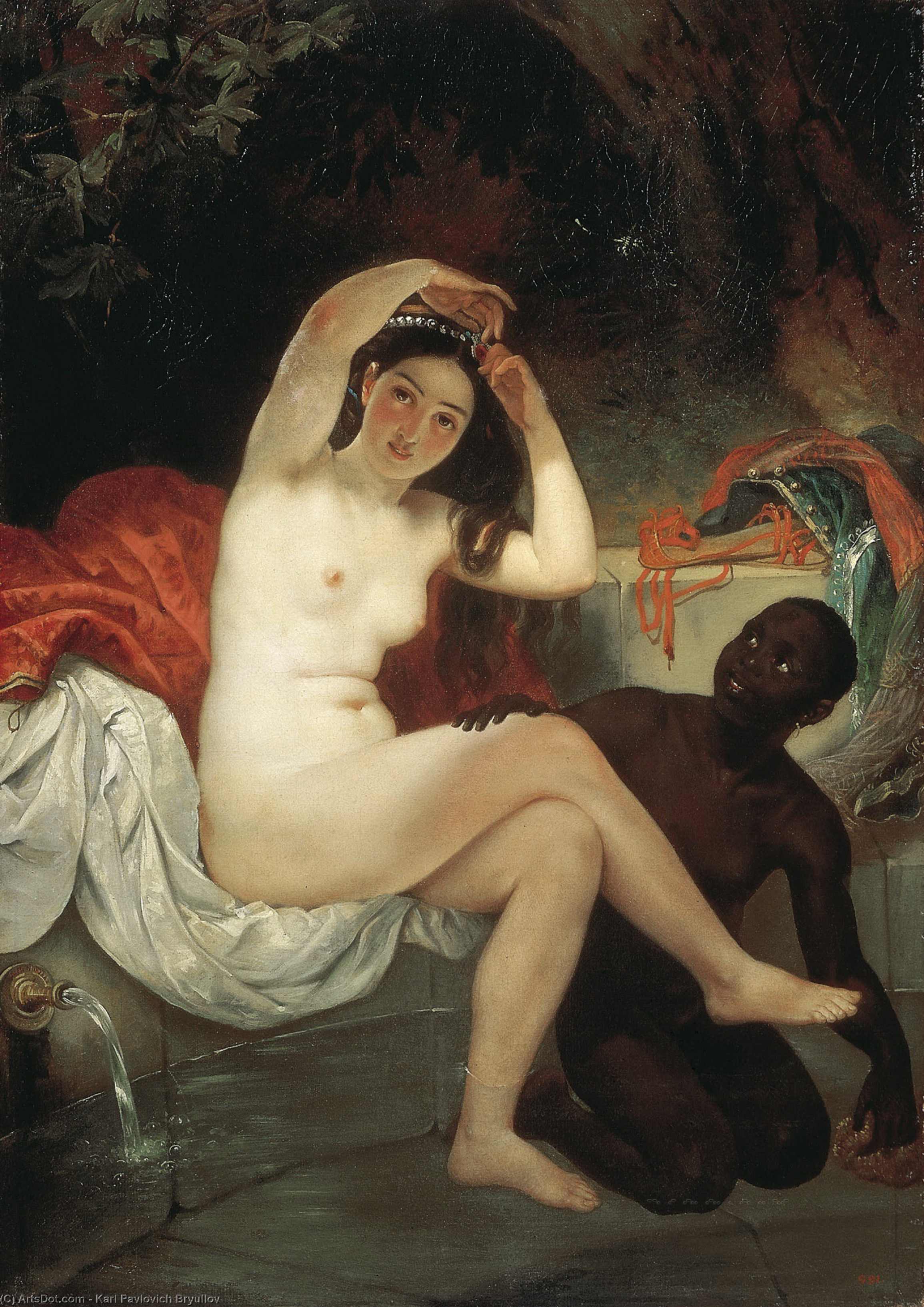
Bathsheba
 Oil On Canvas
- WallArt
- Romanticism
 1832
1832- 19th Century
 173.0 x 126.0 cm
 Galerie Tretyakov
 Lire la suite
Giclées et impressions d'art
Impressions giclées ou sur toile de qualité musée, avec une production rapide et des finitions au choix. ( Commander la reproduction peinte à la main Télécharger l'image haute résolution)




P118B $10

P118H $10

P118W $10

P438Z $10

P508JH $12

P508YH $12

P805H $10

P805Z $10

P919BZ $10

P919G $10

P919XJ $10

P959ZH $10

P968JZ $12

W106C $8

W218G $10

W218JH $8

W218Y $10

W307PJ $10

W316G $10

W316PJ $8

W316Y $10

W398PJ $8

W4111J $10

W500HY $15

W500JH $15

W692G $12

W849H $8

W940BG $15

W953PJ $8




Choisissez parmi nos formats prédéfinis qui respectent les proportions originales de l’œuvre.

Vous pouvez saisir vos propres dimensions pour vous adapter à un cadre ou à un espace spécifique. Si la taille sélectionnée ne correspond pas aux proportions de l'image originale, nous recadrerons l'œuvre ou étendrons l'image avec une bordure en miroir ou une couleur unie. Une maquette numérique vous sera envoyée pour approbation avant le début de la production.
Veuillez noter que l'aperçu à l'écran ne reflète pas le recadrage ou l'extension réelle. Seule la maquette montrera avec précision la composition finale.
Bien que des tailles personnalisées soient disponibles, nous vous recommandons de choisir une dimension dans la liste prédéfinie afin de préserver les proportions originales.
Livraison dans le monde entier () en 2 semaines au lieu des 4/5 semaines habituelles. (18 août)

Livraison express gratuite dans le monde entier

Toile de lin de qualité supérieure

Assurance transport complète

Garantie de remboursement des droits de douane

Garantie de fidélité des couleurs

Politique de retour de 60 jours (uniquement en cas de défaut)

Garantie de remboursement à 100%

Offre de tarifs dégressifs
 L'option verre n'est disponible que pour les dimensions inférieures à 110 cm.

Bathsheba
Giclées et impressions d'art
Format de la reproduction
-


Prix total
$ 80
Description de la pièce
A Vision of Romantic Intimacy
In the quiet, luminous depths of Karl Pavlovich Bryullov’s 1832 masterpiece, Bathsheba, we find ourselves transported to a moment where time itself seems to hold its breath. This monumental canvas is far more than a mere biblical illustration; it is a profound psychological study wrapped in the velvet textures of the Romantic era. The scene captures the biblical Bathsheba in a state of private contemplation, seated as she tends to her hair, her reflection caught in the subtle glow of a mirror. Beside her, the presence of King David, kneeling in a gesture that blurs the line between devotion and desire, introduces a tension that vibrates through the composition. Bryullov does not simply paint a story; he invites the viewer into a sacred, almost voyeuristic space where the boundaries between the divine and the human are beautifully blurred.
The emotional resonance of the work lies in its ability to balance grandeur with vulnerability. As one gazes upon the delicate rendering of Bathsheba’s features, there is an undeniable sense of the ephemeral—a fleeting moment of beauty caught before the inevitable storm of consequence. For the discerning collector or interior designer, this painting offers a centerpiece of immense narrative weight. It possesses the rare ability to anchor a room, providing a focal point that encourages long periods of reflection and conversation. The interplay between the figures suggests an unspoken dialogue, making the artwork feel alive, as if the characters might continue their silent communion the moment we turn away.
Mastery of Light and Romantic Technique
Technically, Bathsheba stands as a testament to Bryullov’s extraordinary command over light and shadow. Drawing inspiration from the dramatic chiaroscuro of Caravaggio, the artist employs a masterful manipulation of illumination to sculpt the figures from the darkness. A soft, ethereal light seems to emanate from within the scene, catching the sheen of silk, the luster of skin, and the intricate details of the royal attire. This technique does not merely illuminate the subject; it imbues the atmosphere with a palpable, heavy air of mystery and importance.
Moving away from the rigid, polished surfaces of Neoclassicism, Bryullov embraces a more textured, emotive brushstroke that is characteristic of the Romantic movement. He prioritizes the feeling of the atmosphere over clinical perfection, allowing the paint to convey the warmth of skin and the weight of fabric. This tactile quality makes the reproduction of such a work incredibly impactful in a physical space; the play of light across the textured surfaces of a high-quality hand-painted piece can bring a sense of classical luxury and historical depth to any modern or traditional interior. To possess this work is to hold a fragment of 19th-century artistic fervor, rendered with a precision that honors the soul of the original masterpiece.
A Timeless Addition to the Curated Space
For those seeking to curate an environment of sophistication and intellectual depth, Bryullov’s work offers unparalleled inspiration. The painting serves as a bridge between eras, blending the anatomical realism of the Renaissance with the emotional turbulence of the Romantic period. Its palette—rich, deep, and harmoniously balanced—complements a wide array of decor styles, from the opulent grandeur of a classical estate to the moody, dramatic accents of contemporary luxury design.
Investing in a reproduction of Bathsheba is an investment in storytelling. It is a piece that demands attention not through loudness, but through its quiet, commanding presence. Whether placed in a private study, a grand salon, or a curated gallery wall, this artwork brings with it the legacy of Saint Petersburg’s finest Romantic master, offering every viewer a window into a world of beauty, longing, and the eternal complexities of the human heart.
Biographie de l'artiste
Karl Pavlovich Bryullov : Une Vie au Temps du Romantisme
Jeunesse et Formation
Karl Pavlovich Bryullov (né Karl Briullo) est né le 23 décembre 1799 à Saint-Pétersbourg, en Russie. Son père, Pavel Ivanovich Briullo, était académicien, sculpteur sur bois et graveur d'origine huguenote, qui a transmis à son jeune fils un amour des arts. Le parcours artistique de Bryullov a commencé sous la direction de son père avant qu’il ne s’inscrive officiellement à l’École impériale des Beaux-Arts de Saint-Pétersbourg en 1809.
Développement Artistique et Influences
Bien que son éducation ait été ancrée dans un cadre classique, Bryullov n'a jamais pleinement embrassé ses contraintes rigides. Il ressentait une forte attirance pour l’Italie dès son plus jeune âge, et son développement artistique a été significativement façonné par les maîtres de la Renaissance italienne. Son œuvre témoigne d'influences d'artistes tels que Raphaël, Michel-Ange et Caravage, en particulier dans leur utilisation dramatique de la lumière et de l’ombre et dans leur maîtrise du détail anatomique.
- Il s'est distingué comme un étudiant prometteur, faisant preuve d'un talent imaginatif pendant ses études.
- Après avoir achevé ses études, il est déménagé à Rome en 1821, où il a passé plus de dix ans à perfectionner ses compétences.
Réalisations Majeures et Œuvres Notables
La percée de Bryullov est venue avec “Le Dernier Jour de Pompéi” (1830-1833), une peinture historique monumentale qui l'a propulsé au rang d’artiste internationalement reconnu. L'œuvre, représentant l'éruption cataclysmique du Vésuve, a été saluée pour sa composition dramatique, son intensité émotionnelle et son brilliance technique. Elle a suscité l'admiration de contemporains tels que Pouchkine et Gogolev.
- “Le Prise d’une Tsaritsa” (1827) – Une œuvre précoce démontrant sa maîtrise des récits historiques.
- “La Défense du Sepulcre” (1846) - Montrant la capacité de Bryullov à équilibrer l'émotion et la précision historique.
- "Princesse Juliette Pavlovna Samoilova quittant un bal avec sa fille adoptive Amacilia Pacini" (1832) – Un exemple saisissant de ses compétences en portraiture.
- “L’Invasion de Rome par Genserich” (1835) - Une autre scène historique dramatique affichant des influences baroques.
Carrière et Vie Tardive
Suite au succès de “Le Dernier Jour de Pompéi”, Bryullov est revenu en Russie triomphalement, obtenant une position prestigieuse à l’Académie impériale des Beaux-Arts en 1836. Il y a servi de professeur jusqu'en 1848, influençant une génération d'artistes russes.
- Il a développé un style de portrait distinctif combinant la simplicité néoclassique avec les sensibilités romantiques.
- Sa santé a commencé à décliner pendant qu’il travaillait sur le plafond de la cathédrale Saint-Isaac.
- En 1849, pour améliorer sa santé, il a quitté la Russie pour Madère et s'est finalement installé près de Rome, en Italie.
Signification Historique et Héritage
Karl Pavlovich Bryullov est considéré comme une figure clé du romantisme russe. Son œuvre a marqué un tournant vers une expression émotionnelle accrue et des récits dramatiques au sein de l'art russe. Il a comblé le fossé entre la formalité néoclassique et le mouvement romantique naissant, influençant les générations suivantes d’artistes, dont Gavriil Gorelov.
L'héritage de Bryullov s'étend au-delà de ses peintures ; il était un enseignant respecté et un champion de l'innovation artistique. Ses contributions ont solidifié sa place en tant que l’un des plus grands artistes visuels de l'histoire russe, laissant une marque durable sur le patrimoine culturel de la nation. Il est décédé le 23 juin 1852 près de Rome et a été enterré au Cimitero Acattolico.

karl pavlovich bryullov
1799 - 1852 , Russie
L'essentiel de l'artiste
- Artistic Movement Or Style: Romantisme
- Artists Who Influenced This Artist:
- Raphaël
- Michel-Ange
- Caravage
- Date Of Birth: 12 décembre 1799
- Full Name: Karl Pavlovich Bryullov
- Nationality: Russien
- Notable Artworks:
- Le Dernier jour de Pompéi
- La prise d'une Tsaritsa
- La Défense du Sepulcre
- Place Of Birth: Saint Petersburg, Russie
Articles connexes
Giclée Prints: Archival Quality & Aesthetic Nuances for the Discerning Collector
Explore the world of giclée prints with OriginalUniqueArt. Learn about archival quality, aesthetic nuances & investment potential. Expert guidance for discerning art collectors seeking museum-quality reproductions and lasting value.

Les 10 Chefs-d'œuvre du Paysage Romantique : Artistes et Décor d'Intérieur
Plongez dans l'émotion du Romantisme avec les 10 plus beaux paysages de Friedrich, Turner & Delacroix. Découvrez leur histoire et trouvez l'inspiration déco idéale sur OriginalUniqueArt.com !

The Enduring Legacy of Fine Art Prints: Technique, History & Aesthetic Impact
Explore the rich history & techniques of fine art prints. Discover investment potential, assess authenticity, and learn how to preserve your collection with expert guidance. Trusted insights for discerning collectors.

Echoes of Time: Exploring the Enduring Appeal & Historical Context of Vintage Art Prints
Explore the captivating world of vintage art prints! Discover their history, collecting tips & enduring appeal. Expert insights on chromolithography and building a legacy collection with OriginalUniqueArt.

Romantic Realism's Finest: 10 Masterpieces for Your Home | OriginalUniqueArt
Explore 10 defining masterpieces of Romantic Realism! Discover Courbet, Millet & Daumier's powerful paintings—capturing emotion and social realities. Find museum-quality reproductions for your home at OriginalUniqueArt.com.