
 Aperçu en situation
 Envoyer
 Partager
 Détails de l'œuvre
 Guide
Guide

 Télécharger l'image
 Articles similaires
 Radiographie
 Diaporama
 Questions et réponses
 Statistiques
Fakires

- 305.0 x 244.0 cm


 Lire la suite
L’œuvre d'art présentée sur cette page est protégée par le droit d'auteur, ce qui signifie que nous ne pouvons légalement créer ou vendre de reproduction identique. Cette protection est appliquée en vertu d'accords internationaux tels que la Convention de Berne et par les lois nationales, notamment celles énoncées par le Loi américaine sur le droit d'auteur - Titre 17.
Cette méthode est pleinement conforme aux réglementations sur le droit d'auteur car elle ne repose pas sur la copie ou la duplication de l'œuvre protégée. Il s'agit plutôt d'une réinterprétation créative — une nouvelle peinture qui s'inspire de l'original sans pour autant lui être identique.
Giclées et impressions d'art
Impressions giclées ou sur toile de qualité musée, avec une production rapide et des finitions au choix. ( Commander la reproduction peinte à la main Passer au format numérique)




P118B €10

P118H €10

P118W €10

P438Z €10

P508JH €12

P508YH €12

P805H €10

P805Z €10

P919BZ €10

P919G €10

P919XJ €10

P959ZH €10

P968JZ €12

W106C €8

W218G €10

W218JH €8

W218Y €10

W307PJ €10

W316G €10

W316PJ €8

W316Y €10

W398PJ €8

W4111J €10

W500HY €15

W500JH €15

W692G €12

W849H €8

W940BG €15

W953PJ €8




Choisissez parmi nos formats prédéfinis qui respectent les proportions originales de l’œuvre.

Saisissez la largeur et la hauteur souhaitées pour qu'elles s'adaptent à votre cadre ou à votre mur. Une impression peut être recadrée, mais jamais agrandie au-delà de l'image originale ; ainsi, un format de forme différente entraînera la perte d'une partie de l'image. Nous vous envoyons une maquette numérique pour approbation avant toute impression. L'image présentée sur cette page ne montre pas le recadrage réel — seule la maquette le permet.
Livraison dans le monde entier () en 2 semaines au lieu des 4/5 semaines habituelles. (10 novembre)

Livraison express gratuite dans le monde entier

Toile de lin de qualité supérieure

Assurance transport complète

Garantie de remboursement des droits de douane

Garantie de fidélité des couleurs

Politique de retour de 100 jours (uniquement en cas de défaut)

Garantie de remboursement à 100%

Offre de tarifs dégressifs
 L'option verre n'est disponible que pour les dimensions inférieures à 110 cm.

Fakires
Giclées et impressions d'art
Format de la reproduction
-


Prix total
€ 73
Julian Schnabel’s *Fakires*: A Monumental Exploration of Sacrifice and Spiritual Intensity
Julian Schnabel emerged from the vibrant, often chaotic New York art scene of the 1980s as a force of nature, challenging conventions and redefining the possibilities of painting. Born in Brooklyn in 1951, his early life took an unexpected turn when his family relocated to Brownsville, Texas, in 1965—a formative experience that instilled within him a sense of outsider status and a fascination with raw, untamed environments. This duality – the urban grit of New York versus the expansive landscapes of the Texan borderlands – would become a recurring theme throughout his artistic journey. He pursued formal training at the University of Houston, but it was his audacious application to the Whitney Museum’s Independent Study Program—delivered between two slices of bread—that truly signaled his iconoclastic spirit and willingness to disrupt established norms. This gesture wasn't mere provocation; it was a statement about breaking down barriers to creativity and embracing unconventional methods.- Subject Matter: Schnabel’s *Fakires* (1993) centers around the concept of “fakir,” referring to Hindu or Muslim mystics who practice extreme asceticism—a deliberate renunciation of worldly possessions and desires for spiritual enlightenment. The word itself carries connotations of profound humility, selflessness, and unwavering devotion.
- Style: This artwork firmly establishes Schnabel’s place within Neo-Expressionist painting, a movement that reacted against the dominance of Minimalism and Conceptual art by prioritizing emotive intensity and figurative representation. It embodies a visceral response to the human condition—a confrontation with vulnerability and suffering.
- Technique: Executed on a monumental cotton drop cloth measuring 305.6 x 244.5 cm, *Fakires* utilizes oil paint mixed with resin – a technique that lends considerable textural depth and luminosity to the surface. Schnabel’s signature approach involves layering materials—including cardboard—to create a complex interplay of textures and colors.
Historical Context: The Return to Painting After Minimalism
The early 1980s witnessed a significant backlash against the austere aesthetic principles championed by Minimalist artists like Donald Judd and Carl Andre. Schnabel’s work represents a deliberate rejection of this reductive style, advocating for a return to expressive painting—a medium capable of conveying profound emotional resonance. It coincided with a broader cultural shift toward confronting difficult themes and exploring the darker aspects of human experience.Symbolism: Sacrifice and Transcendence
The prominent word “fakires” emblazoned across the canvas serves as more than just a visual element; it embodies a core symbolic idea—the willingness to endure hardship for the sake of spiritual devotion. Schnabel’s deliberate use of color – predominantly reds and pinks – contributes to this sense of urgency and passion, mirroring the fervor associated with religious rituals and practices. The painting's overall composition communicates a feeling of unity and harmony between disparate materials, reflecting the artist’s belief that beauty can emerge from confronting uncomfortable truths.Emotional Impact: Confrontation and Revelation
Viewing *Fakires* is undeniably unsettling—a deliberate provocation designed to elicit contemplation about mortality, vulnerability, and the pursuit of spiritual transcendence. Schnabel's masterful manipulation of texture and color compels the viewer to engage emotionally with the artwork, prompting reflection on the complexities of human existence. As Kevin Power eloquently described it, “The word suggests Schnabel’s identification with all of those who suffer pain for us—the pain that is inevitably our companion in the world.” It's a painting that demands attention and rewards careful observation—a testament to Schnabel’s unwavering commitment to artistic innovation and emotional honesty.Further Research
WikiArt: https://www.wikiart.org/en/julian-schnabel/fakires-fakirrak-1993 Guggenheim Bilbao Museum: https://www.guggenheim-bilbao.eus/en/the-collection/works/fakires Julian Schnabel IMDb: https://imdb.com/name/julian-schnabel/Questions et réponses
À quel point la palette de "Fakires" est-elle saturée ?
«Fakires» de Julian Schnabel présente une saturation Muted.
Quelle est la luminance de «Fakires» de Julian Schnabel ?
La luminance enregistrée pour «Fakires» de Julian Schnabel est de Bright Balance.
Où et pour quel usage l'œuvre "Fakires" est-elle recommandée ?
«Fakires» de Julian Schnabel est recommandé pour Accent, idéalement dans une Living Room. L'usage et l'espace permettent de déterminer où placer une reproduction.
Biographie de l'artiste
Julian Schnabel : Une Vie Forgee dans la Texture
Julian Schnabel est né à Brooklyn, États-Unis, en 1951 et son parcours artistique est marqué par une constante remise en question des normes établies et une passion pour l'exploration de matériaux et de techniques innovantes. Dès ses jeunes années, il a été influencé par les paysages désolés du Texas où sa famille avait déménagé en 1965 – une expérience formative qui lui a inculqué un sentiment d’éloignement et une fascination pour les environnements sauvages et brutaux. Cette dualité urbaine et naturelle allait devenir une caractéristique essentielle de son œuvre tout au long de sa vie artistique.Les Premières Explorations Artistiques et l'Émergence du Neo-Expressionisme
Bien qu'il ait suivi des études supérieures à l’Université du Texas à Houston, c'est son audacieux dépôt de candidature au Whitney Museum's Independent Study Program – livré entre deux tranches de pain – qui allait véritablement signaler son esprit iconoclaste et sa volonté de provoquer les conventions artistiques. Cette démarche n’était pas une simple provocation ; elle exprimait une affirmation sur la nécessité de dépasser les barrières traditionnelles et de présenter l’art hors des cadres établis. Il était particulièrement intéressé par les œuvres qui reflétaient les émotions humaines avec une sincérité brute et sans artifices, comme le souligne Robert Hughes dans sa critique acerbe du mouvement Neo-Expressioniste auquel Schnabel appartenait. Cette esthétique rejetait la froide rationalité de l’art contemporain des années 1960 et 70 au profit d'une approche émotionnelle et intuitive.Les Plate Paintings : Une Révolte Matérielle
Schnabel est devenu célèbre grâce à ses célèbres « plate paintings », une œuvre révolutionnaire qui allait bouleverser les habitudes esthétiques de son époque. Ces peintures étaient constituées non pas de panneaux peints avec des images, mais d’assemblages élaborés à partir de céramiques brisées disposées les unes sur les autres et recouvertes de plâtre, de cire et d'une diversité de matériaux : velours, bois flotté, photographies et même morceaux de métal. Cette approche matérielle audacieuse était une rupture avec la peinture classique et une célébration de la matière elle-même comme vecteur d’expression artistique. Les œuvres emblématiques de cette période sont notamment *Ornamental Despair*, *The Student of Prague* et *Fakires*, qui témoignent d'une volonté de dépasser les limites esthétiques et intellectuelles pour communiquer des sentiments puissants et viscéraux. Cette œuvre est considérée comme une véritable révolution dans l’histoire de la peinture contemporaine.Au-delà du Tableau : Une Exploration Cinématographique
La créativité de Schnabel ne se limitait pas à la peinture ; il était également un cinéaste talentueux dont le premier film, *Basquiat* (1996), fut une biopic remarquable consacrée à Jean-Michel Basquiat et à son parcours artistique tumultueux. Ce projet cinématographique n’était pas seulement une reconstitution historique ; il était une immersion dans l'univers émotionnel et créatif de l'artiste, capturant la beauté et la puissance de son travail. Il poursuivit cette voie avec *Before Night Falls* (2000), une adaptation fidèle du roman autobiographique de Reinaldo Arenas, qui fut saluée par la critique internationale et récompensée au Festival Cinématographique de Cannes. Enfin, *The Diving Bell and the Butterfly* (2007) lui valut le prix du Meilleur Réalisateur à Cannes, un Grammy et une nomination aux Oscars – une œuvre exceptionnelle qui utilisait des techniques cinématographiques innovantes pour donner voix à l'expérience intérieure du personnage principal et explorer les thèmes de l’identité et de la liberté artistique. Cette diversité artistique témoigne d'une vision constante et d’une passion pour l’innovation, assurant ainsi que son héritage continuera d'inspirer les artistes et les cinéastes futurs.
Julian Schnabel
1951 - , États-Unis
L'essentiel de l'artiste
- Artistic Movement Or Style: Impressionism
- Artists Or Movements Influenced By This Artist: ['Contemporary artists']
- Artists Who Influenced This Artist:
- Robert Rauschenberg
- Kurt Schwitters
- Date Of Birth: 1878
- Full Name: Julian Alden Weir
- Nationality: British
- Notable Artworks:
- Portrait de Wyatt Eaton
- Visage dans un miroir
- À l'Piano
- Place Of Birth: London
Articles connexes
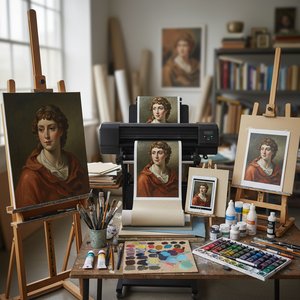
Reproductions d'Art : Exploration des Médiums Disponibles – Peinture à l'Huile, Impression sur Toile de Coton et Impressions Encadrées
: Reproductions d'art de qualité muséale (peinture à l'huile, impressions sur toile). Personnalisation & livraison mondiale. Idéal pour décorateurs et amateurs d'art exigeants.
De l'Esquisse Initiale à l'Héritage Durable : Exploration Approfondie du Processus de Reproduction Peinture à l'Huile
Découvrez l'art de la reproduction peinture à l'huile avec OriginalUniqueArt. Reproductions fidèles par des artistes experts, portraits personnalisés & conservation d'œuvres. Qualité garantie et héritage durable.

De la Photographie Instantanée au Portrait d'Atelier : La Renaissance Moderne de l'Effigie en Peinture à l'Huile
Redécouvrez l'art du portrait à l'huile ! Commandez une œuvre unique, réalisée par des artistes experts. Immortalisez votre ressemblance avec finesse et émotion. Conseils personnalisés & qualité garantie.
L'Héritage Durable de la Peinture à l'Huile Réalisée à la Main : Valeur Esthétique, Longévité et Résonance Émotionnelle
Découvrez l'héritage durable de la peinture à l'huile réalisée à la main. Expertise en conservation, restauration et achat d'œuvres uniques. Investissez dans un art authentique et intemporel.
Transformez votre NFT en chef-d’œuvre à l’huile : reproductions muséales de qualité supérieure et gains instantanés
Transformez votre NFT en une œuvre d'art à l'huile authentique grâce à OriginalUniqueArt.com. Nos artistes experts reproduisent les chefs-d'œuvre muséaux avec précision, garantissant qualité, valeur et satisfaction client. Investissez dans un héritage durable.
