
 Partager
 Partager
 Détails
 Guide imprimable

 Télécharger
 Articles similaires
 Voir le diaporama
 Statistiques
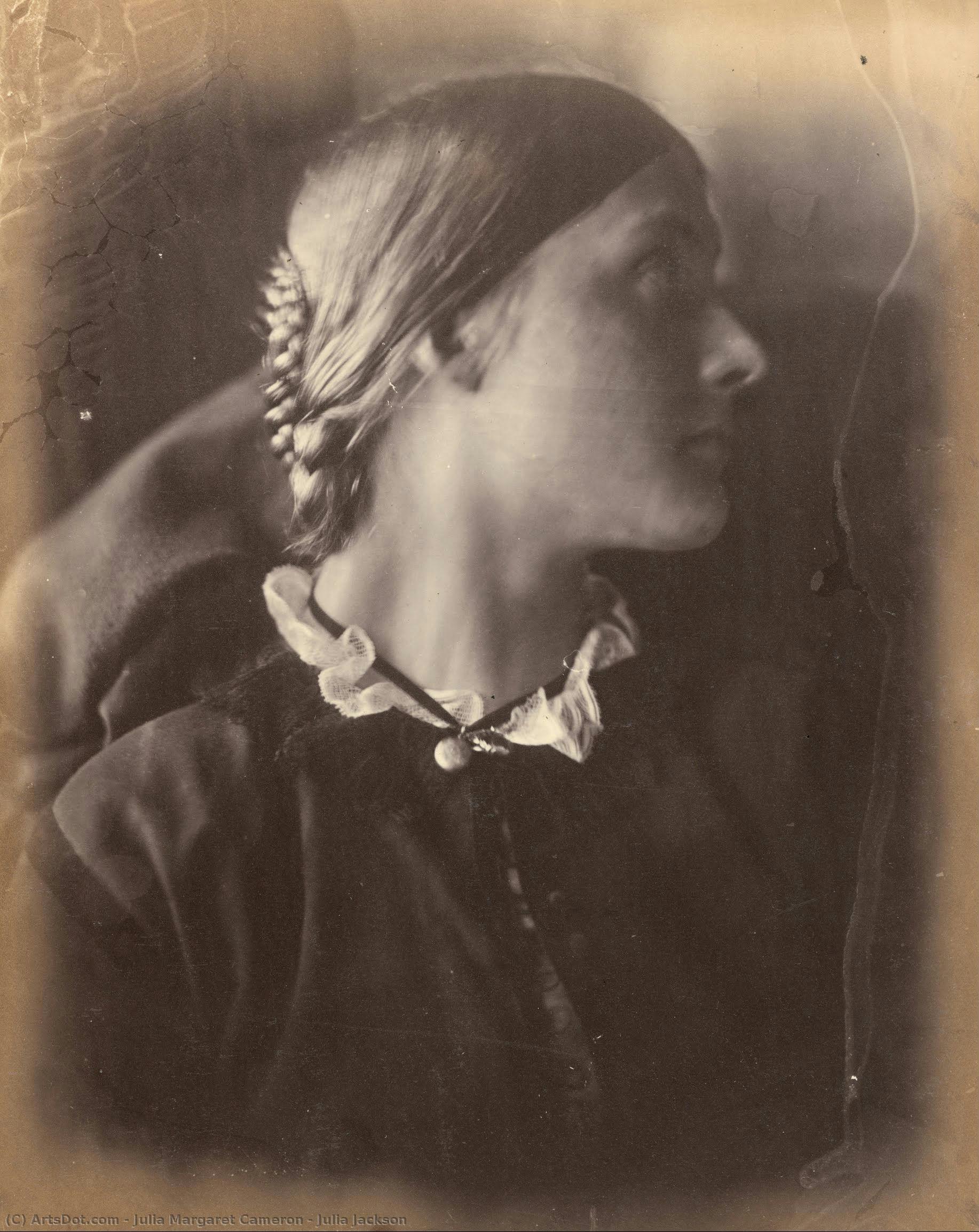
Julia Jackson
 Black and White Photography
- Photo
- Victorian Photography
 1864
1864- 19th Century
 24.0 x 19.0 cm
 National Gallery of Victoria
 Afficher la suite
Reproduction à l'huile faite à la main
Huile sur toile peinte à la main, avec cadre et dimensions personnalisés, réalisée sur commande par nos artistes. ( Passer au format impression Passer au format image numérique)




































Choisissez parmi nos formats prédéfinis qui respectent les proportions originales de l’œuvre.

Vous pouvez saisir vos propres dimensions pour l'adapter à un cadre ou à un espace spécifique. Si la taille sélectionnée ne correspond pas aux proportions de l'image d'origine, nous recadrerons l'œuvre ou prolongerons la peinture avec des éléments peints à la main supplémentaires. Une maquette numérique vous sera envoyée pour approbation avant le début de la production.
Veuillez noter que l'aperçu à l'écran ne reflète pas le recadrage ou l'extension réels. Seule la maquette montrera fidèlement la composition finale.
Bien que des tailles personnalisées soient disponibles, nous vous recommandons de sélectionner une dimension dans la liste prédéfinie afin de préserver les proportions d'origine.
Après la commande, l’équipe OriginalUniqueArt.com contactera le client par e-mail pour recueillir ses instructions et lui fournira une maquette d’aperçu
Livraison dans le monde entier () en 3 à 4 semaines au lieu des 5 semaines habituelles. (25 septembre). Aucun compromis sur la qualité.

Livraison express gratuite dans le monde entier

Toile de lin de haute qualité

Assurance transport complète

Garantie de remboursement des droits de douane

Garantie de fidélité des couleurs

Garantie de retour de 100 jours (uniquement en cas de défaut)

Garantie de remboursement à 100%

Tarifs dégressifs sur quantité
 L'option verre n'est disponible que pour les dimensions inférieures à 110 cm.

Julia Jackson
Technique de reproduction
Format de la reproduction
-


Prix total final
$ 300
A Visionary Encounter: The Soul Behind the Lens
In the soft, silvered shadows of 1864, Julia Margaret Cameron captured more than just a likeness; she captured an essence. This profound portrait of Julia Jackson stands as a testament to a unique bond between photographer and subject—a relationship defined by kinship and artistic obsession. As Cameron’s niece and godchild, the young Jackson was not merely a sitter but a muse, appearing in over fifty of the photographer's most celebrated works. In this particular frame, we witness the dawn of a woman who would later become the matriarch of the Bloomsbury Group, the mother of Virginia Woolf and Vanessa Bell. There is an undeniable gravity in her gaze, a quiet strength that transcends the boundaries of a simple photographic record, inviting the viewer into a private, intimate moment frozen in time.
The composition is masterfully orchestrated to draw the eye toward the subject's striking features. Cameron, a pioneer who defied the rigid, clinical standards of Victorian photography, utilized light not just to illuminate, but to sculpt. By allowing much of the face to recede into soft, velvety shadows, she emphasizes the attenuated and taut neck of the young woman, creating a sense of poetic tension. The interplay of light and dark—the chiaroscuro effect—lends the image a painterly quality, reminiscent of the Old Masters, yet it remains distinctly modern in its psychological intensity. This technique does not merely show us what Jackson looked like; it reveals the mystery of her character, suggesting a depth of thought and an enigmatic spirit that continues to fascinate the contemporary eye.
Technique and the Art of Imperfection
To look upon this work is to understand the revolutionary spirit of Julia Margaret Cameron. Eschewing the sharp, sterile clarity demanded by her contemporaries, Cameron embraced a soft focus and a tactile richness that gave her photographs a dreamlike, ethereal atmosphere. Working with the demanding collodion emulsion process, she navigated the technical challenges of long exposure times to achieve what she called "life-sized heads" that could startle the eye with wonder and delight. The texture of the print, even in reproduction, carries a weight of history, where every grain and shadow contributes to a sense of profound permanence.
For the discerning collector or interior designer, this piece offers a sophisticated anchor for any curated space. Its monochromatic palette provides a timeless elegance that complements both classical and modern decor. Whether placed in a sunlit gallery or a moody, library-inspired study, the portrait acts as a window into the 19th century, bringing with it an aura of intellectual depth and historical prestige. It is more than a decoration; it is an invitation to contemplate the fleeting nature of youth and the enduring power of the artistic gaze.
A Legacy of Light and Shadow
The emotional impact of this portrait lies in its ability to bridge the gap between the past and the present. There is a haunting beauty in the way Jackson’s features emerge from the darkness, a visual metaphor for the emergence of new ideas and generations. As we gaze upon her, we are reminded of the interconnectedness of art and life—how a single moment of photographic experimentation can preserve the spirit of an era. This work remains a cornerstone of photographic history, representing a pivotal moment when photography moved away from mere documentation and toward the realm of high art, capturing the very breath of the human soul.
Biographie de l'artiste
Premières années et Origines
Julia Margaret Cameron, née le 11 juin 1815 à Calcutta, en Inde, est issue d'une famille aristocratique. Ses parents étaient Adeline de l'Étang et James Pattle. Un fait notable est que sa grande-nièce était la célèbre romancière Virginia Woolf, ce qui témoigne du milieu privilégié dans lequel elle a grandi et qui a pu influencer ses aspirations artistiques futures.Carrière Photographique (1864-1875)
Sa carrière photographique débute à l'âge de 48 ans, lorsqu’elle reçoit un appareil photo en cadeau. Cette acquisition marque le début d'une période de onze années qui laissera une empreinte indélébile sur la photographie britannique. Son œuvre se caractérise par :- Des portraits de célébrités, démontrant sa capacité à saisir l'essence même de ses sujets.
- Des thèmes arthuriens et légendaires, reflétant son intérêt pour la mythologie et le folklore.
Style et Technique
L’approche innovante de Cameron en photographie se manifeste par :- Mise au point douce : Son utilisation délibérée de cette technique donne lieu à des portraits intimes et rapprochés, humanisant ses sujets.
- Manipulation du procédé collodion humide : Cela lui a permis de considérer la photographie comme un art et une science, la distinguant ainsi de ses contemporains.
Œuvres Notables et Héritage
Parmi les œuvres les plus notables de Cameron figurent :- Alfred, Lord Tennyson (1865) – Témoignage de sa capacité à capturer l'essence des figures littéraires britanniques.
- Influence sur la photographie moderne : Ses portraits rapprochés ont influencé des générations de photographes.
Collections et Expositions
Les œuvres de Cameron sont exposées dans divers musées, notamment :- La Ingram Collection of Modern British and Contemporary Art – Un musée renommé à Londres présentant un éventail varié d'art britannique moderne.
- Plymouth Museum and Art Gallery – Une institution culturelle à Plymouth, au Royaume-Uni, abritant une collection impressionnante d’œuvres d’art.
Conclusion
L'esprit pionnier de Julia Margaret Cameron en photographie britannique a eu un impact durable sur le monde de l'art. Ses techniques innovantes et ses portraits captivants continuent d'inspirer les artistes et les photographes. Pour découvrir davantage son œuvre ainsi que celle d’autres artistes notables, visitez https://OriginalUniqueArt.com/@/julia-margaret-cameron.
Julia Margaret Cameron
1815 - 1879 , Inde
En bref
- Date De Naissance: 11 juin 1815
- Lieu De Naissance: Calcutta, Inde
- Mouvement Artistique: Photographie victorienne
- Nationalité: Britannique
- Nom Complet: Julia Margaret Cameron
- Œuvres Notables: ['Alfred, Lord Tennyson (1865)']
Articles similaires
L'Esthétique Raffinée de l'Illustration Victorienne : Narration et Techniques Artistiques
Explorez l'esthétique raffinée de l'illustration victorienne : préraphaélisme, techniques gravuristiques et narration visuelle. Découvrez les maîtres artistes et leur héritage avec OriginalUniqueArt.
Les 10 Chefs-d'œuvre du XIXe Siècle : Artistes et Décor Intemporels
Plongez au cœur du XIXe siècle avec les 10 œuvres incontournables de Manet, Monet et Renoir. Découvrez l'histoire, les techniques et l'émotion derrière ces chefs-d'œuvre impressionnistes et réalistes. Trouvez votre reproduction idéale sur OriginalUniqueArt.com !
Les 10 Chefs-d'œuvre Dominés par le Noir : Art, Histoire & Décoration
Plongez dans l'univers fascinant des 10 plus beaux tableaux dominés par le noir. Découvrez les histoires, techniques et symbolisme de chefs-d'œuvre intemporels. Reproductions d'art de qualité musée sur !

Les 10 Chefs-d'œuvre Noirs : Peintures Célèbres et Décoration d'Intérieur
Plongez dans l'univers fascinant des 10 plus beaux tableaux noirs de l'histoire de l'art. Découvrez les secrets de Goya, Manet, Rothko et autres maîtres. Inspirez votre décoration intérieure avec !
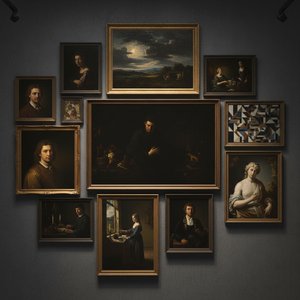
Les 10 Chefs-d'œuvre Dominés par le Noir de Fumée : Art & Décor Intemporels
Plongez dans l'univers fascinant des 10 plus beaux tableaux dominés par le noir de fumée. Découvrez Rembrandt, Goya et Manet… L’histoire, les techniques et l'impact émotionnel de ces chefs-d'œuvre intemporels. Explorez la collection complète sur .


![[Julia Jackson]](/media/artworks/images-thumb/38/f1/38f1667da1e9e5ced766b2acd175f4c6.jpg)