

 Aperçu en situation
 Envoyer
 Partager
 Détails de l'œuvre

 Télécharger
 Articles similaires
 Radiographie
 Diaporama
Marine


 Lire la suite
Reproduction à l'huile faite à la main
Huile sur toile peinte à la main, avec cadre et dimensions personnalisés, réalisée sur commande par nos artistes. ( Commander l'impression Acheter l'image haute résolution)




P118B $10

P118H $10

P118W $10

P438Z $10

P508JH $12

P508YH $12

P805H $10

P805Z $10

P919BZ $10

P919G $10

P919XJ $10

P959ZH $10

P968JZ $12

W106C $8

W218G $10

W218JH $8

W218Y $10

W307PJ $10

W316G $10

W316PJ $8

W316Y $10

W398PJ $8

W4111J $10

W500HY $15

W500JH $15

W692G $12

W849H $8

W940BG $15

W953PJ $8




Choisissez parmi nos formats prédéfinis qui respectent les proportions originales de l’œuvre.

Vous pouvez saisir vos propres dimensions pour l'adapter à un cadre ou à un espace spécifique. Si la taille sélectionnée ne correspond pas aux proportions de l'image d'origine, nous recadrerons l'œuvre ou prolongerons la peinture avec des éléments peints à la main supplémentaires. Une maquette numérique vous sera envoyée pour approbation avant le début de la production.
Veuillez noter que l'aperçu à l'écran ne reflète pas le recadrage ou l'extension réels. Seule la maquette montrera fidèlement la composition finale.
Bien que des tailles personnalisées soient disponibles, nous vous recommandons de sélectionner une dimension dans la liste prédéfinie afin de préserver les proportions d'origine.
Après la commande, l’équipe OriginalUniqueArt.com contactera le client par e-mail pour recueillir ses instructions et lui fournira une maquette d’aperçu
Livraison dans le monde entier () en 3 à 4 semaines au lieu des 5 semaines habituelles. (7 septembre). Aucun compromis sur la qualité.

Livraison express gratuite dans le monde entier

Toile de lin de qualité supérieure

Assurance transport complète

Garantie de remboursement des droits de douane

Garantie de fidélité des couleurs

Politique de retour de 100 jours (uniquement en cas de défaut)

Garantie de remboursement à 100%

Offre de tarifs dégressifs
 L'option verre n'est disponible que pour les dimensions inférieures à 110 cm.

Marine
Technique de reproduction
Format de la reproduction
-


Prix total
$ 300
A Tempestuous Soul: Unveiling Jules Dupré’s “Marine”
Jules Dupré’s “Marine,” painted circa 1870-75, isn’t merely a depiction of a seascape; it's an immersion into the raw, untamed heart of nature. Born in Nantes and deeply influenced by the Barbizon School’s commitment to direct observation, Dupré eschewed the idealized landscapes favored by some contemporaries, instead choosing to confront the dramatic power of storms and turbulent seas. This painting isn’t a postcard view; it's a visceral experience, a testament to the artist’s ability to capture not just the appearance of a storm, but its underlying emotional force.
The composition immediately commands attention with its dominance of the sky – a swirling vortex of grey, blue, and bruised rose. Diagonal brushstrokes, thick and assertive, convey an incredible sense of movement, as if the very air is charged with electricity. Below this tumultuous expanse lies the sea, rendered in equally dynamic fashion; choppy waves crash against the shore, reflecting the drama above. A lone sailboat, a tiny speck on the horizon, serves as a poignant reminder of human vulnerability within this immense and unforgiving environment. The strategic placement of the boat isn’t arbitrary; it subtly suggests resilience – a small vessel battling against overwhelming forces.
The Barbizon Legacy: Earth Tones and Emotional Resonance
Dupré's work firmly places him within the Barbizon School, an artistic movement that prioritized direct observation of nature over academic precision. Unlike many artists who sought to create polished, idealized landscapes, Dupré embraced a more rugged and emotive approach. His palette is deliberately restrained – muted browns, greys, and blues dominate, creating a sense of somber grandeur. This isn’t a celebration of beauty in the conventional sense; it's an exploration of the sublime—that feeling of awe and perhaps even terror inspired by the vastness and power of nature. The use of color is particularly noteworthy: the dark, brooding tones contribute to the painting’s overall mood of melancholy and intensity.
The technique employed is equally significant. Dupré utilizes a layering approach, building up the paint in thick impasto strokes that create a palpable sense of texture. Visible brushwork isn't concealed; it’s an integral part of the painting’s expressive power. The artist doesn’t shy away from roughness or imperfection, mirroring the chaotic energy of the storm itself. This commitment to directness and materiality is characteristic of the Barbizon School and distinguishes Dupré’s work from more polished academic styles.
Symbolism in Storm: Resilience and Human Scale
Beyond its technical merits, “Marine” resonates with profound symbolic meaning. The storm itself can be interpreted as a metaphor for life's challenges—the unpredictable forces that threaten to overwhelm us. The small sailboat, bravely navigating the turbulent waters, represents human resilience, our capacity to endure hardship and persevere in the face of adversity. It’s a subtle but powerful reminder that even in the most daunting circumstances, there is always room for hope and determination.
Furthermore, Dupré's choice to depict a relatively small figure within such a vast landscape highlights the scale of nature and the relative insignificance of human existence. This perspective invites contemplation on our place in the universe—a humbling reminder of both our vulnerability and our capacity for courage. The painting’s emotional impact is undeniably profound, evoking feelings of awe, melancholy, and perhaps even a touch of fear.
A Window into the Barbizon Soul
Jules Dupré's “Marine” stands as a powerful testament to the Barbizon School’s commitment to capturing the raw emotion of nature. It is not simply a landscape painting; it is an exploration of human resilience, a meditation on the sublime, and a window into the soul of one of France’s most compelling artists. Reproductions of this work offer a chance to bring this dramatic scene into any space, inviting contemplation and reminding us of the enduring power of nature's beauty—and its formidable strength.
Biographie de l'artiste
L'Âme Dramatique de Barbizon
Jules Dupré (1811–1889) s'impose comme une figure emblématique de l'École de Barbizon, un mouvement artistique qui prônait l'observation brute et la résonance émotionnelle dans la peinture de paysage. Contrairement à ses contemporains tels que Corot, qui recherchaient souvent une beauté lyrique et une tranquillité sereine, Dupré se confrontait à la face la plus sombre et la plus tempétueuse de la nature. Il possédait une capacité unique à capturer la fureur des tempêtes, la grandeur mélancolique du crépuscule et l'énergie implacable des éléments, transmettant ces expériences avec une intensité inégalée. Né à Nantes, en France, le voyage artistique de Dupré a débuté au cœur d'une fascination naissante pour le monde naturel et sa capacité à évoquer des sentiments humains profonds et souvent turbulents.
Sa jeunesse lui a légué un socle d'attention méticuleuse aux détails et un amour du savoir-faire, des qualités affinées par l'entreprise de fabrication de porcelaine de son père. Cette expérience formatrice allait plus tard se traduire dans ses propres aspirations artistiques, comme en témoignent particulièrement ses premières œuvres explorant les subtilités de la décoration céramique. En tant qu'apprenti décorateur de porcelaine, il a appris la discipline des lignes fines et des textures, un ensemble de compétences qui allait finalement évoluer vers une maîtrise magistrale de la profondeur atmosphérique et des formes organiques.
Une Vision Façonnée par l'Orage et le Ciel
La trajectoire de la carrière de Dupré fut irrévocablement marquée par sa rencontre avec les toiles révolutionnaires de John Constable. Cette exposition aux traditions du paysage anglais a allumé en lui le désir de capturer l'essence même du dynamisme de la nature — le mouvement incessant des feuillages sous l'effet du vent et le jeu dramatique de l'ombre et de la lumière durant les heures les plus volatiles de la journée. En voyageant en Grande-Bretagne en 1831, Dupré a mené des études profondes de ces maîtres anglais, revenant en France avec un répertoire d'images qui allait redéfinir son approche du paysage.
Il trouva une inspiration particulière dans les districts côtiers autour de Southampton et Plymouth. Ces vastes étendues d'eau, reflétant des cieux tourmentés, lui offrirent le laboratoire parfait pour étudier le mouvement tempétueux des nuages d'orage et le déferlement des mers. Ses peintures de cette période ne sont pas de simples représentations de paysages ; elles sont des expressions viscérales de l'humeur et du sentiment, imprégnées d'un sens palpable du drame et même de la tristesse. En adoptant l'esthétique de Barbizon, Dupré a privilégié des palettes de couleurs expressives et des coups de pinceau audacieux plutôt que des représentations idéalisées ou polies, permettant à la texture même de la peinture de refléter la rudesse de la terre.
L'Héritage du Maître de Barbizon
En tant que figure clé du groupe de Barbizon, Dupré tissa des liens étroits avec d'autres peintres légendaires, notamment Théodore Rousseau. Son ascension au sein de l'institution artistique française fut jalonnée d'étapes significatives, telles que son admission au Salon et l'obtention de distinctions officielles par le biais de médailles pour ses paysages. Son œuvre est devenue synonyme d'une certaine harmonie colorée sonore et résonnante, où la lumière d'un soleil couchant ou la noirceur d'une tempête approchante pouvait être ressentie par le spectateur autant qu'elle était vue.
Aujourd'hui, Jules Dupré est célébré comme l'un des paysagistes français les plus influents du XIXe siècle. Sa contribution à l'art réside dans sa capacité à combler le fossé entre l'observation pure et l'émotion romantique. À travers des œuvres telles que La Petite Charrette, Vaches traversant un gué, et ses représentations évocatrices de paysages fluviaux, il a enseigné aux générations d'artistes que la nature n'est pas seulement un sujet à peindre, mais une force puissante à expérimenter. Son héritage reste gravé dans les textures atmosphériques denses et les ciels dramatiques et vibrants qui continuent de captiver l'imagination moderne.

Jules Dupré
1811 - 1889 , France
L'essentiel de l'artiste
- Artistic Movement Or Style: Barbizon School
- Artists Who Influenced This Artist: ['John Constable']
- Date Of Birth: Nantes, France (1811)
- Date Of Death: October 6, 1889
- Full Name: Jules Dupré
- Nationality: French
- Notable Artworks:
- Morning and Evening at the Louvre
- Crossing the Bridge in the Wallace Collection
- Place Of Birth: France
Articles connexes
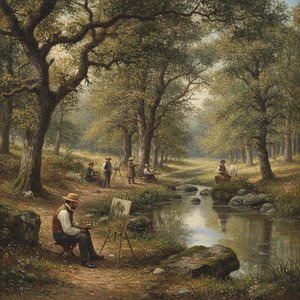
The Barbizon School: The Revolution of Naturalism and the Birth of Plein Air Landscape Painting
Explore the profound impact of the Barbizon School on landscape painting. Discover how masters like Rousseau and Corot revolutionized art through plein air naturalism, moving from academic idealism to the authentic beauty of the French countryside.
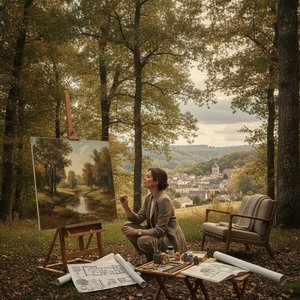
The Barbizon School: A Professional Guide to Naturalism and Landscape Mastery for Interior Designers
Explore the Barbizon School's mastery of naturalism. An expert guide for hotel designers and procurement managers on sourcing high-quality landscape reproductions to elevate hospitality and corporate interiors with authentic, large-scale fine art solutions.

Evoking Nature's Sublime: A Comprehensive Exploration of 19th-Century Landscape Painting
Explore the captivating world of 19th-century landscape painting! Discover renowned artists like Friedrich & Monet, key movements, and find the perfect artwork to bring nature's serenity into your home. Expert insights at OriginalUniqueArt.
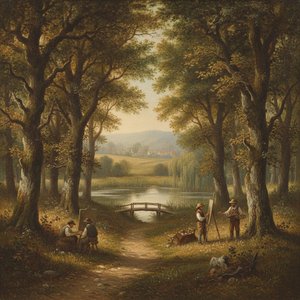
The Barbizon School: Discovering the Masters of Naturalistic Landscape Painting and the Birth of Realism
Explore the revolutionary Barbizon School and its masters, from Corot to Rousseau. Discover how these pioneers of plein air painting redefined landscape art through naturalism. Find museum-quality hand-painted reproductions and expert art insights at OriginalUniqueArt.com.

Les 10 Chefs-d'œuvre du Paysage Romantique : Artistes et Décor d'Intérieur
Plongez dans l'émotion du Romantisme avec les 10 plus beaux paysages de Friedrich, Turner & Delacroix. Découvrez leur histoire et trouvez l'inspiration déco idéale sur OriginalUniqueArt.com !
