

 Aperçu en situation
 Envoyer
 Partager
 Détails de l'œuvre
 Guide
Guide

 Télécharger l'image
 Articles similaires
 Radiographie
 Diaporama
 Statistiques
Pas Mèche


 Lire la suite
Giclées et impressions d'art
Impressions giclées ou sur toile de qualité musée, avec une production rapide et des finitions au choix. ( Commander la reproduction peinte à la main Passer au format numérique)




P118B €10

P118H €10

P118W €10

P438Z €10

P508JH €12

P508YH €12

P805H €10

P805Z €10

P919BZ €10

P919G €10

P919XJ €10

P959ZH €10

P968JZ €12

W106C €8

W218G €10

W218JH €8

W218Y €10

W307PJ €10

W316G €10

W316PJ €8

W316Y €10

W398PJ €8

W4111J €10

W500HY €15

W500JH €15

W692G €12

W849H €8

W940BG €15

W953PJ €8




Choisissez parmi nos formats prédéfinis qui respectent les proportions originales de l’œuvre.

Saisissez la largeur et la hauteur souhaitées pour qu'elles s'adaptent à votre cadre ou à votre mur. Une impression peut être recadrée, mais jamais agrandie au-delà de l'image originale ; ainsi, un format de forme différente entraînera la perte d'une partie de l'image. Nous vous envoyons une maquette numérique pour approbation avant toute impression. L'image présentée sur cette page ne montre pas le recadrage réel — seule la maquette le permet.
Livraison dans le monde entier () en 2 semaines au lieu des 4/5 semaines habituelles. (26 octobre)

Livraison express gratuite dans le monde entier

Toile de lin de qualité supérieure

Assurance transport complète

Garantie de remboursement des droits de douane

Garantie de fidélité des couleurs

Politique de retour de 100 jours (uniquement en cas de défaut)

Garantie de remboursement à 100%

Offre de tarifs dégressifs
 L'option verre n'est disponible que pour les dimensions inférieures à 110 cm.

Pas Mèche
Giclées et impressions d'art
Format de la reproduction
-


Prix total
€ 70
A Moment of Rural Grace: Jules Bastien-Lepage’s *Pas Mèche*
Jules Bastien-Lepage's 1882 painting, *Pas Mèche* (which translates to "No Comb"), offers a poignant glimpse into the heart of rural France at the close of the 19th century. This captivating portrait of a young boy with a fishing rod is more than just a depiction of childhood; it’s a carefully constructed meditation on authenticity, connection to the land, and the fleeting beauty of everyday life – hallmarks of Bastien-Lepage's pioneering Naturalism.
- Subject Matter: The central figure, a boy seemingly lost in his task, embodies the spirit of youthful engagement with nature. His determined posture and grip on the fishing rod speak to an unburdened joy and a deep connection to the surrounding environment.
- Setting & Context: The painting’s location – a roadside pathway near what appears to be a village – immediately grounds the scene in a specific time and place. This was a period of significant social change in France, with artists like Bastien-Lepage striving to capture the realities of rural life before it disappeared entirely.
- The Artist’s Vision: Bastien-Lepage's approach aligns perfectly with the Naturalist movement, rejecting idealized representations and instead focusing on honest, unvarnished portrayals of ordinary people and their surroundings. He sought to depict not just what he *saw*, but what he *felt* about what he saw.
Technical Brilliance: Bastien-Lepage’s Naturalist Style
Bastien-Lepage was renowned for his meticulous technique, a blend of Realism and Impressionistic influences that resulted in remarkably detailed yet luminous paintings. He employed a layered approach to painting, building up thin glazes of color to achieve subtle tonal variations and an almost velvety texture. Notice the careful rendering of light and shadow, particularly on the boy’s jacket and the fishing rod – details that contribute significantly to the work's realism.
- Color Palette: The painting utilizes a restrained yet harmonious color palette dominated by earthy tones—ochres, browns, and greens—reflecting the natural environment.
- Brushwork: His brushstrokes are controlled and precise, contributing to the overall sense of stillness and quiet contemplation. He avoided broad, visible strokes characteristic of some Impressionists, favoring a more deliberate and considered approach.
- Light & Shadow: Bastien-Lepage’s masterful use of light creates a strong sense of depth and volume, further enhancing the realism of the scene.
Symbolism and Emotional Resonance
*Pas Mèche* transcends a simple portrait; it carries significant symbolic weight. The boy's solitary activity represents a connection to tradition, a rejection of modern distractions, and an appreciation for the simple pleasures of life. The inclusion of other villagers in the background subtly reinforces this theme of community and shared experience.
- The Fishing Rod: More than just a tool, the fishing rod symbolizes patience, perseverance, and a connection to the natural world – values central to Bastien-Lepage’s philosophy.
- Youth & Innocence: The boy's youthful appearance evokes feelings of innocence, vulnerability, and hope.
- Nostalgia & Loss: Given Bastien-Lepage’s tragically short life, the painting can also be interpreted as a poignant reflection on lost opportunities and the fleeting nature of beauty.
A Timeless Masterpiece – Perfect for Your Collection
This hand-painted reproduction captures the essence of Jules Bastien-Lepage's artistic genius, offering a stunning addition to any art collection or interior design scheme. Its evocative subject matter and masterful technique make it a timeless piece that will continue to captivate viewers for generations to come. Whether you are an admirer of Naturalism, a collector of French Impressionist works, or simply seeking a beautiful and inspiring artwork, *Pas Mèche* is sure to exceed your expectations. OriginalUniqueArt offers museum-quality reproductions meticulously crafted to faithfully replicate the original’s beauty and detail.
Questions et réponses
Quelle émotion les couleurs de «Pas Mèche» de Jules Bastien-Lepage dégagent-elles ?
La palette Earthy de «Pas Mèche» de Jules Bastien-Lepage s'harmonise avec son ton émotionnel Reflective. La couleur est l'un des moyens par lesquels une œuvre transmet une émotion.
Quelle est la technique utilisée pour «Pas Mèche» de Jules Bastien-Lepage ?
« Pas Mèche » est réalisé en Oil On Canvas.
Où et pour quel usage l'œuvre "Pas Mèche" est-elle recommandée ?
« Pas Mèche » est idéal pour Reflective et s'intègre parfaitement dans une Living Room.
Biographie de l'artiste
Jules Bastien-Lepage : Pionnier du Naturalisme
- Né: Damvillers, France (1848)
- Décédé: 1884
Jules Bastien-Lepage fut un peintre français étroitement associé au début du naturalisme, un style artistique qui s'est développé à partir du mouvement réaliste et a ouvert la voie au développement de l'impressionnisme. Ses représentations en plein air de la vie paysanne dans la campagne furent très influentes sur de nombreux artistes internationaux.
Jeunesse et Formation
Bastien-Lepage est né en 1848 dans le village de Damvillers, Meuse, où il a passé son enfance. Il a commencé sa formation artistique sous la direction de son père, qui était également artiste, avant de déménager à Paris en 1867 pour étudier à l'École des Beaux-Arts. Là, il a travaillé sous Alexandre Cabanel et a développé ses compétences en tant que peintre.
Style Artistique et Influences
Le style de Bastien-Lepage se caractérise par des coups de pinceau complexes et une palette pure baignée d'une lumière naturelle chaude. Il s’est principalement concentré sur les banlieues occidentales de Paris, peignant en plein air selon la tradition du plein-air. Son travail a été influencé par le mouvement réaliste, mais il a également puisé son inspiration auprès d'autres artistes, notamment George Clausen et Tom Roberts.
- Caractéristiques Principales: Coups de pinceau complexes, palette pure, lumière naturelle chaude, peinture en plein air.
- Influences: Mouvement Réaliste, George Clausen, Tom Roberts.
Œuvres Majeures et Reconnaissance
Bastien-Lepage a obtenu un premier succès en 1874 avec son tableau "Portrait de mon Grand-Père", qui a suscité une grande admiration critique et a reçu une médaille de troisième classe. Il a également remporté la renommée pour ses peintures historiques, notamment “Jeanne d’Arc”, aujourd'hui conservée au Musée d'Orsay à Paris.
- Tableaux Notables:
- "Portrait de mon Grand-Père" (1874)
- “Jeanne d’Arc” (Musée d’Orsay, Paris)
- "La Fauconnerie" – reconnu comme le chef du courant naturaliste émergent.
- "Octobre - cueillette des pommes de terre"
- "A la moisson"
- "Laura, Lady Alma Tadema"
- "Sarah Bernhardt" (1879) – un portrait qui lui a valu d'importantes commandes.
- "Paysage hivernal au fusain"
Après le succès de "La Fauconnerie", Bastien-Lepage a été reconnu comme le chef du courant naturaliste émergent. En 1883, un critique pouvait affirmer que « tout le monde peint aujourd'hui tellement comme M. Bastien-Lepage que M. Bastien-Lepage semble peindre comme le monde entier ». Cette renommée lui a valu d'importantes commandes, notamment un portrait de Sarah Bernhardt en 1879.
Le Naturalisme et l’Héritage
Le naturalisme était un mouvement artistique qui est né comme une réaction à la révolution industrielle et à son impact sur la société. Il représentait la classe ouvrière et les pauvres, se concentrant sur leurs luttes et leurs difficultés. Le mouvement a commencé en France et s'est répandu dans toute l'Europe, devenant largement considéré comme un style artistique majeur.
- Signification: Bastien-Lepage fut une figure importante dans le développement du naturalisme et de l'impressionnisme. Ses peintures continuent d’être célébrées pour leur beauté et leur profondeur émotionnelle, et son influence peut être observée chez de nombreux artistes qui l'ont suivi.

Jules Bastien-Lepage
1848 - 1884 , France
L'essentiel de l'artiste
- Artistes Influents:
- Alexandre Cabanel
- George Clausen
- Tom Roberts
- Date De Décès: 1884
- Date De Naissance: 1848
- Influences Artistiques: ['Impressionnisme']
- Lieu De Naissance: Damvillers, France
- Mouvement Artistique: Naturalisme, Réalisme
- Nationalité: Française
- Nom Complet: Jules Bastien-Lepage
- Oeuvres Notables:
- Portrait de mon grand-père
- Jeanne d'Arc
- La moisson
- Sarah Bernhardt
Articles connexes
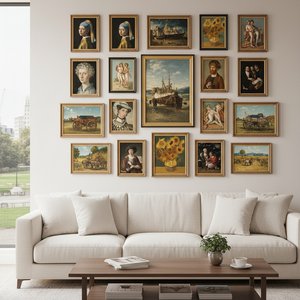
Les 25 Chefs-d'œuvre de la National Gallery : Art, Histoire & Décor d'Intérieur
Plongez au cœur des 25 chefs-d'œuvre de la National Gallery Londres : Van Gogh, Monet, Rembrandt… Découvrez l'histoire fascinante de ces tableaux célèbres et trouvez l'inspiration pour une décoration intérieure raffinée. Reproductions d'art de qualité muséale sur OriginalUniqueArt.com.
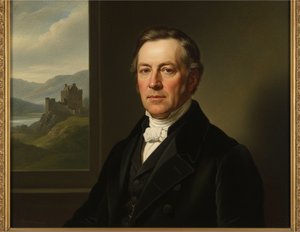
Henry Raeburn: A Scottish Portraitist's Mastery of Light, Character & National Identity
Explore the life & work of Henry Raeburn, a master Scottish portraitist. Discover his innovative techniques, captivating portraits of the Enlightenment era, and lasting legacy in art history. Learn more at OriginalUniqueArt.
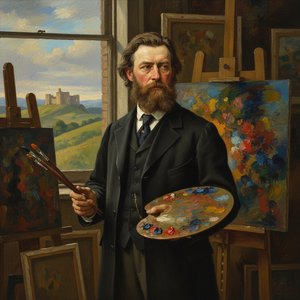
George Paul Chalmers: Rediscovering the Angus Rembrandt & Scottish Colourist Roots
Explore the captivating world of George Paul Chalmers (1833-1878), a pivotal Scottish painter. Discover his landscapes, portraits & connection to the Aesthetic Movement and Colourists. Learn about this 'Angus Rembrandt's' legacy with OriginalUniqueArt.

William Brassey Hole: A Victorian Master of Narrative Watercolour & Scottish Life
Explore the captivating paintings of William Brassey Hole, a Victorian master renowned for his dramatic biblical scenes, Scottish landscapes & industrial life. Discover his technique and lasting legacy.
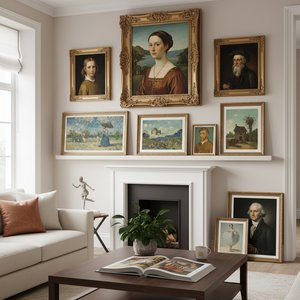
Les 25 Chefs-d'œuvre Incontournables de la National Gallery of Art : Peintures et Décor d'Exception
Plongez au cœur des 25 chefs-d'œuvre de la National Gallery of Art, Washington ! Découvrez l'histoire fascinante de Cézanne, Matisse, Picasso et bien d'autres. Trouvez l'inspiration déco et admirez les reproductions tableaux exceptionnelles sur OriginalUniqueArt.com.


