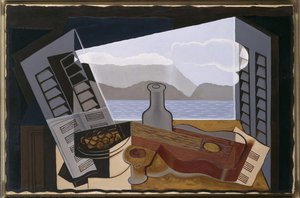
Aperçu en situation
 Partager
 Partager
 Détails
 Guide imprimable

 Télécharger
 Articles similaires
 Radiographie
 Voir le diaporama
 Statistiques
The Miller
 Huile sur toile
- Art mural
- Cubism
 1918
1918- Moderne
 100.0 x 81.0 cm
 Afficher la suite
Giclées et impressions d'art
Impressions giclées ou sur toile de qualité musée, avec une production rapide et des finitions au choix. ( Acheter la peinture faite à la main Passer au format image numérique)




P118B €10

P118H €10

P118W €10

P438Z €10

P508JH €12

P508YH €12

P805H €10

P805Z €10

P919BZ €10

P919G €10

P919XJ €10

P959ZH €10

P968JZ €12

W106C €8

W218G €10

W218JH €8

W218Y €10

W307PJ €10

W316G €10

W316PJ €8

W316Y €10

W398PJ €8

W4111J €10

W500HY €15

W500JH €15

W692G €12

W849H €8

W940BG €15

W953PJ €8




Choisissez parmi nos formats prédéfinis qui respectent les proportions originales de l’œuvre.

Saisissez la largeur et la hauteur souhaitées pour qu'elles s'adaptent à votre cadre ou à votre mur. Une impression ne peut être que découpée, elle ne peut jamais être agrandie au-delà de l'image originale ; ainsi, un format de forme différente entraînera la perte d'une partie de l'image. Nous vous envoyons une maquette numérique pour approbation avant toute impression. L'image présentée sur cette page ne montre pas le recadrage réel — seule la maquette le permet.
Livraison dans le monde entier () en 2 semaines au lieu des 4/5 semaines habituelles. (24 octobre)

Livraison express gratuite dans le monde entier

Toile de lin de haute qualité

Assurance transport complète

Garantie de remboursement des droits de douane

Garantie de fidélité des couleurs

Garantie de retour de 100 jours (uniquement en cas de défaut)

Garantie de remboursement à 100%

Tarifs dégressifs sur quantité
 L'option verre n'est disponible que pour les dimensions inférieures à 110 cm.

The Miller
Giclées et impressions d'art
Format de la reproduction
-


Prix total final
€ 70
The Geometry of Vision: Exploring Juan Gris's The Miller
To stand before Juan Gris’s The Miller is not merely to observe a painting; it is to step into a meticulously constructed intellectual space where reality itself has been disassembled and reassembled. Created in 1918, this seminal work stands as a profound testament to the power of Cubism—an art movement that dared to shatter the polished veneer of traditional representation. Gris, deeply influenced by the revolutionary breakthroughs of Picasso and Braque, channeled his own analytical mind, honed perhaps even during his early studies in engineering, into a visual language that is both rigorously structured and breathtakingly dynamic. The painting confronts the viewer with a subject—a seated figure at what appears to be an instrument—but renders it through a prism of geometric abstraction.
Mastery of Synthetic Cubism
Technically speaking, The Miller is a quintessential example of Synthetic Cubism. Unlike earlier explorations that merely fragmented forms, Gris’s approach here emphasizes the construction itself. Observe how the figure and its surroundings are broken down into overlapping planes, sharp angles, and simplified geometric components. The artist does not depict what he sees in a single glance; rather, he presents multiple viewpoints simultaneously, forcing the eye to reconcile disparate facets of existence on a single canvas. This masterful layering creates an illusion of depth that is achieved not through traditional linear perspective, but through careful juxtaposition and overlapping forms. The color palette supports this intellectual rigor: warm oranges, earthy browns, and sunny yellows anchor the composition, providing a vibrant counterpoint to cooler blues and grays, all bound together by sharply defined, almost architectural lines.
Symbolism and the Subjective Experience
Beyond its formal brilliance, The Miller invites contemplation on the nature of perception. The solitary figure, enveloped within this geometric matrix, can be read as a profound meditation on consciousness itself. Cubism, at its heart, was an attempt to map the subjective experience—the way our minds process time and space, which is inherently non-linear. Gris seems to suggest that reality is not a single, fixed moment, but rather a complex interplay of angles, memories, and simultaneous perspectives. For the collector or designer, this translates into an object that sparks conversation, suggesting depth and intellectual curiosity within any curated setting.
An Enduring Presence for Modern Interiors
For those seeking art that speaks to both history and modernity, The Miller offers unparalleled resonance. Its bold structure and controlled vibrancy make it a spectacular focal point. While the subject matter is deeply rooted in early 20th-century avant-garde movements, its clean lines and sophisticated color balance allow it to integrate seamlessly into contemporary interiors—be they minimalist galleries or richly decorated drawing rooms. Owning a reproduction of this work is acquiring more than just an image; it is adopting a piece of art history that celebrates the triumph of intellect over mere imitation, offering a permanent visual dialogue with one of the most innovative periods in human artistic endeavor.
Questions et réponses
Dans quelle pièce est-il suggéré d'exposer « The Miller », compte tenu de sa palette ?
Les couleurs Sombre et profond de «The Miller» de Juan Gris s'accordent parfaitement avec l'espace recommandé : une Espaces de détente.
En quelle année "The Miller" a-t-il été réalisé ?
«The Miller» date de 1918. Cette date inscrit l'œuvre dans la carrière de Juan Gris ainsi que dans son époque.
Comment les couleurs de «The Miller» de Juan Gris se rapportent-elles à l'émotion qui s'en dégage ?
La palette Sombre et profond de «The Miller» de Juan Gris s'harmonise avec son ton émotionnel Réflexif. La couleur est l'un des moyens par lesquels une œuvre transmet une émotion.
Biographie de l'artiste
Juan Gris : Pionnier du Cubisme
- Né : 23 mars 1887, Madrid, Espagne
- Décédé : 11 mai 1927
Jeunesse et Développement Artistique
José Victoriano González-Pérez, connu sous le nom de Juan Gris, est né à Madrid, en Espagne. Sa jeunesse a été marquée par des études d'ingénierie à l’École des Arts et Sciences de 1902 à 1904. Durant cette période, il contribuait avec des dessins à des périodiques locaux, démontrant un talent précoce pour la représentation visuelle. De 1904 à 1905, Gris a étudié la peinture avec José Moreno Carbonero, perfectionnant ainsi ses compétences artistiques. En 1905, il adopta le pseudonyme Juan Gris, un nom qui deviendrait synonyme de son style distinctif.
Influences Parisiennes et l'Émergence du Cubisme
Un moment décisif dans la carrière de Gris survint en 1906 lorsqu’il déménagea à Paris. Ce déménagement l’exposa à une communauté artistique vibrante, où il se lia d’amitié avec des figures influentes telles que Henri Matisse, Georges Braque et Fernand Léger. Il fut profondément influencé par Pablo Picasso, soumettant initialement des illustrations humoristiques à des revues comme *L'Assiette au Beurre*, *Le Rire*, *Le Charivari* et *Le Cri de Paris*. Vers 1910, Gris se consacra sérieusement à la peinture, se dévouant au développement d’un style cubiste personnel. Il s’éloigna de l’illustration satirique pour adopter des compositions plus abstraites.
Œuvres Clés et Style Artistique
La production artistique de Juan Gris se caractérise par plusieurs éléments clés :
- Clarté et Ordre : Son œuvre mettait l’accent sur la clarté et l’ordre, influençant le style puriste défendu par Amédée Ozenfant et Charles Edouard Jeanneret (Le Corbusier).
- Structure Géométrique : La « période cristalline » de Gris, illustrée par des œuvres telles que *Nature morte devant une fenêtre ouverte* et *Place Ravignan* (1915), présentait une structure géométrique forte.
- Cubisme Synthétique : Après 1913, Gris adopta le cubisme synthétique, utilisant intensivement des techniques comme le papier collé ou le collage. Cela impliquait d’incorporer des matériaux du monde réel dans ses peintures, ajoutant texture et profondeur.
Parmi ses œuvres notables figurent :
- Guitare devant la mer (1925) : Démontre sa simplicité et son adhésion aux principes cubistes.
- Hommage à Pablo Picasso (1912) : Sa première exposition au Salon des Indépendants, témoignant de sa reconnaissance croissante dans le monde artistique.
Héritage et Importance Historique
La contribution de Juan Gris au cubisme est significative. Il a dépassé la phase analytique initiale du mouvement pour adopter une approche plus structurée et synthétique. Son insistance sur la clarté, les formes géométriques et l’incorporation d’objets du quotidien dans ses compositions l'ont établi comme une figure de proue de l'art du XXe siècle. Son œuvre continue d'être célébrée pour sa rigueur intellectuelle et sa beauté esthétique, influençant les générations futures d'artistes.

Juan Gris
1887 - 1927 , Espagne
En bref
- Artistes Influents:
- Pablo Picasso
- Georges Braque
- Henri Matisse
- Date De Décès: 11 mai 1927
- Date De Naissance: 23 mars 1887
- Influences Artistiques:
- Amédée Ozenfant
- Le Corbusier
- Lieu De Naissance: Madrid, Espagne
- Mouvement Artistique: Cubisme, Cubisme synthétique
- Nationalité: Espagnole
- Nom Complet: Juan Gris
- Oeuvres Notables:
- Guitare devant la mer
- Hommage à Picasso
- Nature morte Place Ravignan
Articles connexes

Abstraction Géométrique : Les 10 Chefs-d'œuvre qui ont Marqué l'Histoire de l'Art
Plongez au cœur de l'abstraction géométrique avec OriginalUniqueArt.com ! Découvrez les 10 œuvres majeures de Mondrian, Malevitch et Kandinsky qui ont révolutionné l'art moderne. Inspirez votre décoration intérieure avec des reproductions de tableaux exceptionnelles. Explorez la collection en ligne !
Cubism Unveiled: How Picasso and Braque Redefined Reality Through Geometric Abstraction
Explore the revolutionary world of Cubism. Discover how masters Pablo Picasso and Georges Braque dismantled reality through geometric abstraction to redefine modern art history.
Juan Gris: Cubist Deconstruction & Synthesis – A Comprehensive Exploration
Explore the revolutionary art of Juan Gris – a master of Cubism. Discover his unique approach to deconstruction, vibrant Synthetic Cubist works, and lasting influence on modern art. Expert analysis for collectors.
Déconstruction de la réalité : L'impact révolutionnaire du cubisme sur l'art du XXe siècle
Explorez l'impact révolutionnaire du cubisme sur l'art moderne. Découvrez Picasso, Braque et les maîtres de ce mouvement clé. Guide pour collectionneurs éclairés.
Deconstructing Identity: A Comprehensive Exploration of Cubist Portraiture
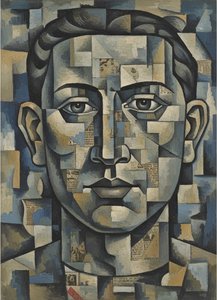
Explore the revolutionary world of Cubist portraiture with our comprehensive guide. Discover Picasso, Braque, Gris & the movement's impact on modern art. Expert analysis for collectors and enthusiasts.