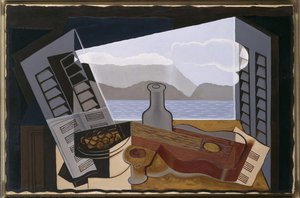
Aperçu en situation
 Envoyer
 Partager
 Détails de l'œuvre
 Guide
Guide

 Télécharger l'image
 Articles similaires
 Radiographie
 Diaporama
 Q&A
Q&A Statistiques
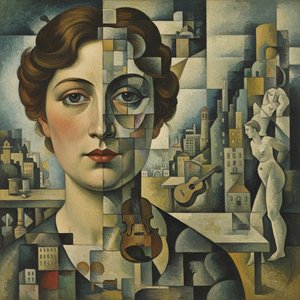
Harlequin with guitar - -

- 116.0 x 89.0 cm


 Lire la suite
Giclées et impressions d'art
Impressions giclées ou sur toile de qualité musée, avec une production rapide et des finitions au choix. ( Commander la reproduction peinte à la main Passer au format numérique)




P118B €10

P118H €10

P118W €10

P438Z €10

P508JH €12

P508YH €12

P805H €10

P805Z €10

P919BZ €10

P919G €10

P919XJ €10

P959ZH €10

P968JZ €12

W106C €8

W218G €10

W218JH €8

W218Y €10

W307PJ €10

W316G €10

W316PJ €8

W316Y €10

W398PJ €8

W4111J €10

W500HY €15

W500JH €15

W692G €12

W849H €8

W940BG €15

W953PJ €8




Choisissez parmi nos formats prédéfinis qui respectent les proportions originales de l’œuvre.

Saisissez la largeur et la hauteur souhaitées pour qu'elles s'adaptent à votre cadre ou à votre mur. Une impression peut être recadrée, mais jamais agrandie au-delà de l'image originale ; ainsi, un format de forme différente entraînera la perte d'une partie de l'image. Nous vous envoyons une maquette numérique pour approbation avant toute impression. L'image présentée sur cette page ne montre pas le recadrage réel — seule la maquette le permet.
Livraison dans le monde entier () en 2 semaines au lieu des 4/5 semaines habituelles. (2 novembre)

Livraison express gratuite dans le monde entier

Toile de lin de qualité supérieure

Assurance transport complète

Garantie de remboursement des droits de douane

Garantie de fidélité des couleurs

Politique de retour de 100 jours (uniquement en cas de défaut)

Garantie de remboursement à 100%

Offre de tarifs dégressifs
 L'option verre n'est disponible que pour les dimensions inférieures à 110 cm.

Harlequin with guitar - -
Giclées et impressions d'art
Format de la reproduction
-


Prix total
€ 71
A Fragmented Portrait of Musical Reverie: Exploring Juan Gris’s Harlequin with Guitar
Juan Gris's “Harlequin with Guitar,” completed in 1919, stands as a cornerstone of Synthetic Cubism—a movement that irrevocably altered the landscape of artistic expression. More than just a depiction of a musician, this painting embodies the intellectual and aesthetic ambitions of its time, reflecting a profound engagement with geometric abstraction and a masterful manipulation of color and texture. Created in Paris during Gris’s formative years as an artist, it captures a moment of contemplative stillness amidst the dynamism of Cubist innovation.The Genesis of Geometric Harmony
Gris's approach to Cubism distinguishes him from his contemporaries like Picasso and Braque; he prioritized harmony and balance within fractured forms—a deliberate antithesis to the chaotic fragmentation championed by other artists. This pursuit of equilibrium is immediately apparent in “Harlequin with Guitar.” The central figure, a harlequin musician, isn’t rendered as a conventional portrait but rather dissected into interlocking planes of color and shape. These geometric elements – cubes, cylinders, cones—are juxtaposed against a muted backdrop featuring two additional figures, subtly hinting at an ensemble performance yet maintaining a sense of profound solitude. This careful orchestration speaks to Gris's belief that abstraction could convey emotion just as effectively as realism.Technique and Material Considerations
Executed in oil on canvas, “Harlequin with Guitar” exemplifies the Synthetic Cubist technique pioneered by Gris and his peers. Unlike Analytical Cubism’s focus on breaking down objects into constituent parts, Synthetic Cubism incorporates collage—specifically paper fragments—to enrich the visual experience. These paper inclusions aren't merely decorative; they contribute to the overall textural complexity of the painting and subtly disrupt the rigid geometric structure. The artist meticulously applied pigment with a brush, layering colors to achieve luminous effects and creating subtle gradations that heighten the sense of depth.Historical Context: Embracing Modernity’s Disquiet
The painting emerged during a period of intense intellectual ferment—the aftermath of World War I—characterized by anxieties about tradition and an eagerness to embrace new artistic languages. Cubism responded directly to these concerns, rejecting perspectival illusion and embracing the challenge of representing multiple viewpoints simultaneously. Gris's decision to depict a musician wasn’t arbitrary; it served as a deliberate provocation against academic conventions, asserting that art could explore psychological states alongside visual representation. The inclusion of the paper collage underscores this broader cultural preoccupation with experimentation and disruption.Symbolism Beyond Representation
While “Harlequin with Guitar” eschews literal depiction, its symbolism resonates deeply. The harlequin figure itself—a traditional theatrical character—represents adaptability and transformation—themes central to the Cubist project. The guitar symbolizes musical expression and contemplation, mirroring Gris’s own artistic sensibilities. Furthermore, the muted backdrop serves as a counterpoint to the vibrant geometric forms, suggesting an inner world of thought and emotion that transcends outward appearances.Emotional Resonance: A Quiet Intensity
Despite its formal austerity, “Harlequin with Guitar” possesses a palpable emotional intensity. The harlequin’s gaze—directed slightly off-center—captures a moment of introspection, inviting the viewer to contemplate the complexities of human experience. The subtle interplay of color and texture contributes to this feeling of quiet contemplation, creating an artwork that transcends mere visual stimulation and speaks to the profound beauty of geometric abstraction. It remains a testament to Gris’s ability to convey emotion through form—a remarkable achievement within the context of early 20th-century art.Questions et réponses
Quelle est la forme et les dimensions de «Harlequin with guitar - -» de Juan Gris ?
«Harlequin with guitar - -» de Juan Gris est une œuvre au format Portrait de 116 x 89 cm.
Que représente « Harlequin with guitar - - » ?
L'œuvre « Harlequin with guitar - - » représente cubism, guitar, harlequin, portrait, geometric, collage, madrid.
Comment les couleurs de «Harlequin with guitar - -» de Juan Gris traduisent-elles l'émotion qui s'en dégage ?
La palette Dark de «Harlequin with guitar - -» de Juan Gris s'harmonise avec son ton émotionnel Reflective. La couleur est l'un des moyens par lesquels une œuvre transmet une émotion.
Biographie de l'artiste
Juan Gris : Pionnier du Cubisme
- Né : 23 mars 1887, Madrid, Espagne
- Décédé : 11 mai 1927
Jeunesse et Développement Artistique
José Victoriano González-Pérez, connu sous le nom de Juan Gris, est né à Madrid, en Espagne. Sa jeunesse a été marquée par des études d'ingénierie à l’École des Arts et Sciences de 1902 à 1904. Durant cette période, il contribuait avec des dessins à des périodiques locaux, démontrant un talent précoce pour la représentation visuelle. De 1904 à 1905, Gris a étudié la peinture avec José Moreno Carbonero, perfectionnant ainsi ses compétences artistiques. En 1905, il adopta le pseudonyme Juan Gris, un nom qui deviendrait synonyme de son style distinctif.
Influences Parisiennes et l'Émergence du Cubisme
Un moment décisif dans la carrière de Gris survint en 1906 lorsqu’il déménagea à Paris. Ce déménagement l’exposa à une communauté artistique vibrante, où il se lia d’amitié avec des figures influentes telles que Henri Matisse, Georges Braque et Fernand Léger. Il fut profondément influencé par Pablo Picasso, soumettant initialement des illustrations humoristiques à des revues comme *L'Assiette au Beurre*, *Le Rire*, *Le Charivari* et *Le Cri de Paris*. Vers 1910, Gris se consacra sérieusement à la peinture, se dévouant au développement d’un style cubiste personnel. Il s’éloigna de l’illustration satirique pour adopter des compositions plus abstraites.
Œuvres Clés et Style Artistique
La production artistique de Juan Gris se caractérise par plusieurs éléments clés :
- Clarté et Ordre : Son œuvre mettait l’accent sur la clarté et l’ordre, influençant le style puriste défendu par Amédée Ozenfant et Charles Edouard Jeanneret (Le Corbusier).
- Structure Géométrique : La « période cristalline » de Gris, illustrée par des œuvres telles que *Nature morte devant une fenêtre ouverte* et *Place Ravignan* (1915), présentait une structure géométrique forte.
- Cubisme Synthétique : Après 1913, Gris adopta le cubisme synthétique, utilisant intensivement des techniques comme le papier collé ou le collage. Cela impliquait d’incorporer des matériaux du monde réel dans ses peintures, ajoutant texture et profondeur.
Parmi ses œuvres notables figurent :
- Guitare devant la mer (1925) : Démontre sa simplicité et son adhésion aux principes cubistes.
- Hommage à Pablo Picasso (1912) : Sa première exposition au Salon des Indépendants, témoignant de sa reconnaissance croissante dans le monde artistique.
Héritage et Importance Historique
La contribution de Juan Gris au cubisme est significative. Il a dépassé la phase analytique initiale du mouvement pour adopter une approche plus structurée et synthétique. Son insistance sur la clarté, les formes géométriques et l’incorporation d’objets du quotidien dans ses compositions l'ont établi comme une figure de proue de l'art du XXe siècle. Son œuvre continue d'être célébrée pour sa rigueur intellectuelle et sa beauté esthétique, influençant les générations futures d'artistes.

Juan Gris
1887 - 1927 , Espagne
L'essentiel de l'artiste
- Artistes Influents:
- Pablo Picasso
- Georges Braque
- Henri Matisse
- Date De Décès: 11 mai 1927
- Date De Naissance: 23 mars 1887
- Influences Artistiques:
- Amédée Ozenfant
- Le Corbusier
- Lieu De Naissance: Madrid, Espagne
- Mouvement Artistique: Cubisme, Cubisme synthétique
- Nationalité: Espagnole
- Nom Complet: Juan Gris
- Oeuvres Notables:
- Guitare devant la mer
- Hommage à Picasso
- Nature morte Place Ravignan
Articles connexes

Maîtriser le Cubisme : Les 25 plus grands chefs-d'œuvre de Georges Braque
Explorez les 25 chefs-d'œuvre de Georges Braque et l'essence du Cubisme. Découvrez ces trésors sur OriginalUniqueArt.com.
Cubism Unveiled: How Picasso and Braque Redefined Reality Through Geometric Abstraction
Explore the revolutionary world of Cubism. Discover how masters Pablo Picasso and Georges Braque dismantled reality through geometric abstraction to redefine modern art history.
Juan Gris: Cubist Deconstruction & Synthesis – A Comprehensive Exploration
Explore the revolutionary art of Juan Gris – a master of Cubism. Discover his unique approach to deconstruction, vibrant Synthetic Cubist works, and lasting influence on modern art. Expert analysis for collectors.
Deconstructing Identity: A Comprehensive Exploration of Cubist Portraiture
Explore the revolutionary world of Cubist portraiture with our comprehensive guide. Discover Picasso, Braque, Gris & the movement's impact on modern art. Expert analysis for collectors and enthusiasts.
Déconstruction de la réalité : L'impact révolutionnaire du cubisme sur l'art du XXe siècle
Explorez l'impact révolutionnaire du cubisme sur l'art moderne. Découvrez Picasso, Braque et les maîtres de ce mouvement clé. Guide pour collectionneurs éclairés.