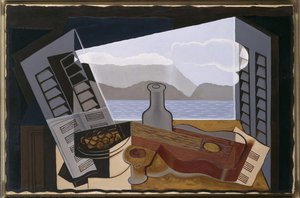
Aperçu en situation
 Partager
 Partager
 Détails
 Guide imprimable

 Télécharger
 Articles similaires
 Radiographie
 Voir le diaporama
 Statistiques
Flowers


 Afficher la suite
Giclées et impressions d'art
Impressions giclées ou sur toile de qualité musée, avec une production rapide et des finitions au choix. ( Acheter la peinture faite à la main Passer au format image numérique)




P118B €10

P118H €10

P118W €10

P438Z €10

P508JH €12

P508YH €12

P805H €10

P805Z €10

P919BZ €10

P919G €10

P919XJ €10

P959ZH €10

P968JZ €12

W106C €8

W218G €10

W218JH €8

W218Y €10

W307PJ €10

W316G €10

W316PJ €8

W316Y €10

W398PJ €8

W4111J €10

W500HY €15

W500JH €15

W692G €12

W849H €8

W940BG €15

W953PJ €8




Choisissez parmi nos formats prédéfinis qui respectent les proportions originales de l’œuvre.

Saisissez la largeur et la hauteur souhaitées pour qu'elles s'adaptent à votre cadre ou à votre mur. Une impression ne peut être que découpée, elle ne peut jamais être agrandie au-delà de l'image originale ; ainsi, un format de forme différente entraînera la perte d'une partie de l'image. Nous vous envoyons une maquette numérique pour approbation avant toute impression. L'image présentée sur cette page ne montre pas le recadrage réel — seule la maquette le permet.
Livraison dans le monde entier () en 2 semaines au lieu des 4/5 semaines habituelles. (21 octobre)

Livraison express gratuite dans le monde entier

Toile de lin de haute qualité

Assurance transport complète

Garantie de remboursement des droits de douane

Garantie de fidélité des couleurs

Garantie de retour de 100 jours (uniquement en cas de défaut)

Garantie de remboursement à 100%

Tarifs dégressifs sur quantité
 L'option verre n'est disponible que pour les dimensions inférieures à 110 cm.

Flowers
Giclées et impressions d'art
Format de la reproduction
-


Prix total final
€ 70
A Symphony of Cubist Geometry
In the vibrant tapestry of early twentieth-century modernism, few works capture the intellectual rigor and sensory richness of Juan Gris quite like his 1914 masterpiece, Flowers. This painting serves as a profound window into the analytical mind of a Spanish visionary who sought to deconstruct reality only to rebuild it with more potent, structural truth. At first glance, the viewer is greeted by a bustling, complex arrangement: a central vase overflowing with blossoms, anchored amidst a sea of scattered books, delicate cups, and the bright, citrusy warmth of oranges. It is a composition that refuses to be ignored, demanding an active gaze that navigates through layers of overlapping planes and intersecting lines.
The painting transcends mere still life, moving into the realm of Synthetic Cubism. Unlike the fragmented, almost monochromatic explorations of his predecessors, Gris utilizes a more structured approach where color and form coalesce to create a sense of rhythmic stability. The objects—the books, the bowls, and the fruit—are not merely depicted; they are architecturally integrated into the canvas. Each element is treated with a mathematical precision that speaks to Gris’s early training in engineering, allowing the viewer to experience the tension between the organic softness of the flowers and the rigid, geometric boundaries of the surrounding objects.
The Poetry of Form and Light
Technically, Flowers is a triumph of balance and tonal harmony. The artist employs a sophisticated palette where the bright, sun-drenched hues of the oranges provide a striking counterpoint to the more muted, earthy tones of the books and ceramics. Through masterful brushwork, Gris creates a tactile quality that invites the eye to linger on the texture of the petals and the smooth glaze of the cups. The light does not simply fall upon the objects; it seems to emerge from within the very intersections of the geometric shapes, creating a luminous depth that breathes life into the static arrangement.
For the discerning collector or interior designer, this piece offers an unparalleled opportunity to introduce a sense of intellectual sophistication and historical weight into a space. The painting’s ability to command attention through its complex composition makes it a perfect focal point for a contemporary gallery, a refined study, or a curated living area. It is more than a decoration; it is a conversation starter that bridges the gap between the classical tradition of the still life and the radical innovations of the modern era.
A Timeless Emotional Resonance
Beyond its formal brilliance, there is an undeniable emotional pulse within this work. There is a certain nostalgic intimacy in the arrangement of everyday items—the remnants of a quiet afternoon spent reading or sharing tea. This sense of domesticity, layered beneath the complex Cubist structure, creates a poignant connection with the viewer. It evokes a feeling of organized chaos, a reflection of the modern human experience where beauty and complexity are inextricably linked.
Owning a high-quality reproduction of this 1914 treasure allows one to inhabit the world of Juan Gris, bringing the spirit of Parisian avant-garde into the home. It serves as a constant reminder of the power of perspective and the enduring allure of finding order within complexity. Whether viewed as an exploration of geometric theory or a celebration of life's simple textures, Flowers remains a breathtaking testament to the transformative power of art.
Questions et réponses
Quelle palette et quelle couleur dominante définissent "Flowers" ?
L'identité chromatique de «Flowers» de Juan Gris : une palette Dark, dominée par le Bronze (#c37539).
Puis-je voir une vue aux rayons X de «Flowers» de Juan Gris ?
La vue X de «Flowers» de Juan Gris se trouve sur la page Rayons X de l'œuvre : une exploration interactive de l'image à travers onze couches optiques.
Quelle émotion les couleurs de «Flowers» de Juan Gris dégagent-elles ?
La palette Dark de «Flowers» de Juan Gris s'harmonise avec son ton émotionnel Reflective. La couleur est l'un des moyens par lesquels une œuvre transmet une émotion.
Biographie de l'artiste
Juan Gris : Pionnier du Cubisme
- Né : 23 mars 1887, Madrid, Espagne
- Décédé : 11 mai 1927
Jeunesse et Développement Artistique
José Victoriano González-Pérez, connu sous le nom de Juan Gris, est né à Madrid, en Espagne. Sa jeunesse a été marquée par des études d'ingénierie à l’École des Arts et Sciences de 1902 à 1904. Durant cette période, il contribuait avec des dessins à des périodiques locaux, démontrant un talent précoce pour la représentation visuelle. De 1904 à 1905, Gris a étudié la peinture avec José Moreno Carbonero, perfectionnant ainsi ses compétences artistiques. En 1905, il adopta le pseudonyme Juan Gris, un nom qui deviendrait synonyme de son style distinctif.
Influences Parisiennes et l'Émergence du Cubisme
Un moment décisif dans la carrière de Gris survint en 1906 lorsqu’il déménagea à Paris. Ce déménagement l’exposa à une communauté artistique vibrante, où il se lia d’amitié avec des figures influentes telles que Henri Matisse, Georges Braque et Fernand Léger. Il fut profondément influencé par Pablo Picasso, soumettant initialement des illustrations humoristiques à des revues comme *L'Assiette au Beurre*, *Le Rire*, *Le Charivari* et *Le Cri de Paris*. Vers 1910, Gris se consacra sérieusement à la peinture, se dévouant au développement d’un style cubiste personnel. Il s’éloigna de l’illustration satirique pour adopter des compositions plus abstraites.
Œuvres Clés et Style Artistique
La production artistique de Juan Gris se caractérise par plusieurs éléments clés :
- Clarté et Ordre : Son œuvre mettait l’accent sur la clarté et l’ordre, influençant le style puriste défendu par Amédée Ozenfant et Charles Edouard Jeanneret (Le Corbusier).
- Structure Géométrique : La « période cristalline » de Gris, illustrée par des œuvres telles que *Nature morte devant une fenêtre ouverte* et *Place Ravignan* (1915), présentait une structure géométrique forte.
- Cubisme Synthétique : Après 1913, Gris adopta le cubisme synthétique, utilisant intensivement des techniques comme le papier collé ou le collage. Cela impliquait d’incorporer des matériaux du monde réel dans ses peintures, ajoutant texture et profondeur.
Parmi ses œuvres notables figurent :
- Guitare devant la mer (1925) : Démontre sa simplicité et son adhésion aux principes cubistes.
- Hommage à Pablo Picasso (1912) : Sa première exposition au Salon des Indépendants, témoignant de sa reconnaissance croissante dans le monde artistique.
Héritage et Importance Historique
La contribution de Juan Gris au cubisme est significative. Il a dépassé la phase analytique initiale du mouvement pour adopter une approche plus structurée et synthétique. Son insistance sur la clarté, les formes géométriques et l’incorporation d’objets du quotidien dans ses compositions l'ont établi comme une figure de proue de l'art du XXe siècle. Son œuvre continue d'être célébrée pour sa rigueur intellectuelle et sa beauté esthétique, influençant les générations futures d'artistes.

Juan Gris
1887 - 1927 , Espagne
En bref
- Artistes Influents:
- Pablo Picasso
- Georges Braque
- Henri Matisse
- Date De Décès: 11 mai 1927
- Date De Naissance: 23 mars 1887
- Influences Artistiques:
- Amédée Ozenfant
- Le Corbusier
- Lieu De Naissance: Madrid, Espagne
- Mouvement Artistique: Cubisme, Cubisme synthétique
- Nationalité: Espagnole
- Nom Complet: Juan Gris
- Oeuvres Notables:
- Guitare devant la mer
- Hommage à Picasso
- Nature morte Place Ravignan
Articles connexes
Deconstructing Reality: A Comprehensive Exploration of Cubist Still Life
Explore the revolutionary world of Cubist Still Life with OriginalUniqueArt. Discover Picasso & Braque's groundbreaking techniques, its philosophical roots, and lasting impact on modern art. Expert insights for collectors.
Juan Gris: Cubist Deconstruction & Synthesis – A Comprehensive Exploration
Explore the revolutionary art of Juan Gris – a master of Cubism. Discover his unique approach to deconstruction, vibrant Synthetic Cubist works, and lasting influence on modern art. Expert analysis for collectors.

Cubist Still Life: Redefining Reality Through Fragmented Forms and Geometric Abstraction
Explore the profound evolution of Cubist still life, from Cézanne's structural foundations to the fragmented brilliance of Braque and Léger. Discover how geometric abstraction redefined reality through a sophisticated lens of form, color, and modern artistic mastery.

The Bountiful Still Life: Symbolism & Artistic Representation of Fruit Across Art History
Explore the rich history of still life painting & the symbolism of fruit across art movements. Discover masterpieces from Caravaggio to Cézanne with OriginalUniqueArt – expert guidance & museum-quality reproductions.

Paul Cézanne : Les 25 Œuvres Maîtresses d'un Génie Révolutionnaire | OriginalUniqueArt
Plongez dans l'univers de Paul Cézanne avec les 25 œuvres incontournables du maître post-impressionniste. Découvrez l'histoire, la technique et l'émotion derrière ses tableaux iconiques comme 'Les Baigneuses' ou 'Mont Sainte-Victoire'. Reproductions d'art haute qualité sur OriginalUniqueArt.com.