
 Aperçu en situation
 Envoyer
 Partager
 Détails de l'œuvre

 Télécharger
 Articles similaires
 Radiographie
 Diaporama
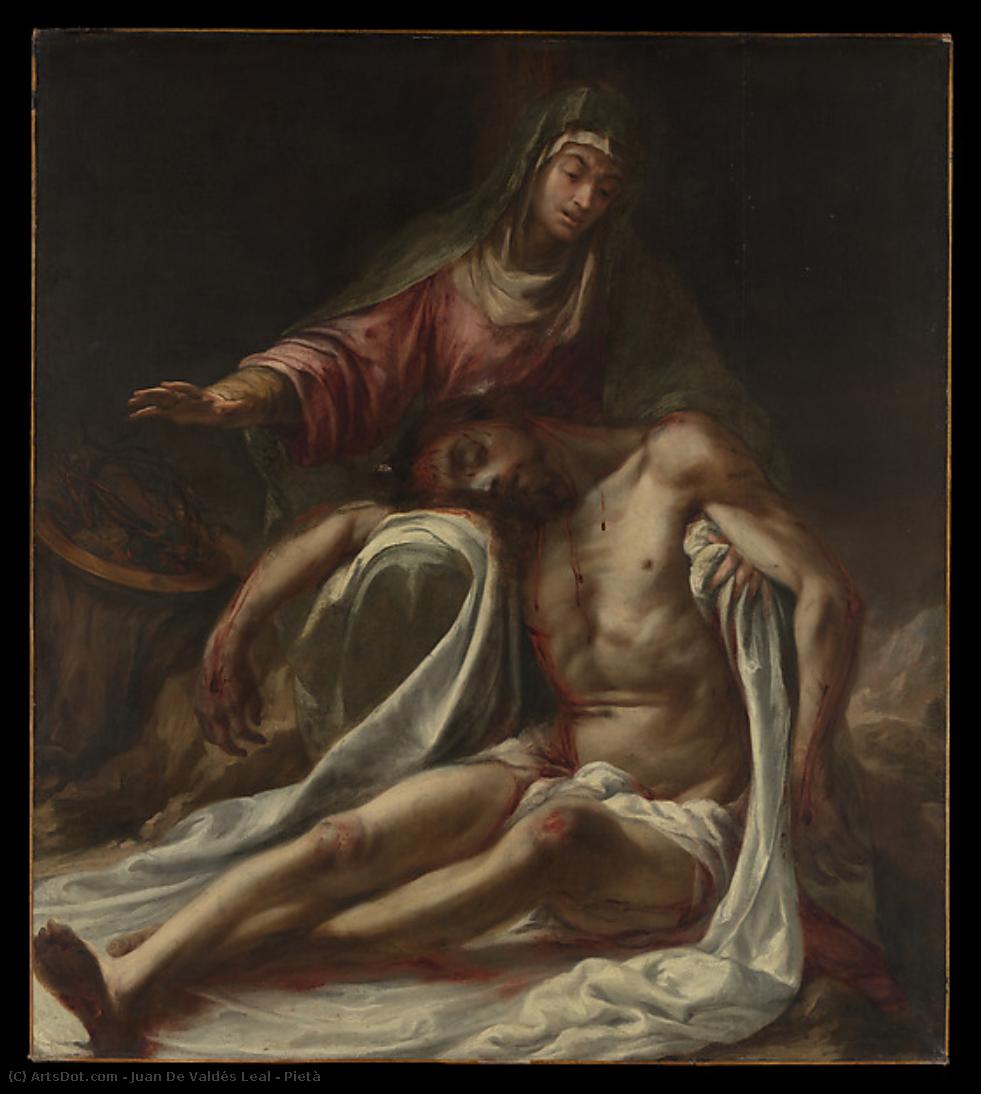
Pietà
 Oil On Canvas
- WallArt
- Baroque
 1657
1657 161.0 x 144.0 cm
 Metropolitan Museum of Art
 Lire la suite
Giclées et impressions d'art
Impressions giclées ou sur toile de qualité musée, avec une production rapide et des finitions au choix. ( Commander la reproduction peinte à la main Télécharger l'image haute résolution)




P118B $10

P118H $10

P118W $10

P438Z $10

P508JH $12

P508YH $12

P805H $10

P805Z $10

P919BZ $10

P919G $10

P919XJ $10

P959ZH $10

P968JZ $12

W106C $8

W218G $10

W218JH $8

W218Y $10

W307PJ $10

W316G $10

W316PJ $8

W316Y $10

W398PJ $8

W4111J $10

W500HY $15

W500JH $15

W692G $12

W849H $8

W940BG $15

W953PJ $8




Choisissez parmi nos formats prédéfinis qui respectent les proportions originales de l’œuvre.

Vous pouvez saisir vos propres dimensions pour vous adapter à un cadre ou à un espace spécifique. Si la taille sélectionnée ne correspond pas aux proportions de l'image originale, nous recadrerons l'œuvre ou étendrons l'image avec une bordure en miroir ou une couleur unie. Une maquette numérique vous sera envoyée pour approbation avant le début de la production.
Veuillez noter que l'aperçu à l'écran ne reflète pas le recadrage ou l'extension réelle. Seule la maquette montrera avec précision la composition finale.
Bien que des tailles personnalisées soient disponibles, nous vous recommandons de choisir une dimension dans la liste prédéfinie afin de préserver les proportions originales.
Livraison dans le monde entier () en 2 semaines au lieu des 4/5 semaines habituelles. (19 août)

Livraison express gratuite dans le monde entier

Toile de lin de qualité supérieure

Assurance transport complète

Garantie de remboursement des droits de douane

Garantie de fidélité des couleurs

Politique de retour de 60 jours (uniquement en cas de défaut)

Garantie de remboursement à 100%

Offre de tarifs dégressifs
 L'option verre n'est disponible que pour les dimensions inférieures à 110 cm.

Pietà
Giclées et impressions d'art
Format de la reproduction
-


Prix total
$ 80
Description de la pièce
The Heart of Sorrow: An Exploration of Valdés Leal’s Pietà
Juan de Valdés Leal's 1657 “Pietà” is not merely a depiction of grief; it’s an immersion into the profound sorrow and spiritual weight of Christian iconography. Born in Seville during the height of the Spanish Baroque, Leal was deeply influenced by the traditions of theatrical sculpture, particularly the evocative “pasos”—elaborate processions featuring religious figures rendered with intense emotion—a practice common in Spain. This painting transcends simple representation, aiming instead to evoke a visceral response from the viewer, mirroring the agony of Mary Magdalene cradling the lifeless body of Christ.
The subject itself – the Pietà – has resonated through Western art for centuries. It’s a timeless image: the Virgin Mary, serene yet heartbroken, holding her son after his crucifixion. Leal masterfully captures this essence, moving beyond the idealized beauty often associated with depictions of the Madonna. Instead, we see a woman marked by sorrow, her expression a complex blend of grief and acceptance. The composition is deliberately tight, drawing our focus entirely to the central figures – a deliberate choice that intensifies the emotional impact. The diagonal line created by Christ’s body, sloping from left to right, guides the eye through the scene, mirroring the descent into despair.
Baroque Drama: Technique and Composition
Leal's mastery lies in his skillful deployment of Baroque techniques. The painting is dominated by *chiaroscuro*, a dramatic contrast between light and dark that sculpts the figures and imbues the scene with an almost theatrical quality. Light focuses intensely on Mary Magdalene and Christ’s body, casting deep shadows around them – these aren't merely stylistic choices; they symbolize the darkness of sin and suffering. The artist employs impasto—thickly applied paint—to create a richly textured surface, adding depth and physicality to the figures. Brushstrokes are bold and expressive, conveying movement and emotion with every mark.
The flattened perspective, characteristic of Baroque art, prioritizes emotional impact over strict realism. Leal doesn’t strive for photographic accuracy; instead, he uses color and form to create a heightened sense of drama and immediacy. The muted palette—primarily dark browns, reds, and blues—contributes to the somber atmosphere, reinforcing the theme of loss and mourning. The use of strong lines further emphasizes the dynamism of the scene, preventing it from feeling static or lifeless.
Symbolism and Spiritual Resonance
Beyond its visual power, the “Pietà” is rich in symbolism. The image directly references Christian iconography, but Leal imbues it with a distinctly Spanish sensibility. The gruesome details of Christ’s suffering—a hallmark of Spanish religious art—are not presented gratuitously; they serve to heighten the spiritual fervor and underscore the sacrifice made for humanity's salvation. Mary Magdalene’s posture – cradling the body with unwavering devotion – represents faith, loyalty, and acceptance of God’s will.
The scene as a whole speaks to universal themes of grief, loss, and redemption. It invites contemplation on mortality, suffering, and the enduring power of love and compassion. Leal's “Pietà” is more than just a religious painting; it’s a profound meditation on the human condition, rendered with breathtaking skill and emotional intensity.
Biographie de l'artiste
Premières années et formation
Juan de Valdés Leal, un peintre et graveur espagnol renommé, est né le 4 mai 1622 à Séville, en Espagne. Il devint peintre, sculpteur et architecte, témoignant de sa polyvalence dans le monde artistique. Dès ses vingt ans, il étudiait sous la direction d’Antonio del Castillo à Cordoue, perfectionnant ses compétences à l'époque baroque.Œuvres notables et collaborations
Les œuvres notables de Valdés Leal comprennent :- L'histoire du prophète Élie pour l’église des Carmélites
- Le martyre de saint André pour l'église San Francesco à Cordoue
- Le triomphe de la croix pour La Caridad à Séville.
Vie personnelle et héritage
Valdés Leal épousa Isabella Carasquilla, également peintre, en 1647. Le couple eut cinq enfants, dont plusieurs devinrent artistes, notamment Lucas, Maria et Laura. Valdés Leal est décédé le 15 octobre 1690 à Séville, laissant derrière lui un héritage dans le monde artistique.Style artistique et influence
L'œuvre de Valdés Leal se caractérise par son style baroque dramatique et émotionnel. Il était influencé par les maîtres flamands et hollandais, mais a développé une sensibilité unique qui se traduit par des compositions sombres, des contrastes forts et une attention particulière aux détails. Ses thèmes récurrents, tels que la mortalité, le *vanitas* et les scènes religieuses, reflètent une profonde méditation sur la condition humaine et la fragilité de l'existence. Son travail a contribué à façonner l’art baroque espagnol et a influencé plusieurs générations d’artistes.Découvrir ses œuvres sur OriginalUniqueArt
Pour explorer davantage les œuvres de Valdés Leal, visitez https://OriginalUniqueArt.com/@/juan de valdés leal, où vous trouverez :- 165 œuvres d'art par Juan de Valdés Leal
- Des reproductions de qualité muséale de ses peintures
- Un style artistique baroque, caractéristique de l'époque. Wikipedia: Juan de Valdés Leal
Découvrez davantage sur OriginalUniqueArt
- Musée des Beaux-Arts d'Asturies (Espagne) : Explorez la collection du musée, présentant l’art européen du XIIe au début du XXe siècle.
- Le musée des beaux-arts de Séville, Espagne : Découvrez l'histoire du musée, sa collection et ses informations sur les visites. Découvrez le monde de l’art avec OriginalUniqueArt

Juan de Valdés Leal
1622 - 1690 , Espagne
L'essentiel de l'artiste
- Artistic Movement Or Style: Baroque
- Artists Who Influenced This Artist: ['Antonio del Castillo']
- Date Of Birth: 4 mai 1622
- Date Of Death: 15 octobre 1690
- Full Name: Juan de Valdés Leal
- Nationality: Espagnol(e)
- Notable Artworks:
- Histoire du prophète Élie
- Martyre de saint André
- Triomphe de la croix
- Place Of Birth (City And Country): Séville, Espagne
Articles connexes
Juan de Valdés Leal: Baroque Realism, Memento Mori & Theatricality of Spanish Grief
Explore the powerful Baroque realism of Juan de Valdés Leal (1622-1690). Discover his somber masterpieces, iconic 'In Ictu Oculi', and profound explorations of mortality. Museum-quality reproductions available at OriginalUniqueArt.

Demandes professionnelles
APS ofrece reproducciones de bellas artes y encargos personalizados desde 2004. Confían en nosotros corporaciones, hoteles y coleccionistas selectos para obras de arte de calidad museística, servicio discreto y soluciones artísticas completas. ¡Póngase en contacto con nosotros para obtener un presupuesto personalizado!

Goya : 25 Chefs-d'Œuvre Inoubliables d'un Maître de l'Âme
Plongez au cœur de l'œuvre inégalable de Goya ! Découvrez 25 chefs-d’œuvre emblématiques, des portraits saisissants aux scènes dramatiques. Explorez la vie et l'art du maître espagnol avec OriginalUniqueArt.com – reproductions d'art de qualité musée et inspirations déco.

À propos de nous
Découvrez notre univers artistique ! Nous mettons l’art de renommée mondiale à portée de main grâce à une sélection pointue, des créations sur mesure et des conseils personnalisés. Apprécié des particuliers et des professionnels depuis plus de 20 ans.

Le Drame Baroque : L'Art qui Apporte la Splendeur dans Votre Intérieur
Plongez dans l'univers somptueux du baroque ! Découvrez son histoire, comment l'intégrer à votre intérieur et les œuvres incontournables. : reproductions d'art de qualité supérieure.



