

 Aperçu en situation
 Partager
 Partager
 Détails
 Guide imprimable

 Télécharger
 Articles similaires
 Radiographie
 Voir le diaporama
 Statistiques
Version of the first draft


 Afficher la suite
Giclées et impressions d'art
Impressions giclées ou sur toile de qualité musée, avec une production rapide et des finitions au choix. ( Acheter la peinture faite à la main Passer au format image numérique)




P118B €10

P118H €10

P118W €10

P438Z €10

P508JH €12

P508YH €12

P805H €10

P805Z €10

P919BZ €10

P919G €10

P919XJ €10

P959ZH €10

P968JZ €12

W106C €8

W218G €10

W218JH €8

W218Y €10

W307PJ €10

W316G €10

W316PJ €8

W316Y €10

W398PJ €8

W4111J €10

W500HY €15

W500JH €15

W692G €12

W849H €8

W940BG €15

W953PJ €8




Choisissez parmi nos formats prédéfinis qui respectent les proportions originales de l’œuvre.

Saisissez la largeur et la hauteur souhaitées pour qu'elles s'adaptent à votre cadre ou à votre mur. Une impression ne peut être que découpée, elle ne peut jamais être agrandie au-delà de l'image originale ; ainsi, un format de forme différente entraînera la perte d'une partie de l'image. Nous vous envoyons une maquette numérique pour approbation avant toute impression. L'image présentée sur cette page ne montre pas le recadrage réel — seule la maquette le permet.
Livraison dans le monde entier () en 2 semaines au lieu des 4/5 semaines habituelles. (25 octobre)

Livraison express gratuite dans le monde entier

Toile de lin de haute qualité

Assurance transport complète

Garantie de remboursement des droits de douane

Garantie de fidélité des couleurs

Garantie de retour de 100 jours (uniquement en cas de défaut)

Garantie de remboursement à 100%

Tarifs dégressifs sur quantité
 L'option verre n'est disponible que pour les dimensions inférieures à 110 cm.

Version of the first draft
Giclées et impressions d'art
Format de la reproduction
-


Prix total final
€ 70
A Pioneer's Vision: Exploring Joseph Maria Olbrich’s “Draft for the Secession Building”
The Vienna Secession, established in 1897, represents more than just an architectural movement; it embodies a radical reimagining of artistic expression and its relationship to society. At its core stood Joseph Maria Olbrich (1867-1908), a sculptor and architect whose formative influence on Viennese art history cannot be overstated. This meticulously rendered pencil drawing, “Draft for the Secession Building,” offers an invaluable glimpse into Olbrich’s creative process—a testament to his ambition and foreshadowing the monumental achievement that would become the Secession Building itself. Examining this preparatory sketch illuminates not only Olbrich's technical prowess but also the intellectual currents shaping the burgeoning Art Nouveau aesthetic.- Subject Matter: The drawing depicts a conceptual exploration of the Secession’s planned exhibition hall, situated on Naschmarkt and facing Karlsplatz—a site chosen deliberately to confront the conservative gaze of Viennese society. Olbrich envisioned a building that would stand apart from traditional architectural conventions, prioritizing emotive impact over mere functionality.
- Style & Technique: Olbrich’s approach aligns seamlessly with the Secession's ethos – blending classical references with expressive ornamentation. The drawing showcases his masterful command of hatching and cross-hatching techniques, skillfully conveying tonal values and simulating surface textures. These meticulous lines capture the essence of Olbrich’s vision for a building that would resonate with grandeur and artistic innovation.
- Composition & Perspective: The sketch reveals Olbrich's deliberate consideration of spatial arrangement. He employs a simplified perspective to establish depth, emphasizing the monumental scale of the envisioned edifice and highlighting the interplay between horizontal and vertical elements. Notably, he incorporates the laurel leaf motif—a symbol of victory and remembrance—as a framing device for the entrance niche, reflecting the Secession’s aspiration to elevate art beyond utilitarian concerns.
- Historical Context: Olbrich's work emerged during a period of profound artistic upheaval in Vienna. The Secession challenged the prevailing academic style, advocating for a new aesthetic language rooted in organic forms and inspired by influences from Italy and North Africa—a reaction against the rigid formalism of Historicism. This drawing serves as tangible evidence of Olbrich’s engagement with these transformative ideas.
- Symbolic Significance: Beyond its technical merits, “Draft for the Secession Building” embodies Olbrich's belief that art should communicate emotion and convey a sense of timeless grandeur. The unfinished quality of the sketch underscores the creative process itself—a journey toward realizing an audacious vision that would ultimately redefine Viennese architectural identity.
Questions et réponses
Vers quelle nuance Version of the first draft tend-elle ?
La teinte dominante de «Version of the first draft» de Joseph Maria Olbrich est Green to Violet Spectrum. Cette teinte constitue la tonalité de fond de la palette.
À quelle période de la carrière de Joseph Maria Olbrich se situe « Version of the first draft » ?
«Version of the first draft» appartient à la période Vienna Secession Era de la carrière de Joseph Maria Olbrich. Cette classification relie l'œuvre à l'évolution de l'artiste.
À quel point la palette de "Version of the first draft" est-elle saturée ?
«Version of the first draft» de Joseph Maria Olbrich est présenté avec une saturation de Muted.
Biographie de l'artiste
Joseph Maria Olbrich : Pionnier de la Sécession Viennoise
- Né: 22 décembre 1867, Tropea, République tchèque
- Décédé: 8 août 1908
- Nationalité: Autrichien
- Mouvement: Sécession Viennoise, Art Nouveau
Jeunesse et Formation
- La jeunesse d'Olbrich a été marquée par les activités commerciales de son père, ce qui a suscité un intérêt pour la construction.
- Il a étudié à l'École des Arts et Métiers de Vienne, perfectionnant ses compétences en peinture architecturale.
- Une formation supplémentaire à l'Académie des Beaux-Arts de Vienne sous Carl von Hasenauer lui a fourni une base en architecture traditionnelle.
- Un Prix de Rome lui a permis de voyager à travers l'Italie et l'Afrique du Nord, élargissant ses horizons artistiques.
- Il a travaillé comme assistant d'Otto Wagner, contribuant de manière significative au projet Wiener Stadtbahn et passant de l'historicisme au Jugendstil.
Œuvres Principales et Style Architectural
- Le Bâtiment de la Sécession (Vienne) : Cette structure emblématique est sans doute la réalisation la plus importante d'Olbrich, incarnant les principes de la Sécession Viennoise avec son dôme doré distinctif et son espace intérieur innovant. Il a servi de siège au mouvement et de lieu d'exposition pour des expositions révolutionnaires.
- Maison d'Exposition de l'Association des Artistes Visuels : Démontre sa capacité à créer des espaces d'exposition adaptables qui équilibrent l'esthétique et la fonctionnalité.
- Premier Projet pour un Bâtiment d'Exposition à la Wollzeile : Met en valeur sa capacité à intégrer les considérations pratiques avec une vision artistique.
- Bâtiments de la Colonie d'Artistes de Darmstadt : Son travail à Darmstadt, commandé par Ernest-Louis, Grand-Duc de Hesse, comprenait de nombreuses résidences et bâtiments d'exposition, reflétant un mélange d'influences historiques et d'ornementation Art Nouveau.
Influences et Développement
- Otto Wagner : En tant qu'assistant de Wagner, Olbrich a absorbé les principes du fonctionnalisme et le rejet des styles historicistes.
- Gustav Klimt & La Sécession Viennoise : Une collaboration avec Klimt et d’autres membres de la Sécession a façonné sa direction artistique vers un nouveau langage esthétique caractérisé par des formes géométriques et des éléments décoratifs.
- Architecture Historique : Tout en rejetant l'adhésion stricte aux précédents historiques, Olbrich s'est inspiré de diverses périodes, les réinterprétant à travers le prisme de l’Art Nouveau.
Héritage et Importance Historique
- Les contributions d'Olbrich ont été essentielles pour établir la Sécession Viennoise comme une force majeure dans l'art et l'architecture européens.
- Son insistance sur la simplicité fonctionnelle et le design innovant a influencé les générations futures d’architectes et de designers.
- La Galerie Nationale Autrichienne du Belvédère abrite des œuvres d'Olbrich, préservant son héritage pour l'étude et l'appréciation futures.
- Il est reconnu comme un pionnier précoce de l'architecture moderne, comblant le fossé entre l'historicisme du XIXe siècle et le mouvement moderniste.

Joseph Maria Olbrich
1867 - 1908 , République tchèque
En bref
- Artistes Ayant Influencé Cet Artiste: ['Otto Wagner']
- Artistes Ou Mouvements Influencés Par Cet Artiste: ['Design moderniste']
- Date De Décès: 8 août 1908
- Date De Naissance: 22 décembre 1867
- Full Name: Joseph Maria Olbrich
- Lieu De Naissance: Tropea, République tchèque
- Mouvement Artistique Ou Style: Sécession viennoise, Art nouveau
- Nationalité: Autrichien(ne)
- Oeuvres Notables:
- Bâtiment de la Sécession
- Exposition House (Artistes visuels)
Articles connexes
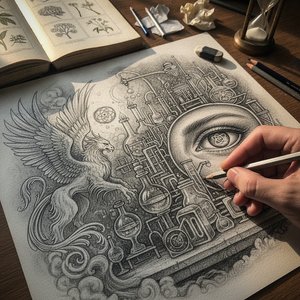
The Alchemy of Graphite: An Expert Guide to Mastering Detail and Depth in Pencil Sketching
Unlock the secrets of graphite sketching with our expert guide for art students. Learn to master pencil grades, create realistic depth, and capture intricate textures through professional techniques designed to elevate your observational drawing skills.
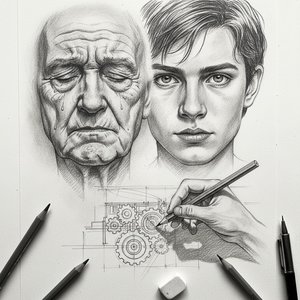
The Nuances of Graphite: Exploring Emotional Depth & Technical Mastery in Pencil Drawing
Explore the captivating world of graphite drawing! Discover its rich history, master essential techniques like chiaroscuro, and learn how artists evoke emotion through this timeless medium. Expert insights for art enthusiasts.

Gustave Klimt : Les 25 Œuvres Maîtresses d'un Artiste Symboliste Incontournable | OriginalUniqueArt
Plongez dans l'univers fascinant de Gustave Klimt ! Découvrez les 25 œuvres majeures du maître symboliste : Le Baiser, Judith et bien d'autres. Inspirez votre décoration intérieure avec OriginalUniqueArt.com et trouvez la reproduction parfaite.
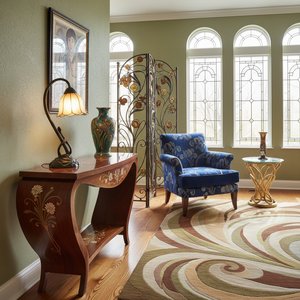
Art Nouveau : Les 10 Chefs-d'œuvre Indémodables à Redécouvrir
Plongez dans l'univers fascinant de l'Art Nouveau ! Découvrez les 10 chefs-d’œuvre emblématiques de Klimt, Mucha et autres artistes majeurs. Inspirez votre décoration intérieure avec ces icônes du style floral et du symbolisme. Explorez la collection complète sur

La Sécession Viennoise : Révolte Artistique et Éclosion d'un Nouveau Style à Vienne
Explorez la Sécession viennoise : un mouvement artistique révolutionnaire avec Klimt, Hoffmann et Olbrich. Découvrez son histoire, ses œuvres emblématiques et son héritage durable. Analyse approfondie par OriginalUniqueArt.


