

 Aperçu en situation
 Envoyer
 Partager
 Détails de l'œuvre

 Télécharger
 Articles similaires
 Radiographie
 Diaporama
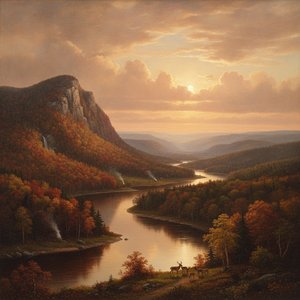
Landscape Taconic Range, (painting)


 Lire la suite
Giclées et impressions d'art
Impressions giclées ou sur toile de qualité musée, avec une production rapide et des finitions au choix. ( Commander la reproduction peinte à la main Télécharger l'image haute résolution)




































Choisissez parmi nos formats prédéfinis qui respectent les proportions originales de l’œuvre.

Vous pouvez saisir vos propres dimensions pour vous adapter à un cadre ou à un espace spécifique. Si la taille sélectionnée ne correspond pas aux proportions de l'image originale, nous recadrerons l'œuvre ou étendrons l'image avec une bordure en miroir ou une couleur unie. Une maquette numérique vous sera envoyée pour approbation avant le début de la production.
Veuillez noter que l'aperçu à l'écran ne reflète pas le recadrage ou l'extension réelle. Seule la maquette montrera avec précision la composition finale.
Bien que des tailles personnalisées soient disponibles, nous vous recommandons de choisir une dimension dans la liste prédéfinie afin de préserver les proportions originales.
Livraison dans le monde entier () en 2 semaines au lieu des 4/5 semaines habituelles. (22 août)

Livraison express gratuite dans le monde entier

Toile de lin de qualité supérieure

Assurance transport complète

Garantie de remboursement des droits de douane

Garantie de fidélité des couleurs

Politique de retour de 60 jours (uniquement en cas de défaut)

Garantie de remboursement à 100%

Offre de tarifs dégressifs
 L'option verre n'est disponible que pour les dimensions inférieures à 110 cm.

Landscape Taconic Range, (painting)
Giclées et impressions d'art
Format de la reproduction
-


Prix total
$ 80
Biographie de l'artiste
Joseph H. Hidley: A Poetic Vision of Rural New York
The art world often celebrates grand narratives, sweeping movements, and the towering figures of established schools. Yet, within these larger contexts, there exist countless artists who quietly captured the essence of their immediate surroundings—individuals like Joseph Henry Hidley (1830-1872), a largely unsung master of American landscape painting. Born in Greenbush, New York, during a period of rapid transformation and industrial growth, Hidley’s work offers a poignant glimpse into a vanishing rural world, rendered with an exquisite attention to detail and imbued with a deeply personal sensibility.
Hidley's life was one of quiet resilience. Orphaned at the tender age of four after his father’s death, he was raised by his maternal grandparents—a circumstance that profoundly shaped his worldview. He wasn’t formally trained as an artist; instead, he honed his skills through a diverse range of occupations – a handyman, carpenter, house painter, and even a taxidermist – all contributing to his unique perspective and technical abilities. This pragmatic approach to life is reflected in his paintings: they are not idealized romantic landscapes but rather honest depictions of everyday scenes, imbued with a sense of quiet dignity.
His most significant period of artistic activity occurred in Poestenkill, New York, a small village nestled along the banks of the Poesten Kill. Here, he established himself as a resident and began to meticulously document the landscape—not through grand vistas or dramatic compositions, but rather through a series of remarkably detailed townscapes. These paintings are characterized by an almost aerial perspective, capturing the layout of the village with astonishing accuracy. The church, the crossroads, the mills – all are rendered with a precision that suggests both observation and affection. He wasn’t simply painting buildings; he was painting a way of life, a community rooted in its physical environment.
The Technique of a Rural Observer
Hidley's technique is remarkably consistent across his body of work. He primarily worked in oil on wood panels, a medium that allowed for both detail and durability. His brushwork is generally smooth and controlled, prioritizing clarity and precision over expressive gestures. He employed a limited palette—primarily muted earth tones, blues, and greens—to create a sense of atmospheric depth and to faithfully represent the colors of the New York countryside. A key element of his style is his use of light; he masterfully captures the subtle shifts in illumination throughout the day, lending a remarkable realism to his scenes.
Interestingly, Hidley’s work wasn't widely recognized during his lifetime. He struggled financially and rarely sold his paintings. It wasn’t until decades after his death that his talent began to be appreciated—a testament to the quiet persistence of an artist who was dedicated solely to capturing the beauty of his surroundings. His paintings were later acquired by the Smithsonian Institution, a recognition of their historical and artistic significance.
Religious Influences and Personal Symbolism
Beyond his townscapes, Hidley also produced a series of religious paintings—often depicting scenes from the Bible or featuring local church figures. These works offer insights into his personal faith and his connection to the community he served as sexton at the Evangelical Lutheran Church in Poestenkill. The imagery is generally straightforward and didactic, but there’s a subtle sense of warmth and humanity that distinguishes them from more austere religious paintings.
Furthermore, it's believed that Hidley incorporated personal symbolism into his work—references to family members, local landmarks, and perhaps even hidden meanings within the composition. The precise nature of these symbols remains largely unknown, adding a layer of mystery to his oeuvre. The view of Poestenkill, for example, prominently features the church where he lived, suggesting a central role in his life and artistic vision.
Legacy and Historical Significance
Joseph H. Hidley’s legacy is one of quiet observation and understated beauty. His paintings offer a valuable record of rural New York in the 19th century—a time of rapid change and social upheaval. They provide a window into the lives of ordinary people, capturing their daily routines, their faith, and their connection to the land. His meticulous attention to detail and his ability to evoke a sense of place make him a significant figure in American folk art.
Today, Hidley’s paintings are increasingly recognized for their artistic merit and historical value. They serve as a reminder that beauty can be found in the most unexpected places—and that even the quietest voices deserve to be heard. His work stands as a testament to the power of observation, dedication, and a deep appreciation for the world around us.

joseph h hidley
1830 - 1872
L'essentiel de l'artiste
- Artistic Movement Or Style: Naive landscapes
- Artists Or Movements Influenced By This Artist: ['American Folk Art']
- Artists Who Influenced This Artist: ['Charles Read']
- Date Of Birth: 1830-03-23
- Date Of Death: 1872-05-14
- Full Name: Joseph Henry Hidley
- Nationality: American
- Notable Artworks:
- View of Poestenkill
- Village scenes
- Place Of Birth: Greenbush, NY
Articles connexes

Les 10 Chefs-d'œuvre du Paysage Romantique : Artistes et Décor d'Intérieur
Plongez dans l'émotion du Romantisme avec les 10 plus beaux paysages de Friedrich, Turner & Delacroix. Découvrez leur histoire et trouvez l'inspiration déco idéale sur OriginalUniqueArt.com !
The Hudson River School: A Definitive Guide to America's Romantic Landscape Tradition
Explore the profound legacy of the Hudson River School. Discover how masters like Thomas Cole captured the American sublime through Romanticism and Luminism. A definitive guide for art historians and collectors seeking to understand America's wild beauty.

Le Sublime et le Pittoresque : Exploration de l'Émotion et de la Nature dans la Peinture Romantique du Paysage
Explorez l'univers fascinant du sublime et du pittoresque dans la peinture romantique. Analyse approfondie de Friedrich, Kandinsky et des maîtres de ce mouvement artistique majeur. Découvrez l'émotion et la nature comme jamais auparavant.

Évocations de lieux : Un voyage historique à travers l'art du paysage
Explorez l'histoire fascinante de la peinture de paysage à travers les chefs-d'œuvre du Romantisme. Découvrez Friedrich, Turner et Aivazovski et laissez-vous inspirer par la beauté sauvage et le sublime. Reproduction d'art de qualité chez OriginalUniqueArt.

Échos de l'Arcadie : Nostalgie et Transformation dans l'Art Paysager Vintage
Explorez l'École du Hudson : un mouvement artistique américain emblématique. Découvrez les maîtres romantiques, leur quête du sublime et l'influence durable de leurs paysages exceptionnels. OriginalUniqueArt vous guide.

