
 Aperçu en situation
 Envoyer
 Partager
 Détails de l'œuvre
 Guide
Guide

 Télécharger l'image
 Articles similaires
 Radiographie
 Diaporama
 Q&A
Q&A Statistiques
Tocant le violon

 Lire la suite
Giclées et impressions d'art
Impressions giclées ou sur toile de qualité musée, avec une production rapide et des finitions au choix. ( Commander la reproduction peinte à la main Passer au format numérique)




































Choisissez parmi nos formats prédéfinis qui respectent les proportions originales de l’œuvre.

Saisissez la largeur et la hauteur souhaitées pour qu'elles s'adaptent à votre cadre ou à votre mur. Une impression peut être recadrée, mais jamais agrandie au-delà de l'image originale ; ainsi, un format de forme différente entraînera la perte d'une partie de l'image. Nous vous envoyons une maquette numérique pour approbation avant toute impression. L'image présentée sur cette page ne montre pas le recadrage réel — seule la maquette le permet.
Livraison dans le monde entier () en 2 semaines au lieu des 4/5 semaines habituelles. (1 novembre)

Livraison express gratuite dans le monde entier

Toile de lin de qualité supérieure

Assurance transport complète

Garantie de remboursement des droits de douane

Garantie de fidélité des couleurs

Politique de retour de 100 jours (uniquement en cas de défaut)

Garantie de remboursement à 100%

Offre de tarifs dégressifs
 L'option verre n'est disponible que pour les dimensions inférieures à 110 cm.

Tocant le violon
Giclées et impressions d'art
Format de la reproduction
-


Prix total
€ 71
Tocando el Violín : Une Fenêtre sur l'Espagne du XIXe Siècle
“Tocando el Violín” (Jouant du violon) de José Jiménez Aranda offre une perspective captivante sur la vie en Espagne au XIXe siècle, illustrant un moment intime de performance musicale dans un cadre domestique richement détaillé. Cette œuvre est un exemple typique du genre *costumbrista*, qui a prospéré en Espagne à cette époque, se concentrant sur la représentation de la vie quotidienne et des coutumes avec réalisme et charme.
Sujet et Composition
La figure centrale de la peinture est un homme absorbé dans le jeu du violon. Il est vêtu d'un costume élaboré présentant un motif vibrant, suggérant peut-être une occasion festive ou une représentation théâtrale. La composition est soigneusement équilibrée ; le musicien se tient devant une bibliothèque débordant de volumes, laissant entrevoir des aspirations intellectuelles et un environnement cultivé. L’agencement des livres, certains plus proches du spectateur et d'autres s'étendant en arrière-plan, crée de la profondeur dans la scène. Son regard concentré et sa posture transmettent un sentiment de dévouement et de passion pour sa musique.
Style et Technique
Le style de Jiménez Aranda est fortement influencé par des maîtres tels que Goya et Velázquez, comme en témoigne son attention méticuleuse aux détails et son rendu habile des textures. La peinture adopte une approche réaliste, capturant les nuances de la lumière et de l’ombre sur le visage et le costume de l'homme. Bien que le médium exact ne soit pas explicitement indiqué, il est probablement exécuté à l’huile, permettant une saturation riche des couleurs et des dégradés subtils qui contribuent au réalisme général. Sa formation à la Real Academia de Bellas Artes de Santa Isabel de Hungría à Séville a encore affiné ses compétences techniques.
Contexte Historique et Influences
“Tocando el Violín” a été créé pendant une période d’échange artistique important entre l’Espagne, la France et l’Italie. Les voyages de Jiménez Aranda à Rome et à Paris l'ont exposé aux œuvres de Mariano Fortuny, dont l'influence est évidente dans la composition élégante de la peinture et son souci du détail. Le mouvement *costumbrista* lui-même reflétait un intérêt croissant pour documenter la culture et les traditions espagnoles à une époque de changement social et politique. La popularité de la représentation de scènes de la vie quotidienne a permis aux artistes comme Jiménez Aranda d'explorer des thèmes identitaires nationaux et du patrimoine culturel.
Impact Émotionnel et Symbolisme
Au-delà de ses mérites techniques, "Tocando el Violín" évoque un sentiment de contemplation tranquille et de loisirs raffinés. L’absorption du musicien dans sa musique crée une atmosphère d'intimité et de tranquillité. La présence des livres suggère la curiosité intellectuelle et le lien avec le savoir. Le costume vibrant laisse entrevoir une célébration, voire une touche de théâtralité. Dans l'ensemble, la peinture offre un aperçu poignant d’une époque révolue, célébrant à la fois les compétences artistiques et les plaisirs simples de la vie.
À propos de José Jiménez Aranda
- Naissance : Séville, Espagne, 1837
- Décès : 1903
- Formation : Real Academia de Bellas Artes de Santa Isabel de Hungría (Séville), Museo del Prado (Madrid)
- Style : *Costumbrista*, influencé par Fortuny, Goya et Velázquez.
- Connu pour : Scènes costumbristas, représentations de corridas et œuvres inspirées du XVIIIe siècle.
Questions et réponses
Quelles couleurs dominent «Tocant le violon» de José Jiménez Aranda ?
« Tocant le violon » se définit par une palette Tons terreux dominée par le Noir (#0b0903).
Quel est le format de « Tocant le violon » ?
«Tocant le violon» de José Jiménez Aranda est une composition en Format portrait. Il convient de vérifier les proportions avant de choisir un format d'impression.
Quelle nuance dominante traverse «Tocant le violon» de José Jiménez Aranda ?
Une nuance De l'ocre au sépia traverse «Tocant le violon» de José Jiménez Aranda.
Biographie de l'artiste
José Jiménez Aranda (1837–1903): A Painter's Journey Through Light and Shadow
José Jiménez Aranda, born in Seville in 1837, was a painter who navigated the complex currents of 19th-century Spanish art with remarkable versatility. His life spanned just over six decades, coinciding with an era of profound transformation—socially, politically, and artistically—and his work serves as a compelling reflection of this dynamic period. From rigorous academic training to embracing the influence of masters like Goya and Velázquez, and later finding inspiration in the luminous scenes championed by Mariano Fortuny, Aranda’s artistic journey was one of continuous evolution. He wasn't merely a recorder of his time; he was an interpreter, capturing both the grandeur of historical moments and the quiet intimacy of everyday life with equal skill. The tragic loss of his wife and daughter in 1892 cast a long shadow over his later years, prompting a return to Seville where he dedicated himself to teaching and continued to refine his distinctive style, leaving behind a legacy that continues to resonate within Spanish art history.Formative Years and Artistic Pilgrimages
Aranda’s artistic inclinations were nurtured from an early age, receiving initial instruction from Manuel Cabral and Eduardo Cano de la Peña. This foundational training proved crucial when, in 1851, he entered the Real Academia de Bellas Artes de Santa Isabel de Hungría in Seville. The Academy provided a rigorous grounding in classical techniques, but it was his subsequent travels that truly ignited his artistic vision. A pivotal moment came during an extended stay in Rome between 1871 and 1878, where he encountered the work of Mariano Fortuny. Fortuny’s influence is palpable in Aranda’s paintings from this period—a shared fascination with luminous color, meticulous detail, and a penchant for depicting elegant scenes often set in historical contexts. This wasn't simply imitation; Aranda absorbed Fortuny’s techniques and adapted them to his own sensibilities. Before Rome, however, he immersed himself in the masterpieces of Spanish art at the Museo del Prado in Madrid, studying the works of Goya and Velázquez with a discerning eye. These masters instilled in him an appreciation for dramatic lighting, psychological depth, and the power of observation—qualities that would become hallmarks of his own style. He also spent time as a restorer and designer of stained glass in Jerez de la Frontera, further honing his technical skills and developing a keen understanding of color and composition.Parisian Refinement and Costumbrista Visions
The years Aranda spent in Paris (1881-1890) were arguably the most commercially successful of his career. He specialized in what became known as “tableautin” painting—small-scale genre scenes, often depicting 18th-century life with a refined elegance reminiscent of Fortuny. These works found favor among collectors and established Aranda’s reputation as a skilled and sophisticated painter. However, upon returning to Madrid, his artistic focus shifted. He began to explore *costumbrismo*, a distinctly Spanish genre that focused on depicting the customs, traditions, and everyday life of the people. Paintings like “Una Desgracia” (A Disaster) from 1890 demonstrate this new direction—a poignant portrayal of human suffering rendered with both realism and emotional depth. This work earned him a first medal at the Nacional exhibition, solidifying his position as a leading figure in Spanish art. It was a move away from the purely decorative towards a more socially conscious form of representation, reflecting a growing engagement with the realities of contemporary Spain.Don Quijote Illustrations: A Monumental Achievement
Perhaps Aranda’s most enduring legacy resides in his extraordinary illustrations for a tercentenary edition of *Don Quijote*. He undertook this ambitious project with unwavering dedication, producing an astonishing 689 highlighted drawings that showcased not only his technical virtuosity but also his profound understanding of Cervantes’ masterpiece. These illustrations are more than mere accompaniments to the text; they are interpretations—vivid, expressive renderings of iconic scenes and characters that capture the spirit of the novel. They exemplify Aranda's mastery of watercolor technique, skillfully blending tonal variations to convey mood and atmosphere with remarkable subtlety. His meticulous attention to detail—from the textures of clothing to the expressions on faces—brought Cervantes’ tale to life in a way that captivated audiences and cemented his place as one of Spain’s greatest artists.A Lasting Influence: The Alcala de Guadaíra Circle
Aranda’s influence extended beyond his own artistic output, shaping the course of Spanish painting for years to come. He became a pivotal figure in the Alcala de Guadaía circle of landscape painters—a group that included Daniel Vázquez Díaz, Eugenio Hermoso, Ricardo López Cabrera, and Sanz Arizmendi—who championed a distinctive style characterized by luminous color palettes and expressive brushwork. His dedication to teaching at the Academy of Fine Arts in Seville ensured that his artistic vision would continue to inspire future generations of Spanish painters. His ability to blend technical skill with emotional depth ensures that his work will continue to captivate viewers for years to come.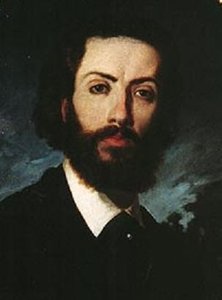
José Jiménez Aranda
1837 - 1903 , Espagne
L'essentiel de l'artiste
- Artistic Movement Or Style: Costumbrismo, Genre peinture
- Artists Or Movements Influenced By This Artist:
- Daniel Vázquez Díaz
- Albert Bierstadt
- Artists Who Influenced This Artist:
- Mariano Fortuny
- Goya
- Velázquez
- Date Of Birth: 1837
- Date Of Death: 1903
- Full Name: José Jiménez Aranda
- Nationality: Español
- Notable Artworks:
- Una Desgracia
- Don Quijote illustrations
- A Pass in the Bullring
- Place Of Birth: Seville, Espagne
Articles connexes

Maîtriser l'ombre : les 25 chefs-d'œuvre puissants de Francisco Goya
Explorez les 25 chefs-d'œuvre de Goya, entre ombre et lumière. Trouvez l'art ultime sur OriginalUniqueArt.com.
José Gutiérrez Solana: A Chronicle of Spanish Society Through Expressionist Vision
Explore the captivating world of José Gutiérrez Solana, a pivotal Spanish Expressionist painter. Discover his haunting depictions of early 20th-century Spain, influenced by Goya & El Greco. Learn about his key works and lasting legacy.

Ignacio Díaz Olano: Bridging Realism & Costumbrismo in Spanish Portraiture
Explore the captivating works of Ignacio Díaz Olano, a pivotal Spanish Realist painter. Discover his intimate portraits, evocative scenes of Andalusia, and unique 'Costumbrista' style. Learn about his legacy & find museum-quality reproductions.

Les 10 Chefs-d'œuvre du XIXe Siècle : Artistes et Décor Intemporels
Plongez au cœur du XIXe siècle avec les 10 œuvres incontournables de Manet, Monet et Renoir. Découvrez l'histoire, les techniques et l'émotion derrière ces chefs-d'œuvre impressionnistes et réalistes. Trouvez votre reproduction idéale sur OriginalUniqueArt.com !

José Villegas Cordero: A Study in Ecuadorian Modernism & National Identity
Explore the life & work of José Villegas Cordero, a pivotal Spanish painter celebrated for his historical scenes & Rococo portraits. Discover his legacy and influence on Ecuadorian modernism with OriginalUniqueArt.
