

 Aperçu en situation
 Partager
 Partager
 Détails
 Guide imprimable

 Télécharger
 Articles similaires
 Radiographie
 Voir le diaporama
 Statistiques
Thomas Amory II
 Oil On Canvas
- WallArt
- Neo-Classical Painting
 1772
1772- 19th Century
 101.0 x 127.0 cm
 Afficher la suite
Reproduction à l'huile faite à la main
Huile sur toile peinte à la main, avec cadre et dimensions personnalisés, réalisée sur commande par nos artistes. ( Passer au format impression Passer au format image numérique)




P118B €10

P118H €10

P118W €10

P438Z €10

P508JH €12

P508YH €12

P805H €10

P805Z €10

P919BZ €10

P919G €10

P919XJ €10

P959ZH €10

P968JZ €12

W106C €8

W218G €10

W218JH €8

W218Y €10

W307PJ €10

W316G €10

W316PJ €8

W316Y €10

W398PJ €8

W4111J €10

W500HY €15

W500JH €15

W692G €12

W849H €8

W940BG €15

W953PJ €8




Choisissez parmi nos formats prédéfinis qui respectent les proportions originales de l’œuvre.

Vous pouvez saisir vos propres dimensions pour l'adapter à un cadre ou à un espace spécifique. Si la taille sélectionnée ne correspond pas aux proportions de l'image d'origine, nous recadrerons l'œuvre ou prolongerons la peinture avec des éléments peints à la main supplémentaires. Une maquette numérique vous sera envoyée pour approbation avant le début de la production.
Veuillez noter que l'aperçu à l'écran ne reflète pas le recadrage ou l'extension réels. Seule la maquette montrera fidèlement la composition finale.
Bien que des tailles personnalisées soient disponibles, nous vous recommandons de sélectionner une dimension dans la liste prédéfinie afin de préserver les proportions d'origine.
Après la commande, l’équipe OriginalUniqueArt.com contactera le client par e-mail pour recueillir ses instructions et lui fournira une maquette d’aperçu
Livraison dans le monde entier () en 3 à 4 semaines au lieu des 5 semaines habituelles. (13 octobre). Aucun compromis sur la qualité.

Livraison express gratuite dans le monde entier

Toile de lin de haute qualité

Assurance transport complète

Garantie de remboursement des droits de douane

Garantie de fidélité des couleurs

Garantie de retour de 100 jours (uniquement en cas de défaut)

Garantie de remboursement à 100%

Tarifs dégressifs sur quantité
 L'option verre n'est disponible que pour les dimensions inférieures à 110 cm.

Thomas Amory II
Technique de reproduction
Format de la reproduction
-


Prix total final
€ 259
Thomas Amory II: A Portrait of Neo-Classical Refinement
John Singleton Copley’s “Thomas Amory II,” painted in 1772, is more than just a portrait; it's a meticulously crafted window into the burgeoning world of colonial Boston. This remarkable work, currently residing within the Corcoran Gallery of Art, exemplifies Copley’s mastery of Neo-Classicism – a style that sought to evoke the grandeur and order of ancient Greece and Rome while simultaneously reflecting the aspirations of the American elite. Measuring 101 x 127 cm, the canvas itself speaks of ambition and careful consideration, mirroring the subject's own status within his community.
- Subject & Social Context: The sitter, Thomas Amory II, a man in his late fifties or early sixties, embodies the wealth and influence of Boston’s merchant class. His attire – a meticulously tailored suit with white shirt and tie – is not merely clothing; it's a declaration of social standing, reflecting the values of order, propriety, and respectability that were highly prized during this period.
- Neo-Classical Influence: Copley’s choice of style is crucial to understanding the painting’s impact. Neo-Classicism emphasized clarity, balance, and restraint, rejecting the ornate excesses of Baroque art. The composition of “Thomas Amory II” – the carefully arranged pose, the subtle use of light and shadow – all contribute to this sense of controlled elegance.
The Artist's Hand: Technique and Detail
Copley’s skill as a painter is immediately apparent in the astonishing level of detail he achieved. Executed in oil on canvas, the painting showcases his mastery of capturing texture – from the smooth fabric of Amory’s clothing to the subtle sheen of his cane. The artist's attention to realism was legendary, and “Thomas Amory II” stands as a testament to this dedication. Note the precise rendering of the folds in the garment, the delicate lines of the face, and the way light catches on the polished surface of the cane – all hallmarks of Copley’s meticulous approach.
The painting's color palette is restrained yet sophisticated, dominated by muted tones that enhance the sense of dignity and composure. The use of chiaroscuro—the dramatic contrast between light and shadow—further emphasizes Amory’s features and adds a layer of depth to the composition. This technique was central to Copley’s ability to convey not just physical likeness but also the sitter's personality and mood.
A Window into 18th-Century Boston
"Thomas Amory II" offers a fascinating glimpse into the social and cultural landscape of colonial Boston in 1772. The inclusion of the column, likely part of a larger architectural setting, subtly reinforces the themes of order and stability that were central to the Neo-Classical aesthetic. It’s a portrait not just of an individual, but of an era – a time of burgeoning commerce, social ambition, and the nascent stirrings of political thought.
Copley's work, alongside pieces like "V. A. and Dr. Babcock," played a vital role in establishing American art’s identity, moving beyond mere imitation of European styles to forge a distinctly American visual language. The painting’s legacy continues through reproductions such as those offered by OriginalUniqueArt.com, allowing collectors and enthusiasts alike to experience the beauty and historical significance of this remarkable masterpiece.
Questions et réponses
À quelle étape de la carrière de John Singleton Copley « Thomas Amory II » appartient-elle ?
« Thomas Amory II » représente la période Mature Period de John Singleton Copley.
Avec quelle technique «Thomas Amory II» de John Singleton Copley est-elle réalisée ?
« Thomas Amory II » est réalisé en Oil On Canvas.
Comment puis-je obtenir une impression de «Thomas Amory II» de John Singleton Copley ?
Pour obtenir un tirage de «Thomas Amory II» de John Singleton Copley, il vous suffit de le commander sur cette page : une impression d'art sur toile de coton ou sur papier canvas d'archive.
Qui a créé « Thomas Amory II » et dans quel style s'inscrit cette œuvre ?
« Thomas Amory II » a été créé par John Singleton Copley dans le style Neo-Classical Painting. L'artiste et le mouvement définissent la tradition de l'œuvre.
Quelle est la date de création de «Thomas Amory II» de John Singleton Copley ?
L'œuvre «Thomas Amory II» de John Singleton Copley date de 1772.
Quelle atmosphère «Thomas Amory II» de John Singleton Copley apporte-t-il à un intérieur ?
Avec son atmosphère Elegant, « Thomas Amory II » est suggéré pour une Living Room.
Puis-je utiliser la réalité augmentée pour voir «Thomas Amory II» de John Singleton Copley dans ma pièce ?
Vous pouvez prévisualiser «Thomas Amory II» de John Singleton Copley sur votre propre mur grâce à la page Aperçu RA de l'œuvre, en utilisant la réalité augmentée sur un appareil compatible.
Quel usage est suggéré pour «Thomas Amory II» de John Singleton Copley ?
L'utilisation recommandée d'une impression de « Thomas Amory II » est Statement.
Biographie de l'artiste
Un pionnier de la peinture anglo-américaine (1738-1815)
John Singleton Copley, un peintre anglo-américain renommé, a laissé une marque indélébile sur le monde de l'art grâce à ses portraits captivants et ses paysages. Né à Boston, Massachusetts, de Richard et Mary Singleton Copley, d’origine anglo-irlandaise, le parcours artistique de John témoigne de son talent inné et de sa dévotion.Jeunesse et formation
Bien que les informations sur la formation formelle de John soient limitées, il est largement admis qu'il était principalement autodidacte, avec une inclination pour l’art dès son plus jeune âge. Son beau-père, Peter Pelham, graveur et peintre, a peut-être fourni quelques conseils, mais le développement artistique principal de John peut être attribué à sa propre persévérance.Contributions artistiques
Le travail de John Singleton Copley se caractérise par :- Portraiture: Ses portraits de personnalités influentes et fortunées de la Nouvelle-Angleterre coloniale sont remarquables pour leur souci du détail et l'incorporation d'artefacts qui reflètent la vie de ses sujets.
- Style innovant: La tendance de Copley à dépeindre des sujets de classe moyenne avec un accent sur leur vie quotidienne était une rupture avec le portrait traditionnel de son époque.
- Diversité artistique: Des autoportraits aux scènes historiques, l'œuvre de John témoigne de sa polyvalence et de ses compétences pour capturer un large éventail de sujets.
Œuvres notables et leur signification
Parmi les œuvres les plus remarquables de John Singleton Copley figurent :- Le Collapse de l'Earl of Chatham dans la Chambre des Lords (Galerie Tate (Londres, Royaume-Uni), huile sur toile), une représentation poignante d'un moment clé de l'histoire britannique.
- M. et Mme Ralph Izard (Alice Delancey) (Musée des Beaux-Arts (Boston, États-Unis), huile sur toile), un portrait exemplaire qui met en valeur l'attention du détail de John et sa capacité à capturer l'essence de ses sujets.
Héritage et influence
L’impact de John Singleton Copley sur le monde de l'art est indéniable. Son approche innovante du portrait et ses contributions à la peinture anglo-américaine ont influencé des générations d'artistes. Pour une compréhension plus approfondie du travail de John et de sa signification, visitez la page de OriginalUniqueArt consacrée à John Singleton Copley, qui présente une collection étendue de ses œuvres.Pour en savoir plus
Pour obtenir davantage d'informations sur l'histoire de la peinture et son évolution, consultez l’article Wikipédia sur l’histoire de la peinture. Pour explorer la vaste collection de OriginalUniqueArt, y compris des œuvres de différentes périodes et styles, parcourez la maison Burghley (Stamford, États-Unis) - un joyau caché de l'art américain et la découverte des œuvres du St Hilda’s College, Oxford, Royaume-Uni.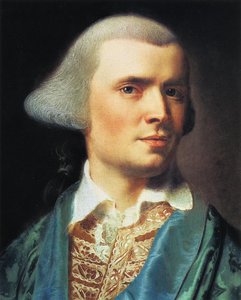
John Singleton Copley
1738 - 1815 , Royaume-Uni
En bref
- Artistic Movement Or Style: Portraiture, Réalisme
- Date Of Birth: 3 juillet 1738
- Date Of Death: 9 septembre 1815
- Full Name: John Singleton Copley
- Nationality: Anglo-Américain
- Notable Artworks:
- Le Collapse de l'Earl de Chatham
- Mr. et Mrs. Ralph Izard
- Watson et le Requin
- Place Of Birth (City And Country): Boston, Royaume-Uni
Articles similaires
L'Héritage Durable du Classicisme : Principes, Évolution et Influence dans l'Art Occidental
Explorez l'héritage durable du classicisme français : ses principes fondateurs, les grands maîtres (Poussin, Lorrain), et son influence sur l'art occidental. Analyse approfondie pour passionnés d'histoire de l'art.

Thomas Hudson: A Study in 18th-Century Portraiture & British Artistic Identity
Explore the life & work of Thomas Hudson, a leading 18th-century British portraitist. Discover his mastery of the 'Grand Manner,' influential style, and lasting impact on British art. Learn about his notable portraits like Judge William Noel & Alexander Van Aken.
Résonance Intemporelle : L'Esthétique Classique dans l'Art – Une Analyse Historique et Esthétique
Explorez l'esthétique classique dans l'art français avec notre analyse historique et philosophique approfondie. Découvrez les principes, figures clés et l'héritage durable de ce mouvement culturel majeur.

Les 10 Chefs-d'œuvre du Néoclassicisme : Artistes et Décor Intemporels
Plongez au cœur du Néoclassicisme avec les 10 chefs-d'œuvre incontournables de David, Ingres et autres maîtres. Découvrez l'histoire fascinante de ces tableaux célèbres et trouvez l'inspiration déco classique sur !

Neo-Classicism Reimagined: The Bold Return of Order, Power, and Timeless Aesthetic Authority
Explore the resurgence of Neo-Classicism. Discover how the bold return of order, symmetry, and mythic power is redefining modern luxury interiors through museum-quality, hand-painted reproductions and bespoke classical commissions for the discerning art collector.


