

 Aperçu en situation
 Partager
 Partager
 Détails
 Guide imprimable

 Télécharger
 Articles similaires
 Radiographie
 Voir le diaporama
 Statistiques
St. Sauveur
 Drawing
- WallArt
 1848
1848- 19th Century
 46.0 x 27.0 cm
 Afficher la suite
Giclées et impressions d'art
Impressions giclées ou sur toile de qualité musée, avec une production rapide et des finitions au choix. ( Acheter la peinture faite à la main Passer au format image numérique)




P118B €10

P118H €10

P118W €10

P438Z €10

P508JH €12

P508YH €12

P805H €10

P805Z €10

P919BZ €10

P919G €10

P919XJ €10

P959ZH €10

P968JZ €12

W106C €8

W218G €10

W218JH €8

W218Y €10

W307PJ €10

W316G €10

W316PJ €8

W316Y €10

W398PJ €8

W4111J €10

W500HY €15

W500JH €15

W692G €12

W849H €8

W940BG €15

W953PJ €8




Choisissez parmi nos formats prédéfinis qui respectent les proportions originales de l’œuvre.

Saisissez la largeur et la hauteur souhaitées pour qu'elles s'adaptent à votre cadre ou à votre mur. Une impression ne peut être que découpée, elle ne peut jamais être agrandie au-delà de l'image originale ; ainsi, un format de forme différente entraînera la perte d'une partie de l'image. Nous vous envoyons une maquette numérique pour approbation avant toute impression. L'image présentée sur cette page ne montre pas le recadrage réel — seule la maquette le permet.
Livraison dans le monde entier () en 2 semaines au lieu des 4/5 semaines habituelles. (24 octobre)

Livraison express gratuite dans le monde entier

Toile de lin de haute qualité

Assurance transport complète

Garantie de remboursement des droits de douane

Garantie de fidélité des couleurs

Garantie de retour de 100 jours (uniquement en cas de défaut)

Garantie de remboursement à 100%

Tarifs dégressifs sur quantité
 L'option verre n'est disponible que pour les dimensions inférieures à 110 cm.

St. Sauveur
Giclées et impressions d'art
Format de la reproduction
-


Prix total final
€ 70
A Moment Frozen in Graphite: The Vision of St. Sauveur
In the quiet, observant moments of 1848, amidst a journey through the heart of northern France, John Ruskin captured more than just architecture; he captured the very soul of Caen. As he sat by a window in an adjacent café, the world outside transformed into a delicate dance of light and shadow on paper. This exquisite black and white drawing of St. Sauveur serves as a profound testament to the artist's ability to translate the monumental weight of stone into the ethereal lightness of a sketch. The composition is a masterclass in architectural reverence, where every arch, column, and intricate carving is rendered with a precision that speaks to Ruskin’s legendary devotion to truth in art. There is a haunting beauty in how the structural elements emerge from the page, inviting the viewer to step into a bygone era of Victorian exploration and romantic discovery.
The technique employed in this study reveals the meticulous hand of a polymath who believed that seeing was an act of devotion. Through delicate linework and subtle tonal shifts, Ruskin breathes life into the facade of the church, creating a sense of depth that pulls the eye toward the ornate carvings and rhythmic columns. The presence of a solitary bird, perched subtly in the upper right corner, acts as a poetic counterpoint to the permanence of the stone, introducing a fleeting, organic element that softens the architectural rigor. This interplay between the enduring and the ephemeral is what makes the piece so captivating for the modern collector; it is not merely a technical study, but an emotional meditation on the passage of time and the preservation of beauty.
For the discerning interior designer or art enthusiast, a reproduction of St. Sauveur offers a sophisticated touch of historical elegance. The monochromatic palette allows this piece to integrate seamlessly into diverse decor styles, from the moody, academic atmosphere of a classic library to the clean, minimalist lines of a contemporary gallery space. It functions as a window into the nineteenth century, providing a focal point that sparks conversation and invites contemplation. Owning such a work is an opportunity to surround oneself with the intellectual legacy of one of Britain's greatest thinkers, bringing a sense of scholarly grace and timeless tranquility to any curated collection.
Questions et réponses
Quels sujets apparaissent dans «St. Sauveur» de John Ruskin ?
Les sujets de « St. Sauveur » sont architecture, columns, arches, bird, carvings, black and white.
Puis-je voir «St. Sauveur» de John Ruskin sous différents éclairages ?
« St. Sauveur » peut être examiné couche par couche sur la page Rayons X de l'œuvre, un visionneur inspiré d'un banc lumineux de restaurateur proposant onze lectures optiques de l'image.
Quelles sont les dimensions réelles de «St. Sauveur» de John Ruskin ?
Les dimensions enregistrées de «St. Sauveur» de John Ruskin sont 46 x 27 cm. Des reproductions peuvent être commandées dans d'autres formats tout en conservant les mêmes proportions.
Biographie de l'artiste
Premières années et éducation
John Ruskin, un polymathe anglais renommé, est né le 8 février 1819 à Londres, au Royaume-Uni. Son enfance a été façonnée par les influences contrastées de son père, John James Ruskin, et de sa mère, Margaret Cock. Cette dualité se refléterait plus tard dans ses divers intérêts et styles d'écriture. L’éducation précoce de Ruskin a eu lieu à la maison, sous la direction de ses parents et de tuteurs privés. Il a ensuite fréquenté King's College, Londres, où il s'est préparé à l'université d'Oxford. Cette base académique a jeté les bases de ses futures entreprises.Poursuites artistiques et littéraires
Les styles d’écriture et les formes littéraires de John Ruskin étaient aussi variés que ses intérêts. Il a écrit des essais, des traités, de la poésie, des conférences, des guides de voyage et même un conte de fées. Ses croquis et peintures détaillés de roches, de plantes, d'oiseaux, de paysages et de structures architecturales ont mis en valeur sa prouesse artistique. Son premier ouvrage majeur, Modern Painters (1843), a défendu le travail de J. M. W. Turner, en soulignant l'importance de la « vérité à la nature ». Cela a marqué le début de sa reconnaissance et de son influence généralisées sur l’art et la littérature du XIXe siècle.Œuvres notables et héritage
- Dawn, Coniston (Abbot Hall Art Gallery, Kendal, Royaume-Uni) - une peinture à l'eau mettant en valeur la capacité de Ruskin à capturer la beauté de la nature.
- Fors Clavigera (1871-1884) - une série de lettres aux travailleurs et aux ouvriers de Grande-Bretagne, soulignant ses préoccupations sociales et politiques.
Influences et développement
John Ruskin a été influencé par une variété de sources intellectuelles et artistiques. Son intérêt pour la nature et l'architecture gothique est évident dans ses écrits et ses peintures. Il était un critique virulent de l’industrialisation et plaidait pour un retour à des formes d'art plus simples et plus naturelles. Ses idées ont été influencées par les penseurs romantiques tels que William Wordsworth et Samuel Taylor Coleridge, ainsi que par les théories esthétiques de Johann Wolfgang von Goethe. Ruskin a développé une philosophie complexe de l’art qui mettait l’accent sur la vérité, la beauté et le lien entre l'art et la moralité.Signification historique
John Ruskin a eu une influence profonde sur le monde de l’art et de la pensée victorienne. Il est considéré comme un des critiques d'art les plus importants du XIXe siècle, et ses idées ont influencé les mouvements préraphaélites et Arts and Crafts. Son plaidoyer pour la préservation architecturale a contribué à sauver de nombreux bâtiments historiques en Grande-Bretagne. Ruskin était également un social réformateur passionné qui s’est efforcé d’améliorer les conditions de vie des travailleurs et de promouvoir l’éducation.Liens utiles depuis OriginalUniqueArt.com
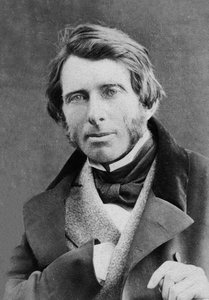
John Ruskin
1819 - 1900 , Royaume-Uni
En bref
- Artistic Movement Or Style: Préraphaélisme, critique d'art
- Artists Or Movements Influenced By This Artist: ['Préraphaélites']
- Artists Who Influenced This Artist: ['J. M. W. Turner']
- Date Of Birth: 8 février 1819
- Date Of Death: 1900
- Full Name: John Ruskin
- Nationality: Britannique
- Notable Artworks:
- Dawn, Coniston
- Fors Clavigera
- Place Of Birth (City And Country): Londres, Royaume-Uni
Articles connexes
The Eloquent Line: Exploring the Artistic Significance of Sketches Across Movements and Media
Explore the profound artistic significance of sketches throughout history. From Renaissance masters to modern innovators like Van Gogh & Guston, discover how these foundational works reveal technique, emotion, and vision. Learn more at OriginalUniqueArt.

Les 10 Chefs-d'œuvre Noirs : Peintures Célèbres et Décoration d'Intérieur
Plongez dans l'univers fascinant des 10 plus beaux tableaux noirs de l'histoire de l'art. Découvrez les secrets de Goya, Manet, Rothko et autres maîtres. Inspirez votre décoration intérieure avec !
Les 10 Chefs-d'œuvre Dominés par le Noir : Art, Histoire & Décoration
Plongez dans l'univers fascinant des 10 plus beaux tableaux dominés par le noir. Découvrez les histoires, techniques et symbolisme de chefs-d'œuvre intemporels. Reproductions d'art de qualité musée sur !
Shadows & Splendor: A Journey Through the Soul of Gothic Art and Architectural Grandeur
Embark on a profound journey through the spiritual intensity of Gothic art. Explore the architectural marvels, luminous stained glass, and sacred sculptures that define this era of grandeur and human devotion.

Gothic Vibes: From Dark Shadows to Bold Modern Edge | The Ultimate Trend Forecast
Explore the evolution of Gothic vibes, from historical shadows to bold modern edge. Discover how dark aesthetics, noir interiors, and contemporary subcultures are redefining modern design through a high-impact, trend-focused lens.