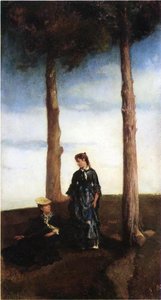
Aperçu en situation
 Envoyer
 Partager
 Détails de l'œuvre
 Guide
Guide

 Télécharger l'image
 Articles similaires
 Radiographie
 Diaporama
 Questions et réponses
 Statistiques
The Dawn


 Lire la suite
Giclées et impressions d'art
Impressions giclées ou sur toile de qualité musée, avec une production rapide et des finitions au choix. ( Commander la reproduction peinte à la main Passer au format numérique)




P118B €10

P118H €10

P118W €10

P438Z €10

P508JH €12

P508YH €12

P805H €10

P805Z €10

P919BZ €10

P919G €10

P919XJ €10

P959ZH €10

P968JZ €12

W106C €8

W218G €10

W218JH €8

W218Y €10

W307PJ €10

W316G €10

W316PJ €8

W316Y €10

W398PJ €8

W4111J €10

W500HY €15

W500JH €15

W692G €12

W849H €8

W940BG €15

W953PJ €8




Choisissez parmi nos formats prédéfinis qui respectent les proportions originales de l’œuvre.

Saisissez la largeur et la hauteur souhaitées pour qu'elles s'adaptent à votre cadre ou à votre mur. Une impression peut être recadrée, mais jamais agrandie au-delà de l'image originale ; ainsi, un format de forme différente entraînera la perte d'une partie de l'image. Nous vous envoyons une maquette numérique pour approbation avant toute impression. L'image présentée sur cette page ne montre pas le recadrage réel — seule la maquette le permet.
Livraison dans le monde entier () en 2 semaines au lieu des 4/5 semaines habituelles. (3 novembre)

Livraison express gratuite dans le monde entier

Toile de lin de qualité supérieure

Assurance transport complète

Garantie de remboursement des droits de douane

Garantie de fidélité des couleurs

Politique de retour de 100 jours (uniquement en cas de défaut)

Garantie de remboursement à 100%

Offre de tarifs dégressifs
 L'option verre n'est disponible que pour les dimensions inférieures à 110 cm.

The Dawn
Giclées et impressions d'art
Format de la reproduction
-


Prix total
€ 72
A Symphony of Light and Grace
In the quiet transition between night and day, John La Farge’s 1899 masterpiece, "The Dawn," captures a moment that feels suspended in eternity. This evocative work is far more than a mere coastal landscape; it is a profound exploration of the Symbolist movement, where the boundaries between the physical world and the spiritual realm begin to blur. At the heart of the composition, a woman dressed in flowing white stands upon a sun-drenched beach, her arms outstretched toward the heavens. Her posture suggests a delicate tension between flight and surrender, as if she is caught in a divine ascent or perhaps a graceful descent into the sea. Beside her, two silent figures anchor the scene, providing a sense of human scale that emphasizes the woman’s solitary, transcendent communion with the rising sun.
The painting serves as a breathtaking study of Impressionistic reverie, where La Farge moves beyond simple visual observation to evoke deep-seated emotional responses. Through his masterful use of light, the artist transforms the shoreline into a realm of shimmering color and atmospheric haze. The diffused glow of the sunrise is rendered with such precision that one can almost feel the warmth of the first rays touching the sand. To achieve this luminous effect, La Fringe employed thick impasto, applying paint with a tactile richness that lends a physical weight to the light itself. This technique creates a dynamic texture, where the heavy strokes of the brush mimic the rhythmic movement of the tide and the ethereal drift of the clouds above.
Symbolism and the Spirit of Rebirth
For the discerning collector or interior designer, "The Dawn" offers a wealth of symbolic depth that transcends its aesthetic beauty. The imagery of the rising sun is a universal emblem of rebirth, hope, and renewal. By positioning the central figure in such an expansive, upward-reaching pose, La Farge alludes to biblical themes of ascension and divine grace. The white of her dress acts as a canvas for the shifting hues of the morning sky, symbolizing purity and the awakening of the soul. This layer of spiritual contemplation makes the piece particularly compelling for spaces intended to inspire peace, reflection, or a sense of wonder.
The historical context of the work further elevates its significance. Painted at the turn of the century, "The Dawn" represents a pivotal moment in American art history when artists were beginning to blend European traditions with a uniquely American sensibility. La Farge, a pioneer in both mural design and stained glass, brought a specialist's eye for color and light to his canvases. For those looking to adorn a home or gallery with a high-quality reproduction, this painting provides an unparalleled opportunity to introduce a sense of sublime beauty and historical prestige. It is a piece that does not merely decorate a wall; it breathes life into a room, inviting viewers to pause and witness the eternal dance of light and spirit.
Questions et réponses
Quelle ambiance et quelle émotion «The Dawn» de John La Farge exprime-t-il ?
L'atmosphère qui se dégage de «The Dawn» de John La Farge est Romantic, et sa tonalité émotionnelle est Romantic.
«The Dawn» de John La Farge est-il une composition en portrait, en paysage ou carrée ?
«The Dawn» de John La Farge présente un format Square. Le format décrit les proportions de la composition.
L'œuvre « The Dawn » se trouve-t-elle dans le pays de son créateur ?
Oui — l'œuvre est conservée dans le pays d'origine de l'artiste. « The Dawn » est conservée en États-Unis d'Amérique, tandis que John La Farge est né(e) en États-Unis d'Amérique.
Biographie de l'artiste
Premières années et formation
John La Farge, peintre américain renommé, créateur de vitraux, décorateur et écrivain, est né le 31 mars 1835 à New York City, issu d'une famille française aisée. Élevé dans un environnement bilingue, son intérêt pour l’art s’est manifesté durant ses études au Mount St. Mary’s University dans le Maryland et au St. John’s College (aujourd’hui Fordham University) à New York.Carrière artistique
Les premiers dessins et paysages de La Farge, réalisés lors de ses études à Newport, témoignent d'une originalité marquée, notamment dans la gestion des valeurs chromatiques. De nombreuses peintures mythologiques et religieuses, dont *Virgil*, ont été réalisées dans une zone du Rhode Island appelée « le Paradis », une forêt que La Farge nommait « le bosquet sacré » en référence à Virgile.- Œuvres notables :
- Le bosquet sacré (Rhode Island)
- Trinity Church, Boston (1873) – premier mural de La Farge
- Église de l'Ascension (New York) – présentant un grand retable
Innovations et héritage
La Farge fut un pionnier dans l’étude de l’art japonais, ce qui se reflète dans son œuvre. Il a maintenu un atelier au 51 West 10th Street à Greenwich Village, aujourd'hui faisant partie du site de l'Eugene Lang College de la New School University.- Contributions clés :
- Introduction du verre opalescent dans les vitraux
- Travaux pionniers en peinture murale pour les bâtiments publics et les églises
- Voyages extensifs en Asie et dans le Pacifique Sud, inspirant sa peinture
Vie ultérieure et décès
La Farge est décédé le 14 novembre 1910 à l'hôpital Butler à Providence, Rhode Island. Il a été inhumé au cimetière de Green-Wood à Brooklyn, New York.- Ressources pertinentes :
Conclusion
Les approches innovantes de La Farge en matière d’art, notamment dans les vitraux et la peinture murale, ont eu un impact durable sur l'art américain. Son travail continue d'inspirer les artistes et les amateurs d'art, faisant de lui une figure essentielle de l'histoire de l'art américain. *Le bosquet sacré*, *Trinity Church* à Boston et *l’Église de l'Ascension* ne sont que quelques exemples des œuvres notables de La Farge, témoignant de sa maîtrise de la couleur et de la composition. En tant qu'artiste, écrivain et décorateur, l'héritage de John La Farge perdure comme un témoignage de sa créativité sans limites.
John La Farge
1835 - 1910 , États-Unis d'Amérique
L'essentiel de l'artiste
- Artistes Influents:
- William Morris Hunt
- Thomas Couture
- Date De Décès: 14 novembre 1910
- Date De Naissance: 31 mars 1835
- Lieu De Naissance: New York, États-Unis
- Mouvement Artistique: Symbolisme, Impressionnisme
- Nationalité: Américaine
- Nom Complet: John La Farge
- Notable Artworks:
- The Sacred Grove
- Trinity Church, Boston
- Church of the Ascension
Articles connexes

John Singer Sargent : Les 25 Œuvres Maîtresses d'un Portraitiste Éminent | OriginalUniqueArt
Plongez dans l'univers de John Singer Sargent : découvrez les 25 œuvres qui ont marqué l'histoire de l'art. Portraits impressionnants, réalisme exquis et couleurs vibrantes. Retrouvez ces chefs-d'œuvre en reproduction haute définition sur OriginalUniqueArt.com.

Réalisme Américain : 10 Chefs-d'œuvre Incontournables pour une Déco Inspirée
Plongez au cœur du Réalisme Américain avec 10 chefs-d'œuvre d'Edward Hopper, Andrew Wyeth et plus. Découvrez l'histoire et les techniques de ces artistes emblématiques. Reproductions de tableaux de qualité musée sur OriginalUniqueArt.com !
John La Farge: Pioneering American Colorism & Japonisme's Influence
Explore the groundbreaking work of John La Farge, a pioneer of American colorism and stained glass. Discover his captivating Japonisme-inspired murals & lasting legacy in 19th-century art. Expert insights for collectors.

Les 25 chefs-d'œuvre de John Constable : l'âme du paysage anglais
Explorez les 25 chefs-d'œuvre de John Constable et l'âme du romantisme anglais. Découvrez toute la collection sur OriginalUniqueArt.com.

John George Brown: Capturing American Life & Sentiment in 19th-Century Genre Painting
Explore the captivating genre paintings of John George Brown, celebrated for his realistic depictions of 19th-century American life. Discover his legacy & find museum-quality reproductions at OriginalUniqueArt.