

 Aperçu en situation
 Partager
 Partager
 Détails
 Guide imprimable

 Télécharger
 Articles similaires
 Radiographie
 Voir le diaporama
 Statistiques
Hilltop


 Afficher la suite
Giclées et impressions d'art
Impressions giclées ou sur toile de qualité musée, avec une production rapide et des finitions au choix. ( Acheter la peinture faite à la main Passer au format image numérique)




P118B €10

P118H €10

P118W €10

P438Z €10

P508JH €12

P508YH €12

P805H €10

P805Z €10

P919BZ €10

P919G €10

P919XJ €10

P959ZH €10

P968JZ €12

W106C €8

W218G €10

W218JH €8

W218Y €10

W307PJ €10

W316G €10

W316PJ €8

W316Y €10

W398PJ €8

W4111J €10

W500HY €15

W500JH €15

W692G €12

W849H €8

W940BG €15

W953PJ €8




Choisissez parmi nos formats prédéfinis qui respectent les proportions originales de l’œuvre.

Saisissez la largeur et la hauteur souhaitées pour qu'elles s'adaptent à votre cadre ou à votre mur. Une impression ne peut être que découpée, elle ne peut jamais être agrandie au-delà de l'image originale ; ainsi, un format de forme différente entraînera la perte d'une partie de l'image. Nous vous envoyons une maquette numérique pour approbation avant toute impression. L'image présentée sur cette page ne montre pas le recadrage réel — seule la maquette le permet.
Livraison dans le monde entier () en 2 semaines au lieu des 4/5 semaines habituelles. (23 octobre)

Livraison express gratuite dans le monde entier

Toile de lin de haute qualité

Assurance transport complète

Garantie de remboursement des droits de douane

Garantie de fidélité des couleurs

Garantie de retour de 100 jours (uniquement en cas de défaut)

Garantie de remboursement à 100%

Tarifs dégressifs sur quantité
 L'option verre n'est disponible que pour les dimensions inférieures à 110 cm.

Hilltop
Giclées et impressions d'art
Format de la reproduction
-


Prix total final
€ 70
The Essence of a Moment – John La Farge’s Hilltop
John La Farge's “Hilltop,” painted in 1862, isn’t merely a depiction of a woodland scene; it’s a carefully constructed evocation of the American spirit—a blend of Romantic idealism and burgeoning realism. The painting captures a fleeting moment within a verdant landscape, centered around two figures standing beneath a canopy of trees. The composition immediately draws the eye to this intimate tableau, suggesting a shared experience of quiet contemplation amidst nature’s grandeur. La Farge masterfully employs light and shadow to create a sense of depth and atmosphere, imbuing the scene with a palpable warmth that belies the cool tones of the palette.

Image: John La Farge, portrait by an unknown artist
A Symphony of Color and Technique
La Farge’s distinctive approach to color is immediately apparent in “Hilltop.” He eschews the stark realism favored by some contemporary artists, instead opting for a rich, luminous palette—a hallmark of his style. The greens are not uniform; they range from deep forest hues to lighter, almost ethereal shades, suggesting varying depths and textures within the foliage. The figures themselves are rendered with subtle gradations of tone, conveying a sense of volume and form without resorting to sharp outlines. La Farge’s technique is characterized by loose brushstrokes and a delicate layering of paint—a method that contributes significantly to the painting's atmospheric quality. He was particularly known for his innovative use of glass in stained-glass windows, which informed his approach to color mixing and light manipulation.
Historical Context: Japonisme and American Pastoral
“Hilltop” is deeply rooted in the artistic currents of its time—particularly the influence of Japanese art, or “Japonisme,” which was sweeping through Europe and America during the mid-19th century. La Farge’s fascination with Japan led him to incorporate elements of Japanese composition and color theory into his work. The flattened perspective, simplified forms, and emphasis on decorative patterns—all characteristic of Japanese prints—are subtly reflected in “Hilltop.” Simultaneously, the painting embodies a romanticized vision of American pastoral life—a nostalgic yearning for an idealized past rooted in rural simplicity and connection to nature. This theme resonated strongly with artists seeking to define a distinctly American artistic identity.
Symbolism and Emotional Resonance
Beyond its aesthetic qualities, “Hilltop” is rich in symbolic meaning. The two figures, seemingly engaged in conversation, represent the potential for human connection and shared experience within the natural world. Their placement beneath the trees suggests a sense of humility and reverence—a recognition of nature’s power and beauty. The dappled sunlight filtering through the foliage creates an atmosphere of tranquility and serenity, inviting the viewer to step into the scene and share in this moment of quiet contemplation. La Farge's work evokes a feeling of peacefulness and nostalgia, reminding us of the enduring appeal of simple pleasures and the restorative power of nature.
Collecting “Hilltop” – A Legacy of American Art
Reproductions of John La Farge’s “Hilltop” offer a beautiful way to bring this evocative painting into your home or office. Whether you choose a fine art print on canvas, archival paper, or a meticulously crafted hand-painted reproduction, you'll be acquiring a piece of American art history—a testament to La Farge’s artistic vision and his profound understanding of color, composition, and the human spirit. Consider framing your chosen reproduction in a style that complements its timeless appeal, allowing this captivating scene to continue inspiring for generations to come.
Questions et réponses
Quel emplacement convient au format de «Hilltop» de John La Farge ?
Le format (Tall) et l'espace recommandé (Living Room) sont les deux caractéristiques de disposition enregistrées pour «Hilltop» de John La Farge.
«Hilltop» de John La Farge est-il une peinture, un dessin ou une estampe ?
« Hilltop » est une œuvre de type WallArt.
Quelle est la date de création de «Hilltop» de John La Farge ?
«Hilltop» date de 1862. Cette date inscrit l'œuvre dans la carrière de John La Farge ainsi que dans son époque.
Biographie de l'artiste
Premières années et formation
John La Farge, peintre américain renommé, créateur de vitraux, décorateur et écrivain, est né le 31 mars 1835 à New York City, issu d'une famille française aisée. Élevé dans un environnement bilingue, son intérêt pour l’art s’est manifesté durant ses études au Mount St. Mary’s University dans le Maryland et au St. John’s College (aujourd’hui Fordham University) à New York.Carrière artistique
Les premiers dessins et paysages de La Farge, réalisés lors de ses études à Newport, témoignent d'une originalité marquée, notamment dans la gestion des valeurs chromatiques. De nombreuses peintures mythologiques et religieuses, dont *Virgil*, ont été réalisées dans une zone du Rhode Island appelée « le Paradis », une forêt que La Farge nommait « le bosquet sacré » en référence à Virgile.- Œuvres notables :
- Le bosquet sacré (Rhode Island)
- Trinity Church, Boston (1873) – premier mural de La Farge
- Église de l'Ascension (New York) – présentant un grand retable
Innovations et héritage
La Farge fut un pionnier dans l’étude de l’art japonais, ce qui se reflète dans son œuvre. Il a maintenu un atelier au 51 West 10th Street à Greenwich Village, aujourd'hui faisant partie du site de l'Eugene Lang College de la New School University.- Contributions clés :
- Introduction du verre opalescent dans les vitraux
- Travaux pionniers en peinture murale pour les bâtiments publics et les églises
- Voyages extensifs en Asie et dans le Pacifique Sud, inspirant sa peinture
Vie ultérieure et décès
La Farge est décédé le 14 novembre 1910 à l'hôpital Butler à Providence, Rhode Island. Il a été inhumé au cimetière de Green-Wood à Brooklyn, New York.- Ressources pertinentes :
Conclusion
Les approches innovantes de La Farge en matière d’art, notamment dans les vitraux et la peinture murale, ont eu un impact durable sur l'art américain. Son travail continue d'inspirer les artistes et les amateurs d'art, faisant de lui une figure essentielle de l'histoire de l'art américain. *Le bosquet sacré*, *Trinity Church* à Boston et *l’Église de l'Ascension* ne sont que quelques exemples des œuvres notables de La Farge, témoignant de sa maîtrise de la couleur et de la composition. En tant qu'artiste, écrivain et décorateur, l'héritage de John La Farge perdure comme un témoignage de sa créativité sans limites.
John La Farge
1835 - 1910 , États-Unis d'Amérique
En bref
- Artistes Influents:
- William Morris Hunt
- Thomas Couture
- Date De Décès: 14 novembre 1910
- Date De Naissance: 31 mars 1835
- Lieu De Naissance: New York, États-Unis
- Mouvement Artistique: Symbolisme, Impressionnisme
- Nationalité: Américaine
- Nom Complet: John La Farge
- Notable Artworks:
- The Sacred Grove
- Trinity Church, Boston
- Church of the Ascension
Articles connexes
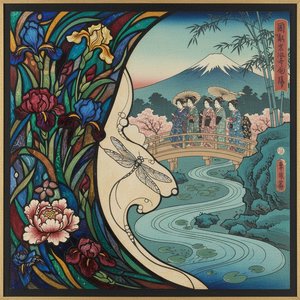
John La Farge: Pioneering American Colorism & Japonisme's Influence
Explore the groundbreaking work of John La Farge, a pioneer of American colorism and stained glass. Discover his captivating Japonisme-inspired murals & lasting legacy in 19th-century art. Expert insights for collectors.

Constable : Les 25 Chefs-d'Œuvre du Maître Anglais | OriginalUniqueArt
Plongez dans l'univers de John Constable avec les 25 œuvres incontournables du maître anglais. Découvrez l'histoire, la technique et l'émotion derrière ses paysages romantiques. Reproductions de qualité muséale sur OriginalUniqueArt.com.

Les 10 Chefs-d'œuvre Noirs : Peintures Célèbres et Décoration d'Intérieur
Plongez dans l'univers fascinant des 10 plus beaux tableaux noirs de l'histoire de l'art. Découvrez les secrets de Goya, Manet, Rothko et autres maîtres. Inspirez votre décoration intérieure avec !

John Singer Sargent : Les 25 Œuvres Maîtresses d'un Portraitiste Éminent | OriginalUniqueArt
Plongez dans l'univers de John Singer Sargent : découvrez les 25 œuvres qui ont marqué l'histoire de l'art. Portraits impressionnants, réalisme exquis et couleurs vibrantes. Retrouvez ces chefs-d'œuvre en reproduction haute définition sur OriginalUniqueArt.com.

Les 10 Chefs-d'œuvre du Paysage Romantique : Artistes et Décor d'Intérieur
Plongez dans l'émotion du Romantisme avec les 10 plus beaux paysages de Friedrich, Turner & Delacroix. Découvrez leur histoire et trouvez l'inspiration déco idéale sur OriginalUniqueArt.com !


