

 Aperçu en situation
 Partager
 Partager
 Détails

 Télécharger
 Articles similaires
 Radiographie
 Voir le diaporama
 Statistiques
Stapleton Cotton (1773–1865), Field Marshal Viscount Combermere, GCB, KST
 Acrylic On Canvas
- WallArt
- Neoclassical Portraiture
 1839
1839 141.0 x 110.0 cm
 English Heritage
 Afficher la suite
Reproduction à l'huile faite à la main
Huile sur toile peinte à la main, avec cadre et dimensions personnalisés, réalisée sur commande par nos artistes. ( Passer au format impression Passer au format image numérique)




P118B $10

P118H $10

P118W $10

P438Z $10

P508JH $12

P508YH $12

P805H $10

P805Z $10

P919BZ $10

P919G $10

P919XJ $10

P959ZH $10

P968JZ $12

W106C $8

W218G $10

W218JH $8

W218Y $10

W307PJ $10

W316G $10

W316PJ $8

W316Y $10

W398PJ $8

W4111J $10

W500HY $15

W500JH $15

W692G $12

W849H $8

W940BG $15

W953PJ $8




Choisissez parmi nos formats prédéfinis qui respectent les proportions originales de l’œuvre.

Vous pouvez saisir vos propres dimensions pour l'adapter à un cadre ou à un espace spécifique. Si la taille sélectionnée ne correspond pas aux proportions de l'image d'origine, nous recadrerons l'œuvre ou prolongerons la peinture avec des éléments peints à la main supplémentaires. Une maquette numérique vous sera envoyée pour approbation avant le début de la production.
Veuillez noter que l'aperçu à l'écran ne reflète pas le recadrage ou l'extension réels. Seule la maquette montrera fidèlement la composition finale.
Bien que des tailles personnalisées soient disponibles, nous vous recommandons de sélectionner une dimension dans la liste prédéfinie afin de préserver les proportions d'origine.
Après la commande, l’équipe OriginalUniqueArt.com contactera le client par e-mail pour recueillir ses instructions et lui fournira une maquette d’aperçu
Livraison dans le monde entier () en 3 à 4 semaines au lieu des 5 semaines habituelles. (13 septembre). Aucun compromis sur la qualité.

Livraison express gratuite dans le monde entier

Toile de lin de haute qualité

Assurance transport complète

Garantie de remboursement des droits de douane

Garantie de fidélité des couleurs

Garantie de retour de 100 jours (uniquement en cas de défaut)

Garantie de remboursement à 100%

Tarifs dégressifs sur quantité
 L'option verre n'est disponible que pour les dimensions inférieures à 110 cm.

Stapleton Cotton (1773–1865), Field Marshal Viscount Combermere, GCB, KST
Technique de reproduction
Format de la reproduction
-


Prix total final
$ 300
A Portrait of Command: Stapleton Cotton by John Hayter
The canvas before you presents more than just a likeness; it’s a carefully constructed tableau of power, duty, and the weight of empire – a portrait of Field Marshal Stapleton Cotton, painted in 1839 by the esteemed John Hayter. This is not merely a depiction of a man; it's an embodiment of Victorian Britain’s military ethos, rendered with meticulous detail and imbued with a subtle yet profound sense of authority. Hayter, Painter-in-Ordinary to Queen Victoria, possessed a rare ability to capture not just physical appearance but also the very essence of his subjects – a skill evident in Cotton’s commanding presence and the dignified bearing he projects. The painting immediately draws the eye to Cotton's figure, standing tall and resolute against a subtly rendered background, suggesting both strength and an unwavering commitment to service.The Man and His Times
Stapleton Cotton was a pivotal figure in 19th-century British military history. Rising through the ranks during the Napoleonic Wars and continuing his distinguished career throughout the expansion of the Empire, he served with distinction in campaigns across Europe, India, and Africa. He commanded cavalry brigades with remarkable success, earning him numerous accolades and ultimately achieving the rank of Field Marshal – a position of immense responsibility and prestige. The portrait itself reflects this elevated status; Cotton is depicted in full military regalia, signifying his leadership role and highlighting his service to the Crown. The backdrop, hinting at a formal setting within an estate or government building, further reinforces his position as a man of considerable influence and authority. It’s important to note that 1839 was a period of significant social and political change in Britain – the aftermath of the Napoleonic Wars, the rise of industrialization, and the ongoing expansion of the Empire all shaped the artistic sensibilities of the time. Hayter's work exemplifies this by presenting a portrait that is both celebratory of military achievement and subtly indicative of the broader societal values of the era.Technique and Style: A Masterclass in Portraiture
Hayter’s technique is characterized by an extraordinary level of realism combined with a masterful understanding of light and shadow. He employed a meticulous approach, utilizing chalk drawings as preliminary sketches to establish proportions and tonal values before committing them to oil paint. This layering process allowed for incredible detail – observe the texture of Cotton's uniform, the subtle creases in his clothing, and the intricate patterns on his sword hilt. The artist’s use of chiaroscuro—the dramatic contrast between light and dark—creates a sense of depth and volume, emphasizing Cotton’s physical presence and projecting an aura of strength and gravitas. Furthermore, Hayter's skill lies in capturing not just the outward appearance but also the inner character of his subject. Cotton’s gaze is direct and unwavering, conveying a sense of self-assurance and quiet dignity. The slight furrow of his brow suggests contemplation and strategic thinking – qualities essential for a military leader.Symbolism and Emotional Resonance
Beyond its technical brilliance, the portrait is rich in symbolic meaning. The horses flanking Cotton represent power, loyalty, and the formidable force of the British army. Their posture mirrors his own, reinforcing the idea of shared command and mutual respect. The inclusion of the cup suggests a moment of reflection or perhaps a celebratory toast – hinting at the rewards associated with military service. More subtly, the composition itself—Cotton centered within the frame—underscores his importance and authority. The painting evokes a complex range of emotions: admiration for Cotton’s achievements, respect for his dedication to duty, and a sense of the grandeur and ambition that defined Victorian Britain. It's a portrait that invites contemplation, prompting viewers to consider not only the life of Stapleton Cotton but also the broader historical context in which he lived and served.A Timeless Masterpiece: Reproductions and Legacy
Today, John Hayter’s portrait of Stapleton Cotton stands as a testament to his artistic skill and a valuable window into Victorian society. High-quality reproductions offer an accessible way to appreciate this remarkable work of art, bringing its details and emotional resonance to a wider audience. Whether displayed in a private collection or incorporated into a stately home's interior design, this painting continues to captivate viewers with its compelling narrative and enduring beauty. It’s a piece that speaks volumes about leadership, honor, and the legacy of an extraordinary military figure.Biographie de l'artiste
John Hayter : Une Vie en Portrait
John Hayter RA (1800-1895) était un peintre portraitiste anglais renommé, surtout connu pour son rôle de Peintre en Ordinaire à la Reine Victoria. Sa carrière s'étendait sur une grande partie du 19e siècle, capturant les portraits de personnalités importantes et contribuant significativement à la peinture de portrait victorienne.
Jeunesse et Débuts Artistiques
Né à St James’s, au Royaume-Uni, John Hayter venait d'une famille ancrée dans la tradition artistique. Il était le second fils du miniaturiste Charles Hayter et frère de Sir George Hayter, également un portraitiste prospère. Cette influence familiale a sans aucun doute joué un rôle crucial dans la formation de son développement artistique précoce.
Hayter est entré aux Royal Academy Schools en 1815, marquant le début formel de sa formation. Il a rapidement commencé à exposer à la Royal Academy la même année, démontrant un talent et une ambition précoces.
Développement Artistique et Style
Le style artistique de Hayter a évolué au sein des conventions de la peinture de portrait victorienne, mettant l'accent sur le réalisme et l'attention aux détails. Bien qu'il soit compétent en peinture à l'huile, il est devenu particulièrement renommé pour ses portraits exécutés en pastel ou crayon. Ces dessins étaient très recherchés et souvent gravés pour publication, notamment dans le Court Album.
Son travail reflète une sensibilité au caractère et au statut social, capturant non seulement la ressemblance physique mais aussi des éléments de personnalité et de statut. Il équilibrait habilement la composition formelle avec un aspect accessible, rendant ses portraits attrayants pour un large public.
Réalisations Majeures et Œuvres Notables
- Peintre en Ordinaire à la Reine Victoria : Cette nomination prestigieuse a consolidé sa réputation et lui a offert des occasions de peindre la Reine elle-même, dès qu'elle avait douze ans.
- Portraits de Personnalités Importantes : Il a créé des portraits de nombreux individus notables, dont le duc de Wellington et l’opéraire Giuditta Pasta.
- Le Court Album : Ses dessins de portrait en pastel étaient fréquemment présentés dans le Court Album (1850-1857), une collection de portraits de la noblesse féminine.
Parmi ses œuvres notables figurent:
- Lady Augusta FitzClarence Kennedy Erskine et ses enfants
- Sir Benjamin Hallowell Carew
- Miss Moore Grant
- Viscountesse Dungannon
Influences et Héritage
Hayter a été directement influencé par son père, Charles Hayter, dont l'expertise en miniature a probablement influencé son propre approche méticuleuse de la peinture de portrait. Il a également travaillé dans le contexte plus large des traditions artistiques britanniques, s’inspirant d’artistes comme Sir Thomas Lawrence.
Bien qu’il ne soit pas aussi largement célébré aujourd'hui que certains de ses contemporains, John Hayter a joué un rôle important dans la documentation de la société victorienne à travers ses portraits. Son travail fournit des informations précieuses sur la mode, les coutumes sociales et les personnalités de l'époque. Sa maîtrise du pastel témoigne d’une technique délicate qui capture à la fois la ressemblance et le caractère.
Signification Historique
La carrière de John Hayter a coïncidé avec une période de changements sociaux et politiques importants en Grande-Bretagne. Ses portraits offrent un aperçu des vies de ceux qui ont navigué dans cette ère, des membres de la noblesse aux personnalités importantes de la politique et des arts. Son œuvre sert de document historique important, préservant la mémoire visuelle de l'Angleterre victorienne.

John Hayter
1800 - 1895 , Royaume-Uni
En bref
- Artistic Movement Or Style: Portraiture victorienne
- Artists Who Influenced This Artist:
- Charles Hayter
- Thomas Lawrence
- Date Of Birth: 1800
- Date Of Death: 1895
- Full Name: John Hayter
- Nationality: Anglais
- Notable Artworks:
- Lady Augusta FitzClarence
- Sir Benjamin Carew
- Miss Moore Grant
- Viscountess Dungannon
- Place Of Birth: St James's, Royaume-Uni
Articles similaires
Les 25 Chefs-d'œuvre du British Museum : Art, Histoire & Décor d'Exception
Plongez au cœur du British Museum avec nos 25 œuvres incontournables. Découvrez l'histoire fascinante des plus grands artistes, de l'art égyptien aux chefs-d'œuvre classiques. Trouvez l'inspiration déco et sublimez votre intérieur avec OriginalUniqueArt.com ! Explorez la collection.
Walter Greaves: A Study in Victorian Realism & the Social Landscape of British Art
Explore the life & work of Walter Greaves, a key Victorian realist painter influenced by Whistler. Discover his London streetscapes, portraits, and enduring legacy. Learn about art appraisal & reproduction options at OriginalUniqueArt.
James Sant: Capturing Victorian Childhood & the Evolving Landscape of British Genre Painting
Explore the life & art of James Sant (1820-1916), renowned Victorian portraitist to Queen Victoria. Discover his captivating depictions of childhood, landscapes, and aristocratic society. Learn about his legacy & find fine art reproductions.
George Hayter: Portraiture, Power & Victorian Society's Canvas
Explore the life & work of George Hayter, Queen Victoria’s Principal Painter. Discover his iconic Victorian portraits, historical masterpieces, and lasting impact on British art history. Learn more at OriginalUniqueArt.
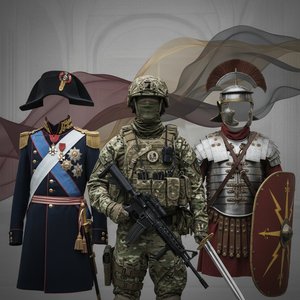
Beyond the Fabric: Decoding Identity, Authority, and Symbolism in the Art of Military Uniforms
Explore the profound symbolism of military uniforms in art history. From Victorian portraits to realistic lithographs, discover how artists capture power, identity, and historical legacy through the intricate details of martial regalia and command.