

 Aperçu en situation
 Partager
 Partager
 Détails

 Télécharger
 Articles similaires
 Radiographie
 Voir le diaporama
 Statistiques
The Via Mala


 Afficher la suite
Giclées et impressions d'art
Impressions giclées ou sur toile de qualité musée, avec une production rapide et des finitions au choix. ( Acheter la peinture faite à la main Passer au format image numérique)




P118B $10

P118H $10

P118W $10

P438Z $10

P508JH $12

P508YH $12

P805H $10

P805Z $10

P919BZ $10

P919G $10

P919XJ $10

P959ZH $10

P968JZ $12

W106C $8

W218G $10

W218JH $8

W218Y $10

W307PJ $10

W316G $10

W316PJ $8

W316Y $10

W398PJ $8

W4111J $10

W500HY $15

W500JH $15

W692G $12

W849H $8

W940BG $15

W953PJ $8




Choisissez parmi nos formats prédéfinis qui respectent les proportions originales de l’œuvre.

Vous pouvez saisir vos propres dimensions pour vous adapter à un cadre ou à un espace spécifique. Si la taille sélectionnée ne correspond pas aux proportions de l'image originale, nous recadrerons l'œuvre ou étendrons l'image avec une bordure en miroir ou une couleur unie. Une maquette numérique vous sera envoyée pour approbation avant le début de la production.
Veuillez noter que l'aperçu à l'écran ne reflète pas le recadrage ou l'extension réelle. Seule la maquette montrera avec précision la composition finale.
Bien que des tailles personnalisées soient disponibles, nous vous recommandons de choisir une dimension dans la liste prédéfinie afin de préserver les proportions originales.
Livraison dans le monde entier () en 2 semaines au lieu des 4/5 semaines habituelles. (13 septembre)

Livraison express gratuite dans le monde entier

Toile de lin de haute qualité

Assurance transport complète

Garantie de remboursement des droits de douane

Garantie de fidélité des couleurs

Garantie de retour de 100 jours (uniquement en cas de défaut)

Garantie de remboursement à 100%

Tarifs dégressifs sur quantité
 L'option verre n'est disponible que pour les dimensions inférieures à 110 cm.

The Via Mala
Giclées et impressions d'art
Format de la reproduction
-


Prix total final
$ 80
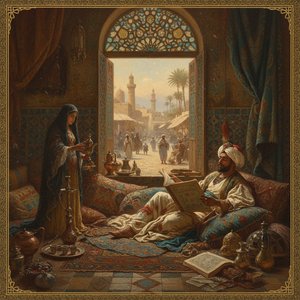
John Frederick Lewis’s “The Via Mala”: A Window into Ottoman Life
John Frederick Lewis's "The Via Mala," painted in 1827, isn’t merely a landscape; it’s a meticulously crafted portal into the world of 19th-century Orientalism. This watercolor and oil masterpiece transports us to the dramatic gorges of the Rhine Valley in Switzerland, yet its power lies not just in its topographical accuracy but in Lewis's profound understanding – and romanticized depiction – of Ottoman culture and daily life. The painting captures a pivotal moment: a group of travelers navigating a treacherous path carved into the mountainside, their figures rendered with an almost photographic realism that belies the artist’s deliberate artistic choices.
Lewis’s journey to Switzerland was part of a larger pattern – a sustained period of travel and observation across the Mediterranean and Middle East. He spent years living in Cairo, immersing himself in the sights, sounds, and customs of Ottoman society. This extended sojourn profoundly shaped his artistic vision, moving him beyond simple depictions of exotic locales towards a nuanced portrayal of human interaction within those environments. Unlike many Western artists who approached Orientalism with a sense of detached observation or even exploitation, Lewis sought to represent the people he encountered with respect and empathy, capturing their clothing, architecture, and social rituals with remarkable detail.
A Symphony of Detail: Technique and Composition
Lewis’s technical skill is immediately apparent. The painting is characterized by an extraordinary level of precision – a hallmark of his style. He meticulously rendered the rugged terrain, the weathered faces of the travelers, and the intricate details of their clothing. Notice the way he captures the play of light on the stone walls, the subtle variations in texture, and the delicate folds of fabric. This painstaking attention to detail wasn’t simply about accuracy; it was a deliberate strategy for conveying depth and realism. The composition itself is carefully balanced, drawing the eye along the winding path towards the distant horizon. The placement of figures creates a sense of movement and drama, while the use of atmospheric perspective – softening details in the distance – adds to the painting’s overall spatial coherence.
Lewis's choice of medium—watercolor and oil combined—further enhances the work’s impact. The watercolor provides a luminous quality, capturing the vibrancy of the natural landscape, while the oil lends richness and depth to the figures and architectural elements. This hybrid approach allowed him to achieve both delicate detail and bold color contrasts, creating a visually arresting effect.
Symbolism and Narrative
“The Via Mala” is rich in symbolic meaning. The treacherous path itself represents the challenges and uncertainties of life’s journey – a metaphor that resonates deeply with the travelers depicted within the scene. Their clothing—a mix of practical travel attire and elements suggestive of Ottoman influence—hints at their origins and destinations. The presence of a small, ornate tent suggests a temporary refuge amidst the harsh landscape, perhaps symbolizing the fleeting nature of encounters and the transient quality of life in foreign lands.
Interestingly, Lewis’s work connects to a contemporary novel, “Via Mala,” by John Knittel, which explored themes of guilt, betrayal, and moral ambiguity within a Swiss village. The painting can be seen as an artistic echo of this narrative, reflecting the complexities and hidden tensions that often lie beneath the surface of seemingly idyllic settings. The title itself, "The Via Mala," directly references this literary work, suggesting a shared exploration of difficult paths and shadowed secrets.
A Legacy of Orientalist Vision
John Frederick Lewis’s “The Via Mala” stands as a testament to his exceptional talent and his profound engagement with the cultures he encountered. It exemplifies the Romantic ideal of the artist as an explorer, observer, and interpreter of the world. His meticulous detail, evocative composition, and nuanced understanding of Ottoman life have secured his place as one of the most important figures in Orientalist painting. Reproductions of this captivating work offer a unique opportunity to bring this window into another era and culture into your own home, inviting contemplation on themes of travel, identity, and the enduring power of art to transcend time and distance.
Biographie de l'artiste
John Frederick Lewis : Une Vie de Peintre Orientaliste
Jeunesse et Formation
John Frederick Lewis, un peintre orientaliste anglais renommé, est né le 14 juillet 1804 à Londres. Il était le fils de Frederick Christian Lewis, graveur et peintre de paysages. Ce background familial artistique a indubitablement influencé son développement initial. Sa formation formelle a commencé sous la tutelle de Sir Thomas Lawrence, où il a perfectionné ses compétences aux côtés d'autres artistes tels qu'Edwin Landseer. Cette période fondatrice lui a inculqué une solide compréhension de la technique et de la composition.
Carrière Artistique et Développement
La carrière artistique de Lewis s’est déroulée par plusieurs phases distinctes, chacune marquée par des styles évolutifs et des thèmes spécifiques :
- Période Orientaliste : Lewis a entrepris de longs voyages dans la région méditerranéenne, capturant avec minutie son essence dans des aquarelles et des peintures à l'huile détaillées. Il revenait fréquemment sur ses compositions, les rendant sur plusieurs supports.
- Influences espagnoles et marocaines (1832-1834) : Un tour en Espagne et au Maroc s’est avéré déterminant. Il a produit de nombreuses lithographies publiées plus tard sous le titre “Sketches and Drawings of the Alhambra” (1835) et “Lewis’s Sketches of Spain and Spanish Character” (1836).
- Période Égyptienne (1841-1851) : Sa sojournée au Caire a été sans doute la plus productive. Ici, il a perfectionné son style orientaliste, créant des œuvres très détaillées présentant à la fois des scènes de genre réalistes et des représentations idéalisées d'intérieurs égyptiens de classes supérieures.
Œuvres Notables
Lewis a créé un vaste corpus d’œuvres célébrées pour leur minutie et leur atmosphère évocatrice. Certaines de ses œuvres les plus reconnues comprennent :
- A Bedouin (Yale Center for British Art, New Haven) – Une aquarelle exemplifiant son style orientaliste.
- The Ramesseum at Thebes (Yale Center for British Art, New Haven) – Montrant son remarquable souci du détail architectural.
- A Young Turkish Woman (Yale Center for British Art, New Haven) – Une autre illustration frappante de son œuvre orientaliste.
- Harem Life in Constantinople - Une peinture à l'huile détaillée représentant la vie domestique ottomane.
Influences et Style Artistique
Son style a été façonné par plusieurs influences, notamment l’importance de Sir Thomas Lawrence en matière de portraiture et de composition. Cependant, son observation directe des cultures du Moyen-Orient lui a permis de développer une esthétique unique caractérisée par :
- Minutiosité : Un engagement à représenter avec précision les textures, les motifs et les éléments architecturaux.
- Palette de couleurs riche : L’utilisation de teintes vives inspirées des paysages et des costumes qu'il a rencontrés.
- Scènes de genre et vues d'intérieur : Se concentrer sur la vie quotidienne et les intérieurs intimes.
Héritage et Importance Historique
La contribution de Lewis au monde de l’art réside dans son rôle important dans le développement de la peinture orientaliste. Ses représentations méticuleuses de l'architecture islamique, des meubles et des costumes ont établi de nouvelles normes de réalisme dans ce genre. Il a contribué à populariser une vision romantique mais détaillée du Moyen-Orient auprès du public occidental. Après son retour en Angleterre en 1851, il a continué à peindre jusqu’à sa mort le 15 août 1876 à Walton-on-Thames.
Son œuvre est encore étudiée et admirée pour sa valeur artistique et son aperçu historique des perceptions du Orient au XIXe siècle.

John Frederick Lewis
1804 - 1876 , Royaume-Uni
En bref
- Artistic Movement Or Style: Orientalisme
- Artists Who Influenced This Artist: ['Sir Thomas Lawrence']
- Date Of Birth: 14 juillet 1804
- Full Name: John Frederick Lewis
- Nationality: Britannique
- Notable Artworks:
- A Bedouin
- La Lettre interceptée
- Le Ramesseum à Thébes
- Une jeune femme turque
- Place Of Birth: Londres
Articles similaires

John Singer Sargent : Les 25 Œuvres Maîtresses d'un Portraitiste Éminent | OriginalUniqueArt
Plongez dans l'univers de John Singer Sargent : découvrez les 25 œuvres qui ont marqué l'histoire de l'art. Portraits impressionnants, réalisme exquis et couleurs vibrantes. Retrouvez ces chefs-d'œuvre en reproduction haute définition sur OriginalUniqueArt.com.

Les 10 Chefs-d'œuvre de l'Aquarelle qui ont Révolutionné l'Art | OriginalUniqueArt
Plongez dans l'univers fascinant des 10 chefs-d'œuvre de l'aquarelle qui ont marqué l'histoire de l'art. Découvrez Turner, Monet, Goya et bien d'autres ! Retrouvez ces œuvres emblématiques en reproductions exceptionnelles sur OriginalUniqueArt.com.
John Frederick Lewis: Orientalism, Detail & Genre Painting in 19th-Century British Art
Explore the captivating Orientalist paintings of John Frederick Lewis! Discover his mastery of detail, genre scenes & influence on 19th-century British art. Learn about his life, techniques & legacy at OriginalUniqueArt.

Constable : Les 25 Chefs-d'Œuvre du Maître Anglais | OriginalUniqueArt
Plongez dans l'univers de John Constable avec les 25 œuvres incontournables du maître anglais. Découvrez l'histoire, la technique et l'émotion derrière ses paysages romantiques. Reproductions de qualité muséale sur OriginalUniqueArt.com.

Ephemeral Visions: Exploring the Artistic Legacy & Contemporary Practice of Watercolor Painting
Explore the captivating world of watercolor painting! Discover its rich history, essential techniques, influential artists & collecting tips. A comprehensive guide for art enthusiasts from OriginalUniqueArt.
