

 Aperçu en situation
 Envoyer
 Partager
 Détails de l'œuvre

 Télécharger
 Articles similaires
 Radiographie
 Diaporama
Study of a Lioness


 Lire la suite
Giclées et impressions d'art
Impressions giclées ou sur toile de qualité musée, avec une production rapide et des finitions au choix. ( Commander la reproduction peinte à la main Télécharger l'image haute résolution)




P118B $10

P118H $10

P118W $10

P438Z $10

P508JH $12

P508YH $12

P805H $10

P805Z $10

P919BZ $10

P919G $10

P919XJ $10

P959ZH $10

P968JZ $12

W106C $8

W218G $10

W218JH $8

W218Y $10

W307PJ $10

W316G $10

W316PJ $8

W316Y $10

W398PJ $8

W4111J $10

W500HY $15

W500JH $15

W692G $12

W849H $8

W940BG $15

W953PJ $8




Choisissez parmi nos formats prédéfinis qui respectent les proportions originales de l’œuvre.

Vous pouvez saisir vos propres dimensions pour vous adapter à un cadre ou à un espace spécifique. Si la taille sélectionnée ne correspond pas aux proportions de l'image originale, nous recadrerons l'œuvre ou étendrons l'image avec une bordure en miroir ou une couleur unie. Une maquette numérique vous sera envoyée pour approbation avant le début de la production.
Veuillez noter que l'aperçu à l'écran ne reflète pas le recadrage ou l'extension réelle. Seule la maquette montrera avec précision la composition finale.
Bien que des tailles personnalisées soient disponibles, nous vous recommandons de choisir une dimension dans la liste prédéfinie afin de préserver les proportions originales.
Livraison dans le monde entier () en 2 semaines au lieu des 4/5 semaines habituelles. (21 août)

Livraison express gratuite dans le monde entier

Toile de lin de qualité supérieure

Assurance transport complète

Garantie de remboursement des droits de douane

Garantie de fidélité des couleurs

Politique de retour de 60 jours (uniquement en cas de défaut)

Garantie de remboursement à 100%

Offre de tarifs dégressifs
 L'option verre n'est disponible que pour les dimensions inférieures à 110 cm.

Study of a Lioness
Giclées et impressions d'art
Format de la reproduction
-


Prix total
$ 80
Description de la pièce
A Study in Serenity: John Frederick Lewis’s Lioness
John Frederick Lewis's "Study of a Lioness," painted circa 1824-1827, is more than just a depiction of a majestic animal; it’s a carefully constructed tableau of quiet contemplation and subtle observation. This watercolor masterpiece, now housed within the Yale Center for British Art, offers a rare glimpse into the artist's meticulous approach to capturing both the physical form and the psychological state of his subjects – a hallmark of the Orientalist movement he so powerfully championed. The painting immediately draws the eye with its earthy palette: ochres, browns, and sandy yellows dominate, creating an atmosphere of sun-drenched stillness that contrasts sharply with the inherent power of the lioness herself.
Lewis’s technique is remarkably detailed for a watercolor, showcasing his mastery of layering and glazing. He doesn't simply render the animal; he builds up textures – the coarse fur, the damp earth beneath her paws, the subtle shadows that define her musculature. The loose brushstrokes in the background sky, punctuated by wisps of cloud, provide a sense of depth and distance, while the precise rendering of the lioness’s features—her open mouth, slightly parted as if in a gentle yawn or perhaps a moment of repose – invites us to interpret her state of mind. The graphite underdrawing, barely visible beneath the watercolor washes, adds an additional layer of control and precision to the composition.
Origins in Orientalism and the Exotic
Lewis’s work firmly places him within the burgeoning field of Orientalist painting, a genre that flourished during the 19th century. This movement wasn't simply about depicting the East; it was an attempt to understand and represent cultures vastly different from Western European norms. Lewis, having spent considerable time in Egypt and later traveling through Spain and Morocco, developed a deep appreciation for Islamic art and architecture, which profoundly influenced his style. The lioness itself, a symbol of strength and royalty across many cultures, becomes imbued with a particular resonance within this context – representing both the raw power of nature and the refined beauty of the East.
The painting’s creation coincided with a period of intense European fascination with the Middle East, fueled by exploration, trade, and political intrigue. Lewis's meticulous attention to detail reflects this broader cultural trend, aiming to capture not just the appearance of the subject but also the atmosphere and spirit of its environment. The inclusion of two figures in the background – their identities deliberately ambiguous – adds a layer of narrative complexity, suggesting a scene of human interaction within the larger landscape.
Symbolism and Emotional Resonance
Beyond its technical brilliance, “Study of a Lioness” resonates with profound emotional depth. The lioness’s posture—relaxed yet alert—evokes a sense of quiet dignity and self-assuredness. She is not depicted as a predator actively hunting; instead, she appears to be enjoying a moment of respite, embodying a connection to the natural world. The sandy ground beneath her paws grounds the image in the earth, while the sky above offers a sense of limitless space.
The painting’s overall effect is one of serene contemplation—a reminder that even within the most powerful creatures, there exists a capacity for stillness and grace. It's a testament to Lewis’s ability to capture not just the outward appearance of his subjects but also their inner essence, inviting viewers to contemplate the beauty and complexity of both the natural world and the human experience.
A Legacy in Reproduction
Reproductions of “Study of a Lioness” offer an accessible way to appreciate Lewis’s artistry and the rich cultural context of his work. Whether displayed as a statement piece in a contemporary interior or studied closely for its technical details, this painting continues to captivate audiences with its timeless beauty and profound emotional resonance. The meticulous detail and evocative atmosphere make it a perfect addition to any collection, offering a window into the world of Orientalist art and the artistic vision of John Frederick Lewis.
Biographie de l'artiste
John Frederick Lewis : Une Vie de Peintre Orientaliste
Jeunesse et Formation
John Frederick Lewis, un peintre orientaliste anglais renommé, est né le 14 juillet 1804 à Londres. Il était le fils de Frederick Christian Lewis, graveur et peintre de paysages. Ce background familial artistique a indubitablement influencé son développement initial. Sa formation formelle a commencé sous la tutelle de Sir Thomas Lawrence, où il a perfectionné ses compétences aux côtés d'autres artistes tels qu'Edwin Landseer. Cette période fondatrice lui a inculqué une solide compréhension de la technique et de la composition.
Carrière Artistique et Développement
La carrière artistique de Lewis s’est déroulée par plusieurs phases distinctes, chacune marquée par des styles évolutifs et des thèmes spécifiques :
- Période Orientaliste : Lewis a entrepris de longs voyages dans la région méditerranéenne, capturant avec minutie son essence dans des aquarelles et des peintures à l'huile détaillées. Il revenait fréquemment sur ses compositions, les rendant sur plusieurs supports.
- Influences espagnoles et marocaines (1832-1834) : Un tour en Espagne et au Maroc s’est avéré déterminant. Il a produit de nombreuses lithographies publiées plus tard sous le titre “Sketches and Drawings of the Alhambra” (1835) et “Lewis’s Sketches of Spain and Spanish Character” (1836).
- Période Égyptienne (1841-1851) : Sa sojournée au Caire a été sans doute la plus productive. Ici, il a perfectionné son style orientaliste, créant des œuvres très détaillées présentant à la fois des scènes de genre réalistes et des représentations idéalisées d'intérieurs égyptiens de classes supérieures.
Œuvres Notables
Lewis a créé un vaste corpus d’œuvres célébrées pour leur minutie et leur atmosphère évocatrice. Certaines de ses œuvres les plus reconnues comprennent :
- A Bedouin (Yale Center for British Art, New Haven) – Une aquarelle exemplifiant son style orientaliste.
- The Ramesseum at Thebes (Yale Center for British Art, New Haven) – Montrant son remarquable souci du détail architectural.
- A Young Turkish Woman (Yale Center for British Art, New Haven) – Une autre illustration frappante de son œuvre orientaliste.
- Harem Life in Constantinople - Une peinture à l'huile détaillée représentant la vie domestique ottomane.
Influences et Style Artistique
Son style a été façonné par plusieurs influences, notamment l’importance de Sir Thomas Lawrence en matière de portraiture et de composition. Cependant, son observation directe des cultures du Moyen-Orient lui a permis de développer une esthétique unique caractérisée par :
- Minutiosité : Un engagement à représenter avec précision les textures, les motifs et les éléments architecturaux.
- Palette de couleurs riche : L’utilisation de teintes vives inspirées des paysages et des costumes qu'il a rencontrés.
- Scènes de genre et vues d'intérieur : Se concentrer sur la vie quotidienne et les intérieurs intimes.
Héritage et Importance Historique
La contribution de Lewis au monde de l’art réside dans son rôle important dans le développement de la peinture orientaliste. Ses représentations méticuleuses de l'architecture islamique, des meubles et des costumes ont établi de nouvelles normes de réalisme dans ce genre. Il a contribué à populariser une vision romantique mais détaillée du Moyen-Orient auprès du public occidental. Après son retour en Angleterre en 1851, il a continué à peindre jusqu’à sa mort le 15 août 1876 à Walton-on-Thames.
Son œuvre est encore étudiée et admirée pour sa valeur artistique et son aperçu historique des perceptions du Orient au XIXe siècle.

John Frederick Lewis
1804 - 1876 , Royaume-Uni
L'essentiel de l'artiste
- Artistic Movement Or Style: Orientalisme
- Artists Who Influenced This Artist: ['Sir Thomas Lawrence']
- Date Of Birth: 14 juillet 1804
- Full Name: John Frederick Lewis
- Nationality: Britannique
- Notable Artworks:
- A Bedouin
- La Lettre interceptée
- Le Ramesseum à Thébes
- Une jeune femme turque
- Place Of Birth: Londres
Articles connexes

John Frederick Lewis: Orientalism, Detail & Genre Painting in 19th-Century British Art
Explore the captivating Orientalist paintings of John Frederick Lewis! Discover his mastery of detail, genre scenes & influence on 19th-century British art. Learn about his life, techniques & legacy at OriginalUniqueArt.

Les 10 Chefs-d'œuvre de l'Aquarelle qui ont Révolutionné l'Art | OriginalUniqueArt
Plongez dans l'univers fascinant des 10 chefs-d'œuvre de l'aquarelle qui ont marqué l'histoire de l'art. Découvrez Turner, Monet, Goya et bien d'autres ! Retrouvez ces œuvres emblématiques en reproductions exceptionnelles sur OriginalUniqueArt.com.

Ephemeral Visions: Exploring the Artistic Legacy & Contemporary Practice of Watercolor Painting
Explore the captivating world of watercolor painting! Discover its rich history, essential techniques, influential artists & collecting tips. A comprehensive guide for art enthusiasts from OriginalUniqueArt.

John Singer Sargent : Les 25 Œuvres Maîtresses d'un Portraitiste Éminent | OriginalUniqueArt
Plongez dans l'univers de John Singer Sargent : découvrez les 25 œuvres qui ont marqué l'histoire de l'art. Portraits impressionnants, réalisme exquis et couleurs vibrantes. Retrouvez ces chefs-d'œuvre en reproduction haute définition sur OriginalUniqueArt.com.
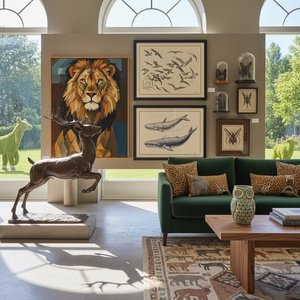
Animalia : L'empreinte durable des animaux dans l'art et le design d'intérieur
Explorez l'histoire fascinante de la représentation animale dans l'art et le design d'intérieur. Découvrez le symbolisme, les tendances et comment intégrer l'image animale chez vous avec .


