

 Aperçu en situation
 Envoyer
 Partager
 Détails de l'œuvre

 Télécharger
 Articles similaires
 Radiographie
 Diaporama
 Statistiques
Arab School


 Lire la suite
Reproduction à l'huile faite à la main
Huile sur toile peinte à la main, avec cadre et dimensions personnalisés, réalisée sur commande par nos artistes. ( Passer au format impression Passer à l'image numérique)




P118B $10

P118H $10

P118W $10

P438Z $10

P508JH $12

P508YH $12

P805H $10

P805Z $10

P919BZ $10

P919G $10

P919XJ $10

P959ZH $10

P968JZ $12

W106C $8

W218G $10

W218JH $8

W218Y $10

W307PJ $10

W316G $10

W316PJ $8

W316Y $10

W398PJ $8

W4111J $10

W500HY $15

W500JH $15

W692G $12

W849H $8

W940BG $15

W953PJ $8




Choisissez parmi nos formats prédéfinis qui respectent les proportions originales de l’œuvre.

Vous pouvez saisir vos propres dimensions pour l'adapter à un cadre ou à un espace spécifique. Si la taille sélectionnée ne correspond pas aux proportions de l'image d'origine, nous recadrerons l'œuvre ou prolongerons la peinture avec des éléments peints à la main supplémentaires. Une maquette numérique vous sera envoyée pour approbation avant le début de la production.
Veuillez noter que l'aperçu à l'écran ne reflète pas le recadrage ou l'extension réels. Seule la maquette montrera fidèlement la composition finale.
Bien que des tailles personnalisées soient disponibles, nous vous recommandons de sélectionner une dimension dans la liste prédéfinie afin de préserver les proportions d'origine.
Après la commande, l’équipe OriginalUniqueArt.com contactera le client par e-mail pour recueillir ses instructions et lui fournira une maquette d’aperçu
Livraison dans le monde entier () en 3 à 4 semaines au lieu des 5 semaines habituelles. (11 septembre). Aucun compromis sur la qualité.

Livraison express gratuite dans le monde entier

Toile de lin de haute qualité

Assurance transport complète

Garantie de remboursement des droits de douane

Garantie de fidélité des couleurs

Garantie de retour de 100 jours (uniquement en cas de défaut)

Garantie de remboursement à 100%

Tarifs dégressifs sur quantité
 L'option verre n'est disponible que pour les dimensions inférieures à 110 cm.

Arab School
Technique de reproduction
Format de la reproduction
-


Prix total final
$ 300
A Window Into a World of Grace: John Frederick Lewis’s “Arab School”
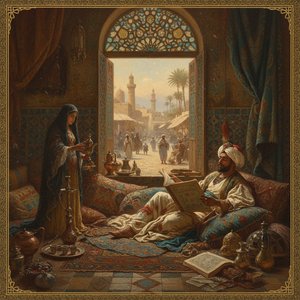
John Frederick Lewis's "Arab School," painted circa 1841-51, isn’t merely a depiction of a classroom; it’s a meticulously crafted portal into the heart of 19th-century Ottoman society. This watercolor and gouache masterpiece, now housed within the Metropolitan Museum of Art in New York City, offers a rare glimpse beyond the often sensationalized portrayals of the Middle East prevalent at the time, revealing instead a scene of quiet learning, dignified respect, and subtle social dynamics. Lewis, an English Orientalist painter who spent over a decade immersed in Cairo’s vibrant culture, possessed a remarkable ability to capture not just the outward appearance but also the underlying atmosphere of his subjects – a skill evident in every brushstroke of “Arab School.”
The painting immediately draws the eye toward the central figure: a man distinguished by his flowing white beard and traditional attire. He’s not a flamboyant scholar, nor is he presented as an exotic spectacle; rather, he embodies authority and wisdom – a respected teacher guiding a young student. His posture, upright and attentive, suggests a dedication to his role, while the boy's focused gaze speaks volumes about the value placed on education within this community. To his right, another individual, seated on the floor, demonstrates a profound respect for the teacher’s words, mirroring the reverence of the central figure. The composition isn’t static; it pulses with an unspoken conversation, a shared moment of intellectual engagement.
Orientalism and the Pursuit of Authenticity
Lewis's work firmly resides within the realm of Orientalist painting – a genre that flourished during the 19th century, fueled by European fascination with the East. However, unlike many of his contemporaries who often relied on stereotypes and romanticized depictions, Lewis sought to portray Middle Eastern life with a remarkable degree of accuracy and sensitivity. His extended sojourn in Cairo allowed him to observe local customs firsthand, master Arabic script, and adopt traditional dress – elements that profoundly influenced his artistic approach. He meticulously documented the architecture, furnishings, and clothing of the region, striving for an authentic representation that moved beyond superficial exoticism.
The inclusion of Arabic calligraphy on the walls of the schoolhouse is a crucial detail, underscoring the importance of literacy and religious learning within this setting. These intricate inscriptions aren’t merely decorative; they serve as a constant reminder of the cultural heritage being imparted to the students. The simple yet elegant design of the room – the worn wooden benches, the muted color palette, the single window framed by dark bars – speaks volumes about the practical realities of life in an Ottoman schoolhouse. It's a scene stripped of grandiosity, focusing instead on the quiet dignity of everyday learning.
Symbolism and Emotional Resonance
Beyond its realistic depiction of daily life, “Arab School” is rich with symbolic meaning. The window, framed by dark bars, subtly hints at the constraints imposed upon Ottoman society – a reminder of the political realities that shaped the lives of its inhabitants. Yet, within this seemingly restrictive environment, there’s an undeniable sense of hope and potential embodied in the faces of the students and teacher. The painting evokes a feeling of serenity and intellectual curiosity, suggesting a space where knowledge is valued and nurtured.
Lewis's masterful use of watercolor – its delicate washes, subtle gradations of color, and luminous effects – perfectly captures the atmosphere of the scene. The light filtering through the window creates a soft, diffused glow, illuminating the faces of the individuals within the room. This careful attention to detail, combined with Lewis’s profound understanding of his subject matter, results in a work that is both visually stunning and emotionally resonant. “Arab School” isn't just a painting; it’s a testament to the power of observation, empathy, and artistic skill – a timeless reminder of the enduring value of education and human connection.
Collecting a Legacy: Reproductions and Beyond
Reproductions of "Arab School" are available through various reputable art dealers and online platforms. When selecting a reproduction, consider the medium (canvas or print) and framing options to ensure it complements your interior design aesthetic. The original’s delicate watercolor technique is best replicated with high-quality archival materials that preserve color accuracy and prevent fading over time. Investing in a faithful reproduction allows you to bring this remarkable work of art into your home, celebrating Lewis's legacy and the rich cultural heritage he so beautifully captured.
Biographie de l'artiste
John Frederick Lewis : Une Vie de Peintre Orientaliste
Jeunesse et Formation
John Frederick Lewis, un peintre orientaliste anglais renommé, est né le 14 juillet 1804 à Londres. Il était le fils de Frederick Christian Lewis, graveur et peintre de paysages. Ce background familial artistique a indubitablement influencé son développement initial. Sa formation formelle a commencé sous la tutelle de Sir Thomas Lawrence, où il a perfectionné ses compétences aux côtés d'autres artistes tels qu'Edwin Landseer. Cette période fondatrice lui a inculqué une solide compréhension de la technique et de la composition.
Carrière Artistique et Développement
La carrière artistique de Lewis s’est déroulée par plusieurs phases distinctes, chacune marquée par des styles évolutifs et des thèmes spécifiques :
- Période Orientaliste : Lewis a entrepris de longs voyages dans la région méditerranéenne, capturant avec minutie son essence dans des aquarelles et des peintures à l'huile détaillées. Il revenait fréquemment sur ses compositions, les rendant sur plusieurs supports.
- Influences espagnoles et marocaines (1832-1834) : Un tour en Espagne et au Maroc s’est avéré déterminant. Il a produit de nombreuses lithographies publiées plus tard sous le titre “Sketches and Drawings of the Alhambra” (1835) et “Lewis’s Sketches of Spain and Spanish Character” (1836).
- Période Égyptienne (1841-1851) : Sa sojournée au Caire a été sans doute la plus productive. Ici, il a perfectionné son style orientaliste, créant des œuvres très détaillées présentant à la fois des scènes de genre réalistes et des représentations idéalisées d'intérieurs égyptiens de classes supérieures.
Œuvres Notables
Lewis a créé un vaste corpus d’œuvres célébrées pour leur minutie et leur atmosphère évocatrice. Certaines de ses œuvres les plus reconnues comprennent :
- A Bedouin (Yale Center for British Art, New Haven) – Une aquarelle exemplifiant son style orientaliste.
- The Ramesseum at Thebes (Yale Center for British Art, New Haven) – Montrant son remarquable souci du détail architectural.
- A Young Turkish Woman (Yale Center for British Art, New Haven) – Une autre illustration frappante de son œuvre orientaliste.
- Harem Life in Constantinople - Une peinture à l'huile détaillée représentant la vie domestique ottomane.
Influences et Style Artistique
Son style a été façonné par plusieurs influences, notamment l’importance de Sir Thomas Lawrence en matière de portraiture et de composition. Cependant, son observation directe des cultures du Moyen-Orient lui a permis de développer une esthétique unique caractérisée par :
- Minutiosité : Un engagement à représenter avec précision les textures, les motifs et les éléments architecturaux.
- Palette de couleurs riche : L’utilisation de teintes vives inspirées des paysages et des costumes qu'il a rencontrés.
- Scènes de genre et vues d'intérieur : Se concentrer sur la vie quotidienne et les intérieurs intimes.
Héritage et Importance Historique
La contribution de Lewis au monde de l’art réside dans son rôle important dans le développement de la peinture orientaliste. Ses représentations méticuleuses de l'architecture islamique, des meubles et des costumes ont établi de nouvelles normes de réalisme dans ce genre. Il a contribué à populariser une vision romantique mais détaillée du Moyen-Orient auprès du public occidental. Après son retour en Angleterre en 1851, il a continué à peindre jusqu’à sa mort le 15 août 1876 à Walton-on-Thames.
Son œuvre est encore étudiée et admirée pour sa valeur artistique et son aperçu historique des perceptions du Orient au XIXe siècle.

John Frederick Lewis
1804 - 1876 , Royaume-Uni
En bref
- Artistic Movement Or Style: Orientalisme
- Artists Who Influenced This Artist: ['Sir Thomas Lawrence']
- Date Of Birth: 14 juillet 1804
- Full Name: John Frederick Lewis
- Nationality: Britannique
- Notable Artworks:
- A Bedouin
- La Lettre interceptée
- Le Ramesseum à Thébes
- Une jeune femme turque
- Place Of Birth: Londres
Articles similaires

Les 10 Chefs-d'œuvre de l'Aquarelle qui ont Révolutionné l'Art | OriginalUniqueArt
Plongez dans l'univers fascinant des 10 chefs-d'œuvre de l'aquarelle qui ont marqué l'histoire de l'art. Découvrez Turner, Monet, Goya et bien d'autres ! Retrouvez ces œuvres emblématiques en reproductions exceptionnelles sur OriginalUniqueArt.com.
John Frederick Lewis: Orientalism, Detail & Genre Painting in 19th-Century British Art
Explore the captivating Orientalist paintings of John Frederick Lewis! Discover his mastery of detail, genre scenes & influence on 19th-century British art. Learn about his life, techniques & legacy at OriginalUniqueArt.

John Singer Sargent : Les 25 Œuvres Maîtresses d'un Portraitiste Éminent | OriginalUniqueArt
Plongez dans l'univers de John Singer Sargent : découvrez les 25 œuvres qui ont marqué l'histoire de l'art. Portraits impressionnants, réalisme exquis et couleurs vibrantes. Retrouvez ces chefs-d'œuvre en reproduction haute définition sur OriginalUniqueArt.com.

Ephemeral Visions: Exploring the Artistic Legacy & Contemporary Practice of Watercolor Painting
Explore the captivating world of watercolor painting! Discover its rich history, essential techniques, influential artists & collecting tips. A comprehensive guide for art enthusiasts from OriginalUniqueArt.

Éphémères Visions : L'Aquarelle, Histoire et Résonance Émotionnelle d'un Art Intemporel
Explorez l'histoire fascinante de l'aquarelle, des origines à nos jours. Découvrez les techniques, les artistes emblématiques et nos conseils d'experts pour collectionner ces œuvres éphémères. OriginalUniqueArt.
