

 Aperçu en situation
 Partager
 Partager
 Détails
 Guide imprimable

 Télécharger
 Articles similaires
 Radiographie
 Voir le diaporama
 Statistiques
Untitled (D2XALP)
 Oil On Canvas
- WallArt
 1872
1872- 19th Century
 39.0 x 78.0 cm
 Metropolitan Museum of Art
 Afficher la suite
Giclées et impressions d'art
Impressions giclées ou sur toile de qualité musée, avec une production rapide et des finitions au choix. ( Acheter la peinture faite à la main Passer au format image numérique)




P118B €10

P118H €10

P118W €10

P438Z €10

P508JH €12

P508YH €12

P805H €10

P805Z €10

P919BZ €10

P919G €10

P919XJ €10

P959ZH €10

P968JZ €12

W106C €8

W218G €10

W218JH €8

W218Y €10

W307PJ €10

W316G €10

W316PJ €8

W316Y €10

W398PJ €8

W4111J €10

W500HY €15

W500JH €15

W692G €12

W849H €8

W940BG €15

W953PJ €8




Choisissez parmi nos formats prédéfinis qui respectent les proportions originales de l’œuvre.

Vous pouvez saisir vos propres dimensions pour vous adapter à un cadre ou à un espace spécifique. Si la taille sélectionnée ne correspond pas aux proportions de l'image originale, nous recadrerons l'œuvre ou étendrons l'image avec une bordure en miroir ou une couleur unie. Une maquette numérique vous sera envoyée pour approbation avant le début de la production.
Veuillez noter que l'aperçu à l'écran ne reflète pas le recadrage ou l'extension réelle. Seule la maquette montrera avec précision la composition finale.
Bien que des tailles personnalisées soient disponibles, nous vous recommandons de choisir une dimension dans la liste prédéfinie afin de préserver les proportions originales.
Livraison dans le monde entier () en 2 semaines au lieu des 4/5 semaines habituelles. (11 octobre)

Livraison express gratuite dans le monde entier

Toile de lin de haute qualité

Assurance transport complète

Garantie de remboursement des droits de douane

Garantie de fidélité des couleurs

Garantie de retour de 100 jours (uniquement en cas de défaut)

Garantie de remboursement à 100%

Tarifs dégressifs sur quantité
 L'option verre n'est disponible que pour les dimensions inférieures à 110 cm.

Untitled (D2XALP)
Giclées et impressions d'art
Format de la reproduction
-


Prix total final
€ 69
John Frederick Kensett: A Pioneer of Luminism
John Frederick Kensett (March 22, 1816 – December 14, 1872) was an American landscape painter and engraver born in Cheshire, Connecticut. He stands as a pivotal figure within the second generation of the Hudson River School of artists—a movement that championed the transcendental beauty of America’s natural landscapes and sought to capture their ethereal light. Unlike his predecessors who often employed dramatic compositions and rich color palettes, Kensett distinguished himself through a refined Luminist style characterized by subtle brushstrokes and an unwavering focus on atmospheric illumination – a technique profoundly influenced by Dutch masters like Jacob Maris and Isaac Israelson. His artistic vision aimed to convey not merely what the eye perceives but also what the soul feels when confronted with the sublime grandeur of nature.The Essence of Tranquility: Lake George
Kensett’s “Lake George,” completed in 1872, exemplifies this Luminist aesthetic perfectly. The painting depicts a serene expanse of Lake George nestled amidst rolling hills and snow-capped mountains—a scene that immediately transports the viewer to the Adirondack wilderness during autumn. Rather than striving for theatrical grandeur, Kensett meticulously rendered the lake’s surface with an almost imperceptible shimmer, achieved through delicate glazing techniques – applying thin layers of translucent paint over underlying colors to create depth and luminosity. This masterful manipulation of light is paramount to conveying the painting's mood: a profound sense of peace and contemplation.Composition and Color Palette: Restraint and Resonance
The horizontal orientation of “Lake George” emphasizes the vastness of the lake, mirroring the expansive horizon line which dominates approximately one-third of the canvas. The lower right section is anchored by a rocky outcrop—a grounding element that balances the airy expanse above. Kensett’s color palette leans heavily on cool tones – blues and greens – reflecting the dominant hues of the lake and surrounding foliage. Subtle reds appear in the rocks, providing visual warmth against the coolness of the overall composition. These colors aren't vibrant or assertive; instead, they blend seamlessly to create a harmonious effect that resonates with tranquility.Technique and Materials: Brushstrokes as Vessels of Light
Kensett’s brushwork is remarkably understated—almost invisible to the untrained eye. He employed loose, blended strokes to build up layers of color, prioritizing tonal gradations over precise delineation. Glazes – thin washes of translucent pigment – played a crucial role in achieving atmospheric perspective and enhancing the painting's luminous quality. These meticulous techniques underscore Kensett’s dedication to capturing not just the visual appearance of Lake George but also its intangible essence—the feeling of stillness and connection with the natural world.Symbolism and Legacy: Transcendental Vision
“Lake George” transcends mere representation; it embodies the Luminist philosophy's belief in perceiving nature as a conduit for spiritual insight. The painting’s quiet grandeur invites viewers to pause, observe, and contemplate—a deliberate response to the transcendentalist movement’s emphasis on experiencing the sublime beauty of God’s creation. Kensett’s enduring legacy lies in his unwavering commitment to capturing light and atmosphere with unparalleled sensitivity—a contribution that continues to inspire artists and collectors alike. His masterpiece remains a testament to the power of observation and the transformative potential of art.Questions et réponses
Comment puis-je visionner «Untitled (D2XALP)» de John Frederick Kensett sous forme de diaporama ?
Le diaporama de « Untitled (D2XALP) » peut être visionné sur la page Diaporama de l'œuvre.
Qui a créé "Untitled (D2XALP)" ?
« Untitled (D2XALP) » est attribué à John Frederick Kensett.
Quelle est la luminosité perçue de «Untitled (D2XALP)» de John Frederick Kensett ?
La luminosité perçue de «Untitled (D2XALP)» de John Frederick Kensett est brilliant. Elle peut être harmonisée avec la lumière de l'espace prévu.
Quelle est la date de création de «Untitled (D2XALP)» de John Frederick Kensett ?
L'œuvre «Untitled (D2XALP)» de John Frederick Kensett date de 1872.
À quel âge John Frederick Kensett a-t-il créé « Untitled (D2XALP) » ?
John Frederick Kensett avait 56 ans lors de la création de « Untitled (D2XALP) » en 1872. L'âge est calculé à partir de l'année de naissance de l'artiste, 1816.
De quoi est fait « Untitled (D2XALP) » ?
Le médium de «Untitled (D2XALP)» de John Frederick Kensett est Oil On Canvas. Les reproductions visent à restituer l'aspect de cette technique.
Quel espace est suggéré pour «Untitled (D2XALP)» de John Frederick Kensett ?
L'espace recommandé pour «Untitled (D2XALP)» de John Frederick Kensett est un Living Room. Cette suggestion peut bien entendu être adaptée à votre intérieur.
Biographie de l'artiste
Une vie consacrée à capturer des paysages sereins
John Frederick Kensett, un artiste et graveur américain, est né le 22 mars 1816 à Cheshire, dans le Connecticut. Membre de la deuxième génération de l'École de la Rivière Hudson, les œuvres emblématiques de Kensett se caractérisent par leurs qualités sereines et lumineuses, célébrant les aspects transcendantaux de la nature.Jeunesse et formation
Kensett a fréquenté Cheshire Academy et a étudié la gravure avec son père, Thomas Kensett. Il a ensuite travaillé comme graveur à New Haven jusqu'en 1838, puis s'est installé à New York pour travailler sur des gravures de billets de banque. En 1840, Kensett s’est rendu en Europe pour étudier la peinture, perfectionnant ses talents aux côtés de Benjamin Champney.Studio établi et style luministe
Après avoir établi son studio à New York, Kensett a beaucoup voyagé dans le nord-est et dans les Rocheuses du Colorado, capturant l'essence de ces paysages. Son style a évolué d’une approche traditionnelle de l’École de la Rivière Hudson vers une approche plus raffinée du luminisme, caractérisée par des coups de pinceau inconscients transmettant les qualités de la lumière atmosphérique.- Mount Washington from the Valley of Conway (1851), une peinture emblématique, a été achetée par l'American Art Union et distribuée à 13 000 abonnés.
- Eaton's Neck, Long Island (1872), un exemple parfait du style luministe de Kensett, se trouve désormais dans la collection du Metropolitan Museum of Art à New York.
Réalisations majeures et héritage
Kensett a été l'un des fondateurs du Metropolitan Museum of Art et membre à part entière de la National Academy of Design. Son travail, largement acclamé de son vivant, continue d’influencer la peinture de paysage. Œuvres clés :- Sunset Sky (vers 1870), Metropolitan Museum of Art, New York
- Three Mile Harbor (vers 1860), Museum of Fine Arts, Tallahassee

John Frederick Kensett
1816 - 1872 , États-Unis d'Amérique
En bref
- Artistic Movement Or Style: Hudson River School, Luminisme
- Artists Or Movements Influenced By This Artist: ['Peinture de paysage']
- Artists Who Influenced This Artist:
- Thomas Cole
- Benjamin Champney
- Date Of Birth: 22 mars 1816
- Date Of Death: 1872
- Full Name: John Frederick Kensett
- Nationality: Américain
- Notable Artworks:
- Mount Washington from the Valley
- Eaton's Neck, Long Island
- Sunset Sky
- Three Mile Harbor
- Place Of Birth (City And Country): Cheshire, États-Unis
Articles similaires
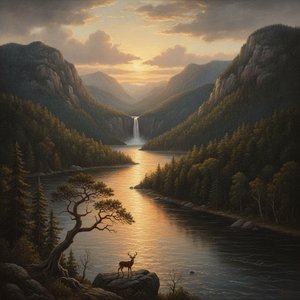
Epic Landscapes & Wild Nature: The Power of the Hudson River School's Sublime Artistry
Explore the breathtaking power of the Hudson River School. Journey through epic American landscapes, from Thomas Cole's sublime vistas to Luminist light, and discover how these timeless masterpieces continue to inspire modern collectors and art lovers worldwide.

L'École du fleuve Hudson : 10 chefs-d'œuvre incontournables pour sublimer votre intérieur
Plongez dans l'univers grandiose de l'École du fleuve Hudson ! Découvrez 10 chefs-d'œuvre emblématiques de Thomas Cole, Frederic Church et Albert Bierstadt. Inspirez votre décoration intérieure avec ces paysages américains romantiques. Explorez la collection complète sur OriginalUniqueArt.com.

Robert Spencer: Luminism, Narrative & the American Landscape Tradition
Explore the captivating world of Luminism & the Hudson River School with our expert analysis. Discover the history, artists, and enduring beauty of 19th-century American landscape painting. Find museum-quality reproductions at OriginalUniqueArt.
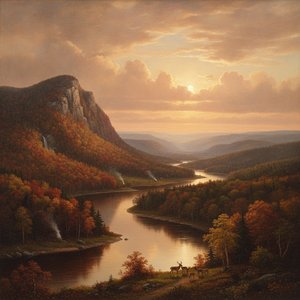
The Hudson River School: A Definitive Guide to America's Romantic Landscape Tradition
Explore the profound legacy of the Hudson River School. Discover how masters like Thomas Cole captured the American sublime through Romanticism and Luminism. A definitive guide for art historians and collectors seeking to understand America's wild beauty.

L'École du fleuve Hudson : Romantisme américain et exploration d'un paysage national
Explorez l'École du fleuve Hudson : un mouvement artistique américain majeur célébrant la nature et le sublime. Découvrez ses peintres emblématiques, son histoire et son héritage durable avec OriginalUniqueArt.


