

 Aperçu en situation
 Partager
 Partager
 Détails

 Télécharger l'image
 Articles similaires
 Radiographie
 Voir le diaporama
James Allen (c.1682–1746)


 Afficher la suite
Reproduction à l'huile faite à la main
Huile sur toile peinte à la main, avec cadre et dimensions personnalisés, réalisée sur commande par nos artistes. ( Acheter l'impression Acheter l'image)




































Choisissez parmi nos formats prédéfinis qui respectent les proportions originales de l’œuvre.

Vous pouvez saisir vos propres dimensions pour l'adapter à un cadre ou à un espace spécifique. Si la taille sélectionnée ne correspond pas aux proportions de l'image d'origine, nous recadrerons l'œuvre ou prolongerons la peinture avec des éléments peints à la main supplémentaires. Une maquette numérique vous sera envoyée pour approbation avant le début de la production.
Veuillez noter que l'aperçu à l'écran ne reflète pas le recadrage ou l'extension réels. Seule la maquette montrera fidèlement la composition finale.
Bien que des tailles personnalisées soient disponibles, nous vous recommandons de sélectionner une dimension dans la liste prédéfinie afin de préserver les proportions d'origine.
Après la commande, l’équipe OriginalUniqueArt.com contactera le client par e-mail pour recueillir ses instructions et lui fournira une maquette d’aperçu
Livraison dans le monde entier () en 3 à 4 semaines au lieu des 5 semaines habituelles. (27 août). Aucun compromis sur la qualité.

Livraison express gratuite dans le monde entier

Toile de lin de haute qualité

Assurance transport complète

Garantie de remboursement des droits de douane

Garantie de fidélité des couleurs

Politique de retour de 60 jours (uniquement en cas de défaut)

Garantie de remboursement à 100%

Tarifs dégressifs sur quantité
 L'option verre n'est disponible que pour les dimensions inférieures à 110 cm.

James Allen (c.1682–1746)
Technique de reproduction
Format de la reproduction
-


Prix total final
$ 300
Description de l'œuvre
À propos de James Allen (c.1682–1746)
- Sujet et portraiture : Ce portrait saisissant représente James Allen (c. 1682–1746), une figure importante de l'histoire du Dulwich College, en Angleterre. Il est dépeint comme Warden à partir de 1712 puis Master du collège, incarnant l'autorité et le raffinement. La peinture capture son apparence avec des détails remarquables, offrant un aperçu de la vie d’un bienfaiteur influent.
- Style et technique : Peinte en 1724 par John Ellys (c. 1701–1757), l'œuvre est emblématique du style de portraiture prévalent au début de la période géorgienne. Ellys, formé par des artistes éminents tels que Hogarth et Vanderbank, démontre une habile utilisation de l’huile sur toile pour créer des textures et des tons réalistes. Le rendu méticuleux des vêtements d'Allen, de sa perruque et de ses traits faciaux met en évidence la prouesse technique d'Ellys.
Contexte historique et provenance
- Commande du Dulwich College : Le portrait a été initialement commandé par le Dulwich College lui-même, reflétant l’estime dans laquelle Allen était tenu. Il a fondé la James Allen's Girls’ School et a joué un rôle essentiel dans la formation de l'héritage de l'institution. La peinture servait de représentation visuelle importante de son bienfaiteur.
- Biographie de l'artiste : John Ellys (1701-1757) était un respecté peintre portraitiste anglais connu pour ses commandes royales et ses gravures. Sa formation sous la direction d’artistes éminents tels que Sir James Thornhill, Johann Rudolph Schmutz, puis avec Hogarth, a façonné son style artistique. Il détenait un mandat de copie de tableaux dans les palais royaux, étudiant des œuvres de maîtres tels que Van Dyck et Kneller.
Symbolisme et impact émotionnel
- Éléments de statut : L'inclusion d’une horloge au mur fait subtilement allusion au passage du temps et à l'héritage durable d'Allen. Le pilier à côté de lui suggère la stabilité et la force, renforçant sa position au sein de la communauté universitaire. Sa tenue – une robe formelle et une perruque – souligne davantage son statut social.
- Un sentiment de dignité : Le portrait évoque un sentiment de dignité et de gravité intellectuelle. Le regard d'Allen est direct et composé, véhiculant confiance et autorité. La composition générale crée un sentiment de respect et d’admiration pour le sujet.
Collection et reproduction
- Pour les amateurs d'art : Ce portrait offre une fenêtre fascinante sur la société anglaise du XVIIIe siècle et la vie de ses personnalités éminentes. C’est un excellent exemple de portrait géorgien, mettant en valeur à la fois l’habileté artistique et la signification historique.
- Pour les décorateurs d'intérieur : Une reproduction de cette œuvre ajoutera une touche d’élégance classique à n’importe quel espace. Ses couleurs riches et sa composition détaillée le rendent adapté aux bibliothèques, aux bureaux ou aux salons formels. La taille du tableau (240 x 147 cm) lui permet de devenir un point focal dans une pièce.
- Reproductions de haute qualité : Des reproductions peintes à la main de ce chef-d'œuvre sont disponibles, capturant les détails et l’impact émotionnel de l’original. Ces reproductions offrent un moyen abordable d’acquérir une œuvre d’art historique et d’améliorer votre collection ou votre décoration intérieure.
Biographie de l'artiste
John Ellys: Bridging the Gap Between Court and Canvas
The name John Ellys, though perhaps less celebrated than some of his contemporaries, represents a pivotal figure in 18th-century English portraiture – a painter who skillfully navigated the demanding world of royal commissions, academic training, and evolving artistic styles. Born in March 1701, Ellys’s life unfolded against a backdrop of significant shifts within the British art scene, marked by the rise of Hogarth and Vanderbank, and ultimately shaped by his close association with Sir Robert Walpole. His career wasn't defined by radical innovation but rather by a remarkable ability to synthesize influences, adapt techniques, and consistently deliver elegant, refined portraits that catered to the tastes of both the court and the burgeoning art market.
Ellys’s early artistic development was rooted in formal instruction. He began his training under Johann Rudolph Schmutz, a German painter known for his meticulous draftsmanship, before transitioning to the tutelage of Sir James Thornhill and later, the influential John Vanderbank. This diverse exposure proved invaluable, providing him with a solid foundation in classical techniques while simultaneously exposing him to the more dynamic and satirical approaches championed by Hogarth. Crucially, Ellys’s early years were spent copying works by masters like Anthony van Dyck and Godfrey Kneller – an essential practice for any aspiring portraitist of the era, allowing him to internalize the nuances of composition, color palette, and figure rendering.
Royal Patronage and Artistic Evolution
Ellys’s career truly took flight when he secured a warrant to copy pictures in the royal palaces for study – an opportunity that afforded him unparalleled access to some of the most treasured artworks in the collection. This experience profoundly influenced his style, imbuing his portraits with a sense of gravitas and refinement. He quickly established himself as a favored painter within the Walpole circle, undertaking numerous commissions for Sir Robert Walpole, who served as First Lord of the Treasury and oversaw much of England’s foreign policy during the early 18th century. Walpole's patronage wasn’t merely about acquiring beautiful portraits; it was about projecting an image of stability and power – a role Ellys skillfully fulfilled.
A particularly notable commission involved the acquisition of *The Virgin and Angels* by Anthony van Dyck from the Princess of Friesland. Walpole, recognizing the painting’s significance, entrusted Ellys with the task of procuring it for the Hermitage Gallery – a testament to his reputation as a discerning art buyer and a skilled negotiator. This undertaking demonstrated not only Ellys's connections within the royal court but also his understanding of the value and prestige associated with acquiring masterpieces.
The St. Martin’s Lane Academy and Artistic Leadership
Following in the footsteps of Vanderbank, Ellys and William Hogarth succeeded to the directorship of the St. Martin's Lane Academy in 1736 – a prestigious institution that served as a hub for artistic innovation and debate. Their tenure at the academy spanned nearly three decades, during which they fostered a vibrant community of artists while simultaneously navigating the complex dynamics of academic leadership. Ellys’s approach differed somewhat from Hogarth's more overtly critical stance; he maintained a greater degree of decorum and focused on providing practical instruction rather than engaging in polemical arguments about artistic merit.
Despite their shared leadership, Ellys held a distinct perspective on the prevailing trends within portrait painting. He expressed reservations about Sir Joshua Reynolds’s innovations, particularly his emphasis on classical ideals and theatrical poses. While acknowledging Reynolds's talent, Ellys favored a more restrained and elegant style – one that prioritized accuracy of likeness and subtle nuances of expression. This difference in aesthetic sensibilities ultimately shaped the distinct character of their respective artistic practices.
Legacy and Artistic Style
John Ellys died on September 14, 1757, leaving behind a substantial body of work that reflects his diverse influences and his commitment to delivering portraits of exceptional quality. His style is characterized by its meticulous draftsmanship, refined color palette, and understated elegance – qualities that resonated with the tastes of his aristocratic clientele. He was particularly adept at capturing the likenesses of his subjects, imbuing each portrait with a sense of dignity and composure.
Ellys’s legacy extends beyond his individual paintings. He played a crucial role in shaping the landscape of 18th-century English portraiture, bridging the gap between academic training and contemporary artistic trends. His association with Hogarth and Vanderbank exposed him to the latest innovations while simultaneously preserving a sense of tradition and refinement. Furthermore, his service as master keeper of the lions at the Tower – a seemingly minor appointment – underscored his connections within the highest echelons of British society.
Notable Works
- Portrait of Lord Whitworth and his nephew (1727)
- Portraits of numerous members of the aristocracy, including Lavinia Fenton, Duchess of Bolton, James Figg, and Frederick, Prince of Wales.
- Numerous engravings based on his portraits, notably those by John Faber the Younger.
Ellys’s work continues to be studied and appreciated for its technical skill, understated elegance, and its reflection of a pivotal moment in British art history.

john ellys
1701 - 1757
En bref
- Artistic Movement Or Style: Portrait painting
- Artists Or Movements Influenced By This Artist:
- Anthony van Dyck
- Sir Joshua Reynolds
- Artists Who Influenced This Artist:
- John Vanderbank
- William Hogarth
- Date Of Birth: March 1701
- Date Of Death: September 1757
- Full Name: John Ellys
- Nationality: English
- Notable Artworks:
- Lavinia Fenton portrait
- James Figg portrait
- Frederick, Prince of Wales
- Place Of Birth: WahooArt, England
Articles similaires

Constable : Les 25 Chefs-d'Œuvre du Maître Anglais | OriginalUniqueArt
Plongez dans l'univers de John Constable avec les 25 œuvres incontournables du maître anglais. Découvrez l'histoire, la technique et l'émotion derrière ses paysages romantiques. Reproductions de qualité muséale sur OriginalUniqueArt.com.

John Singer Sargent : Les 25 Œuvres Maîtresses d'un Portraitiste Éminent | OriginalUniqueArt
Plongez dans l'univers de John Singer Sargent : découvrez les 25 œuvres qui ont marqué l'histoire de l'art. Portraits impressionnants, réalisme exquis et couleurs vibrantes. Retrouvez ces chefs-d'œuvre en reproduction haute définition sur OriginalUniqueArt.com.

James Abbott McNeill Whistler : Les 25 Œuvres Maîtresses d'un Précurseur de l'Art Moderne
Plongez dans l'univers de James Abbott McNeill Whistler : découvrez ses 25 œuvres les plus emblématiques, des nocturnes aux portraits saisissants. Explorez son esthétisme unique et trouvez l'inspiration déco avec OriginalUniqueArt.com.

Munnings : Les 25 Œuvres Maîtresses du Cavalier Anglais | OriginalUniqueArt
Plongez dans l'univers vibrant d'Alfred Munnings ! Découvrez les 25 œuvres maîtresses du peintre anglais, icônes de l'art équestre et de l'impressionnisme britannique. Tableaux de chevaux, paysages idylliques… Trouvez votre inspiration déco sur OriginalUniqueArt.com.
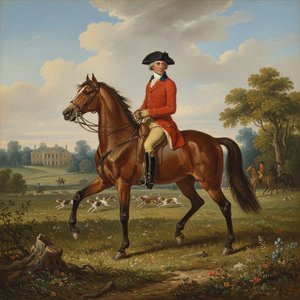
John Nost Sartorius: Equestrian Portraiture & the Shifting Social Landscape of 18th-Century England
Explore the captivating equestrian art of John Nost Sartorius (1759-1828). Discover his detailed paintings of racehorses, hunting scenes & aristocratic life. Learn about collecting Sartorius's work and its lasting value.


