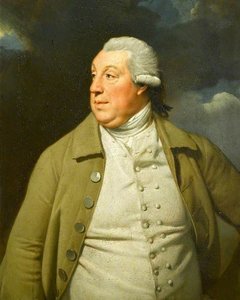
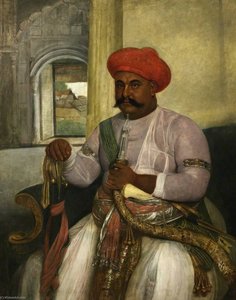
Aperçu en situation
 Envoyer
 Partager
 Détails de l'œuvre

 Télécharger
 Articles similaires
 Radiographie
 Diaporama
Self Portrait
 Acrylic On Canvas
- WallArt
- Neoclassical/Romantic
 1805
1805- 19th Century
 33.0 x 31.0 cm
 British Library
 Lire la suite
Giclées et impressions d'art
Impressions giclées ou sur toile de qualité musée, avec une production rapide et des finitions au choix. ( Commander la reproduction peinte à la main Télécharger l'image haute résolution)




P118B $10

P118H $10

P118W $10

P438Z $10

P508JH $12

P508YH $12

P805H $10

P805Z $10

P919BZ $10

P919G $10

P919XJ $10

P959ZH $10

P968JZ $12

W106C $8

W218G $10

W218JH $8

W218Y $10

W307PJ $10

W316G $10

W316PJ $8

W316Y $10

W398PJ $8

W4111J $10

W500HY $15

W500JH $15

W692G $12

W849H $8

W940BG $15

W953PJ $8




Choisissez parmi nos formats prédéfinis qui respectent les proportions originales de l’œuvre.

Vous pouvez saisir vos propres dimensions pour vous adapter à un cadre ou à un espace spécifique. Si la taille sélectionnée ne correspond pas aux proportions de l'image originale, nous recadrerons l'œuvre ou étendrons l'image avec une bordure en miroir ou une couleur unie. Une maquette numérique vous sera envoyée pour approbation avant le début de la production.
Veuillez noter que l'aperçu à l'écran ne reflète pas le recadrage ou l'extension réelle. Seule la maquette montrera avec précision la composition finale.
Bien que des tailles personnalisées soient disponibles, nous vous recommandons de choisir une dimension dans la liste prédéfinie afin de préserver les proportions originales.
Livraison dans le monde entier () en 2 semaines au lieu des 4/5 semaines habituelles. (19 août)

Livraison express gratuite dans le monde entier

Toile de lin de qualité supérieure

Assurance transport complète

Garantie de remboursement des droits de douane

Garantie de fidélité des couleurs

Politique de retour de 60 jours (uniquement en cas de défaut)

Garantie de remboursement à 100%

Offre de tarifs dégressifs
 L'option verre n'est disponible que pour les dimensions inférieures à 110 cm.

Self Portrait
Giclées et impressions d'art
Format de la reproduction
-


Prix total
$ 80
Description de la pièce
A Window into the Soul: Johann Zoffany’s “Self Portrait as David with the Head of Goliath”
Johann Zoffany's "Self Portrait as David with the Head of Goliath," painted in 1805, is far more than a simple depiction of an artist contemplating his own likeness. It’s a meticulously constructed tableau vivant—a staged scene brimming with classical allusion, theatricality, and a subtle, almost unsettling, exploration of identity and artistic ambition. This remarkable work, housed within the Google Art Project, offers a captivating glimpse into the mind of a master portraitist navigating the complex social landscape of 18th-century England.
Zoffany’s genius lay in his ability to seamlessly blend historical references with contemporary life. The painting immediately draws the eye to the central figure, a man strikingly resembling Zoffany himself, posed dramatically as David, victorious over Goliath. However, this isn't a straightforward homage to Michelangelo’s iconic sculpture; rather, it’s a carefully orchestrated layering of symbolism. The head of Goliath, prominently displayed on a table beside him, is not merely a prop but a deliberate reference to the biblical narrative—a potent emblem of triumph and artistic skill. The inclusion of this severed head speaks volumes about Zoffany's own aspirations: he sought recognition as a master craftsman, capable of capturing both the physical likeness and the spirit of his subjects.
The Stage is Set: Context and Composition
Beyond the central figure, the composition unfolds like a miniature theatrical scene. Two statues—one depicting Venus and the other Diana—stand sentinel on either side, adding an element of classical grace and subtly elevating the entire arrangement. These figures, reminiscent of Roman sculptures, serve as silent witnesses to Zoffany’s self-portrait, grounding the scene in antiquity while simultaneously suggesting a dialogue between past and present. The carefully chosen setting – a richly furnished room with a vibrant tapestry and a collection of intriguing objects—further enhances this sense of layered meaning. The inclusion of a violoncello, a symbol of musical refinement and intellectualism, hints at Zoffany’s own appreciation for the arts and his desire to be associated with the elite circles of London society.
Zoffany's meticulous attention to detail is evident in every aspect of the painting. The lighting, expertly rendered, creates a sense of depth and drama, drawing the viewer into the scene. The textures—the velvet upholstery, the polished wood of the furniture, the rough surface of the stone statues—are all depicted with remarkable realism. This commitment to accuracy reflects Zoffany’s training as a decorative painter and his understanding of how to create convincing illusions of space and form.
A Reflection on Identity: The Artist's Gaze
Perhaps the most compelling aspect of “Self Portrait as David with the Head of Goliath” is its subtle exploration of identity. Zoffany isn’t simply portraying himself; he’s presenting a carefully constructed image of himself—an artist, a scholar, and a man of refined taste. The direct gaze of his self-portrait invites the viewer to engage in a silent dialogue, questioning the nature of representation and the relationship between art and reality. The inclusion of the severed head of Goliath can be interpreted as a symbolic challenge – a reminder that artistic success often requires confronting difficult truths and overcoming formidable obstacles.
Furthermore, the painting’s creation occurred during a period of significant social and political change in England. The rise of the middle class, the burgeoning interest in classical art and literature, and the expansion of the British Empire all contributed to a climate of intellectual ferment. Zoffany's work reflects these shifting values, capturing the spirit of an era defined by ambition, innovation, and a fascination with the past.
Collecting the Echoes: Reproduction and Legacy
Reproductions of “Self Portrait as David with the Head of Goliath” offer a remarkable opportunity to experience the richness and complexity of Zoffany’s masterpiece. Whether displayed in a grand salon or a smaller study, this painting continues to captivate viewers with its intricate details, evocative symbolism, and profound insights into the human condition. It serves as a testament to the enduring power of art to illuminate our understanding of ourselves and the world around us.
Biographie de l'artiste
Johann Zoffany : Vie et Héritage
Jeunesse et Formation
Johann Zoffany, né Johannes Josephus Zaufallij en 1733 à Fribourg-en-Méningue, en Allemagne, était un peintre qui a acquis une renommée principalement en Angleterre et en Italie. Les détails de son enfance sont rares, mais il est connu qu'il a reçu une formation artistique dès son plus jeune âge. Il a d’abord été apprenti chez un sculpteur, peut-être Melchior Paulus à Ellwangen, avant d'étudier avec Martin Speer à Regensburg. Cette période fondatrice a jeté les bases de sa carrière future.
Voyage en Italie et en Angleterre
En 1750, Zoffany voyagea à Rome, où il entra dans l'atelier d'Agostino Masucci et y affina ses compétences au sein de la tradition artistique italienne. Il s’installa ensuite en Angleterre en 1760, se débrouillant pour le moment en créant des conceptions décoratives pour les horloges fabriquées par Stephen Rimbault. Cette période marque un tournant car il commença à établir des liens et à gagner une reconnaissance dans la scène artistique de Londres.
Patronage Royal et Développement Artistique
Zoffany attira rapidement l'attention du roi George III et de la reine Charlotte, devenant un portraitiste favori de la famille royale. Sa capacité à capturer des moments informels – tels que La Reine Charlotte et ses deux plus jeunes enfants (1765) – le distinguait des peintres de cour plus formels. Il était également populaire auprès de la famille impériale autrichienne et a été nommé baron de l'Empire du Saint-Empire romain germanique en 1776 par l'impératrice Marie Thérèse.
Le Maître des « Pièces de Conversation »
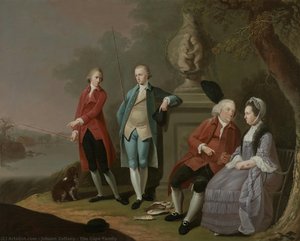
Zoffany est devenu célèbre pour ses « pièces de conversation », ou *conversazione* – portraits de groupe informels représentant des rassemblements sociaux. Il excellait à capturer les personnalités et les interactions au sein de ces scènes, mettant souvent en vedette des figures importantes de la société, du théâtre et de la littérature. Ses œuvres telles que La Famille Cope (1775) illustrent ce style, offrant un aperçu de la vie de ses mécènes.
Réalisations Majeures et Œuvres Notables
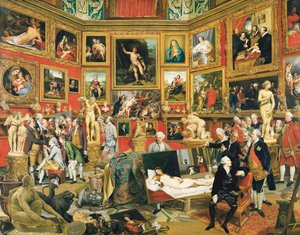
- Tribuna de l'Uffizi (1772-1778) : Peut-être son œuvre la plus célèbre, une représentation méticuleuse de la Galerie Uffizi à Florence.
- Dr William Hunter enseignant l'anatomie à l'Académie Royale (1779) : Une représentation fascinante de l'éducation médicale et de l'enquête scientifique.
- George III (1771) : Un portrait royal mettant en valeur le pouvoir et l'élégance du roi.
- Le match à la perruque du colonel Mordaunt (1784-1786) : Une représentation vibrante de la vie coloniale en Inde, capturant un événement culturel unique.
Années en Inde et Vie ultérieure
De 1783 à 1789, Zoffany résidait en Inde, où il a peint des portraits de figures importantes telles que Warren Hastings et Asaf-ud-Daula. Ses expériences là-bas ont influencé son style artistique et ses sujets. Une histoire remarquable de cette période concerne un naufrage près des îles Andaman, où les survivants ont recouru à des mesures extrêmes pour leur survie.
Influences et Héritage
L'œuvre de Zoffany reflète des influences tant de la précision allemande que de l'art italien. Il a été influencé par des artistes tels qu’Agostino Masucci et s'est inspiré de la tradition baroque. Son style, en revanche, a influencé ses contemporains et les artistes ultérieurs intéressés par le portrait et le commentaire social. Il a relié les traditions artistiques et a laissé un impact durable sur l'art du XVIIIe siècle.
Signification Historique
Les peintures de Johann Zoffany fournissent des informations précieuses sur les coutumes sociales, la vie intellectuelle et les valeurs culturelles de son temps. Ses « pièces de conversation » offrent des portraits intimes d'individus importants et de leur monde, tandis que ses représentations de l'Inde contribuent à notre compréhension de l'histoire coloniale. Il reste une figure importante dans l'histoire de l'art, célébré pour sa compétence technique, ses observations perspicaces et sa vision artistique unique.

johann zoffany
1733 - 1810 , Allemagne
L'essentiel de l'artiste
- Artistic Movement Or Style: Néo-classicisme
- Artists Who Influenced This Artist:
- Agostino Masucci
- Martin Speer
- Date Of Birth: 1733
- Full Name: Johann Joseph Zoffany
- Nationality: Allemand
- Notable Artworks:
- La Tribuna de Florència
- Le Docteur William Hunter enseignant l'anatomie à l'Académie Royale
- George III
- Le match à la perruque du colonel Mordaunt
- Place Of Birth: Frankfurt am Main
Articles connexes
Les 10 Chefs-d'œuvre du Néoclassicisme : Artistes et Décor Intemporels
Plongez au cœur du Néoclassicisme avec les 10 chefs-d'œuvre incontournables de David, Ingres et autres maîtres. Découvrez l'histoire fascinante de ces tableaux célèbres et trouvez l'inspiration déco classique sur !
L'Héritage Durable du Classicisme : Principes, Évolution et Influence dans l'Art Occidental
Explorez l'héritage durable du classicisme français : ses principes fondateurs, les grands maîtres (Poussin, Lorrain), et son influence sur l'art occidental. Analyse approfondie pour passionnés d'histoire de l'art.
Johann Zoffany: Capturing Georgian Society with Brushstrokes of Cosmopolitan Flair
Explore the captivating world of Johann Zoffany, master portraitist of Georgian society. Discover his unique 'conversation pieces,' imperial commissions & lasting legacy. A guide for discerning collectors.
Reflecting the Self: A History of Portraiture & Psychological Insight
Explore the fascinating history of self-portraiture from Renaissance masters like Dürer & Rembrandt to modern interpretations. Discover the psychological insights and artistic techniques behind these iconic works. Expert analysis for art enthusiasts.
Résonance Intemporelle : L'Esthétique Classique dans l'Art – Une Analyse Historique et Esthétique
Explorez l'esthétique classique dans l'art français avec notre analyse historique et philosophique approfondie. Découvrez les principes, figures clés et l'héritage durable de ce mouvement culturel majeur.