Aperçu en situation
 Partager
 Partager
 Détails
 Guide imprimable

 Télécharger
 Articles similaires
 Radiographie
 Voir le diaporama
 Statistiques
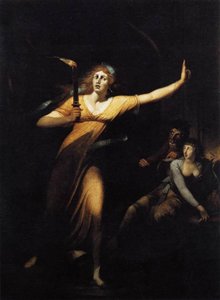
Lady Macbeth
 Oil On Canvas
- WallArt
- Romantic Gothic Surrealism
 1784
1784- 19th Century
 221.0 x 160.0 cm
 Musée du Louvre
 Afficher la suite
Giclées et impressions d'art
Impressions giclées ou sur toile de qualité musée, avec une production rapide et des finitions au choix. ( Acheter la peinture faite à la main Passer au format image numérique)




P118B $10

P118H $10

P118W $10

P438Z $10

P508JH $12

P508YH $12

P805H $10

P805Z $10

P919BZ $10

P919G $10

P919XJ $10

P959ZH $10

P968JZ $12

W106C $8

W218G $10

W218JH $8

W218Y $10

W307PJ $10

W316G $10

W316PJ $8

W316Y $10

W398PJ $8

W4111J $10

W500HY $15

W500JH $15

W692G $12

W849H $8

W940BG $15

W953PJ $8




Choisissez parmi nos formats prédéfinis qui respectent les proportions originales de l’œuvre.

Vous pouvez saisir vos propres dimensions pour vous adapter à un cadre ou à un espace spécifique. Si la taille sélectionnée ne correspond pas aux proportions de l'image originale, nous recadrerons l'œuvre ou étendrons l'image avec une bordure en miroir ou une couleur unie. Une maquette numérique vous sera envoyée pour approbation avant le début de la production.
Veuillez noter que l'aperçu à l'écran ne reflète pas le recadrage ou l'extension réelle. Seule la maquette montrera avec précision la composition finale.
Bien que des tailles personnalisées soient disponibles, nous vous recommandons de choisir une dimension dans la liste prédéfinie afin de préserver les proportions originales.
Livraison dans le monde entier () en 2 semaines au lieu des 4/5 semaines habituelles. (27 septembre)

Livraison express gratuite dans le monde entier

Toile de lin de haute qualité

Assurance transport complète

Garantie de remboursement des droits de douane

Garantie de fidélité des couleurs

Garantie de retour de 100 jours (uniquement en cas de défaut)

Garantie de remboursement à 100%

Tarifs dégressifs sur quantité
 L'option verre n'est disponible que pour les dimensions inférieures à 110 cm.

Lady Macbeth
Giclées et impressions d'art
Format de la reproduction
-


Prix total final
$ 80
A Gothic Descent: The Psychological Terror of Lady Macbeth
In the hallowed corridors of the Musée du Louvre, there exists a canvas that does not merely depict a scene, but rather exhales a palpable sense of dread. Johann Heinrich Füssli’s 1784 masterpiece, Lady Macbeth, serves as a visceral embodiment of Romanticism’s obsession with the fractured human psyche. This is not a portrait of nobility, but a window into a soul in the throes of disintegration. As Lady Macbeth wanders through the shadows of her own mind, the painting captures that precise, harrowing moment where the weight of transgression becomes an unbearable physical presence. For the collector or lover of fine art, this work offers more than aesthetic beauty; it provides a profound encounter with the sublime and the unsettling.
The composition is a masterclass in chiaroscuro, the dramatic interplay of light and shadow that Füssli utilized to sculpt emotion from darkness. The stark illumination upon Lady Macbeth’s face acts as a theatrical spotlight, pulling her from the encroaching gloom to reveal a countenance etched with horror and shock. This technique, reminiscent of the great Caravaggio, does not simply illuminate the subject; it amplifies her vulnerability. The surrounding darkness feels heavy, almost predatory, pressing in upon the central figure and mirroring the inescapable nature of her guilt. To possess a reproduction of such a piece is to bring a sense of dramatic tension and intellectual depth into a space, making it an ideal focal point for interiors that value storytelling and atmospheric intensity.
Symbolism and the Weight of Guilt
Every element within Füssli’s vision is imbued with a heavy symbolic resonance. The dagger held aloft in her hand serves as the chilling centerpiece of the narrative, a silent witness to the violence that has stained her conscience. As she gestures toward the viewer, there is an unsettling intimacy to the work, as if the viewer is being drawn into her madness. In the periphery, the presence of the unconscious man and the watchful, fearful servant creates a layered psychological landscape. These figures are not merely background elements; they represent the external world that remains oblivious to—or terrified by—the internal storm raging within the protagonist.
The artist’s meticulous attention to detail extends far beyond anatomical precision. The muted palette, dominated by somber blues, greys, and deep blacks, underscores a mood of profound melancholy and moral decay. Füssli captures the very essence of the Gothic movement—the fascination with the supernatural, the grotesque, and the irrational. For the interior designer, this painting offers a sophisticated way to introduce "mood" into a room, providing a conversation piece that explores the complexities of human nature. It is a work that demands contemplation, inviting anyone who gazes upon it to reflect on the enduring power of memory and the indelible marks left by our most significant actions.
Biographie de l'artiste
Early Life and Education
Johann Heinrich Füssli, known as Henry Fuseli, was born on February 7, 1741, in Zurich, Switzerland – the second of eighteen children to Johann Caspar Füssli, a respected portrait painter. His upbringing within an artistic family instilled in him a deep appreciation for visual arts from a young age. He received a comprehensive classical education at the Collegium Carolinum in Zurich, where he honed his skills in Latin, Greek, and rhetoric – foundational disciplines that would later inform his understanding of art history and theory. This rigorous academic training provided him with a solid base upon which to build his artistic career, exposing him to the principles of ancient sculpture and classical literature, elements that profoundly influenced his aesthetic sensibilities.Artistic Career in Europe
Füssli’s artistic journey commenced with his relocation to London in 1764, where he encountered Sir Joshua Reynolds, a pivotal figure in the British art scene. Reynolds recognized Füssli's potential and encouraged him to dedicate himself entirely to painting, steering him away from the more traditional path of church ministry that had initially been envisioned for him. Following this crucial mentorship, Füssli embarked on an extended sojourn through Italy between 1770 and 1778. During this period, he immersed himself in the works of master painters such as Titian, Caravaggio, and the Mannerists – absorbing their techniques, compositional strategies, and expressive approaches to color and light. This Italian experience proved transformative, shaping his artistic style and providing him with a deeper understanding of Western art history.Supernatural Themes and Literary Inspiration
Füssli’s paintings are particularly renowned for their exploration of supernatural themes, often drawing inspiration from literary sources. He created a series of evocative works based on John Milton's epic poems, envisioning a “Milton Gallery” – a concept akin to Boydell’s Shakespeare Gallery – intended to showcase these powerful narratives through visual representation. His most famous work, *The Nightmare* (1782), exemplifies this fascination with the macabre and unsettling, depicting a woman consumed by terror as she confronts a demonic incubus. This painting, along with others like “Titania, Bottom & Fairies,” captured the burgeoning Romantic sensibility of the late 18th century, characterized by an interest in emotion, imagination, and the darker aspects of human experience.Influence and Legacy
Füssli’s distinctive style exerted a considerable influence on subsequent generations of British artists, notably William Blake, whose own work often explored themes of mythology, symbolism, and the subconscious. His dramatic use of chiaroscuro (the contrast between light and dark), coupled with his penchant for depicting fantastical creatures and unsettling scenes, paved the way for Romanticism in Britain. His works continue to be studied and admired for their psychological depth, evocative atmosphere, and masterful execution. Museums worldwide – including the Kunsthaus Zürich in Switzerland and the Albertina in Vienna – house significant collections of Füssli’s paintings, ensuring that his artistic legacy endures as a testament to his unique vision and enduring impact on the history of art.
Johann Heinrich Füssli
1741 - 1825 , Suisse
En bref
- Artistic Movement Or Style: Romantisme, Néoclassicisme
- Artists Or Movements Influenced By This Artist: ['William Blake']
- Artists Who Influenced This Artist:
- Titian
- Caravaggio
- Date Of Birth: 7 février 1741
- Date Of Death: 16 avril 1825
- Full Name: Johann Heinrich Füssli
- Nationality: Suisse
- Notable Artworks:
- Le Cauchemar
- Titania et Bottom
- Place Of Birth: Zurich, Suisse
Articles similaires

Gothic Vibes: From Dark Shadows to Bold Modern Edge | The Ultimate Trend Forecast
Explore the evolution of Gothic vibes, from historical shadows to bold modern edge. Discover how dark aesthetics, noir interiors, and contemporary subcultures are redefining modern design through a high-impact, trend-focused lens.
Henri Matisse : Les 25 Œuvres Maîtresses d'un Génie de la Couleur | OriginalUniqueArt
Plongez dans l'univers vibrant d'Henri Matisse ! Découvrez les 25 œuvres majeures du fauvisme et de la peinture moderne. Explorez La Danse, L'Atelier Rouge & plus encore. Reproductions de qualité musée sur OriginalUniqueArt.com.
Gothic Art Guide for Hotel Designers: Leveraging Dramatic Shadows and Architectural Grandeur in Luxury Interiors
Elevate hospitality interiors with our expert guide to Gothic art. Discover how to leverage dramatic shadows, architectural grandeur, and high-end reproductions to create sophisticated, atmospheric hotel spaces that captivate guests.
Shadows & Splendor: A Journey Through the Soul of Gothic Art and Architectural Grandeur
Embark on a profound journey through the spiritual intensity of Gothic art. Explore the architectural marvels, luminous stained glass, and sacred sculptures that define this era of grandeur and human devotion.
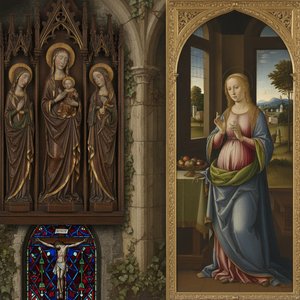
Late Gothic Art: The Divine Transition from Medieval Symbolism to Renaissance Naturalism
Explore the profound transition of Late Gothic art from medieval symbolism to Renaissance naturalism. Discover the elegance of International Gothic, the legacy of Master Theodoric, and the evolution of European courtly masterpieces through an expert art-historical lens.