

 Aperçu en situation
 Partager
 Partager
 Détails
 Guide
Guide

 Télécharger
 Articles similaires
 Radiographie
 Voir le diaporama
 Statistiques
Gold and azure


 Afficher la suite
Reproduction à l'huile faite à la main
Huile sur toile peinte à la main, avec cadre et dimensions personnalisés, réalisée sur commande par nos artistes. ( Passer au format impression Passer au format image numérique)




P118B $10

P118H $10

P118W $10

P438Z $10

P508JH $12

P508YH $12

P805H $10

P805Z $10

P919BZ $10

P919G $10

P919XJ $10

P959ZH $10

P968JZ $12

W106C $8

W218G $10

W218JH $8

W218Y $10

W307PJ $10

W316G $10

W316PJ $8

W316Y $10

W398PJ $8

W4111J $10

W500HY $15

W500JH $15

W692G $12

W849H $8

W940BG $15

W953PJ $8




Choisissez parmi nos formats prédéfinis qui respectent les proportions originales de l’œuvre.

Vous pouvez saisir vos propres dimensions pour l'adapter à un cadre ou à un espace spécifique. Si la taille sélectionnée ne correspond pas aux proportions de l'image d'origine, nous recadrerons l'œuvre ou prolongerons la peinture avec des éléments peints à la main supplémentaires. Une maquette numérique vous sera envoyée pour approbation avant le début de la production.
Veuillez noter que l'aperçu à l'écran ne reflète pas le recadrage ou l'extension réels. Seule la maquette montrera fidèlement la composition finale.
Bien que des tailles personnalisées soient disponibles, nous vous recommandons de sélectionner une dimension dans la liste prédéfinie afin de préserver les proportions d'origine.
Après la commande, l’équipe OriginalUniqueArt.com contactera le client par e-mail pour recueillir ses instructions et lui fournira une maquette d’aperçu
Livraison dans le monde entier () en 3 à 4 semaines au lieu des 5 semaines habituelles. (21 septembre). Aucun compromis sur la qualité.

Livraison express gratuite dans le monde entier

Toile de lin de haute qualité

Assurance transport complète

Garantie de remboursement des droits de douane

Garantie de fidélité des couleurs

Garantie de retour de 100 jours (uniquement en cas de défaut)

Garantie de remboursement à 100%

Tarifs dégressifs sur quantité
 L'option verre n'est disponible que pour les dimensions inférieures à 110 cm.

Gold and azure
Technique de reproduction
Format de la reproduction
-


Prix total final
$ 300
A Catalan Reverie: Joaquim Mir’s “Gold and Azure”
Joaquim Mir’s “Gold and Azure,” painted in 1902, is more than just a landscape; it's a distilled essence of the Catalan spirit – a poignant meditation on beauty, solitude, and the enduring power of nature. This evocative work captures a moment of profound tranquility within a region undergoing seismic shifts, reflecting Mir’s own complex relationship with his homeland’s burgeoning nationalism and artistic Modernisme movement. The painting immediately draws the eye to a majestic mountain range dominating the scene, its rocks rendered in warm yellows that suggest both geological age and a subtle, almost spiritual glow. Below, a serene lake mirrors the sky, creating an illusion of infinite space and reinforcing the sense of peace. Scattered trees and bushes add texture and depth, grounding the composition while simultaneously emphasizing the vastness of the surrounding wilderness.
The Painter’s Palette and Technique
Mir's technique in “Gold and Azure” is characterized by a deliberate restraint, a hallmark of his artistic approach. He employs a muted palette dominated by blues, yellows, and browns – colors deeply rooted in the Catalan landscape. The brushwork is loose and expressive, avoiding sharp outlines and instead favoring broad strokes that convey atmosphere rather than precise detail. This technique contributes significantly to the painting’s dreamlike quality, inviting the viewer into a world of quiet contemplation. Notice how he builds up layers of color, creating subtle gradations and shimmering effects, particularly in the reflections on the lake surface – a testament to his mastery of light and shadow.
Historical Context: Barcelona at the Dawn of Modernisme
Painted in 1902, “Gold and Azure” exists within a pivotal moment for Barcelona. The city was experiencing a surge of artistic innovation fueled by Catalan nationalism and the rise of Modernisme. Mir’s association with the *Colla del Safrà* – a group of avant-garde artists including Canals, Nonell, and Pichot – placed him firmly at the heart of this movement. This collective sought to break away from traditional academic styles and create art that was uniquely Catalan, reflecting the region's distinctive identity and spirit. Mir’s work, like many within the *Colla del Safrà*, often explored themes of memory, myth, and the relationship between humanity and nature – subjects deeply resonant with the Catalan experience.
Symbolism and Emotional Resonance
The inclusion of a small boat on the lake introduces an element of human presence, subtly disrupting the otherwise pristine landscape. This could be interpreted as a symbol of man’s connection to nature, or perhaps a poignant reminder of our own fleeting existence within the face of eternity. The overall mood of “Gold and Azure” is one of quiet melancholy – a feeling that permeates much of Mir's oeuvre. It’s a painting that invites introspection, prompting viewers to consider themes of solitude, beauty, and the enduring power of the natural world. This reproduction captures not just an image, but the very soul of Joaquim Mir’s vision.
Biographie de l'artiste
Joaquim Mir: A Catalan Visionary
Joaquim Mir y Trinxet (1873-1940) stands as one of the most distinctive figures in Catalan Modernisme, a movement dedicated to forging a singular cultural identity for Catalonia during a period marked by fervent nationalist aspirations. More than simply documenting his surroundings, Mir transformed them into luminous expressions of emotion and intuition—a feat achieved through an unparalleled mastery of color and form that transcends Impressionistic conventions. His life unfolded against the backdrop of Barcelona’s burgeoning artistic dynamism, shaped by encounters with fellow innovators like Santiago Rusiñol and Josep Puig i Cadafalch, whose collaborative spirit epitomized the ethos of the era.Early Influences and Artistic Formation
Mir’s formative years were spent at the Llotja Fine Arts School in Barcelona, where he honed his skills under the tutelage of Lluís Graner, absorbing the stylistic currents circulating throughout Europe. Crucially, he befriended Isidre Nonell and Ricard Canals—members of the influential *Colla del Safrà*, a collective that fostered experimentation and mutual inspiration. This association proved pivotal in shaping Mir’s artistic sensibilities, propelling him toward a path distinct from those pursued by his peers who sought renown in Paris. In 1897, he embarked on a transformative journey to Mallorca alongside Santiago Rusiñol, immersing himself in the island’s landscape—a formative experience that would profoundly influence his subsequent artistic endeavors. Here, he encountered William Degouve de Nuncques, whose ethereal paintings captivated Mir’s imagination and instilled within him a fascination for capturing atmosphere and emotion rather than precise visual representation.The Mallorca Years: Synthesis of Color and Light
These years in Mallorca witnessed the genesis of Mir’s signature style—characterized by bold chromatic contrasts and textural effects that defied conventional artistic norms. He abandoned academic realism, prioritizing subjective perception and channeling his innermost feelings onto canvas. His landscapes weren't mere topographical sketches; they were luminous meditations on nature imbued with a palpable sense of mysticism. The resulting paintings—such as “Marina con algas marinas” (“Marina with Seaweed”) and “Sa Calobra”—became emblems of Modernisme’s aesthetic ideals, reflecting the movement’s preoccupation with capturing the sublime beauty of Catalan scenery. His palette exploded with vibrant hues—azure blues, ochres, golds—creating immersive environments that evoked emotion rather than simply depicting visual details.Casa Trinxet and Architectural Expression
Mir’s artistic vision extended beyond painting; he actively participated in shaping Barcelona’s architectural landscape through his monumental murals for Casa Trinxet, commissioned by his uncle Avelino Trinxet Casas between 1903 and 1904. Designed by Josep Puig i Cadafalch—a fellow Modernist pioneer—Casa Trinxet stands as a testament to Mir’s commitment to artistic innovation and his ability to translate aesthetic principles into tangible form. The murals, executed with meticulous attention to detail and infused with an exuberant chromatic vocabulary, exemplify Mir’s belief that art should illuminate the soul and elevate the senses. They are considered masterpieces of Catalan Modernisme, embodying the movement's aspiration to transform buildings into instruments of artistic expression.Legacy and Artistic Significance
Joaquim Mir died in Barcelona in 1940, leaving behind a legacy that continues to inspire artists and scholars alike. His paintings—characterized by their luminous color palettes, expressive brushstrokes, and profound engagement with Catalan landscape—remain among the most celebrated achievements of Modernisme. He championed an artistic philosophy rooted in intuition and emotion, rejecting academic conventions in favor of capturing the essence of nature’s beauty—a singular vision that distinguishes him from his contemporaries. Mir's enduring influence resides not merely in his stylistic innovations but also in his unwavering dedication to artistic integrity—a testament to his conviction that art should serve as a conduit for spiritual contemplation and aesthetic delight. His work stands as an indelible emblem of Catalan identity and artistic excellence, securing its place within the annals of 20th-century art history.
Joaquim Mir
1879 - 1940 , Espagne
En bref
- Artistic Movement Or Style: Modernisme
- Artists Or Movements Influenced By This Artist: ['Impressionisme']
- Artists Who Influenced This Artist:
- William Degouve de Nuncques
- Santiago Rusiñol
- Date Of Birth: 6 janvier 1873
- Full Name: Joaquim Mir y Trinxet
- Nationality: Espagnol
- Notable Artworks: ['Marina avec pêcheurs']
- Place Of Birth: Barcelona, Espagne
Articles similaires

Giclée Prints: Archival Quality & Aesthetic Nuances for the Discerning Collector
Explore the world of giclée prints with OriginalUniqueArt. Learn about archival quality, aesthetic nuances & investment potential. Expert guidance for discerning art collectors seeking museum-quality reproductions and lasting value.

Hokusai : Les 25 Œuvres Maîtresses d'un Génie Japonais | OriginalUniqueArt
Plongez dans l'univers de Katsushika Hokusai avec les 25 œuvres incontournables du maître japonais. Découvrez l'histoire, les techniques d'ukiyo-e et la beauté intemporelle de 'La Grande Vague'. Reproductions tableaux de qualité muséale sur OriginalUniqueArt.com.
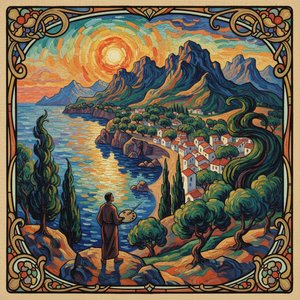
Joaquim Mir: A Catalan Visionary – Exploring Symbolism, Landscape & Modernist Aesthetic
Explore the captivating world of Joaquim Mir, a pivotal Catalan Modernisme painter. Discover his vibrant landscapes, symbolic depth & lasting influence on Spanish art history. Learn more at OriginalUniqueArt.

Les 10 Chefs-d'œuvre du Paysage Romantique : Artistes et Décor d'Intérieur
Plongez dans l'émotion du Romantisme avec les 10 plus beaux paysages de Friedrich, Turner & Delacroix. Découvrez leur histoire et trouvez l'inspiration déco idéale sur OriginalUniqueArt.com !

Constable : Les 25 Chefs-d'Œuvre du Maître Anglais | OriginalUniqueArt
Plongez dans l'univers de John Constable avec les 25 œuvres incontournables du maître anglais. Découvrez l'histoire, la technique et l'émotion derrière ses paysages romantiques. Reproductions de qualité muséale sur OriginalUniqueArt.com.