

 Aperçu en situation
 Partager
 Partager
 Détails
 Guide imprimable

 Télécharger
 Articles similaires
 Radiographie
 Voir le diaporama
 Statistiques
Slaughtered Pig
 Oil On Canvas
- WallArt
- Renaissance Realism
 1563
1563- Renaissance
 114.0 x 83.0 cm
 Wallraf-Richartz-Museum
 Afficher la suite
Reproduction à l'huile faite à la main
Huile sur toile peinte à la main, avec cadre et dimensions personnalisés, réalisée sur commande par nos artistes. ( Passer au format impression Passer au format image numérique)




P118B €10

P118H €10

P118W €10

P438Z €10

P508JH €12

P508YH €12

P805H €10

P805Z €10

P919BZ €10

P919G €10

P919XJ €10

P959ZH €10

P968JZ €12

W106C €8

W218G €10

W218JH €8

W218Y €10

W307PJ €10

W316G €10

W316PJ €8

W316Y €10

W398PJ €8

W4111J €10

W500HY €15

W500JH €15

W692G €12

W849H €8

W940BG €15

W953PJ €8




Choisissez parmi nos formats prédéfinis qui respectent les proportions originales de l’œuvre.

Saisissez la largeur et la hauteur souhaitées, pour s'adapter à votre cadre ou à votre mur. Cette œuvre est peinte à la main ; ainsi, pour un format de forme différente, l'artiste peut peindre un peu plus autour du tableau ou réduire légèrement les bords — c'est vous qui choisissez. Nous vous envoyons une maquette numérique pour approbation avant que la peinture ne commence. L'image présentée sur cette page ne reflète pas le résultat réel — seule la maquette le fait.
Après la commande, l’équipe OriginalUniqueArt.com contactera le client par e-mail pour recueillir ses instructions et lui fournira une maquette d’aperçu
Livraison dans le monde entier () en 3 à 4 semaines au lieu des 5 semaines habituelles. (23 octobre). Aucun compromis sur la qualité.

Livraison express gratuite dans le monde entier

Toile de lin de haute qualité

Assurance transport complète

Garantie de remboursement des droits de douane

Garantie de fidélité des couleurs

Garantie de retour de 100 jours (uniquement en cas de défaut)

Garantie de remboursement à 100%

Tarifs dégressifs sur quantité
 L'option verre n'est disponible que pour les dimensions inférieures à 110 cm.

Slaughtered Pig
Technique de reproduction
Format de la reproduction
-


Prix total final
€ 264
A Visceral Encounter with Renaissance Realism
In the quiet intensity of Joachim Beuckelaer’s 1563 masterpiece, "Slaughtered Pig," the viewer is not merely an observer but a witness to a profound moment of transformation. This oil on canvas, born from the vibrant intellectual and commercial energy of Antwerp’s golden age, transcends the boundaries of a simple genre painting. At first glance, the scene presents a raw, almost unsettling depiction of butchery: a pig hangs suspended from a sturdy wooden beam, its hind legs bound, while the visceral reality of its anatomy is laid bare. The artist does not flinch from the grisly details; instead, he invites us to look closer at the exposed musculature and the glistening textures of the carcass. Through this unflinching gaze, Beuckelaer captures a pivotal moment in art history where the boundaries between the mundane and the monumental begin to blur.
The composition is a masterclass in chiaroscuro, utilizing dramatic light and deep, enveloping shadows to sculpt the figures and the central subject. As light spills across the scene, it illuminates the intricate textures of the pig's skin and the practiced movements of the two men engaged in their labor. One figure, perched precariously atop a ladder, reaches toward the animal, while another stands below, wielding his tools with a precision that speaks to years of tradition. This interplay of light and shadow does more than create depth; it imbues the scene with a somber, almost ritualistic atmosphere, turning a common agricultural task into a heavy meditation on the cycle of life and death.
The Art of the Everyday: Symbolism and Technique
Beyond the surface-level realism lies a complex web of symbolism deeply rooted in the humanist spirit of the sixteenth century. While Beuckelaer is celebrated for his mastery of market and kitchen scenes, his work often carries an undercurrent of spiritual reflection. The act of slaughter depicted here can be viewed as a symbolic representation of sacrifice, a theme that resonated powerfully within the religious landscape of the Renaissance. The vulnerability of the animal, contrasted with the methodical, almost clinical precision of the butchers, serves as a poignant reminder of mortality and the interconnectedness of all living things. It is this ability to find profound meaning within the most earthly of subjects that elevates Beuckelaer from a mere chronicler of daily life to a philosopher of the canvas.
Technically, the painting is a triumph of Flemish precision. Beuckelaer employed a meticulous layering of translucent glazes, a technique that allows light to penetrate the paint layers and reflect back, creating an inner luminosity and an extraordinary sense of tactile realism. Every element—from the rough grain of the wooden beam to the sheen of the metal instruments—is rendered with an obsessive attention to detail. This dedication to texture makes the painting feel remarkably alive, as if one could almost sense the weight of the carcass or the dampness of the rural setting. For the collector or interior designer, such a piece offers more than just visual beauty; it provides a conversation piece that commands attention through its sheer technical prowess and emotional depth.
A Timeless Addition to the Sophisticated Interior
For those seeking to curate a space that reflects depth, history, and a love for classical realism, "Slaughtered Pig" offers an unparalleled sense of character. The painting’s palette, dominated by rich earth tones, provides a grounding element that complements both traditional and contemporary decor. Its ability to evoke a sense of nostalgia and reverence makes it an ideal centerpiece for a study, a library, or a dining room where themes of sustenance and heritage are celebrated. Owning a high-quality reproduction of this work allows one to bring the spirit of the Antwerp Renaissance into the modern home, offering a window into a world where even the most unsettling realities were met with profound artistic contemplation.
Questions et réponses
Est-ce que Joachim Beuckelaer, créateur de « Slaughtered Pig », est connu sous d'autres noms ?
D'autres noms répertoriés pour Joachim Beuckelaer, créateur de « Slaughtered Pig », incluent Bueckelaer.
Où puis-je voir l'original de «Slaughtered Pig» de Joachim Beuckelaer ?
«Slaughtered Pig» de Joachim Beuckelaer est exposé au Wallraf-Richartz-Museum, Cologne, Allemagne. La mention du musée se rapporte à l'œuvre originale et non à des reproductions.
Combien de personnes consultent « Slaughtered Pig » ?
La page Statistiques de «Slaughtered Pig» de Joachim Beuckelaer présente les statistiques de visites publiques : le nombre de visites mensuelles de cette œuvre, une comparaison avec les œuvres les plus consultées de l'artiste, ainsi que la provenance des visiteurs.
Biographie de l'artiste
Joachim Beuckelaer : Une Vie Dévouée à la Peinture Flamande
- Né: Anvers, Belgique (c. 1533)
- Décédé: c. 1573
Joachim Beuckelaer était un peintre flamand éminent, spécialisé dans les scènes de marché et de cuisine, reconnu pour ses représentations détaillées de la nourriture, du matériel ménager et l'intégration de récits bibliques dans la vie quotidienne. Son œuvre a considérablement influencé le développement de l'art des natures mortes non seulement en Europe du Nord mais aussi en Italie.
Jeunesse et Formation
Né au sein d’une famille d’artistes, le père de Beuckelaer, Mattheus Beuckeleer, était enregistré comme maître dans la guilde Saint-Luc d'Anvers. Cette connexion familiale lui a offert une exposition précoce au monde de l'art. Il a probablement reçu sa formation initiale auprès de son père et de son oncle, Pieter Aertsen, un peintre renommé pour avoir ouvert la voie aux scènes de marché et de cuisine. Son frère, Huybrecht Beuckelaer, a également suivi leurs traces en tant que peintre.
Joachim Beuckelaer est devenu maître indépendant au sein de la guilde Saint-Luc d'Anvers en 1560, marquant son entrée formelle dans la communauté artistique. Tout au long de sa carrière, il est resté actif à Anvers, s’appuyant et affinant constamment les thèmes établis par Aertsen.
Caractéristiques Principales de Son Œuvre
- Scènes de Marché: Les scènes de marché de Beuckelaer se caractérisaient par leur détail méticuleux et intégraient souvent des épisodes bibliques en arrière-plan. Par exemple, sa série "Les Quatre Éléments" dépeint un marché aux poissons animé avec douze variétés de poisson représentant les douze disciples de Jésus, tandis qu'une arche révèle Christ marchant sur la mer de Galilée.
- Scènes de Cuisine: À l’instar d’Aertsen, les scènes de cuisine de Beuckelaer mettaient en valeur des ingrédients abondants et des intérieurs domestiques. Sa "Scène de Cuisine avec Christ à Emmaüs" combine de manière unique une préparation de repas somptueux avec le récit biblique de l'apparition du Christ à ses disciples.
- Éléments de Nature Morte: Bien qu’il soit principalement connu pour ses scènes de marché et de cuisine, Beuckelaer a également produit des natures mortes représentant des objets et des aliments ordinaires, démontrant sa maîtrise du détail et du réalisme. Sa "Nature Morte d'une Carcasse" (1563) est considérée comme l’un des premiers exemples datés de ce sujet.
Influences et Héritage
Les innovations artistiques de Beuckelaer ont eu un impact durable sur les générations futures de peintres. Il a considérablement influencé des artistes tels que Frans Snyders, qui a développé davantage le genre des natures mortes élaborées, et Vincenzo Campi en Italie. La série "Les Quatre Éléments" témoigne de son talent pour mélanger harmonieusement des scènes quotidiennes avec un symbolisme religieux, contribuant ainsi de manière significative à l'évolution tant de la peinture de marché/cuisine que du domaine naissant de l'art des natures mortes.
Signification Historique
Joachim Beuckelaer a joué un rôle crucial dans la transition de l’art flamand d’un thème principalement religieux vers des sujets plus séculiers. Ses représentations détaillées de la vie quotidienne – marchés, cuisines et natures mortes – reflétaient un intérêt croissant pour le réalisme et l'observation au sein de la communauté artistique. En intégrant des récits bibliques dans ces scènes, il a créé des œuvres à la fois visuellement captivantes et riches de sens, consolidant ainsi sa place en tant que figure essentielle de l’art flamand du XVIe siècle.

Joachim Beuckelaer
1533 - 1573 , Belgique
En bref
- Artistic Movement Or Style: Renaissance
- Artists Or Movements Influenced By This Artist:
- Frans Snyders
- Vincenzo Campi
- Artists Who Influenced This Artist: ['Pieter Aertsen']
- Date Of Birth: c. 1533
- Date Of Death: c. 1573
- Full Name: Joachim Beuckelaer
- Nationality: Flamand
- Notable Artworks:
- Les Quatre éléments : Eau
- Cuisine avec Christ à Emmaüs
- Place Of Birth: Anvers, Belgique
Articles connexes
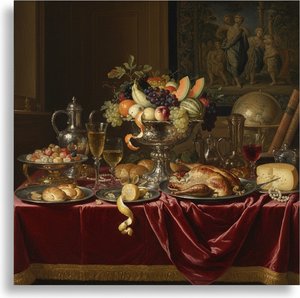
Abraham Hendricksz van Beyeren: Pioneering Dutch Still Life & the Banquet Tradition
Explore the captivating world of Dutch Golden Age still life with Abraham van Beyeren. Discover his innovative techniques, symbolic banquet scenes & lasting influence on art history. Learn about collecting these masterpieces.
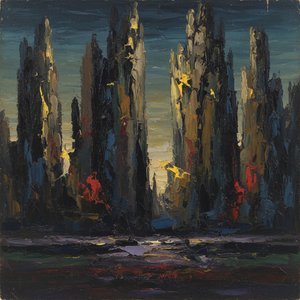
Clyfford Still's Abstract Expressionism: A Study of Color, Form & the Existential Landscape
Explore the profound world of Clyfford Still's Abstract Expressionism with OriginalUniqueArt. Discover his unique style, existential themes & investment potential. Expert analysis for discerning collectors.

Silent Narratives: Exploring the Enduring Appeal of Still Life Painting Across Centuries
Explore the rich history of still life painting with OriginalUniqueArt. Discover Dutch Masters, decode vanitas symbolism & learn about collecting timeless art. Expert insights and museum-quality reproductions.
De la Nature Morte Classique à l'Abstraction Contemporaine : Élever les Espaces de Réception d'une Villa par la Reproduction Artistique
Découvrez l'histoire de la nature morte et sublimez votre villa avec des reproductions d'art exceptionnelles. Conseils d'experts, personnalisation sur mesure & qualité garantie par OriginalUniqueArt.
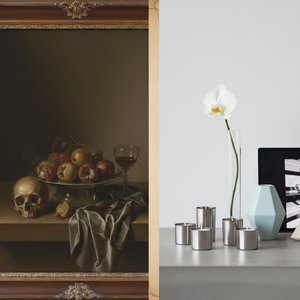
The Enduring Appeal of Still Life: A Historical & Contemporary Exploration
Explore the rich history & symbolism of still life painting with OriginalUniqueArt. Discover masterpieces from the Dutch Golden Age, learn about vanitas art, and find expert guidance for collecting timeless artworks.


