

 Aperçu en situation
 Envoyer
 Partager
 Détails de l'œuvre

 Télécharger
 Articles similaires
 Radiographie
 Diaporama
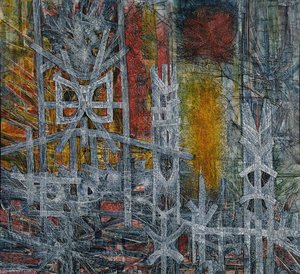
Nightnoon
 1965
1965 132.0 x 168.0 cm
 Lire la suite
Acquérez une image numérique haute résolution et optimisée, d'une qualité bien supérieure à l'aperçu en ligne.
Chaque fichier est méticuleusement préparé par nos spécialistes internes à l'aide d'outils avancés et d'une retouche manuelle experte. Nous garantissons que chaque image possède une clarté exceptionnelle, une précision des couleurs irréprochable et un niveau de détail fin.
Le fichier final est livré par e-mail sous 72 heures, optimisé pour une utilisation immédiate dans des contextes professionnels, éditoriaux et d'impression. Il offre la même qualité de confiance que celle utilisée par les plus grands studios de création, éditeurs et galeries.
Image numérique
Téléchargez un fichier haute résolution pour votre usage personnel, l'impression et vos projets créatifs. ( Commander l'impression Commander la reproduction peinte à la main)
Inclus avec chaque commande d'image numérique
Livraison numérique experte, garantie.
En choisissant OriginalUniqueArt.com, vous n'obtenez pas seulement une simple image : vous recevez une œuvre numérique sublimée avec professionnalisme, conçue avec précision et accompagnée d'une garantie de satisfaction. Voici tout ce qui accompagne automatiquement votre commande :

Envoi rapide par e-mail
Votre fichier d'image numérique haute résolution vous sera envoyé par e-mail sous 72 heures après votre commande — prêt à un usage immédiat.

Fichier numérique optimisé par l'IA
Votre œuvre d'art bénéficie d'une optimisation professionnelle grâce à des outils d'IA avancés et une retouche manuelle, garantissant un niveau maximal de détail, de clarté et de fidélité chromatique.

Réexpédition gratuite à vie
Vous avez accidentellement supprimé ou perdu votre fichier ? Pas d'inquiétude — nous vous le renverrons gratuitement, quand vous le souhaitez.

Aucuns frais de douane — À jamais
Profitez de votre œuvre d'art instantanément sans frais de douane ni de livraison — les téléchargements numériques sont toujours exonérés de taxes.

Garantie de fidélité des couleurs
Nous garantissons que votre image numérique reproduit les couleurs de l'original aussi fidèlement que possible grâce à des outils professionnels et une gestion rigoureuse des couleurs.

Garantie satisfaction 60 jours
Si vous n'êtes pas satisfait de votre image numérique, nous la retoucherons ou vous rembourserons 100% sous 60 jours — sans poser de questions.

Garantie de remboursement à 100%
Pas satisfait ? Obtenez un remboursement intégral dans les 60 jours suivant la réception de votre fichier numérique — sans aucune question posée.

Réductions sur les commandes groupées
Achetez 3 images, économisez 10% - Achetez 5, économisez 15% - Achetez 10+, économisez 20%. Idéal pour les projets créatifs, les galeries et les agences.
Artistic Background
Jimmy Ernst was an American painter born in Germany in 1920. His father, Max Ernst, was a renowned Surrealist artist, and his mother, Louise Straus, was an art critic and journalist. This exposure to the art world from a young age likely influenced Jimmy Ernst's style and technique. The Nightnoon painting is a testament to his skill in capturing the essence of abstract expressionism. Key Features of the painting include:- The use of bold colors and geometric shapes to create a sense of depth and dimensionality
- The incorporation of abstract elements, such as lines and patterns, to add texture and visual interest
- The overall composition, which creates an intriguing visual experience for the viewer
The Nightnoon painting is a significant example of Jimmy Ernst's contribution to the abstract expressionist movement. As a professional expert in Art, I can attest that this painting is a must-see for anyone interested in modern and contemporary art. Visit https://OriginalUniqueArt.com to discover more about Jimmy Ernst and other notable artists, and to explore our collection of hand-made oil painting reproductions.
Biographie de l'artiste
A Life Forged in the Crucible of Exile
The story of Jimmy Ernst is one inextricably woven into the turbulent fabric of twentieth-century history, a narrative defined by displacement, survival, and the profound influence of the avant-garde. Born Hans-Ulrich Ernst in 1920 in Cologne, Germany, his very existence was shaped by the shadows of the era's most seismic political shifts. As the son of the legendary Surrealist master Max Ernst and the esteemed art historian Luise Straus-Ernst, Jimmy was born into a world where art and intellect were under constant siege. The rise of the Nazi regime in Germany brought personal tragedy to his doorstep; following the search of his mother's apartment by the SS, the family was fractured, eventually leading to his migration to New York in 1938. This transition from the heart of Europe to the burgeoning energy of America would become the defining metamorphosis of his life, turning a child of the German intelligentsia into a vital voice within the American art scene.
His early years were marked by an extraordinary exposure to the giants of Surrealism. During childhood visits to France, he moved through circles that included Salvador Dalí, Joan Miró, and Man Ray, absorbing the dreamlike logic and subversive spirit of the movement long before he ever picked up a brush with intent. However, his journey was also shadowed by the unimaginable loss of his mother in the Holocaust, a trauma that added a layer of poignant gravity to his later explorations of identity and memory.
The Irascible Spirit and the New York School
Upon arriving in New York, Ernst did not merely observe the art world; he became one of its most active architects. His connection to Peggy Guggenheim—who would become his stepmother—placed him at the epicenter of modernism. Serving as the director of the influential Art of This Century gallery, he helped curate the very movements that would redefine Western painting. It was during this era that Ernst emerged as a prominent member of the Irascible Eighteen, a defiant group of painters who famously protested the conservative policies of the Metropolitan Museum of Art. This group, captured in a legendary photograph by Nina Leen, included titans such as Jackson Pollock, Willem de Kooning, and Mark Rothko.
As a painter, Ernst’s work evolved from the inherited echoes of Surrealism into the vigorous, gestural language of Abstract Expressionism. His canvases became arenas for exploring the tension between form and chaos, often reflecting the themes of exile and the fractured nature of memory that haunted his biography. His technique was characterized by a profound sensitivity to texture and movement, allowing him to communicate the visceral emotions of a life lived amidst global upheaval. Through his brush, the trauma of the past and the liberation of the New York School found a singular, expressive voice.
Legacy and Artistic Endurance
The later years of Ernst's life were marked by both academic distinction and continued creative vigor. His contributions to art education were solidified through his role as an instructor at Brooklyn College, where he helped shape the next generation of American designers and painters. His accolades were numerous, reflecting a career of immense merit:
- Guggenheim Fellowship (1961), recognizing his mastery of abstract form.
- Election to the National Academy of Design as an Associate Academician in 1977.
- An honorary degree from Long Island University in 1982.
- Membership in the prestigious American Academy of Arts and Letters.
Even as he moved to the tranquil landscapes of East Hampton and Florida, the echoes of his complex heritage remained present in his work. His memoir, A Not-So-Still Life, serves as a moving testament to a man who navigated the wreckage of the old world to help build the foundations of the new. Today, Jimmy Ernst is remembered not just as the heir to a Surrealist dynasty, but as a formidable artist in his own right—a painter whose work stands as a bridge between the fractured dreams of Europe and the explosive freedom of American abstraction.
jimmy ernst
1920 - 1984 , Germany
En bref
- Artistic Movement Or Style: 1920s Art Deco
- Artists Or Movements Influenced By This Artist:
- Dada
- Surrealism
- Expressionism
- Artists Who Influenced This Artist: ['Marcel Duchamp']
- Date Of Death: 1984
- Nationality: WahooArt
- Notable Artworks: ['']

