

 Aperçu en situation
 Envoyer
 Partager
 Détails de l'œuvre
 Guide
Guide

 Télécharger l'image
 Articles similaires
 Radiographie
 Diaporama
 Statistiques
Christ Couronné de Thorns


 Lire la suite
Reproduction à l'huile faite à la main
Huile sur toile peinte à la main, avec cadre et dimensions personnalisés, réalisée sur commande par nos artistes. ( Passer au format impression Passer au format numérique)




P118B €10

P118H €10

P118W €10

P438Z €10

P508JH €12

P508YH €12

P805H €10

P805Z €10

P919BZ €10

P919G €10

P919XJ €10

P959ZH €10

P968JZ €12

W106C €8

W218G €10

W218JH €8

W218Y €10

W307PJ €10

W316G €10

W316PJ €8

W316Y €10

W398PJ €8

W4111J €10

W500HY €15

W500JH €15

W692G €12

W849H €8

W940BG €15

W953PJ €8




Choisissez parmi nos formats prédéfinis qui respectent les proportions originales de l’œuvre.

Saisissez la largeur et la hauteur souhaitées, pour s'adapter à votre cadre ou à votre mur. Cette œuvre est peinte à la main ; ainsi, pour un format de forme différente, l'artiste peut peindre un peu plus autour du tableau ou réduire légèrement les bords — c'est vous qui choisissez. Nous vous envoyons une maquette numérique pour approbation avant que la peinture ne commence. L'image présentée sur cette page ne reflète pas le résultat réel — seule la maquette le fait.
Après la commande, l’équipe OriginalUniqueArt.com contactera le client par e-mail pour recueillir ses instructions et lui fournira une maquette d’aperçu
Livraison dans le monde entier () en 3 à 4 semaines au lieu des 5 semaines habituelles. (26 octobre). Aucun compromis sur la qualité.

Livraison express gratuite dans le monde entier

Toile de lin de qualité supérieure

Assurance transport complète

Garantie de remboursement des droits de douane

Garantie de fidélité des couleurs

Politique de retour de 100 jours (uniquement en cas de défaut)

Garantie de remboursement à 100%

Offre de tarifs dégressifs
 L'option verre n'est disponible que pour les dimensions inférieures à 110 cm.

Christ Couronné de Thorns
Technique de reproduction
Format de la reproduction
-


Prix total
€ 263
Christ Mocked (Crowning with Thorns): A Descent Into Darkness
Hieronymus Bosch’s “Christ Mocked (The Crowning with Thorns)” stands as one of the most unsettling and profoundly symbolic paintings produced during the Renaissance. Executed around 1510, this artwork transcends mere depiction; it plunges viewers into a psychological landscape fraught with torment and moral judgment—a testament to Bosch's unparalleled ability to convey complex emotions through visual language. The painting’s immediate impact is undeniably disturbing, capturing a pivotal moment in Christ’s Passion – the humiliation preceding his crucifixion – with unflinching detail that continues to fascinate scholars and artists alike.- Subject Matter: Bosch meticulously portrays the events leading up to Jesus' crowning with thorns. The scene depicts Jesus being subjected to mockery by Roman soldiers and dignitaries, highlighting the betrayal and cruelty of those who condemned him.
- Style & Technique: Bosch’s distinctive style is characterized by meticulous realism blended seamlessly with fantastical elements—a hallmark of his oeuvre. Employing oil paint on oak wood, he achieved remarkable textural depth and luminosity, capturing the grim expressions of the figures involved and conveying a palpable sense of claustrophobia.
- Historical Context: Painted during a period marked by religious anxieties and burgeoning humanist thought, “Christ Mocked” reflects the broader intellectual currents of its time. Bosch’s vision aligns with contemporary devotional literature that emphasized the suffering endured by Christ as atonement for humanity's sins—a powerful reminder of Christian theology.
Symbolism: Layers of Meaning Beyond Appearances
Bosch’s genius lies in his masterful use of symbolism, transforming a simple narrative into an allegory brimming with hidden references. The composition itself is carefully structured to convey profound spiritual truths. Bosch employs geometric principles—particularly triangles—to establish stability and guide the viewer's gaze toward Christ, who occupies the central vertical axis. Furthermore, he meticulously arranges the figures on multiple planes, creating a dynamic interplay of space that amplifies the emotional intensity of the scene.- Figures & Gestures: Each participant embodies specific symbolic roles—the soldiers represent earthly authority and cruelty, while the dignitaries symbolize papal complicity in Christ’s condemnation. Their gestures are laden with significance, conveying mockery, contempt, and a deliberate disregard for divine dignity.
- Objects & Imagery: Bosch incorporates numerous objects imbued with symbolic resonance, including thorns, a crown, and an arrow—each representing elements of suffering and humiliation. The oak leaves adorning the soldier’s hat evoke pagan rituals associated with sacrifice and death, underscoring the painting's broader thematic concerns.
- Color Palette: Bosch utilizes a restrained color palette dominated by muted tones—primarily browns, greens, and reds—creating an atmosphere of gloom and oppression. The pale hue of Christ’s robe serves as a stark contrast to the vibrant colors surrounding him, emphasizing his vulnerability and highlighting the moral drama unfolding before our eyes.
Emotional Impact: Confronting Darkness Within Humanity
“Christ Mocked” compels viewers to confront uncomfortable truths about human nature—namely, our capacity for cruelty and betrayal. Bosch’s depiction of Christ’s torment transcends mere historical record; it taps into primal fears and anxieties concerning mortality and divine justice. The painting's unsettling atmosphere lingers long after viewing, prompting contemplation on themes of faith, suffering, and redemption. It remains a cornerstone of Bosch’s artistic legacy—a haunting reminder that even amidst grandeur and piety, darkness resides within the human soul.The National Gallery Reproduction
A high-quality reproduction of “Christ Mocked” by Hieronymus Bosch offers an exceptional opportunity to appreciate the artist's unparalleled skill and vision. OriginalUniqueArt’s meticulous reproductions faithfully capture the painting’s textural richness and luminous color palette, allowing collectors and interior designers alike to immerse themselves in its evocative atmosphere—a timeless masterpiece destined to inspire generations of art lovers.Questions et réponses
Quelle est la luminance de «Christ Couronné de Thorns» de Jérôme Bosch ?
Les couleurs de « Christ Couronné de Thorns » présentent une luminance Luminosité douce.
Quelles sont les dimensions de l'original «Christ Couronné de Thorns» de Jérôme Bosch ?
Les dimensions enregistrées de «Christ Couronné de Thorns» de Jérôme Bosch sont 73 x 59 cm. Des reproductions peuvent être commandées dans d'autres formats tout en conservant les mêmes proportions.
Quelle est la technique et les dimensions de «Christ Couronné de Thorns» de Jérôme Bosch ?
L'œuvre originale «Christ Couronné de Thorns» de Jérôme Bosch est une Acrylique sur toile mesurant 73 x 59 cm. La technique et les dimensions correspondent à l'œuvre originale.
Biographie de l'artiste
vie et carrière
Hieronymus Bosch, un peintre néerlandais/flandrien renommé du Brabant, est né vers 1450 à ‘s-Hertogenbosch, aux Pays-Bas. Sa vie reste enveloppée de mystère, avec seulement quelques traces de son existence. Malgré le manque d'informations biographiques, l’art de Bosch a eu un impact profond sur l’art européen du nord, en particulier au XVIe siècle.style artistique et influences
Le style unique de Bosch, caractérisé par des représentations surréalistes et imaginatives de thèmes religieux, est largement influent. Ses peintures à l'huile sur bois, souvent représentant des visions étranges et cauchemardesques de l’enfer, ont fait l’objet de nombreuses interprétations. Le Triptyque du Jugement Dernier (c. 1480-1490) et le Jardin du Paradis Terrestre (c. 1490-1510) sont deux de ses œuvres les plus célèbres, mettant en valeur sa maîtrise du médium.Œuvres notables et collections
* L’Ascension des Bienheureux (renaissance du nord, huile sur panneau) : un exemple rare de l'œuvre de Bosch, présentant une scène onirique et étrange. * Épiphanie (c. 1495, Musée du Prado, Madrid) : Un triptyque qui démontre l’utilisation innovante de l’huile sur bois par Bosch. * Tête d'un Halberdiers (Musée du Prado, Madrid) : Un bel exemple de la peinture à portrait de Bosch, mettant en valeur son souci du détail.Musées et collections présentant l’œuvre de Bosch
* Le Musée du Prado, Madrid : abrite certaines des œuvres les plus célèbres de Bosch, notamment l’Épiphanie et le Triptyque du Jugement Dernier. * Le Musée d'Art de Philadelphie, Philadelphie : présente une version de l’Épiphanie, offrant une perspective unique sur le style artistique de Bosch.- Découvrez davantage des œuvres de Hieronymus Bosch à https://OriginalUniqueArt.com/@/hieronymus-bosch
- Découvrez le mouvement de l'art néerlandais du début et ses figures clés, dont Jan van Eyck et Pieter Bruegel le Vieux, à https://OriginalUniqueArt.com/@@/a@d3cpaf-the-erly-netherlandish-art-movement
- Apprenez-en davantage sur la vie et l'œuvre de Pieter Bruegel le Vieux à https://en.wikipedia.org/wiki/pieter_bruegel_the_elder
Héritage
Le style énigmatique de Hieronymus Bosch captive les amateurs d'art depuis des siècles, et son influence peut encore être observée dans l'œuvre de nombreux artistes. Son mélange unique de surréalisme et d’intuitions profondes sur la condition humaine a solidifié sa place en tant que maître de la peinture néerlandaise.
Jérôme Bosch
1450 - 1516 , Pays-Bas
L'essentiel de l'artiste
- Artistes Influencés: ['Pieter Bruegel le Vieux']
- Artistes Influents:
- Jan van Eyck
- Pieter Bruegel l'Ancien
- Date De Décès: 1516
- Date De Naissance: c. 1450
- Lieu De Naissance: 's-Hertogenbosch, Pays-Bas
- Mouvement Artistique: Renaissance nordique
- Nationalité: Néerlandais/Flamand
- Nom Complet: Jérôme Bosch
- Œuvres Notables:
- Le Jardin des délices terrestres
- Triptyque du Jugement Dernier
- L'Ascension des Bienheureux
- Épiphanie
Articles connexes
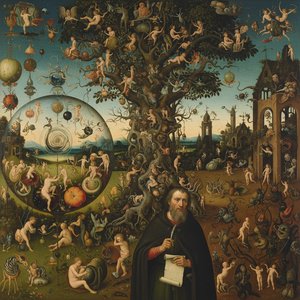
Jérôme Bosch : Décoder les Visions d'un Maître Néerlandais
Explorez l'univers fascinant de Jérôme Bosch avec notre analyse approfondie. Découvrez le symbolisme caché de ses œuvres, des Primitifs Flamands au célèbre Jardin des Délices. Un voyage artistique incontournable.
Sacred Narratives Embodied: A Comprehensive Exploration of Religious Iconography in Art History
Explore the rich history of religious iconography in art! Discover symbolism, movements & masterpieces from Byzantine to Renaissance periods. Expert insights for collectors and enthusiasts at OriginalUniqueArt.
Sacred Narratives on Canvas: Exploring Religious Painting Through History
Explore the rich history of religious painting with OriginalUniqueArt.com! Discover iconic artworks, symbolism & techniques from antiquity to the Renaissance. Enhance your art appreciation today.
Les 25 Chefs-d'œuvre du Prado : Voyage au Cœur de l'Art Espagnol
Plongez au cœur du Musée du Prado avec notre sélection des 25 œuvres incontournables : Velázquez, Goya, El Greco… Découvrez l'histoire et la beauté de ces chefs-d'œuvre baroques. Trouvez l'inspiration déco & achetez des reproductions haute qualité sur OriginalUniqueArt.com !
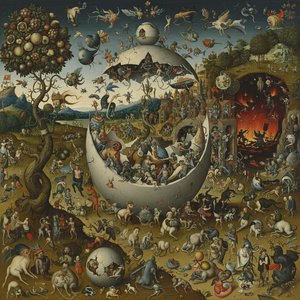
Hieronymus Bosch : Les 25 Œuvres Maîtresses d'un Génie Visionnaire | OriginalUniqueArt
Plongez dans l'univers fascinant de Hieronymus Bosch ! Découvrez les 25 œuvres maîtresses du peintre flamand, symbolisme religieux et visions fantastiques. Reproductions d'art de qualité muséale sur OriginalUniqueArt.com.


