
() ·
A painting made for you, by hand
Reproduction à l'huile faite à la main
Huile sur toile peinte à la main, avec cadre et dimensions personnalisés, réalisée sur commande par nos artistes. ( Passer au format impression Passer au format numérique)
Description de la pièce
Own a stunning hand-painted reproduction of Jean Dubuffet’s ‘Table Chargée d’Objets’ (1951). Explore his unique, abstract style & dynamic composition – a captivating piece for art collectors.
Biographie de l'artiste
Explore Jean Philippe Arthur Dubuffet's raw & expressive art brut movement. Discover thick impasto, unconventional materials, & a revolutionary approach to painting.
 Lire la suite
from ·
Chapter 1
How large should it be?
Slide to change the size; the picture on the left shows the frame at its real width. The proportions of the original are kept.
Choisissez parmi nos formats prédéfinis qui respectent les proportions originales de l’œuvre.

Saisissez la largeur et la hauteur souhaitées, pour s'adapter à votre cadre ou à votre mur. Cette œuvre est peinte à la main ; ainsi, pour un format de forme différente, l'artiste peut peindre un peu plus autour du tableau ou réduire légèrement les bords — c'est vous qui choisissez. Nous vous envoyons une maquette numérique pour approbation avant que la peinture ne commence. L'image présentée sur cette page ne reflète pas le résultat réel — seule la maquette le fait.
Chapter 2
How should it arrive?
Choose the edges of the stretched canvas
Choose your frame

White €1

Blurside €1

Extended €1

P118B €10

P118H €10

P118W €10

P438Z €10

P508JH €12

P508YH €12

P805H €10

P805Z €10

P919BZ €10

P919G €10

P919XJ €10

P959ZH €10

P968JZ €12

W106C €8

W218G €10

W218JH €8

W218Y €10

W307PJ €10

W316G €10

W316PJ €8

W316Y €10

W398PJ €8

W4111J €10

W500HY €15

W500JH €15

W692G €12

W849H €8

W940BG €15

W953PJ €8

H24-GOLD €30

H24-SILVER €30

H36-GOLD €45

H36-SILVER €45
Sous cadre
Moulding: . Overall size with the frame: .
Chapter 3
Who paints it, and should anything change?
After order, OriginalUniqueArt.com team will email client for instructions and provide a mockup preview
Livraison dans le monde entier () en 3 à 4 semaines au lieu des 5 semaines habituelles. (29 octobre). Aucun compromis sur la qualité.
Chapter 4
The finishing touches
A nameplate, as in a museum?
Détails de la plaque en bronze gravée
This elegant plaque features the artist's name and the title of the artwork, finely engraved for a timeless presentation.
It is made from bronze with a refined, elegant finish. The text is precisely laser-engraved for a sharp and permanent result. Measuring 9x2 cm, the plaque is compact yet easy to read. It's built to be durable and scratch-resistant, offering a professional, museum-quality look. Mounting is simple thanks to the included adhesive backing.
Détails de la plaque en acrylique transparent
The plaque includes essential engraved details such as the artist's name, the title of the artwork, the date it was created, the type of media used-like oil on canvas or watercolor-a brief description of the piece, and a QR code that links to the complete artwork information.
It is crafted from clear acrylic, offering a sleek, modern appearance. The text is UV-engraved in black to ensure strong visual contrast. With a size of 10x15 cm, it ensures optimal readability. It comes equipped with two metal hooks for secure wall mounting. The plaque is designed to be weather-resistant, making it suitable for various environments, and it includes interactive features that work seamlessly with smartphone scanning.
Détails de la plaque en acrylique noir
This elegant plaque includes engraved information such as the artist's name, the title of the artwork, the date it was created, the type of media used (like oil on canvas or watercolor), a short description of the artwork, and a QR code for quick access to more information.
The plaque itself is made from refined black acrylic with a premium finish. The text is laser-engraved in white for high contrast and readability. Its size is 10x15 cm, designed to be easy to read. It comes with two metal hooks for professional mounting. The design is sleek and fits any interior style. It is also weather-resistant and durable, with built-in digital integration for mobile compatibility.
A protective varnish?
When do you need it?
Chapter 5
Your painting, as you ordered it

Table Laden with Objects (Table chargée d'objets)
Technique de reproduction
Format de la reproduction
-

Artiste de prestige
Plus de détails, de finesse et un temps de production accru
-

Cadre de reproduction
-
-
Pour les œuvres ou reproductions dont un côté mesure plus de 105 cm (environ 41 pouces), le cadre sera expédié sous forme de kit démonté. Cette méthode garantit une livraison sécurisée et prévient tout dommage pendant le transport.
Assemblage professionnel requis - ce produit n'est pas destiné au bricolage (DIY).
Le kit doit être assemblé et la toile tendue par un encadreur professionnel expérimenté, en utilisant de la colle à bois (non fournie), une pince à tendre la toile et des serre-joints pour maintenir les traverses d'équerre pendant le séchage de la colle. Un assemblage incorrect ou une tension inégale de la toile peut endommager l'œuvre de manière irréversible et n'est pas couvert par notre garantie.
 Pour les œuvres ou reproductions dont un côté mesure plus de 105 cm (environ 41 pouces), le cadre sera expédié sous forme de kit démonté. Cette méthode garantit une livraison sécurisée et prévient tout dommage pendant le transport.
Toutes les baguettes en bois massif sont incluses, découpées avec précision à la taille requise.
À assembler avec les vis fournies, ainsi qu'avec de la colle à bois pour les assemblages d'angles (non fournie), à prévoir par votre encadreur.
L'utilisation d'outils professionnels est requise et non incluse : une pince à tendre la toile (tendeur) et des serre-joints pour maintenir les baguettes bien d'équerre pendant le séchage de la colle.
Important :
L'assemblage des angles nécessite de la colle à bois, les barres doivent être maintenues avec des serre-joints jusqu'au séchage complet de la colle, et le tendage de la toile sur le châssis assemblé nécessite une pince à tendre la toile. Aucun de ces éléments n'est inclus dans le kit. Veuillez consulter un encadreur professionnel expérimenté avant de commander ce format.

Cartel
-
-

Vernis de protection
Vernis brillant (intensifie les couleurs, protège de la lumière et de l'humidité)
-

Personnaliser mon œuvre
Exemples de personnalisation : remplacer le visage par une photo du client ; ajouter un animal de compagnie (par exemple, remplacer un chat par un chien) ; inclure un message caché en arrière-plan ; modifier le paysage ou les éléments d'arrière-plan.
-

Livraison urgente
Livraison dans le monde entier () en 3 à 4 semaines au lieu des 5 semaines habituelles. (29 octobre). Aucune concession sur la qualité.
-
Livraison express
Livraison dans le monde entier () sous 5 semaines. (5 novembre).
Inclus
Prix total
€ 265
L'option verre n'est disponible que pour les dimensions inférieures à 110 cm.
Included with every order
- Livraison express gratuite dans le monde entier
- Toile de lin de qualité supérieure
- Assurance transport complète
- Garantie de remboursement des droits de douane
- Garantie de fidélité des couleurs
- Politique de retour de 100 jours (uniquement en cas de défaut)
- Garantie de remboursement à 100%
- Offre de tarifs dégressifs


 Aperçu en situation
 Envoyer
 Partager
 Détails de l'œuvre
 Guide
Guide

 Télécharger l'image
 Articles similaires
 Radiographie
 Diaporama
 Q&A
Q&A Statistiques
In numbers
- 1951the year it was painted
- 29frames to choose from
- standard sizes, in its own proportions
- 5weeks to paint and deliver it
About the original


Cette œuvre est protégée par le droit d'auteur
L’œuvre d'art présentée sur cette page est protégée par le droit d'auteur, ce qui signifie que nous ne pouvons légalement créer ou vendre de reproduction identique. Cette protection est appliquée en vertu d'accords internationaux tels que la Convention de Berne et par les lois nationales, notamment celles énoncées par le Loi américaine sur le droit d'auteur - Titre 17.
En tant qu'alternative respectueuse et légale, nous proposons des œuvres d'art personnalisées, peintes à la main et inspirées de l'original. Nos artistes talentueux et professionnels étudient avec soin le style, l'ambiance et l'essence artistique de l'œuvre originale pour créer une pièce nouvelle et unique qui évoque la même émotion — tout en restant une création originale en soi.
Cette méthode est pleinement conforme aux réglementations sur le droit d'auteur car elle ne repose pas sur la copie ou la duplication de l'œuvre protégée. Il s'agit plutôt d'une réinterprétation créative — une nouvelle peinture qui s'inspire de l'original sans pour autant lui être identique.

Jean Philippe Arthur Dubuffet
1901 - 1985, France
Quick facts about Jean Philippe Arthur Dubuffet
- Artistic Movement Or Style: École de Paris, Art Brut
- Artists Or Movements Influenced By This Artist:
- Classical Sculpture
- Surrealist Writings
- Artists Who Influenced This Artist:
- Juan Gris
- André Masson
- Fernand Léger
- Date Of Birth: July 31, 1901
- Date Of Death: May 12, 1985
- Full Name: Jean Philippe Arthur Dubuffet
- Nationality: French
- Notable Artworks:
- Weaver's vision
- Comings and goings
- Scenic triplex
- Place Of Birth: Le Havre, France
Biographie de l'artiste
Early Life and Artistic Beginnings
Jean Philippe Arthur Dubuffet, born on July 31st, 1901, in the bustling port city of Le Havre, France, was a figure deeply rooted in both the industrial landscape of his hometown and the burgeoning artistic circles of Paris. His family’s background as wholesale wine merchants provided him with a comfortable yet somewhat detached existence – a stark contrast to the raw, visceral experiences that would later profoundly shape his art. Dubuffet's childhood was marked by a quiet observation of the world around him, an early sensitivity to texture and form that foreshadowed his future explorations in unconventional materials. He developed close friendships with fellow artists like Raymond Queneau and Georges Limbour, individuals who shared a rebellious spirit and a fascination with alternative modes of expression. At the age of 18, he enrolled at the Académie Julian in Paris, seeking formal training but quickly finding its rigid structure stifling to his burgeoning artistic vision. Disillusioned by what he perceived as an overly academic approach, Dubuffet abandoned the academy after only six months, embarking on a period of independent study and experimentation that would prove crucial to the development of his unique style. This early rejection of conventional art forms laid the foundation for his later embrace of “art brut,” a movement he himself would champion.The Emergence of Art Brut and a Rejection of Tradition
Dubuffet’s artistic trajectory took a dramatic turn in 1942, during the dark years of World War II. Seeking refuge from the constraints of established art institutions, he turned his attention to the everyday world – the streets of Paris, the faces of ordinary people, and the discarded remnants of urban life. He began collecting works created by individuals marginalized by society: prisoners, psychiatric patients, street artists, and children. These “outsider” creations, devoid of technical polish or conventional aesthetic values, resonated deeply with Dubuffet’s artistic sensibilities. He recognized in them a genuine expression of emotion, instinct, and unfiltered experience – qualities he believed were absent from the polished works of the art establishment. It was during this period that he coined the term “art brut” (raw art) to describe this alternative form of creativity, establishing it as a distinct movement with its own theoretical framework. Dubuffet’s approach challenged the prevailing notions of beauty and artistic merit, advocating for an appreciation of imperfection, spontaneity, and the power of direct expression. His early exhibitions, notably at the Galerie René Drouin in 1944, were met with considerable controversy, as critics struggled to reconcile his unconventional methods with the established standards of the art world.Techniques and Materials: A Celebration of Texture and Imperfection
Dubuffet’s artistic practice was characterized by a remarkable versatility and an unwavering commitment to exploring new materials and techniques. He moved beyond traditional painting mediums, incorporating elements such as mud, sand, coal dust, and even discarded objects into his works. His signature technique, known as “impasto,” involved applying thick layers of paint – sometimes several inches deep – creating textured surfaces that seemed to pulsate with energy. He frequently employed a process called "Hourloupe," using a felt-tip pen to create intricate, densely packed lines and patterns, often reminiscent of graffiti or calligraphic markings. This technique, developed in the 1960s, became a defining feature of his later work, adding another layer of complexity and visual interest to his compositions. Dubuffet’s use of unconventional materials – burlap, plaster, metal, and even found objects – reflected his desire to break free from traditional artistic conventions and to engage with the physicality of the materials themselves. His works are not simply representations of reality but rather explorations of texture, form, and surface—a testament to his innovative approach.International Recognition and Legacy
Despite initial resistance from the art establishment, Dubuffet’s work gradually gained recognition throughout the 1950s and 60s, largely thanks to the efforts of Pierre Matisse, a prominent dealer who championed his artistic vision. His paintings were exhibited in major museums around the world, including the Guggenheim Museum in New York and the Centre Pompidou in Paris. Dubuffet’s influence extended beyond the realm of painting, inspiring artists across various disciplines – sculpture, architecture, and design—to embrace unconventional materials and techniques. His concept of “art brut” continues to resonate today, informing contemporary art practices that celebrate authenticity, spontaneity, and the power of outsider creativity. The Musée Maurice Denis in Saint-Ouen-l’Aumône, France, houses a comprehensive collection of Dubuffet's works and serves as a vital resource for understanding his artistic legacy. His work remains a powerful reminder of the importance of challenging established norms and embracing alternative forms of expression.Key Dates
* July 31, 1901: Born in Le Havre, France * May 12, 1985: Died in Paris, FranceArticles connexes
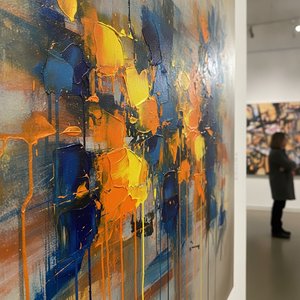
Beyond the Lines: Mastering the High-Impact World of Contemporary Abstraction
Master the high-impact world of contemporary abstraction. Discover how bold colors, textures, and modern movements like Abstract Expressionism can transform your space with premium, high-energy art curated for the design-conscious professional.
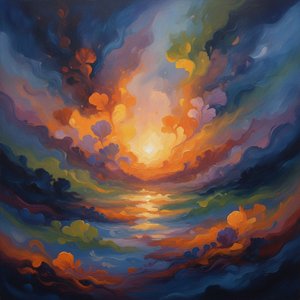
The Soul of Color: A Journey into the Emotional Resonance of Lyrical Abstraction
Embark on a cultural journey through Lyrical Abstraction. Explore how masters like Kandinsky used color and motion to translate emotion into visual poetry. Discover the profound beauty of abstract expressionism and learn to curate emotional resonance in your own art collection.

Kandinsky : Les 25 Œuvres Maîtresses d'un Pionnier de l'Art Abstrait | OriginalUniqueArt
Plongez dans l'univers vibrant de Kandinsky ! Découvrez les 25 œuvres majeures du pionnier de l'art abstrait. Explorez son expressionnisme, ses couleurs audacieuses et l'histoire fascinante derrière chaque tableau. Reproductions d'exception sur OriginalUniqueArt.com.

Abstraction Géométrique : Les 10 Chefs-d'œuvre qui ont Marqué l'Histoire de l'Art
Plongez au cœur de l'abstraction géométrique avec OriginalUniqueArt.com ! Découvrez les 10 œuvres majeures de Mondrian, Malevitch et Kandinsky qui ont révolutionné l'art moderne. Inspirez votre décoration intérieure avec des reproductions de tableaux exceptionnelles. Explorez la collection en ligne !


