

 Aperçu en situation
 Partager
 Partager
 Détails
 Guide
Guide

 Télécharger
 Articles similaires
 Radiographie
 Voir le diaporama
 Statistiques
The Lost Game
 Acrylic On Canvas
- WallArt
- 19th-century French Realism
 1858
1858 21.0 x 27.0 cm
 La Collection Wallace
 Afficher la suite
Giclées et impressions d'art
Impressions giclées ou sur toile de qualité musée, avec une production rapide et des finitions au choix. ( Acheter la peinture faite à la main Passer au format image numérique)




P118B $10

P118H $10

P118W $10

P438Z $10

P508JH $12

P508YH $12

P805H $10

P805Z $10

P919BZ $10

P919G $10

P919XJ $10

P959ZH $10

P968JZ $12

W106C $8

W218G $10

W218JH $8

W218Y $10

W307PJ $10

W316G $10

W316PJ $8

W316Y $10

W398PJ $8

W4111J $10

W500HY $15

W500JH $15

W692G $12

W849H $8

W940BG $15

W953PJ $8




Choisissez parmi nos formats prédéfinis qui respectent les proportions originales de l’œuvre.

Vous pouvez saisir vos propres dimensions pour vous adapter à un cadre ou à un espace spécifique. Si la taille sélectionnée ne correspond pas aux proportions de l'image originale, nous recadrerons l'œuvre ou étendrons l'image avec une bordure en miroir ou une couleur unie. Une maquette numérique vous sera envoyée pour approbation avant le début de la production.
Veuillez noter que l'aperçu à l'écran ne reflète pas le recadrage ou l'extension réelle. Seule la maquette montrera avec précision la composition finale.
Bien que des tailles personnalisées soient disponibles, nous vous recommandons de choisir une dimension dans la liste prédéfinie afin de préserver les proportions originales.
Livraison dans le monde entier () en 2 semaines au lieu des 4/5 semaines habituelles. (21 septembre)

Livraison express gratuite dans le monde entier

Toile de lin de haute qualité

Assurance transport complète

Garantie de remboursement des droits de douane

Garantie de fidélité des couleurs

Garantie de retour de 100 jours (uniquement en cas de défaut)

Garantie de remboursement à 100%

Tarifs dégressifs sur quantité
 L'option verre n'est disponible que pour les dimensions inférieures à 110 cm.

The Lost Game
Giclées et impressions d'art
Format de la reproduction
-


Prix total final
$ 80
Jean-Louis Ernest Meissonier’s “The Lost Game”: A Microscopic Masterpiece of Victorian Leisure
“The Lost Game,” painted in 1858 by the celebrated French artist Jean-Louis Ernest Meissonier, is more than just a depiction of gentlemen engaged in a card game; it's a meticulously crafted window into the social fabric and psychological nuances of mid-19th century France. Meissonier, renowned for his extraordinary ability to capture fleeting moments of everyday life with astonishing detail – earning him the moniker “the French Metsu” – here presents a scene brimming with quiet observation and subtle tension. The painting’s power lies not in grand gestures or dramatic action, but in its intimate portrayal of a seemingly trivial pastime elevated to an almost ritualistic performance.
The composition is deceptively simple: nine men are seated around a mahogany table, bathed in the warm glow of lamplight. Each figure is rendered with painstaking accuracy – from the meticulously embroidered waistcoat and cravat to the carefully positioned fingers holding playing cards. Meissonier’s signature technique—microscopic painting—is on full display here. He doesn't merely paint figures; he dissects them, revealing every wrinkle, every bead of perspiration, every subtle shift in posture. This level of detail wasn’t simply a technical exercise; it was a deliberate attempt to immerse the viewer in the scene, creating an illusion of proximity and intimacy. The use of chiaroscuro – dramatic contrasts between light and shadow – further enhances this effect, drawing attention to key elements while simultaneously obscuring others, adding layers of mystery and intrigue.
A Glimpse into Victorian Social Life
“The Lost Game” offers a fascinating glimpse into the leisure activities of the French upper class during the Second Empire. The scene unfolds within a richly furnished room – a testament to the opulence and material prosperity of the era. The two dining tables, the comfortable chairs, and the carefully chosen accessories all speak to a life of comfort and refinement. However, beneath this veneer of affluence lies a subtle undercurrent of competition and social maneuvering. The men are not simply playing cards; they’re engaged in a complex dance of status, reputation, and perhaps even veiled rivalry. The game itself – likely piquet, a popular card game of the time – served as a focal point for social interaction, providing an opportunity to display wit, skill, and social grace.
Meissonier’s choice of subject matter is particularly noteworthy. He wasn't interested in depicting heroic battles or historical events; instead, he focused on the mundane details of everyday life – a deliberate departure from the prevailing artistic trends of his time. This focus on domesticity and social interaction reflected a broader shift in French art during the Second Empire, as artists increasingly sought to capture the realities of bourgeois society. The painting’s popularity at the time underscored this trend, demonstrating a public appetite for images that offered a window into the lives of their peers.
Symbolism and the Enigmatic “Game”
The title itself – "The Lost Game" – is laden with symbolic weight. While the literal meaning refers to the card game being played, it also alludes to the broader concept of a mental game—a phenomenon that would later gain widespread notoriety in the 21st century. Some scholars believe Meissonier was consciously referencing this emerging psychological phenomenon, using the painting as a visual metaphor for the elusive nature of human consciousness and the challenges of self-control. The very act of playing the game becomes a performance, a subtle display of intellect and social acumen.
Furthermore, the scene’s quiet intensity—the focused expressions on the men's faces, the careful positioning of their hands—suggests that there is more at stake than mere entertainment. The painting invites us to speculate about the unspoken rules and hidden agendas that govern this seemingly innocent pastime. Is it a friendly competition? A test of skill? Or perhaps a carefully orchestrated display of social dominance?
A Timeless Reproduction
Reproduced with exceptional fidelity, “The Lost Game” retains its captivating charm and historical significance. OriginalUniqueArt’s hand-painted reproductions capture the artist's meticulous detail and evocative atmosphere, offering a stunning addition to any collection or interior space. The painting’s intimate scale—measuring just 21 x 27 cm—makes it ideal for smaller rooms or private studies, while its rich colors and intricate details command attention wherever it is displayed. This remarkable work serves as a poignant reminder of the enduring appeal of Meissonier's artistic vision and his ability to transform the ordinary into the extraordinary.
Biographie de l'artiste
**Premières années et formation**
Jean-Louis Ernest Meissonier, peintre et sculpteur français renommé, est né le 21 février 1815 à Lyon. Son père, Charles, espérait qu'il suivrait ses traces dans les affaires, mais la passion de Meissonier pour la peinture l’emporta. À seize ans, il obtint la permission de ses parents de poursuivre une carrière artistique. Sa formation initiale inclut des études sous la direction de Léon Cogniet et l'influence des maîtres hollandais au Louvre. Cette base allait façonner son style distinctif.**Ascension vers la reconnaissance**
La percée de Meissonier survint avec sa peinture Les Bourgeois Flamands, également connue sous le nom de *La visite au bourgmestre*, exposée au Salon de 1831. Cette œuvre, aujourd'hui faisant partie de la collection de Sir Richard Wallace à Hertford House à Londres, marqua le début de son succès avec sa peinture miniature en huile d’une précision microscopique.- Ses œuvres ultérieures, telles que La Partie d'échecs (1841), Le Jeune homme jouant du violoncelle (1842) et Peintre dans son atelier (1843), consolidèrent sa réputation pour un artisanat méticuleux.
- Son mariage avec Emma Steinhel, une femme protestante de Strasbourg, en 1838, marqua une étape personnelle importante.
- L'implication de Meissonier dans la Garde Nationale pendant les journées de juin 1848 témoigna de son engagement envers le gouvernement républicain.
**Style et Influences Artistiques**
Le style de Meissonier se caractérisait par un réalisme minutieux, une attention obsessionnelle aux détails et une palette de couleurs subtile. Il était souvent qualifié de "Metsu français", en référence au peintre hollandais Gabriel Metsu, connu pour ses scènes de genre bourgeoises.- Influences Hollandaises : Meissonier a été profondément influencé par les maîtres hollandais du XVIIe siècle, notamment Gerard Dou et Gabriel Metsu, qu'il étudiait attentivement au Louvre.
- Précision et Détail : Son œuvre se distinguait par une précision extrême, chaque détail étant rendu avec une grande exactitude. Il utilisait souvent un style miniature, créant des œuvres d’une petite taille mais d’une richesse de détails impressionnante.
- Sujets Bourgeois : Comme Metsu, Meissonier privilégiait les scènes de la vie quotidienne bourgeoise, représentant des activités telles que les parties d'échecs, les lectures et les conversations intimes.
**Œuvres Majeures et Réception Critique**
Meissonier a produit un grand nombre d’œuvres remarquables qui ont contribué à sa renommée internationale. Parmi ses œuvres les plus célèbres figurent :- Halte de cavalerie, propriété du duc de Morny.
- La Bagarre, propriété de la reine Victoria.
- Les Joueurs et la querelle (La rixe), présentée à la cour anglaise par Napoléon III.
**Héritage et Postérité**
Jean-Louis Ernest Meissonier est décédé le 31 janvier 1891 à l'âge de 75 ans. Son œuvre continue d'être admirée pour sa maîtrise technique, son réalisme minutieux et sa représentation fidèle de la société bourgeoise du XIXe siècle. Ses tableaux sont exposés dans les plus grands musées du monde, notamment le Musée d’Orsay à Paris. Il a laissé une marque durable sur l'art français et continue d'inspirer les artistes contemporains par son souci du détail et sa capacité à capturer la beauté de l'ordinaire.
Jean-Louis Ernest Meissonier
1815 - 1891 , France
En bref
- Artistes Influents:
- Gabriel Metsu
- Léon Cogniet
- Date De Décès: 31 janvier 1891
- Date De Naissance: 21 février 1815
- Lieu De Naissance: Lyon, France
- Mouvement Artistique: Classicisme français
- Nationalité: Française
- Nom Complet: Jean-Louis Ernest Meissonier
- Oeuvres Notables:
- Les bourgeois flamands
- Le jeu d'échecs
- L'empereur à Solférino
Articles similaires

Pixels Précieux : Exploration de la rareté, de la valeur et de l'impact culturel des peintures en édition limitée issues du monde du jeu vidéo
Explorez le monde fascinant de l'art vidéo et des peintures en édition limitée issues du jeu vidéo. Découvrez la rareté, la valeur culturelle et les opportunités d'investissement avec OriginalUniqueArt.
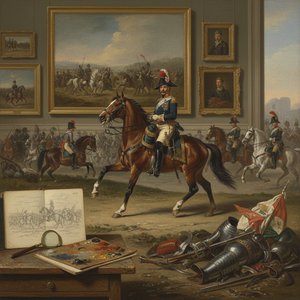
Jean-Louis Ernest Meissonier: Realism, Historical Narrative & Artistic Perfection
Explore the world of Jean-Louis Ernest Meissonier, a master of French Realism renowned for his meticulously detailed historical & military scenes. Discover his iconic artworks and lasting legacy.

Pinceaux et Combats de Boss : L'Artisanat Pictural des Universes Ludiques à la Main – Portraits d'Artistes et Inspirations
Explorez l'artisanat pictural exceptionnel : portraits personnalisés, illustrations de jeux vidéo et reproductions haute qualité. Artistes experts, créations uniques sur commande. Découvrez notre savoir-faire !
Au-delà des Pixels et du Jeu : La Signification Esthétique et Identitaire de l'Art Vidéo pour le Collectionneur Moderne
Explorez le monde fascinant de l'art vidéo contemporain. Guide expert pour collectionneurs : authenticité, marché, conservation et les artistes qui façonnent ce médium innovant.

10 chefs-d'œuvre du Réalisme Romantique qui capturent l'âme humaine
Plongez dans l'émotion du Réalisme Romantique. Explorez 10 chefs-d'œuvre iconiques, de Constable à Homer, mêlant vérité et passion. Trouvez l'inspiration pour votre décor avec nos reproductions de qualité musée sur OriginalUniqueArt.com. Découvrez toute la collection en ligne.


