- Accueil

- Impression sur toile
- Jean Goujon
- Caryatides
 Partager
 Partager
 Détails de l'œuvre

 Télécharger
 Articles similaires
 Diaporama
Caryatides


 Afficher la suite
Giclée / Impression d'art
Impression giclée ou sur toile de qualité musée, avec une production rapide et des finitions au choix. ( Switch to hand made Painting Switch to Image)




































Choisissez parmi nos formats prédéfinis qui respectent les proportions originales de l’œuvre.

Vous pouvez saisir vos propres dimensions pour vous adapter à un cadre ou à un espace spécifique. Si la taille sélectionnée ne correspond pas aux proportions de l'image originale, nous recadrerons l'œuvre ou étendrons l'image avec une bordure en miroir ou une couleur unie. Une maquette numérique vous sera envoyée pour approbation avant le début de la production.
Veuillez noter que l'aperçu à l'écran ne reflète pas le recadrage ou l'extension réelle. Seule la maquette montrera avec précision la composition finale.
Bien que des tailles personnalisées soient disponibles, nous vous recommandons de choisir une dimension dans la liste prédéfinie afin de préserver les proportions originales.
Livraison dans le monde entier () en 2 semaines au lieu des 4/5 semaines habituelles. (28 juillet)

Livraison express gratuite dans le monde entier

Toile de lin de haute qualité

Assurance transport complète

Garantie de remboursement des frais de douane

Garantie de fidélité des couleurs

Politique de retour de 60 jours (uniquement en cas de défaut)

Garantie de remboursement à 100%

Réduction sur les achats groupés
 L'option verre n'est disponible que pour les dimensions inférieures à 110 cm.

Caryatides
Giclée / Impression d'art
Format de reproduction
-


Prix total final
$ 80
Description de l'œuvre
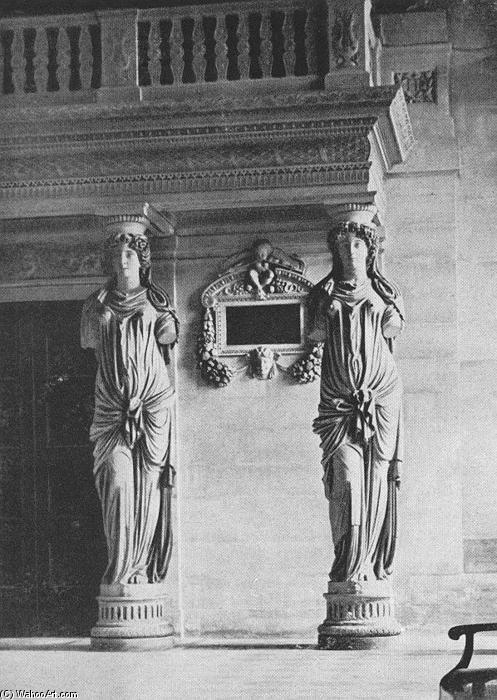
Jean Goujon’s Caryatides: Echoes of Classical Grace in Parisian Ornamentation
The Salle des Caryatides within the Louvre Palace stands as a testament to Jean Goujon's mastery and the enduring influence of classical ideals on Renaissance art. Constructed between 1549 and 1550 by Pierre Lescot, this opulent ballroom embodies the ambition of royal patronage and showcases Goujon’s unparalleled skill in sculpting monumental drapery—a technique that elevates the sculpture beyond mere representation to become an embodiment of elegance and sophistication. This photograph captures a meticulously crafted reproduction of two Caryatides sculptures, offering viewers a glimpse into the artistic vision that shaped Parisian grandeur.A Sculptor's Pilgrimage to Rome
Jean Goujon’s formative years were spent in Italy, where he immersed himself in the legacy of Roman sculpture and actively sought inspiration from artists like Michelangelo Buonarroti. This exposure profoundly impacted his stylistic sensibilities, fostering a deep appreciation for anatomical precision and a masterful command of drapery—elements that would become hallmarks of his oeuvre. Goujon’s approach wasn't merely imitative; he skillfully adapted classical principles to forge a distinctly Mannerist style characterized by elongated figures, stylized poses, and dramatic expressions. The resulting sculptures possess an arresting dynamism that transcends the static nature of traditional portraiture.Monumental Drapery: A Symphony of Texture and Form
The Caryatides themselves exemplify Goujon’s extraordinary ability to render drapery with breathtaking realism. Unlike earlier sculptors who often simplified folds and creases, Goujon painstakingly recreated the intricate textures of fabric—silk, linen, and wool—creating surfaces that shimmer with subtle variations in light and shadow. This meticulous attention to detail isn't merely decorative; it serves as a crucial element in conveying movement and volume. The drapery clings to the Caryatides’ bodies, emphasizing their form while simultaneously suggesting an ethereal quality – mirroring the idealized beauty of classical goddesses.Symbolism of Strength and Feminine Ideal
Beyond its aesthetic brilliance, the Caryatides carry significant symbolic weight. As supporting columns—a tradition rooted in ancient Greece—they represent stability and endurance, reflecting the aspirations of Renaissance architects to create spaces that inspire awe and reverence. Simultaneously, the female figures embody the humanist ideal of feminine beauty – a concept championed by thinkers like Pico della Mirandola who celebrated womanhood as possessing inherent dignity and potential for spiritual growth. The floral crowns adorning the Caryatides further reinforce this symbolism, referencing the fecundity and vitality associated with springtime—a motif prevalent in Renaissance art and literature.Documenting Artistic Excellence: A Photographic Reflection
This photograph serves as a compelling record of Goujon’s sculptural achievement, capturing the Salle des Caryatides' setting with remarkable clarity. The diffused natural light illuminates the sculptures’ surfaces, revealing subtle nuances of texture and color—a testament to the meticulous craftsmanship involved in creating this reproduction. Like Lescot’s original design, the image conveys a sense of timeless grandeur, inviting viewers to contemplate the enduring power of classical art to inspire beauty and contemplation.Biographie de l'artiste
Jean Goujon: The Sculptor Who Shaped Parisian Elegance
Jean Goujon (c. 1510 – c. 1567) stands as a cornerstone of French Renaissance sculpture and architecture, embodying the stylistic fervor of Mannerism while simultaneously grounding itself in classical ideals. Born in Normandy, his early life remains shrouded in obscurity, yet his prolific output quickly established him as one of the era’s foremost artistic voices—a testament to his prodigious talent and unwavering dedication to craft. Goujon's journey began with formative experiences in Italy, where he absorbed the grandeur of Roman sculpture and integrated its principles into his own distinctive style. This influence is palpable throughout his oeuvre, particularly evident in his masterful handling of drapery and anatomical precision.Early Career & Rouen Cathedral
Goujon’s artistic ascent commenced in Rouen Cathedral (1541-42), where he undertook the monumental task of sculpting the tomb monument to Louis de Brézé, seigneur d'Anet—a commission that showcased his burgeoning skill and ambition. This ambitious project cemented his reputation as a rising star within the French sculptural landscape. Simultaneously, he honed his architectural prowess at Saint-Maclou Church, demonstrating an innate ability to blend artistic vision with structural engineering. The resulting edifice stands as a magnificent example of Renaissance ecclesiastical architecture, reflecting Goujon’s commitment to both aesthetic beauty and functional integrity. His meticulous attention to detail ensured that every element contributed to the overall grandeur of the cathedral—a reflection of his profound understanding of architectural harmony.Parisian Patronage & Collaboration with Lescot
Moving to Paris in 1544, Goujon entered into a pivotal partnership with Pierre Lescot, the architect overseeing the ambitious reconstruction of Saint-Germain-l'Auxerrois cathedral. Together, they conceived and executed breathtaking sculptural decorations—most notably the pulpit—a masterpiece that exemplifies Lescot’s neoclassical sensibilities and Goujon’s masterful drapery technique. The dismantled pulpit serves as a poignant reminder of artistic collaboration and the enduring legacy of Parisian architectural grandeur. Goujon’s involvement at Château d’Écouen for the connétable de Montmorency further solidified his position as a favored artist of the royal court, contributing to the opulent embellishment of this magnificent château. Lescot's influence on Goujon’s artistic vision was undeniable—their shared pursuit of elegance and refinement shaped the aesthetic sensibilities of their time.The Louvre & Florentine Influence
Perhaps Goujon’s most celebrated achievement was his collaboration with Lescot on the western extension of the Louvre Palace (1555-62), where he sculpted monumental Caryatids—graceful female figures supporting arches—inspired by Greek sculptures but imbued with a distinctly Mannerist flair. These sculptures, alongside other decorative elements, transformed the Louvre into a symbol of French artistic excellence and demonstrated Goujon’s ability to synthesize classical forms with expressive dynamism. His work profoundly impacted the stylistic trends of the time, establishing him as a pivotal figure in shaping Parisian visual culture. The influence of Florentine sculpture—particularly Michelangelo Buonarroti—is evident in Goujon's anatomical precision and his masterful rendering of drapery—a testament to his unwavering dedication to artistic mastery.Legacy & Artistic Style
Goujon’s distinctive style—characterized by elongated figures, sensual poses, and fluid drapery—became synonymous with Mannerism in France. He skillfully employed techniques borrowed from Greek sculpture, yet subtly deviated from strict adherence to classical conventions, prioritizing emotional intensity and artistic virtuosity over anatomical accuracy. His engravings for Jean Martin's translation of Vitruvius showcased his meticulous attention to detail and contributed to the dissemination of humanist ideals throughout Europe. Though overshadowed by later artists during the Baroque period, Goujon’s influence endured—his elegant sculptures continued to inspire generations of French sculptors and artists, securing his place as a true visionary of the Renaissance. His legacy resides not merely in his impressive output but also in the enduring impact of his artistic style on subsequent generations of artists—a testament to his profound contribution to the history of European art.
Jean Goujon
1510 - 1567 , France
En bref
- Artistic Movement Or Style: Mannerisme
- Artists Or Movements Influenced By This Artist: ['Classicisme']
- Artists Who Influenced This Artist: ['Michelangelo']
- Date Of Birth: c. 1510 Normandy France
- Date Of Death: c. 1567
- Full Name: Jean Goujon
- Nationality: Francais
- Notable Artworks:
- Nymphes
- Pieta
- La Guerre et La Paix
- Fontaine des Innocents
- Place Of Birth: Normandy France
Articles connexes

Luca della Robbia: Renaissance Sculpture & the Innovation of Terracotta Glazing
Discover the innovative terracotta glazing techniques of Luca della Robbia, a Renaissance master sculptor. Explore his iconic works, legacy, and collecting tips with OriginalUniqueArt.

Jean-Baptiste Debret: Witnessing Brazil’s Emergence Through Art & Identity
Explore the captivating art of Jean-Baptiste Debret, a key witness to Brazil’s imperial era. Discover his iconic portraits, historical scenes & insightful depictions of Brazilian life. Learn about his legacy and find museum-quality reproductions at OriginalUniqueArt.
L'Héritage Durable du Classicisme : Principes, Évolution et Influence dans l'Art Occidental
Explorez l'héritage durable du classicisme français : ses principes fondateurs, les grands maîtres (Poussin, Lorrain), et son influence sur l'art occidental. Analyse approfondie pour passionnés d'histoire de l'art.
Modigliani : Les 25 Œuvres Maîtresses d'un Artiste Incontournable | OriginalUniqueArt
Plongez dans l'univers poignant de Modigliani avec les 25 œuvres incontournables du peintre italien. Découvrez l'histoire, le style unique et la mélancolie de ses portraits et nus célèbres. Reproductions d'art de qualité muséale sur OriginalUniqueArt.com.
Jean-Baptiste Greuze: Morality, Sentiment & the Rise of Genre Painting
Explore the life & art of Jean-Baptiste Greuze, a pivotal French Rococo painter renowned for his emotionally resonant genre scenes and moral lessons. Discover his legacy & impact on 18th-century art history.


