
 Aperçu en situation
 Envoyer
 Partager
 Détails de l'œuvre
 Guide
Guide

 Télécharger l'image
 Articles similaires
 Radiographie
 Diaporama
 Q&A
Q&A Statistiques
Reclining Nude

- 70.0 x 180.0 cm


 Lire la suite
Giclées et impressions d'art
Impressions giclées ou sur toile de qualité musée, avec une production rapide et des finitions au choix. ( Commander la reproduction peinte à la main Passer au format numérique)




P118B €10

P118H €10

P118W €10

P438Z €10

P508JH €12

P508YH €12

P805H €10

P805Z €10

P919BZ €10

P919G €10

P919XJ €10

P959ZH €10

P968JZ €12

W106C €8

W218G €10

W218JH €8

W218Y €10

W307PJ €10

W316G €10

W316PJ €8

W316Y €10

W398PJ €8

W4111J €10

W500HY €15

W500JH €15

W692G €12

W849H €8

W940BG €15

W953PJ €8




Choisissez parmi nos formats prédéfinis qui respectent les proportions originales de l’œuvre.

Saisissez la largeur et la hauteur souhaitées pour qu'elles s'adaptent à votre cadre ou à votre mur. Une impression peut être recadrée, mais jamais agrandie au-delà de l'image originale ; ainsi, un format de forme différente entraînera la perte d'une partie de l'image. Nous vous envoyons une maquette numérique pour approbation avant toute impression. L'image présentée sur cette page ne montre pas le recadrage réel — seule la maquette le permet.
Livraison dans le monde entier () en 2 semaines au lieu des 4/5 semaines habituelles. (2 novembre)

Livraison express gratuite dans le monde entier

Toile de lin de qualité supérieure

Assurance transport complète

Garantie de remboursement des droits de douane

Garantie de fidélité des couleurs

Politique de retour de 100 jours (uniquement en cas de défaut)

Garantie de remboursement à 100%

Offre de tarifs dégressifs
 L'option verre n'est disponible que pour les dimensions inférieures à 110 cm.

Reclining Nude
Giclées et impressions d'art
Format de la reproduction
-


Prix total
€ 71
A Moment of Quietude: Jean Frédéric Bazille’s ‘Reclining Nude’
Jean Frédéric Bazille's 'Reclining Nude,' painted in 1864, is more than just a depiction of the human form; it’s a carefully constructed evocation of serenity and sensual grace, a testament to the burgeoning academic realism that would soon give way to the revolutionary currents of Impressionism. This horizontal canvas, measuring 70 x 180 cm, immediately draws the viewer into a space of contemplative stillness, dominated by a female figure posed diagonally across the frame – a deliberate choice designed to imbue the scene with a dynamic energy despite her apparent repose.
The Language of Form and Color
- Realism Elevated: Bazille’s mastery lies in his meticulous rendering of the human form. The figure's curves are sculpted with an almost obsessive attention to detail, reflecting a deep understanding of anatomy gleaned from his early medical studies – a fascinating juxtaposition of disciplines that informed his artistic vision.
- Earthy Palette, Subtle Contrast: The color palette is deliberately restrained, dominated by earthy tones—pinks, beiges, and ochres—that evoke the natural world. Yet, subtle accents of red, orange, and green within the drapery introduce a delicate visual tension, preventing the scene from becoming overly somber.
- Texture as Narrative: The artist skillfully employs texture to enhance the sense of realism. Smooth skin contrasts beautifully with the folds and creases of the draped fabric, creating a tactile quality that invites the viewer to almost reach out and touch the canvas.
A Window into 19th-Century Sensibilities
Painted during a pivotal moment in French art history, ‘Reclining Nude’ embodies the ideals of academic realism prevalent at the time. This style prioritized accurate representation and meticulous detail, reflecting a desire to return to classical artistic traditions after the Romantic era's emphasis on emotion and subjectivity. Bazille’s work speaks to a broader cultural fascination with beauty, sensuality, and the idealized human form – themes that resonated deeply within 19th-century society.
Technique and the Artist’s Hand
Bazille's technique is characterized by a masterful use of glazes—thin layers of oil paint applied one over another—to achieve a luminous effect. This painstaking process allowed him to build up color gradually, creating subtle gradations of tone and depth that contribute significantly to the painting’s overall richness. The application of pigment with linseed oil on a primed canvas demonstrates a deep understanding of materials and their potential for expressive effect. The layering technique is particularly evident in the drapery, where light seems to catch and shimmer within the folds.
Symbolism and Emotional Resonance
While ‘Reclining Nude’ avoids overt symbolic representation – there are no allegorical figures or explicit references to mythology – it possesses a profound emotional resonance. The figure's pose, her relaxed posture, and the diffused lighting evoke a sense of quiet contemplation and peaceful sensuality. It is a moment captured in time, inviting the viewer to share in this private space of serenity. This piece offers a glimpse into the artistic sensibilities of a generation grappling with questions of beauty, truth, and the human condition.
Questions et réponses
Comment «Reclining Nude» de Jean Frédéric Bazille lie-t-il Academic Realism au pays d'origine de l'artiste ?
«Reclining Nude» lie le mouvement Academic Realism à France à travers le lieu de naissance de son créateur.
Quelle est la luminance de «Reclining Nude» de Jean Frédéric Bazille ?
«Reclining Nude» de Jean Frédéric Bazille présente une luminance de Dark. La luminance décrit la quantité de lumière que les couleurs semblent réfléchir.
Les couleurs de «Reclining Nude» de Jean Frédéric Bazille sont-elles saturées ou atténuées ?
Les couleurs de «Reclining Nude» de Jean Frédéric Bazille présentent une saturation Muted. La saturation indique si les couleurs sont vives ou atténuées.
Biographie de l'artiste
Jeunesse et Formation
Jean Frédéric Bazille, né le 6 décembre 1841 à Montpellier (Hérault), fut un peintre impressionniste français. Issu d'une famille protestante aisée, il reçut une éducation soignée. Son père, Gaston Bazille, était agronome et sénateur, tandis que sa mère, Camille Vialars, hérita du domaine agricole de Saint-Sauveur à Lattes. Initialement destiné à une carrière médicale, Bazille manifesta très tôt un intérêt pour les arts. Il suivit des cours de dessin au musée Fabre, dans l'atelier des sculpteurs Baussan père et fils, puis dans un atelier de peinture où il copia des maîtres anciens comme Véronèse.Débuts à Paris et Influence Impressionniste
En 1862, Bazille quitta Montpellier pour Paris afin de poursuivre ses études artistiques. Il s'inscrit à l'atelier de Charles Gleyre, où il rencontra Claude Monet, Auguste Renoir et Alfred Sisley. Ces rencontres furent déterminantes dans son évolution artistique. Il partagea rapidement des ateliers avec Monet et Renoir, participant activement au bouillonnement créatif du milieu parisien. L’influence d’Edgar Degas, Édouard Manet, Henri Fantin-Latour, Émile Zola et Paul Verlaine fut également significative. Bazille s'engagea dans un mouvement qui remettait en question les conventions artistiques de l'époque, embrassant une approche plus libre et spontanée de la peinture.Œuvre et Style
L’œuvre de Bazille se caractérise par une palette lumineuse et des compositions équilibrées. Ses sujets privilégiés incluent des scènes de genre, des portraits et des paysages, souvent inspirés de son environnement familial à Montpellier. Parmi ses œuvres les plus notables figurent "La Robe rose" (1864), qui témoigne de sa maîtrise de la couleur et de la lumière, ainsi que "Réunion de famille" (1867-1868), une scène intimiste capturant l'atmosphère d'un repas familial. Son style évolua vers un impressionnisme teinté d’une certaine rigueur formelle, le distinguant de ses contemporains les plus radicalement novateurs. Il peignit également des natures mortes et des portraits, démontrant sa polyvalence artistique.Engagement Militaire et Fin Tragique
En 1870, avec l'éclatement de la guerre franco-prussienne, Bazille s’engagea dans le troisième régiment de zouaves. Il fut tué au combat à Beaune-la-Rolande le 28 novembre 1870, à l'âge de 28 ans. Sa mort prématurée interrompit une carrière prometteuse et priva le monde de l’art d’un talent exceptionnel. Son engagement militaire est un témoignage poignant de son époque et de ses convictions personnelles.Postérité et Reconnaissance
Malgré sa courte vie, Bazille a laissé une œuvre significative qui témoigne de son talent et de son originalité. Après des décennies d'oubli relatif, son art connaît aujourd’hui une reconnaissance croissante. Ses tableaux sont exposés dans les plus grands musées du monde, notamment au musée d'Orsay à Paris. L'œuvre de Bazille est appréciée pour sa sensibilité, sa maîtrise technique et sa contribution à l'émergence de l'impressionnisme. Il est considéré comme un artiste important de son époque, dont le travail continue d’inspirer les artistes et les amateurs d'art contemporains.
Jean Frédéric Bazille
1841 - 1870 , France
L'essentiel de l'artiste
- Artistes Influents:
- Eugène Delacroix
- Claude Monet
- Édouard Manet
- Date De Décès: 28 novembre 1870
- Date De Naissance: 6 décembre 1841
- Lieu De Naissance: Montpellier, France
- Mouvement Artistique: Impressionnisme
- Nationalité: Française
- Nom Complet: Jean Frédéric Bazille
- Oeuvres Notables:
- La Robe rose
- Réunion Familiale
- Studio rue de Furstenberg
Articles connexes

L'héritage durable de la peinture à l'huile : technique, histoire et pratique contemporaine
Explorez l'histoire fascinante de la peinture à l'huile, des techniques ancestrales aux pratiques contemporaines. Découvrez les maîtres, apprenez et trouvez votre œuvre d'art idéale chez .

The Enduring Legacy of Oil on Canvas: Technique, History & Aesthetic Impact
Explore the rich history & techniques of oil painting – from Renaissance masters to Impressionism. Discover pigments, layering methods, and why this timeless medium endures. Expert insights for artists & art enthusiasts.

The Beauty of Perfection: A Journey Through the Rigor and Radiance of Academic Realism
Explore the profound elegance of Academic Realism. Discover how meticulous observation, anatomical precision, and the pursuit of ideal beauty created a timeless legacy of technical mastery and emotional depth in the world's most revered art academies.
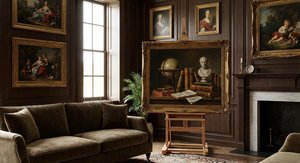
Les 10 Chefs-d'œuvre du Réalisme Académique : Artistes et Décor Intemporels
Plongez dans l'univers du Réalisme Académique avec OriginalUniqueArt.com ! Découvrez 10 chefs-d'œuvre intemporels de Bouguereau, Gérôme et Cabanel. Reproductions de qualité muséale pour une décoration intérieure élégante. Explorez la collection en ligne !

L'Huile sur Toile : Exploration Historique et Technique d'un Médium Artistique Intemporel
Explorez l'histoire fascinante de la peinture à l'huile, des techniques ancestrales aux maîtres flamands comme Van Eyck. Découvrez les secrets des pigments, liants et glacis pour comprendre cet art intemporel.


