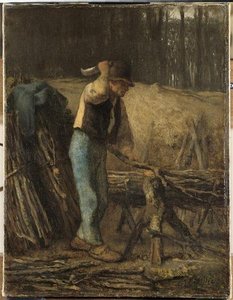
Aperçu en situation
 Envoyer
 Partager
 Détails de l'œuvre

 Télécharger
 Articles similaires
 Radiographie
 Diaporama
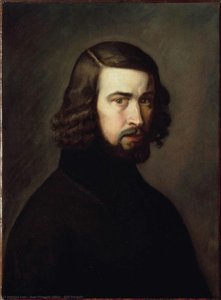
Self-Portrait


 Lire la suite
Giclées et impressions d'art
Impressions giclées ou sur toile de qualité musée, avec une production rapide et des finitions au choix. ( Commander la reproduction peinte à la main Télécharger l'image haute résolution)




P118B $10

P118H $10

P118W $10

P438Z $10

P508JH $12

P508YH $12

P805H $10

P805Z $10

P919BZ $10

P919G $10

P919XJ $10

P959ZH $10

P968JZ $12

W106C $8

W218G $10

W218JH $8

W218Y $10

W307PJ $10

W316G $10

W316PJ $8

W316Y $10

W398PJ $8

W4111J $10

W500HY $15

W500JH $15

W692G $12

W849H $8

W940BG $15

W953PJ $8




Choisissez parmi nos formats prédéfinis qui respectent les proportions originales de l’œuvre.

Vous pouvez saisir vos propres dimensions pour vous adapter à un cadre ou à un espace spécifique. Si la taille sélectionnée ne correspond pas aux proportions de l'image originale, nous recadrerons l'œuvre ou étendrons l'image avec une bordure en miroir ou une couleur unie. Une maquette numérique vous sera envoyée pour approbation avant le début de la production.
Veuillez noter que l'aperçu à l'écran ne reflète pas le recadrage ou l'extension réelle. Seule la maquette montrera avec précision la composition finale.
Bien que des tailles personnalisées soient disponibles, nous vous recommandons de choisir une dimension dans la liste prédéfinie afin de préserver les proportions originales.
Livraison dans le monde entier () en 2 semaines au lieu des 4/5 semaines habituelles. (21 août)

Livraison express gratuite dans le monde entier

Toile de lin de qualité supérieure

Assurance transport complète

Garantie de remboursement des droits de douane

Garantie de fidélité des couleurs

Politique de retour de 60 jours (uniquement en cas de défaut)

Garantie de remboursement à 100%

Offre de tarifs dégressifs
 L'option verre n'est disponible que pour les dimensions inférieures à 110 cm.

Self-Portrait
Giclées et impressions d'art
Format de la reproduction
-


Prix total
$ 80
Description de la pièce
The Genesis of a Visionary: Millet's Early Years and Artistic Roots
Jean-François Millet, born in Gruchy, Normandy, in 1814, wasn’t destined for the hallowed halls of artistic academies. Instead, his formative years were inextricably linked to the rhythms of rural life – a landscape he would later translate onto canvas with unparalleled honesty and depth. His family, farmers themselves, instilled within him not just practical skills but also an intimate understanding of the land, its people, and their arduous existence. This grounding in the soil wasn’t merely a backdrop; it became the very foundation of his artistic vision, informing his meticulous observation and profound empathy for those who toiled beneath the sun. Early education was supplemented by the tangible lessons of farm work – sowing seeds, reaping harvests, and enduring the physical demands of rural labor—experiences that would later infuse his paintings with an authentic resonance rarely found in contemporary art.
Millet’s initial exposure to artistic pursuits began through the guidance of local priests who recognized his intellectual curiosity. However, the realities of family life quickly intervened, demanding he contribute to the farm's operations alongside his formal studies. This dual existence—balancing academic learning with the practicalities of rural life—shaped his perspective and instilled a deep respect for the dignity of manual labor, themes that would repeatedly surface in his celebrated works.
A Portrait of Purpose: Deconstructing Millet’s Self-Portrait
Millet's 1841 self-portrait offers an intimate glimpse into the mind and spirit of a burgeoning artist. Painted during a period of significant transition in his career, it transcends a simple likeness to become a carefully constructed statement about artistic ambition and personal reflection. The composition is strikingly direct; Millet confronts the viewer with unwavering gaze, projecting an aura of control and self-assurance—a deliberate choice that speaks volumes about his evolving confidence as an artist.
The attire – a dark suit and tie, indicative of a burgeoning bourgeois identity – subtly contrasts with the rough texture of his beard and mustache. The visible white shirt beneath the jacket hints at a desire to maintain standards of formality while simultaneously acknowledging his roots. This juxtaposition suggests a negotiation between tradition and modernity, reflecting Millet’s own journey as he navigated the changing landscape of 19th-century France. The painting isn't merely a depiction of a man; it’s an exploration of identity—the artist grappling with his place in the world and asserting his artistic voice.
Realism and the Dignity of Labor: Millet’s Artistic Philosophy
Millet’s self-portrait is a pivotal work within the Realist movement, a reaction against the idealized forms and mythological subjects prevalent in earlier art. He sought to capture the everyday lives of ordinary people—particularly rural laborers—with unflinching honesty and without romanticizing their struggles. This commitment to realism extended beyond mere representation; Millet aimed to convey the dignity inherent in manual labor, portraying his subjects with respect and empathy.
The painting’s stark black-and-white palette further emphasizes this sense of austerity and directness. It mirrors the somber tones often found in Millet's later works depicting peasant life—fields of wheat, harvests, and scenes of rural toil. The lack of embellishment forces the viewer to confront the subject directly, fostering a connection rooted in shared humanity.
A Reproduction for Reflection: Bringing Millet’s Vision Home
OriginalUniqueArt offers meticulously crafted hand-painted reproductions of Jean-François Millet's Self-Portrait, allowing you to bring this powerful work into your own space. Each reproduction is created by skilled artists who understand the nuances of Millet’s technique and his artistic philosophy. The result is a faithful representation that captures not only the visual details but also the emotional depth and intellectual complexity of the original painting.
More than just a decorative piece, a OriginalUniqueArt reproduction of Millet's Self-Portrait serves as a poignant reminder of the dignity of labor, the challenges faced by rural communities, and the enduring power of art to illuminate the human condition. It’s an investment in beauty, history, and a profound connection to one of France’s most significant artistic voices.
Biographie de l'artiste
jeune enfance et éducation
jean-françois millet, né le 4 octobre 1814 en Normandie, en France, est devenu une figure clé de l’École de Barbizon et un promoteur du mouvement artistique réaliste. Élevé dans une communauté agricole, la jeune vie de Millet a été imprégnée d’expériences rurales, ce qui a profondément influencé ses thèmes artistiques.voyage artistique
L'éducation artistique de Millet a commencé en 1833 sous l'enseignement du peintre de portraits Bon du Mouchel à Cherbourg. Il a ensuite étudié avec Théophile Langlois de Chèvreville, élève de Baron Gros. Grâce à une bourse, il s'est installé à Paris en 1837 pour fréquenter l’École des Beaux-Arts et étudier sous la tutelle de Paul Delaroche. Cependant, son parcours n'était pas sans embûches ; en 1839, il a perdu sa bourse et a été rejeté par le Salon.œuvres notables et mouvement réaliste
Le voyage artistique de Millet reflète sa profonde connexion à ses racines rurales et son dévouement à représenter la vie des paysans avec dignité et réalisme. Certaines de ses œuvres notables comprennent :- Les Moissonneurs (1855), une représentation poignante des paysans, mettant en valeur la maîtrise de Millet du réalisme.
- L'Angélus (1850-1861), une série de peintures qui soulignent les difficultés quotidiennes de la vie rurale.
- Le Semoir (1850), une représentation emblématique des difficultés rencontrées par les agriculteurs, aujourd'hui conservée au Musée d’Orsay à Paris.
héritage et influence
L'héritage de Millet en tant que fondateur de l'École de Barbizon le marque comme une figure clé dans la transition vers le réalisme dans l'art. Son influence peut être observée dans les œuvres des artistes ultérieurs, notamment Correa Benito Rebolledo, qui ont continué à repousser les limites du réalisme. Explorez davantage les œuvres de Millet et le mouvement réaliste sur OriginalUniqueArt : Jean François Millet l'Aîné | OriginalUniqueArt Le Nouveau Réalisme Art Movement | OriginalUniqueArt
Jean-François Millet
1814 - 1875 , France
L'essentiel de l'artiste
- Artistes Influents:
- Bon du Mouchel
- Théophile Langlois
- Paul Delaroche
- Date De Décès: 1875
- Date De Naissance: 4 octobre 1814
- Influence Sur Les Artistes: ['Correa Benito Rebolledo']
- Lieu De Naissance: Gruchy, France
- Mouvement Artistique: Réalisme, Barbizon
- Nationalité: Française
- Nom Complet: Jean-François Millet
- Oeuvres Notables:
- Les Glaneuses
- L'Angélus
- Le Semeur
Articles connexes

Jean-François Millet: Realism, Rural Life & the Poetic Depiction of Labor
Explore the life & work of Jean-François Millet, a founder of Realism. Discover his poignant depictions of rural France, iconic paintings like 'The Angelus,' and lasting influence on art history. Learn more at OriginalUniqueArt.

Romantic Realism's Finest: 10 Masterpieces for Your Home | OriginalUniqueArt
Explore 10 defining masterpieces of Romantic Realism! Discover Courbet, Millet & Daumier's powerful paintings—capturing emotion and social realities. Find museum-quality reproductions for your home at OriginalUniqueArt.com.

Echoes of Rural Life: Art's Enduring Representations of the Countryside
Explore the rich history of rural life in art! Discover masterpieces from Millet to Mauve & beyond. Learn about Realism, Barbizon School & find inspiration for your home with OriginalUniqueArt.
The Poetic Truth of Observation: Exploring 19th-Century Realism in Painting
Explore the captivating world of 19th-century Realism! Discover key artists like Courbet & Millet, masterpieces, and the powerful social commentary behind this influential art movement. Expert insights at OriginalUniqueArt.
The Evocative Embrace of Reality: Exploring Romantic Realism in 19th-Century Painting
Explore the captivating world of Romantic Realism! Discover key artists like Courbet & Millet, masterpieces, and the social context behind this influential art movement. Expert insights for collectors at OriginalUniqueArt.