- Accueil

- Reproduction de peinture à l'huile
- jános rombauer
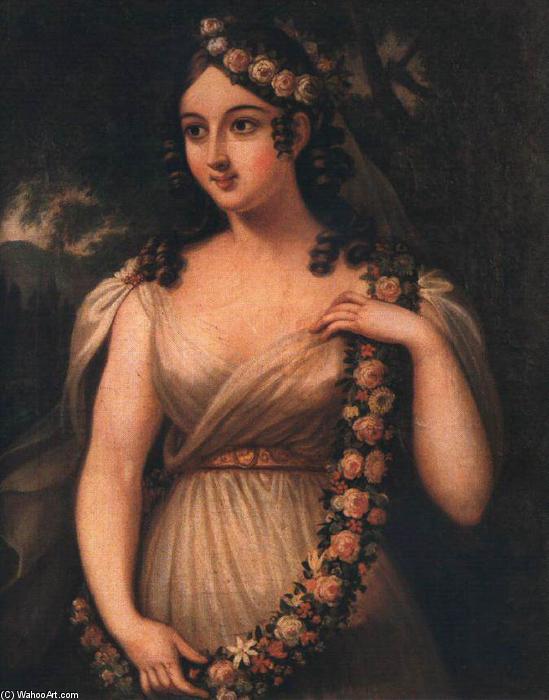
- Spring (Flora, May)
 Commander l'impression Acheter l'image haute résolution
 Partager
 Partager
 Détails de l'œuvre
 Ajouter aux favoris

 Télécharger
 Articles similaires
 Radiographie
 Diaporama
Spring (Flora, May)
 1830
1830 46.0 x 36.0 cm
 Galerie de la ville
 Afficher la suite
Reproduction à l'huile faite à la main
Huile sur toile peinte à la main, avec cadre et dimensions personnalisés, réalisée sur commande par nos artistes.




































Choisissez parmi nos formats prédéfinis qui respectent les proportions originales de l’œuvre.

Vous pouvez saisir vos propres dimensions pour l'adapter à un cadre ou à un espace spécifique. Si la taille sélectionnée ne correspond pas aux proportions de l'image d'origine, nous recadrerons l'œuvre ou prolongerons la peinture avec des éléments peints à la main supplémentaires. Une maquette numérique vous sera envoyée pour approbation avant le début de la production.
Veuillez noter que l'aperçu à l'écran ne reflète pas le recadrage ou l'extension réels. Seule la maquette montrera fidèlement la composition finale.
Bien que des tailles personnalisées soient disponibles, nous vous recommandons de sélectionner une dimension dans la liste prédéfinie afin de préserver les proportions d'origine.
Après la commande, l’équipe OriginalUniqueArt.com contactera le client par e-mail pour obtenir ses instructions et lui fournira une maquette d’aperçu.
Livraison dans le monde entier () en 3 à 4 semaines au lieu des 5 semaines habituelles. (20 juillet). Aucune concession sur la qualité.

Livraison express gratuite dans le monde entier

Toile de lin de haute qualité

Assurance transport complète

Garantie de remboursement des frais de douane

Garantie de fidélité des couleurs

Politique de retour de 60 jours (uniquement en cas de défaut)

Garantie de remboursement à 100%

Réduction sur les achats groupés
 L'option verre n'est disponible que pour les dimensions inférieures à 110 cm.

Spring (Flora, May)
Technique de reproduction
Format de reproduction
-


Prix total final
-
Description de l'œuvre
A Closer Look at the Painting
The painting depicts a young woman adorned with floral decorations, symbolizing the arrival of spring. Her serene expression and gentle gaze draw the viewer's attention, while the intricate details of the flowers and her attire showcase Rombauer's exceptional skill as an artist. The use of soft lighting and delicate brushwork adds to the overall sense of elegance and refinement. Key Features of the Painting:- The subject's facial expression and posture convey a sense of calmness and tranquility
- The floral decorations and garland around her neck add a touch of whimsy and playfulness
- The artist's use of color and composition creates a sense of balance and harmony
Artist and Museum Information
János Rombauer was a talented artist known for his beautiful and intricate paintings. To learn more about his work and other artists, visit OriginalUniqueArt.com, which offers a wide range of handmade oil painting reproductions, including works by Rombauer. The Mestská Galeria in Presov, Slovakia, is also worth exploring, as it features an impressive collection of artworks from local and international artists.For those interested in learning more about János Rombauer and his artwork, Wikipedia provides a comprehensive overview of his life and career. Additionally, OriginalUniqueArt.com's page on Rombauer offers a selection of his paintings, including Spring (Flora, May), which can be reproduced as a handmade oil painting.
Biographie de l'artiste
The Enduring Vision of János Rombauer: A Portraitist of Hungarian Nobility
János Rombauer (1782-1849) stands as a pivotal figure in the artistic landscape of 18th and early 19th century Hungary, a master portraitist whose meticulous detail and subtle psychological insight continue to captivate viewers today. Born in Lőcse (Levoča), Slovakia – then part of the Kingdom of Hungary – Rombauer’s life was inextricably linked to the shifting political currents of Central Europe, shaping both his artistic development and his career trajectory. His early years were marked by a family rooted in craftsmanship; his father, David Rombauer, was a skilled woodcarver, instilling in János an appreciation for precision and material quality that would later inform his painting style. While formal training remained elusive, Rombauer’s talent quickly emerged, leading him to establish himself as a portraitist in Pest (Budapest) by the age of nineteen. Rombauer's artistic journey took a dramatic turn when he encountered Józef August Iliński, a Polish aristocrat serving the Russian government. Impressed by Rombauer’s burgeoning abilities, Iliński invited him to his estate near Romaniv, Ukraine, offering an unparalleled opportunity to hone his craft within the opulent circles of European nobility. This period in Saint Petersburg proved transformative, exposing Rombauer to the refined tastes and artistic conventions of Imperial Russia. He became a member of the Imperial Academy of Arts, participating in prestigious exhibitions and absorbing influences from renowned artists like Vladimir Borovikovsky and Orest Kiprensky. The influence of these masters is particularly evident in his later portraits – a subtle blending of classical formality with a heightened sense of psychological realism.A Portraiture of Hungarian Society: Themes and Techniques
Rombauer’s oeuvre is overwhelmingly defined by portraiture, yet it transcends mere likeness to offer profound glimpses into the social fabric and individual personalities of his subjects. He meticulously captured the nuances of aristocratic life – the leisurely pursuits, the intricate rituals, and the subtle power dynamics that governed Hungarian society. His portraits frequently depict members of the nobility, including landowners, merchants like the prominent Eperjes Merchant Art, and even visiting dignitaries from Russia. His ability to convey character through carefully observed details—the angle of a hand, the expression in an eye, the drape of clothing—is remarkable. Technically, Rombauer’s work is characterized by a meticulous attention to detail and a masterful use of light and shadow. He employed a refined technique reminiscent of the Biedermeier style – a popular artistic movement emphasizing realism and intimacy. His portraits are often executed in miniature format, requiring extraordinary precision and control. The delicate rendering of fabrics, the subtle gradations of color, and the meticulous portrayal of facial features all contribute to the overall sense of realism and immediacy. The “English Garden in the Csáky Castle at Hotkóc” exemplifies this skill, showcasing a grid-like composition filled with miniature Baroque landscapes, demonstrating his ability to create complex scenes within a limited space.Key Works and Notable Commissions
Among Rombauer’s most celebrated works are “Spring (Flora, May)” – a vibrant depiction of springtime in bloom – and “Young Man in a Landscape,” which captures the elegance and leisure of the Hungarian aristocracy. His portrait of Saint John the Baptist, housed at the Slovak National Gallery, is considered one of his finest achievements, demonstrating his mastery of composition and psychological insight. The meticulous detail with which he portrays the figure’s contemplative expression and the symbolic significance of the landscape surrounding him speaks volumes about Rombauer's artistic vision. He also undertook numerous commissions for Hungarian nobility, including portraits of faculty members at the Lutheran College in Pest, further solidifying his position as a leading portraitist within the kingdom.Legacy and Historical Significance
János Rombauer’s legacy extends beyond his individual artistic achievements. He played a crucial role in shaping the development of Hungarian portraiture during a period of significant social and political change. His work provides invaluable insights into the lives, customs, and values of Hungarian nobility throughout the early 19th century. His portraits are not merely representations of individuals; they are windows into a bygone era, offering a tangible connection to Hungary’s rich cultural heritage. Today, his paintings reside in prestigious collections across Europe, including the Hermitage Museum and the Tretyakov Gallery, ensuring that his enduring vision continues to inspire and captivate audiences worldwide. His influence can still be felt in contemporary portraiture, demonstrating the lasting impact of this remarkable artist.Further Resources

jános rombauer
1782 - 1849
En bref
- Artistic Movement Or Style: Biedermeier
- Artists Or Movements Influenced By This Artist: ['Borovikovsky']
- Artists Who Influenced This Artist: ['Stunder']
- Date Of Birth: May 28, 1782
- Date Of Death: February 12, 1849
- Full Name: János Rombauer
- Nationality: Hungarian
- Notable Artworks:
- Saint John the Baptist
- English Garden
- Place Of Birth: Lőcse, Hungary

