Menu
CONSEIL EN ART OFFERT
Aperçu en situationAperçu en situation Visualiser en RAVisualiser en RA Passer au tirage Passer au tiragePasser à l'image Passer à l'image EnvoyerEnvoyer
Détails de l'œuvreDétails de l'œuvre Ajouter aux favoris Ajouter aux favoris TéléchargerTélécharger Articles similairesArticles similaires RadiographieRadiographie DiaporamaDiaporama

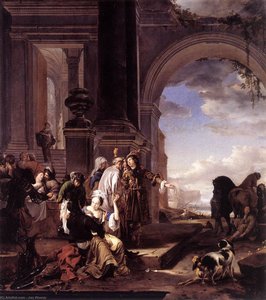
After the Hunt

Discover Jan Weenix's masterful 'After the Hunt,' a captivating Dutch Baroque painting of hunters and game. Explore intricate details, rich colors, and a scene brimming with camaraderie & realism.

Jan Weenix (1641-1719): Maître baroque néerlandais de scènes de chasse richement détaillées, peintures de gibier et paysages. Admiré pour son réalisme et sa couleur vibrante.

Reproduction à l'huile faite à la main

Huile sur toile peinte à la main, avec cadre et dimensions personnalisés, réalisée sur commande par nos artistes. (Passer au tirage Passer au tiragePasser à l'image Passer à l'image)

P118B $10
P118H $10
P118W $10
P438Z $10
P508JH $12
P508YH $12
P805H $10
P805Z $10
P919BZ $10
P919G $10
P919XJ $10
P959ZH $10
P968JZ $12
W106C $8
W218G $10
W218JH $8
W218Y $10
W307PJ $10
W316G $10
W316PJ $8
W316Y $10
W398PJ $8
W4111J $10
W500HY $15
W500JH $15
W692G $12
W849H $8
W940BG $15
W953PJ $8

Standard
custom
CM
INCH

Choisissez parmi nos formats prédéfinis qui respectent les proportions originales de l’œuvre.

largeur
hauteur

Vous pouvez saisir vos propres dimensions pour l'adapter à un cadre ou à un espace spécifique. Si la taille sélectionnée ne correspond pas aux proportions de l'image d'origine, nous recadrerons l'œuvre ou prolongerons la peinture avec des éléments peints à la main supplémentaires. Une maquette numérique vous sera envoyée pour approbation avant le début de la production.
Veuillez noter que l'aperçu à l'écran ne reflète pas le recadrage ou l'extension réels. Seule la maquette montrera fidèlement la composition finale.
Bien que des tailles personnalisées soient disponibles, nous vous recommandons de sélectionner une dimension dans la liste prédéfinie afin de préserver les proportions d'origine.

Exemples de personnalisation possibles : remplacer un visage par la photo du client ; ajouter un animal de compagnie (par exemple, remplacer un chat par un chien) ; inclure un message caché en arrière-plan ; modifier le paysage ou les éléments de l'arrière-plan.
Après la commande, l’équipe OriginalUniqueArt.com contactera le client par e-mail pour recueillir ses instructions et lui fournira une maquette d’aperçu

Livraison dans le monde entier () en 3 à 4 semaines au lieu des 5 semaines habituelles. (9 août). Aucun compromis sur la qualité.

why_choose_icon
Livraison express gratuite dans le monde entier

why_choose_icon
Toile de lin de qualité supérieure
why_choose_icon
Assurance transport complète
why_choose_icon
Garantie de remboursement des droits de douane
why_choose_icon
Garantie de fidélité des couleurs
why_choose_icon
Politique de retour de 60 jours (uniquement en cas de défaut)
why_choose_icon
Garantie de remboursement à 100%
why_choose_icon
Offre de tarifs dégressifs

Prix total

$ 300

reproduction

After the Hunt

Technique de reproduction

Format de la reproduction

-

Prix total

$ 300

Informations clés

  • Medium: Oil on panel
  • Location: Rijksmuseum, Amsterdam
  • Notable elements: Hunting scene detail
  • Year: 1656
  • Influences: Jan Baptist Weenix
  • Title: After the Hunt
  • Artistic style: Dutch Golden Age

Quiz d'art

Chaque question ne comporte qu'une seule bonne réponse.

Question 1:
What is the primary subject depicted in Jan Weenix’s ‘After the Hunt’?
Question 2:
According to the provided text, Jan Weenix was primarily known for his paintings of:
Question 3:
In what year was Jan Weenix born?
Question 4:
The text mentions that Jan Weenix’s work was highly valued by Johann Wolfgang von Goethe for its depiction of:
Question 5:
Which of the following best describes Jan Weenix’s artistic lineage?

Description de l'œuvre

A Moment Frozen in Time: The Spirit of the Dutch Golden Age

In the quiet, evocative atmosphere of Jan Weenix’s "After the Hunt," we are transported back to the year 1665, into a world where the boundaries between man, animal, and nature blur into a singular, harmonious moment. This masterful work serves as more than just a depiction of a post-hunt gathering; it is a window into the social fabric of the Dutch Golden Age. The scene captures a profound sense of camaraderie, where the adrenaline of the chase has subsided, leaving behind a lingering warmth of shared triumph and quiet companionship. As we gaze upon the man standing beside his loyal hounds, we feel the weight of tradition and the deep-seated connection to the land that defined the era.

The composition is a delicate dance of light and shadow, rendered with the meticulous precision that Jan Weenix inherited from his father’s workshop. Though the palette may appear restrained, it possesses a rich, tonal depth that breathes life into every texture—from the coarse fur of the hunting dogs to the soft, atmospheric haze of the background. The presence of other figures, engaged in low-toned conversation, adds layers of narrative complexity, suggesting a community bound by shared rituals and the seasonal rhythms of the hunt. A horse visible in the distance provides a sense of scale and depth, anchoring the group within a vast, breathing landscape.

Mastery of Realism and the Art of Detail

To behold this painting is to witness the pinnacle of Dutch Baroque realism. Weenix possessed an extraordinary ability to render the physical world with such clarity that the viewer can almost hear the soft panting of the dogs or the rustle of the basket held by the central figure. His technique, rooted in the tradition of observing nature with scientific accuracy, allows for a breathtaking interplay of textures. The way light catches the edges of the figures and settles into the folds of their attire creates a sense of three-dimensional presence that is both captivating and immersive.

For the discerning collector or interior designer, this piece offers an unparalleled opportunity to introduce a sense of historical grandeur and quiet sophistication into a space. The artwork does not merely decorate a wall; it commands attention through its subtle emotional resonance. It evokes a feeling of timelessness, making it an ideal centerpiece for a study, a library, or a formal dining room where conversation and reflection are encouraged. A high-quality reproduction of this work preserves the delicate nuances of Weenix’s brushwork, allowing the legacy of 17th-century Dutch mastery to reside within a modern setting.

Symbolism and the Emotional Landscape

Beyond its technical brilliance, "After the Hunt" is steeped in the symbolism of the era. The hunt itself was often a metaphor for the pursuit of virtue, social status, and the mastery of one's environment. The dogs, symbols of fidelity and instinct, stand as steadfast companions to the human spirit, representing the controlled wildness that exists within civilization. There is an underlying theme of peace following conflict—the transition from the intensity of the hunt to the restorative calm of the gathering.

The emotional impact of the painting lies in its ability to evoke nostalgia for a lost era of elegance and connection. It invites the viewer to pause, to breathe, and to appreciate the beauty found in the quiet intervals of life. Whether you are drawn to the historical significance of Jan Weenix’s lineage or the atmospheric allure of his landscapes, this painting remains a profound testament to the enduring power of art to capture the very essence of human experience.


Biographie de l'artiste

Jan Weenix : Vie et Héritage

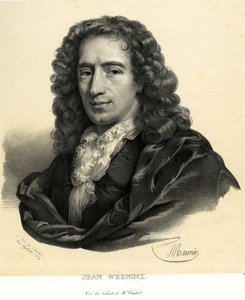
Jan Weenix (1641-1719) était un peintre néerlandais baroque renommé pour ses représentations richement détaillées de natures mortes de chasse, de pièces de gibier et de paysages. Son œuvre incarne l'esprit artistique du Siècle d'Or, mettant en valeur à la fois la maîtrise technique et une observation attentive du monde naturel.

Jeunesse et Développement Artistique

Né à Amsterdam, aux Pays-Bas, en 1641, Jan Weenix a suivi les traces de son père dans le domaine de l'art. Son père, Jan Baptist Weenix, était également un peintre respecté spécialisé dans des sujets similaires. Cette influence familiale s’est avérée cruciale pour le développement artistique précoce de Jan. Il a initialement travaillé sous la direction de son père, apprenant les techniques de la peinture de natures mortes et de la représentation des animaux.

Influences et Style Artistique

Le style de Jan Weenix reflète les influences de plusieurs artistes clés de son temps. Son père lui a transmis un amour pour le réalisme détaillé et des palettes de couleurs vibrantes. Il a également été influencé par des peintres comme Hendrick Cornelisz Vroom, connu pour ses marines, et potentiellement d'autres spécialistes du travail animalier tels que Melchior de Hondecoeter et Gillis Claesz d'Hondecoeter.

Le style artistique de Weenix se caractérise par :

  • Représentation précise des textures – le fourrure, les plumes et la végétation sont dépeintes avec une remarquable exactitude.
  • Utilisation dramatique de la lumière et de l'ombre (chiaroscuro) pour créer de la profondeur et de l'intérêt visuel.
  • Une palette de couleurs vibrantes qui donne vie à ses sujets.
  • Maîtrise compositionnelle dans l'arrangement des éléments dans le cadre.

Œuvres Majeures et Réalisations

Tout au long de sa carrière, Jan Weenix a produit un important corpus d’œuvres. Certaines de ses peintures les plus notables comprennent :

  • Chasse et nature morte aux fruits à côté d'un vase de jardin (1714) – Une composition complexe présentant du gibier, des fruits et des éléments architecturaux.
  • Nature morte avec un lièvre et autres gibiers (1697) – Démontre sa maîtrise de la représentation de l’anatomie et de la texture animale.
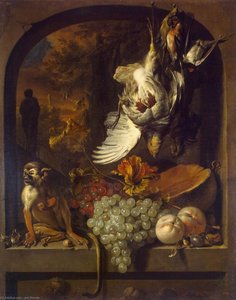
  • Un singe assis (avant 1685) - Montre sa capacité à capturer la personnalité dans les portraits d'animaux.
  • Le paon blanc – Une représentation frappante d'un oiseau majestueux, mettant en valeur l’habileté de Weenix avec la couleur et le détail.

Il a également reçu des commandes auprès de mécènes importants, notamment une invitation au court de Johann Wilhelm, électeur de Palatinat, où il a travaillé aux côtés d'autres artistes renommés.

Signification Historique

Jan Weenix a joué un rôle important dans la popularisation des natures mortes de chasse et des peintures de gibier pendant la période baroque. Ses œuvres étaient très recherchées par les collectionneurs et ont contribué au développement des traditions artistiques néerlandaises. Il a aidé à élever ces genres au-delà d'une simple décoration, en leur insufflant un sentiment de réalisme, de drame et de beauté esthétique.

Sa fille, Maria Weenix, a poursuivi la tradition familiale en tant que fleuriste talentueuse, consolidant ainsi le nom des Weenix dans les annales de l'art néerlandais. L’héritage de Jan Weenix continue d’inspirer les artistes et de captiver les publics avec ses représentations magistrales du monde naturel.

Jan Weenix

Jan Weenix

1641 - 1719 , Netherlands

L'essentiel de l'artiste

  • Artistic Movement Or Style: Dutch Baroque
  • Artists Or Movements Influenced By This Artist: ['Maria Weenix']
  • Artists Who Influenced This Artist:
    • Jan Baptist Weenix
    • Hendrick Cornelisz Vroom
  • Date Of Birth: Amsterdam, Netherlands (1641)
  • Date Of Death: y enterré, le 19 septembre 1719
  • Full Name: Jan Weenix
  • Nationality: Pays-Bas
  • Notable Artworks:
    • Hunting and Fruit Still Life
    • Still Life with a Hare
    • A Seated Monkey
  • Place Of Birth: Amsterdam, Pays-Bas
Explorez des œuvres d'art classées par thèmes, styles et caractéristiques.