

 Aperçu en situation
 Partager
 Partager
 Détails

 Télécharger
 Articles similaires
 Radiographie
 Voir le diaporama
 Statistiques
Mary Magdalen
 Oil On Panel
- WallArt
- Romanism
 1528
1528- Renaissance
 67.0 x 76.0 cm
 Rijksmuseum
 Afficher la suite
Reproduction à l'huile faite à la main
Huile sur toile peinte à la main, avec cadre et dimensions personnalisés, réalisée sur commande par nos artistes. ( Passer au format impression Passer au format image numérique)




P118B $10

P118H $10

P118W $10

P438Z $10

P508JH $12

P508YH $12

P805H $10

P805Z $10

P919BZ $10

P919G $10

P919XJ $10

P959ZH $10

P968JZ $12

W106C $8

W218G $10

W218JH $8

W218Y $10

W307PJ $10

W316G $10

W316PJ $8

W316Y $10

W398PJ $8

W4111J $10

W500HY $15

W500JH $15

W692G $12

W849H $8

W940BG $15

W953PJ $8




Choisissez parmi nos formats prédéfinis qui respectent les proportions originales de l’œuvre.

Vous pouvez saisir vos propres dimensions pour l'adapter à un cadre ou à un espace spécifique. Si la taille sélectionnée ne correspond pas aux proportions de l'image d'origine, nous recadrerons l'œuvre ou prolongerons la peinture avec des éléments peints à la main supplémentaires. Une maquette numérique vous sera envoyée pour approbation avant le début de la production.
Veuillez noter que l'aperçu à l'écran ne reflète pas le recadrage ou l'extension réels. Seule la maquette montrera fidèlement la composition finale.
Bien que des tailles personnalisées soient disponibles, nous vous recommandons de sélectionner une dimension dans la liste prédéfinie afin de préserver les proportions d'origine.
Après la commande, l’équipe OriginalUniqueArt.com contactera le client par e-mail pour recueillir ses instructions et lui fournira une maquette d’aperçu
Livraison dans le monde entier () en 3 à 4 semaines au lieu des 5 semaines habituelles. (20 septembre). Aucun compromis sur la qualité.

Livraison express gratuite dans le monde entier

Toile de lin de haute qualité

Assurance transport complète

Garantie de remboursement des droits de douane

Garantie de fidélité des couleurs

Garantie de retour de 100 jours (uniquement en cas de défaut)

Garantie de remboursement à 100%

Tarifs dégressifs sur quantité
 L'option verre n'est disponible que pour les dimensions inférieures à 110 cm.

Mary Magdalen
Technique de reproduction
Format de la reproduction
-


Prix total final
$ 300
A Soul in Solitude: The Devotion of Mary Magdalen
In the quietude of this 1528 masterpiece, we encounter a moment of profound spiritual introspection that transcends the centuries. Jan van Scorel, a master who brilliantly bridged the gap between the meticulous traditions of the Northern Renaissance and the sweeping, lyrical grace of the Italian Romanist style, presents us with an intimate portrait of Mary Magdalene. She sits nestled beneath the protective canopy of a leafy tree, her hands clasped tightly against her chest in a gesture that oscillates between fervent prayer and deep, transformative repentance. The composition is far more than a mere portrait; it serves as a window into a searching soul. Her long, flowing hair and the gentle, heavy drape of her garments speak to a tactile reality, while her steady gaze invites the viewer into a shared space of silent contemplation.
Behind her, the landscape unfolds with a breathtaking sense of scale, where distant mountains rise like silent, eternal witnesses to her devotion. This vastness adds a layer of majesty to her personal moment of grace, suggesting that her internal struggle is mirrored by the grandeur of the natural world. The inclusion of secondary figures in the periphery adds a subtle narrative complexity, hinting at a world that continues its rhythmic movement around her, yet emphasizing her profound isolation within her spiritual journey.
Technical Brilliance and the Romanist Influence
The technical brilliance of Van Scorel is on full display through his masterful use of light and color, creating a painting that vibrates with life. He employs a balanced palette that captures the lushness of the natural world while maintaining a focused luminosity on the central figure. One can observe the subtle interplay of shadows beneath the foliage, which creates a sense of three-dimensional depth, pulling the viewer directly into the scene. This mastery of chiaroscuro—likely inspired by his transformative travels through Italy and his exposure to the works of masters like Giorgione—allows the textures of the fabric and the ruggedness of the distant peaks to feel tangibly present.
Van Scorel’s unique ability to blend the detailed, almost microscopic precision of the Dutch tradition with the atmospheric softness of the Italian Renaissance is what makes this piece so captivating. The way light catches the embroidery of her bodice and the soft sheen of her hair demonstrates a level of skill that was revolutionary for his time. For the discerning collector, this interplay of light and shadow offers a dynamic visual experience that changes depending on the lighting of the room, making it a truly living piece of art.
An Essential Piece for the Discerning Collector
For the interior designer or the passionate art lover, a high-quality reproduction of Mary Magdalen offers much more than mere aesthetic beauty; it provides a focal point of historical and emotional weight. This painting is an invitation to stillness in an increasingly chaotic world. Whether placed in a quiet study, a grand library, or as a centerpiece in a contemporary living space, the work commands attention through its dignity and depth.
Integrating such a piece into a curated collection allows for a dialogue between history and modern elegance. It serves as a conversation starter, a testament to the enduring power of Renaissance humanism and the timelessness of spiritual seeking. To possess this reproduction is to bring a fragment of 16th-century mastery into the modern home, offering an atmosphere of sophistication, peace, and profound intellectual inspiration.
Biographie de l'artiste
Biographie et Œuvre de Jan van Scorel
Jan van Scorel, né à Schoorl près d’Alkmaar en 1495 et décédé à Utrecht en 1562, est une figure majeure de la Renaissance flamande et hollandaise. Son parcours artistique, marqué par un voyage intensif en Italie, témoigne d'une synthèse remarquable entre les traditions picturales du Nord et l’éclat des modèles italiens. Bien que ses débuts soient enveloppés de certaines incertitudes, on lui attribue une formation initiale influencée par plusieurs maîtres, dont Pieter Gerritsz à Haarlem, Jacob Cornelisz à Amsterdam et Jan Gossaert à Utrecht – tous des figures importantes de la peinture néerlandaise de l’époque.- Influences clés : La peinture italienne, notamment Giorgione et Raphaël, a profondément marqué son style.
- Collaborations : Il a collaboré avec des artistes renommés tels que Maarten van Heemskerck, enrichissant ainsi sa palette artistique et son réseau professionnel.
Voyages et Évolution Artistique
Le voyage de Jan van Scorel en Italie, débutant vers 1518, fut une véritable révélation. Il s’imprégna des techniques picturales, de la composition et de l'harmonie des couleurs qui caractérisaient le style romain. Il visita Nuremberg, Venise, la Terre Sainte et Rome, absorbant les influences de ces lieux emblématiques. Cette expérience se traduisit par une évolution stylistique notable : il abandonna progressivement les conventions du gothique tardif pour adopter un style plus réaliste et atmosphérique, influencé par le paysage pictural vénitien. Il est important de noter que son séjour à Rome coïncida avec la papauté hollandaise d'Adriaan VI, ce qui lui conféra une position privilégiée au sein du Vatican, où il fut nommé conservateur des antiquités du Belvédère, un poste auparavant occupé par Raphaël.Œuvres Majeures et Techniques
L’œuvre de Jan van Scorel est riche et variée, témoignant d'une maîtrise technique exceptionnelle et d'une sensibilité artistique profonde. Parmi ses œuvres les plus remarquables, on peut citer :- Sippenaltar (1520) : Ce retable, réalisé à Obervellach, illustre parfaitement sa capacité à combiner des éléments narratifs complexes avec une grande finesse picturale.
- La Mort de Cléopâtre (c. 1523) : Cette œuvre, exposée au Rijksmuseum d’Amsterdam, est un exemple saisissant de son influence vénitienne et de sa maîtrise du clair-obscur.
- L'Entrée du Christ à Jérusalem (vers 1526) : Ce polyptyque, conservé au Centraal Museum d’Utrecht, témoigne de sa connaissance approfondie de l'architecture romaine et de son souci du détail.
Héritage et Importance Historique
Jan van Scorel occupe une place essentielle dans l'histoire de la peinture néerlandaise. Il fut l’un des premiers artistes à introduire les idéaux de la Renaissance italienne dans le Nord, contribuant ainsi à la diffusion d'un style pictural novateur et élégant. Son influence se ressent dans l'œuvre de nombreux artistes qui lui succédèrent, notamment Maarten van Heemskerck. Malheureusement, une grande partie de son œuvre fut détruite lors des iconoclasmes de la Réforme au début du XVIIe siècle, ce qui rend sa production encore plus précieuse et rare. Malgré cette perte, l'art de Jan van Scorel continue d’inspirer les collectionneurs et les chercheurs, témoignant de la richesse et de la diversité de la peinture néerlandaise du XVIe siècle.
Jan van Scorel
1495 - 1562 , Pays-Bas
En bref
- Artistic Movement Or Style: Romaniste, Renaissance
- Artists Or Movements Influenced By This Artist:
- Maarten van Heemskerck
- Renaissance Italienne
- Artists Who Influenced This Artist:
- Pieter Gerritsz
- Jacob Cornelisz
- Jan Gossaert
- Date Of Birth: 1495-08-01
- Date Of Death: 1562-12-06
- Full Name: Jan van Scorel
- Nationality: Néerlandais
- Notable Artworks:
- Sippenaltar
- Mort Cléopâtre
- Place Of Birth: Schoorl, Pays-Bas
Articles similaires

Maerten van Heemskerck: Bridging Mannerism & Renaissance Ideals
Explore the captivating world of Maerten van Heemskerck, a pivotal Dutch Renaissance painter bridging Mannerism & Italian influence. Discover his masterpieces and legacy with OriginalUniqueArt.

Les 10 Chefs-d'œuvre de la Peinture Primitif Néerlandaise : Art, Histoire & Décor
Plongez au cœur de la peinture flamande ! Découvrez les 10 chefs-d'œuvre de Jan van Eyck, Campin & Memling. Histoire, symbolisme et réalisme : trouvez l'inspiration déco et achetez des reproductions d'art exceptionnelles sur OriginalUniqueArt.com.

Jan van Goyen: Master of Dutch Landscape & Atmospheric Perspective
Discover Jan van Goyen, the master of Dutch landscape painting. Explore his subtle technique, atmospheric realism & lasting influence on art history. Learn about this 17th-century pioneer at OriginalUniqueArt.
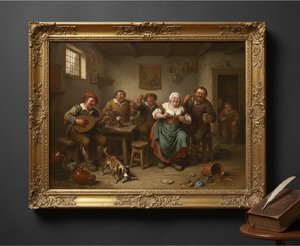
Adriaen van Ostade: A Master of Dutch Genre Painting & Social Commentary
Explore the life & work of Adriaen van Ostade, a leading Dutch Golden Age painter. Discover his realistic genre scenes, social commentary, and lasting influence on art history. Learn more at OriginalUniqueArt.

Rembrandt van Rijn : Les 25 Œuvres Maîtresses à Redécouvrir | OriginalUniqueArt
Plongez dans l'univers de Rembrandt van Rijn avec les 25 œuvres incontournables du maître baroque. Découvrez l'histoire, la technique et l'émotion derrière ses portraits célèbres et 'La Ronde de Nuit'. Reproductions tableaux haute qualité sur OriginalUniqueArt.com