Aperçu en situation
 Envoyer
 Partager
 Détails de l'œuvre
 Guide
Guide

 Télécharger l'image
 Articles similaires
 Radiographie
 Diaporama
 Statistiques
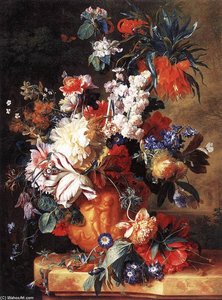
Panier de fleurs


 Lire la suite
Giclées et impressions d'art
Impressions giclées ou sur toile de qualité musée, avec une production rapide et des finitions au choix. ( Commander la reproduction peinte à la main Passer au format numérique)




P118B €10

P118H €10

P118W €10

P438Z €10

P508JH €12

P508YH €12

P805H €10

P805Z €10

P919BZ €10

P919G €10

P919XJ €10

P959ZH €10

P968JZ €12

W106C €8

W218G €10

W218JH €8

W218Y €10

W307PJ €10

W316G €10

W316PJ €8

W316Y €10

W398PJ €8

W4111J €10

W500HY €15

W500JH €15

W692G €12

W849H €8

W940BG €15

W953PJ €8




Choisissez parmi nos formats prédéfinis qui respectent les proportions originales de l’œuvre.

Saisissez la largeur et la hauteur souhaitées pour qu'elles s'adaptent à votre cadre ou à votre mur. Une impression peut être recadrée, mais jamais agrandie au-delà de l'image originale ; ainsi, un format de forme différente entraînera la perte d'une partie de l'image. Nous vous envoyons une maquette numérique pour approbation avant toute impression. L'image présentée sur cette page ne montre pas le recadrage réel — seule la maquette le permet.
Livraison dans le monde entier () en 2 semaines au lieu des 4/5 semaines habituelles. (26 octobre)

Livraison express gratuite dans le monde entier

Toile de lin de qualité supérieure

Assurance transport complète

Garantie de remboursement des droits de douane

Garantie de fidélité des couleurs

Politique de retour de 100 jours (uniquement en cas de défaut)

Garantie de remboursement à 100%

Offre de tarifs dégressifs
 L'option verre n'est disponible que pour les dimensions inférieures à 110 cm.

Panier de fleurs
Giclées et impressions d'art
Format de la reproduction
-


Prix total
€ 70
Une symphonie de splendeur botanique
Dans le silence des galeries de l'Alte Pinakothek à Munich, s'ouvre une fenêtre sur un été qui ne se fane jamais. Le "Panier de fleurs" de Jan van Huysum n'est pas une simple nature morte ; c'est une célébration époustouflante de la vie à son apogée la plus vibrante. En contemplant ce chef-d'œuvre à l'huile sur panneau, les frontières entre la toile et la réalité commencent à se dissoudre. L'arrangement — une collection luxuriante et débordante de roses, de lys et de tulipes — semble palpiter d'une vitalité cachée. Van Huysum, titan de l'ère baroque néerlandaise, invite le spectateur dans une expérience sensorielle immersive où l'air semble chargé du parfum imaginaire de la terre humide et du nectar sucré. C'est une œuvre conçue pour captiver l'œil et émouvoir l'âme, s'imposant comme une pièce maîtresse inégalée pour toute collection cherchant à faire entrer la beauté éternelle de la nature à l'intérieur.
La prouesse technique déployée dans cette œuvre est rien de moins que miraculeuse. Van Huysum était un maître de la technique du glacis, appliquant des couches de couleurs translucides si fines et délicates qu'elles permettent à la lumière de pénétrer et de se réfléchir depuis l'intérieur même de la peinture. Cela crée une lueur intérieure lumineuse qui imite la texture veloutée d'un pétale de rose ou le miroitement cristallin d'une goutte de rosée matinale. Chaque élément est rendu avec une précision scientifique ; l'on peut presque ressentir la fraîcheur des feuilles vertes et le poids fragile des fleurs. Pour le collectionneur averti ou le décorateur d'intérieur, ce niveau de détail offre un profond sentiment de luxe et de profondeur, offrant un point focal qui récompense une contemplation prolongée et ajoute une couche de naturalisme sophistiqué à tout espace soigneusement composé.
L'héritage de l'Âge d'Or néerlandais
Pour comprendre la résonance émotionnelle du "Panier de fleurs", il faut remonter à la riche lignée artistique dont il est issu. Né au sein d'une famille de peintres célèbres à Amsterdam, Jan van Huysum a hérité d'un profond respect pour l'exactitude botanique. Alors que ses contemporains cherchaient souvent le drame à travers des paysages grandioses ou la grandeur mythologique, Van Huysum a trouvé l'infini dans l'infinitésimal. Son travail représente le zénith de la peinture florale néerlandaise, où la quête du naturalisme rencontre une dévotion presque spirituelle à la beauté de l'instant éphémère. Un symbolisme poignant est tissé dans cette composition ; la perfection même des fleurs sert de memento mori, un doux rappel de la nature éphémère de la vie et de la beauté transitoire de la jeunesse.
Cet équilibre délicat entre observation scientifique et enchantement esthétique rend son œuvre intemporelle. La composition ne repose pas sur une symétrie rigide, mais plutôt sur un chaos organique et contrôlé qui semble à la fois spontané et parfaitement orchestré. Pour ceux qui cherchent à parer leur demeure d'un art inspirant la tranquillité et l'émerveillement, une reproduction de haute qualité de ce chef-d'œuvre offre bien plus qu'une simple décoration. Elle apporte un fragment d'histoire dans l'ère moderne — un éclat de l'Âge d'Or néerlandais qui continue de rayonner de lumière, de couleur et d'une passion durable pour le monde naturel.
Questions et réponses
Quelle atmosphère se dégage de « Panier de fleurs » ?
«Panier de fleurs» dégage une atmosphère Sérénité.
L'œuvre « Panier de fleurs » de Jan Van Huysum est-elle dans le domaine public, et pourquoi ?
«Panier de fleurs» de Jan Van Huysum est dans le dans le domaine public - ses droits d'auteur sont tombés dans le domaine public. Les droits d'auteur sont calculés à partir de l'année du décès de l'artiste, et Jan Van Huysum est décédé en 1749.
Dans quelle pièce recommanderiez-vous d'exposer «Panier de fleurs» de Jan Van Huysum ?
«Panier de fleurs» de Jan Van Huysum est recommandé pour une Espaces de vie. Cette suggestion s'appuie sur le sujet, les couleurs et l'atmosphère de l'œuvre.
Biographie de l'artiste
Jan van Huysum (1682–1749): A Master of Floral Illusion
Jan van Huysum, a name synonymous with the exquisite flower paintings of the Dutch Golden Age, was born in Amsterdam on April 15, 1682. He wasn’t simply a painter of blooms; he was a master of illusion, capable of rendering petals and droplets with such breathtaking realism that viewers felt they could almost inhale their fragrance. Born into an artistic family—his father, Justus van Huysum the Elder, was also a respected flower painter, and his brothers Jacob and Michiel followed suit—Jan’s path seemed predetermined. However, he wasn't immediately drawn to floral subjects. Early in his career, he experimented with landscapes, described as “conventional and arcadian,” but it was within the delicate world of still life that his true genius blossomed. The foundation of Van Huysum’s artistic education was laid by his father, a formative experience that instilled in him not only technical skill but also an understanding of the art market. Amsterdam during this period thrived as a center for commerce and culture, fostering a demand for luxurious and decorative paintings like those depicting lavish floral arrangements. This environment shaped Van Huysum’s approach; he wasn't merely replicating nature, but crafting idealized visions of beauty intended to delight and impress. His earliest dated work is completed in 1717 and now residing in the Louvre, already revealing a remarkable maturity and attention to detail, hinting at the mastery that was to come.The Art of Detail: Technique and Style
What truly sets Van Huysum apart is his unparalleled technique. He employed smooth, glossy brushstrokes, building up layers of paint to create an almost enamel-like surface that enhanced the richness and vibrancy of his colors. But it wasn’t just about color; it was about light—the way it played across petals, illuminated water droplets clinging to leaves, and created a sense of depth and volume. He possessed an extraordinary eye for detail, meticulously capturing the textures of every flower, fruit, and leaf with astonishing precision. Stories circulated that he could paint details like ants and dew drops so realistically they were visible without magnification—a testament to his dedication and skill. His compositions are characterized by a refined elegance and balance. Unlike some of his contemporaries who favored crowded, overflowing arrangements, he consistently avoided imbalance or over-composition. His later works became more elaborate, certainly, but always maintained a sense of harmony and grace. He often incorporated elements of fantasy into his work, particularly in his landscapes which featured imaginary scenes with classical architectural details and motionless trees. These weren’t attempts at topographical accuracy, but rather evocative settings designed to showcase the beauty of the flowers they contained.Influences and Artistic Development
Van Huysum’s artistic development was profoundly shaped by his father’s influence—a legacy that extended beyond mere technical instruction. Justus van Huysum the Elder championed a style rooted in observation and idealized representation, prioritizing clarity and luminous color. Jan absorbed these principles wholeheartedly, honing his skills alongside his brothers and establishing himself as a prominent figure within Amsterdam's artistic community. He studied under Rembrandt’s pupil Hendrick Willem Ter Brugghen, gaining invaluable insight into chiaroscuro—the dramatic interplay of light and shadow—a technique that would become central to Van Huysum’s distinctive aesthetic. Furthermore, he was exposed to the works of Rubens and Van Dyck during his visits to Madrid, broadening his artistic horizons and enriching his stylistic repertoire.Major Achievements and Legacy
Throughout his lifetime, Jan van Huysum enjoyed considerable acclaim and financial success. His paintings were highly sought after by collectors—including royalty—and he commanded high prices for his work. Today, his masterpieces can be found in prestigious museums around the world, including the Louvre in Paris, the National Gallery in London, and collections in Berlin and Amsterdam. Among his most celebrated works are *Terracotta Vase with Flowers and Fruits*, a stunning display of color and texture; *Flowers and Fruits*, showcasing his mastery of composition; and *Bouquet of Flowers in an Urn*, a testament to his ability to capture the ephemeral beauty of nature. His meticulous attention to detail, combined with his masterful use of light and color, cemented his place as one of the foremost floral painters of his era—a true innovator who elevated still life art to new heights of sophistication and elegance. Van Huysum’s legacy continues to inspire artists today, reminding us that beauty can be found in the simplest of forms when rendered with unwavering precision and profound artistic vision.
Jan Van Huysum
1682 - 1749 , Pays-Bas
L'essentiel de l'artiste
- Artistic Movement Or Style: Dutch Golden Age, Still life
- Artists Or Movements Influenced By This Artist: ['Justus van Huysum']
- Artists Who Influenced This Artist:
- Johannes de Bosch
- Jan van Os
- Date Of Birth: April 15, 1682
- Date Of Death: February 8, 1749
- Full Name: Jan van Huysum
- Nationality: Dutch
- Notable Artworks:
- Terracotta Vase with Flowers
- Flowers and Fruits
- Bouquet of Flowers in an Urn
- Place Of Birth: Amsterdam, Netherlands
Articles connexes

Rembrandt van Rijn : Les 25 Œuvres Maîtresses à Redécouvrir | OriginalUniqueArt
Plongez dans l'univers de Rembrandt van Rijn avec les 25 œuvres incontournables du maître baroque. Découvrez l'histoire, la technique et l'émotion derrière ses portraits célèbres et 'La Ronde de Nuit'. Reproductions tableaux haute qualité sur OriginalUniqueArt.com
Jan Steen: A Master of Dutch Genre Painting & the Golden Age
Explore the life & art of Jan Steen, a leading Dutch Golden Age painter renowned for his humorous genre scenes & insightful social commentary. Discover his techniques, legacy, and collecting tips.

L'Âge d'Or Néerlandais : 10 Chefs-d'œuvre Incontournables pour Décorer avec Art et Histoire
Plongez au cœur de l'Âge d'Or néerlandais ! Découvrez 10 chefs-d'œuvre intemporels de Rembrandt, Vermeer et autres maîtres hollandais. Explorez leur histoire, technique & trouvez l'inspiration déco sur

Masterpieces of Light: A Definitive Guide to the Landscapes of the Dutch Golden Age
Discover the luminous mastery of Dutch Golden Age landscapes. Our expert guide explores the atmospheric realism of masters like Van Goyen and Cuyp. Elevate your space with museum-quality, hand-painted oil reproductions from OriginalUniqueArt.com. Art history, beautifully realized.

Golden Light & Dutch Skies: The Timeless Magic of Dutch Golden Age Landscapes
Discover the breathtaking beauty of Dutch Golden Age landscapes. Explore the mastery of light, chiaroscuro, and 17th-century realism through an expert art history lens, celebrating the enduring legacy of the Dutch Masters for discerning collectors and art lovers.