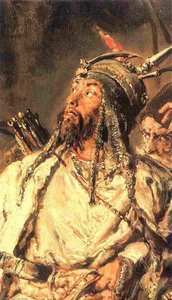
Aperçu en situation
 Partager
 Partager
 Détails
 Guide imprimable

 Télécharger
 Articles similaires
 Radiographie
 Voir le diaporama
 Statistiques
Skarga`s Sermon
 Oil On Canvas
- WallArt
- Romanticism
 1864
1864- 19th Century
 224.0 x 397.0 cm
 Afficher la suite
Giclées et impressions d'art
Impressions giclées ou sur toile de qualité musée, avec une production rapide et des finitions au choix. ( Acheter la peinture faite à la main Passer au format image numérique)




P118B €10

P118H €10

P118W €10

P438Z €10

P508JH €12

P508YH €12

P805H €10

P805Z €10

P919BZ €10

P919G €10

P919XJ €10

P959ZH €10

P968JZ €12

W106C €8

W218G €10

W218JH €8

W218Y €10

W307PJ €10

W316G €10

W316PJ €8

W316Y €10

W398PJ €8

W4111J €10

W500HY €15

W500JH €15

W692G €12

W849H €8

W940BG €15

W953PJ €8




Choisissez parmi nos formats prédéfinis qui respectent les proportions originales de l’œuvre.

Vous pouvez saisir vos propres dimensions pour vous adapter à un cadre ou à un espace spécifique. Si la taille sélectionnée ne correspond pas aux proportions de l'image originale, nous recadrerons l'œuvre ou étendrons l'image avec une bordure en miroir ou une couleur unie. Une maquette numérique vous sera envoyée pour approbation avant le début de la production.
Veuillez noter que l'aperçu à l'écran ne reflète pas le recadrage ou l'extension réelle. Seule la maquette montrera avec précision la composition finale.
Bien que des tailles personnalisées soient disponibles, nous vous recommandons de choisir une dimension dans la liste prédéfinie afin de préserver les proportions originales.
Livraison dans le monde entier () en 2 semaines au lieu des 4/5 semaines habituelles. (3 octobre)

Livraison express gratuite dans le monde entier

Toile de lin de haute qualité

Assurance transport complète

Garantie de remboursement des droits de douane

Garantie de fidélité des couleurs

Garantie de retour de 100 jours (uniquement en cas de défaut)

Garantie de remboursement à 100%

Tarifs dégressifs sur quantité
 L'option verre n'est disponible que pour les dimensions inférieures à 110 cm.

Skarga`s Sermon
Giclées et impressions d'art
Format de la reproduction
-


Prix total final
€ 69
A Dramatic Encounter in 17th-Century Poland
In the grand tapestry of Polish Romanticism, few works command the room with as much gravity and historical weight as Jan Matejko’s masterpiece, Skarga's Sermon. Created in 1864, this monumental oil on canvas serves as a window into a pivotal moment of spiritual and political tension. The scene captures a gathering of souls within a dimly lit room, where the air seems thick with the weight of impending change. At the heart of this composition is the Jesuit priest Piotr Skarga, whose powerful sermon acts as the catalyst for the profound emotions displayed by those gathered around him. Through his commanding presence, Matej and the artist invites us to witness not just a religious service, but a moment of intense national reflection.
The painting is a triumph of narrative depth, where every figure contributes to a larger story of duty and dissent. Dressed in the intricate, old-fashioned attire of the 17th century, the individuals present—some standing in rapt attention, others lost in somber thought—embody the various facets of a society at a crossroads. The artist masterfully utilizes body language and facial expressions to convey the underlying tensions of an era marked by upheaval. It is a scene that transcends mere historical documentation, offering instead a visceral experience of the psychological landscape of Poland during a time of great turmoil.
Mastery of Light, Color, and Texture
Technically, Skarga's Sermon is a testament to Matejko’s extraordinary skill in handling large-scale oil painting. The artist employs a somber and dramatic color palette, dominated by deep browns, heavy blacks, and striking reds. This choice of tones does more than just set the historical stage; it creates a chiaroscuro effect that pulls the viewer into the very center of the congregation. The light seems to struggle against the shadows, highlighting the textures of fine fabrics, the glint of metal, and the weathered skin of the listeners, lending an almost tactile quality to the canvas.
For the discerning collector or interior designer, this work offers an unparalleled sense of prestige and intellectual depth. The composition is dense and layered, rewarding repeated viewings with new discoveries—from the subtle interplay of light on a dining table to the quiet, brooding presence of figures tucked into the periphery. A high-quality reproduction of such a piece brings more than just decoration to a space; it introduces a profound sense of history and a sophisticated, dramatic atmosphere that can serve as the definitive focal point of a curated gallery or an elegant study.
A Legacy of National Identity
Beyond its aesthetic brilliance, Skarga's Sermon carries a heavy symbolic burden. As a work of historical painting, it was designed to stir the soul and remind the viewer of the complexities of the Polish spirit. The sermon itself, delivered by Skarga, is a metaphor for the call to conscience and the necessity of unity in the face of external threats. This emotional resonance is what has allowed the painting to endure as one of Jan Matejko's most celebrated achievements, housed within the prestigious National Museum in Warsaw.
To possess or display a reproduction of this work is to engage with a piece of cultural heritage that speaks of resilience and introspection. It is an ideal choice for those who appreciate art that tells a story, offering a sophisticated blend of historical accuracy and Romantic passion. Whether viewed as a study in light and shadow or as a profound historical narrative, Skarga's Sermon remains an enduring icon of artistic and national importance.
Questions et réponses
Quel âge avait Jan Matejko lors de la création de « Skarga`s Sermon » en 1864 ?
Lorsque « Skarga`s Sermon » a été créé en 1864, Jan Matejko — né(e) en 1838 — était âgé(e) de 26 ans.
Puis-je utiliser la réalité augmentée pour voir «Skarga`s Sermon» de Jan Matejko dans ma pièce ?
« Skarga`s Sermon » dispose d'un aperçu en réalité augmentée : la page Aperçu RA de l'œuvre vous permet de la visualiser dans votre propre espace sur un appareil compatible.
Vers quelle nuance Skarga`s Sermon tend-elle ?
La teinte dominante de «Skarga`s Sermon» de Jan Matejko est Warm Sunset Tones. Cette teinte constitue la tonalité de fond de la palette.
À quel courant artistique «Skarga`s Sermon» de Jan Matejko appartient-il ?
Le mouvement associé à «Skarga`s Sermon» de Jan Matejko est Romanticism. Cette classification situe l'œuvre parmi des artistes et des œuvres d'art apparentés.
Qu'est-ce que "Skarga`s Sermon" partage avec le reste de l'œuvre de Jan Matejko ?
«Skarga`s Sermon» partage avec les autres œuvres de Jan Matejko son style Romanticism ainsi que ses thèmes récurrents : romanticism influence, polish historical narrative, counter reformation themes, political rebuke of elite, national identity preservation, key early masterpiece.
À quel artiste est attribuée l'œuvre "Skarga`s Sermon" ?
« Skarga`s Sermon » a été créé par Jan Matejko. Les informations présentes sur cette page décrivent l'œuvre originale de Jan Matejko.
En quelle année "Skarga`s Sermon" a-t-il été réalisé ?
«Skarga`s Sermon» de Jan Matejko a été créé en 1864.
Biographie de l'artiste
Premières années et formation
Jan Alojzy Matejko, peintre polonais renommé, est né le 24 juin 1838 à Cracovie, en Pologne. Son père, Franciszek Ksawery Matejko, était un tuteur et professeur de musique d'origine tchèque. La vie précoce de Jan a été marquée par la révolution de Cracovie de 1846 et le siège de 1848 de Cracovie par les Autrichiens, des événements qui influenceraient plus tard ses thèmes artistiques. Matejko a fréquenté le lycée Saint-Anne mais l'a quitté en 1851 en raison de mauvaises notes. Cependant, il a montré un talent exceptionnel pour l'art dès son plus jeune âge. Il a étudié à l'École des beaux-arts de Cracovie de 1852 à 1858, se spécialisant dans la peinture historique sous la tutelle de Wojciech Korneli Stattler et Władysław Łuszczkiewicz.Carrière artistique
La première œuvre majeure de Matejko, Les Tsars Chouyski devant Zygmunt III, a été achevée en 1853. Il a commencé à exposer ses peintures historiques au cercle des amis des beaux-arts de Cracovie en 1855. Parmi ses œuvres notables figurent :- Rejtan (1866): une grande peinture à l'huile sur toile représentant un moment clé de l'histoire polonaise.
- L’Union de Lublin (1869): une œuvre importante qui met en valeur la capacité de Matejko à capturer des événements historiques.
- La Bataille de Grunwald (1878): un chef-d'œuvre qui souligne sa capacité à transmettre l'intensité des scènes de bataille.
Influences et développement artistique
L’art de Matejko a été influencé par le romantisme européen, en particulier les œuvres d'Eugène Delacroix et Théodore Géricault. Il s'est également inspiré de la peinture historique polonaise, cherchant à représenter des événements importants de l'histoire nationale avec un sens du drame et du patriotisme. Son style est caractérisé par une attention particulière aux détails historiques, une composition dynamique et une utilisation expressive de la couleur. Au fil de sa carrière, Matejko a développé une maîtrise de la narration visuelle, capable de raconter des histoires complexes à travers ses peintures. Il était également un maître du portrait, capturant les personnalités et l'esprit de ses sujets avec précision et profondeur psychologique.Contributions muséologiques et héritage
Matejko a passé la majeure partie de sa vie à Cracovie, devenant finalement directeur à l’Académie des beaux-arts Jan Matejko, anciennement connue sous le nom d’Académie des beaux-arts de Cracovie. Parmi ses élèves figuraient des peintres éminents tels que Maurycy Gottlieb, Jacek Malczewski, Józef Mehoffer et Stanisław Wyspiański. Œuvres notables disponibles sur OriginalUniqueArt :- Jan Matejko : Varna (romantisme)
- Jan Matejko : Nature morte (romantisme)
- Jan Matejko : L’Union de Lublin (298 x 512 cm, romantisme, huile sur toile)
Références
Découverte des chefs-d'œuvre du Musée national de Cracovie, en Pologne (wikipedia.org)
Jan Matejko
1838 - 1893 , Pologne
En bref
- Artistes Influents:
- Wojciech Korneli Stattler
- Władysław Łuszczkiewicz
- Date De Naissance: 24 juin 1838
- Influence Sur Les Artistes:
- Maurycy Gottlieb
- Jacek Malczewski
- Lieu De Naissance: Kraków, Pologne
- Mouvement Artistique: Romantisme
- Nationalité: Polonaise
- Nom Complet: Jan Matejko
- Œuvres Notables:
- Rejtan (1866)
- Union de Lublin (1869)
- Bataille de Grunwald (1878)
Articles similaires

Reason vs. Emotion: The Epic Battle Between Neoclassicism and Romanticism
Explore the profound tension between Neoclassicism's rational order and Romanticism's emotional depth. A sophisticated journey through art history, from Enlightenment logic to the sublime passion of Delacroix, curated for the true classical art enthusiast.
Stanisław Wyspiański: Symbolism, National Identity & the Polish Secession
Explore the life & work of Stanisław Wyspiański, a pivotal figure in Polish Symbolism and the Young Poland movement. Discover his iconic paintings, dramas, and stained glass designs reflecting national identity & artistic innovation.

10 chefs-d'œuvre iconiques qui ont défini le Romantisme
Plongez dans l'émotion pure du Romantisme. De Delacroix à Turner, explorez 10 chefs-d'œuvre vibrants et trouvez l'inspiration pour votre décor avec nos reproductions de qualité musée. Découvrez tous les chefs-d'œuvre sur OriginalUniqueArt.com.
The Evocative Brushstroke: Exploring Emotion, Individuality & the Sublime in Romanticism's Artistic Landscape
Explore the passionate world of Romanticism! Discover masterpieces by Friedrich & Goya, delve into the sublime, and understand the movement's lasting impact on art history. Expert analysis & insights at OriginalUniqueArt.
Jan Matejko: Historical Narrative & National Identity in 19th-Century Polish Painting
Explore the powerful historical paintings of Jan Matejko, Poland's national artist. Discover his iconic works & learn how he shaped Polish identity in the 19th century. High-quality reproductions available.