Aperçu en situation
 Envoyer
 Partager
 Détails de l'œuvre

 Télécharger
 Articles similaires
 Radiographie
 Diaporama
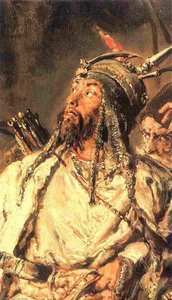
Copernicus in the tower at Frombork, or Conversations with God
 Oil On Canvas
- WallArt
- Romanticism
 1872
1872 221.0 x 315.0 cm
 Université Jagiellonne
 Lire la suite
Giclées et impressions d'art
Impressions giclées ou sur toile de qualité musée, avec une production rapide et des finitions au choix. ( Commander la reproduction peinte à la main Télécharger l'image haute résolution)




P118B $10

P118H $10

P118W $10

P438Z $10

P508JH $12

P508YH $12

P805H $10

P805Z $10

P919BZ $10

P919G $10

P919XJ $10

P959ZH $10

P968JZ $12

W106C $8

W218G $10

W218JH $8

W218Y $10

W307PJ $10

W316G $10

W316PJ $8

W316Y $10

W398PJ $8

W4111J $10

W500HY $15

W500JH $15

W692G $12

W849H $8

W940BG $15

W953PJ $8




Choisissez parmi nos formats prédéfinis qui respectent les proportions originales de l’œuvre.

Vous pouvez saisir vos propres dimensions pour vous adapter à un cadre ou à un espace spécifique. Si la taille sélectionnée ne correspond pas aux proportions de l'image originale, nous recadrerons l'œuvre ou étendrons l'image avec une bordure en miroir ou une couleur unie. Une maquette numérique vous sera envoyée pour approbation avant le début de la production.
Veuillez noter que l'aperçu à l'écran ne reflète pas le recadrage ou l'extension réelle. Seule la maquette montrera avec précision la composition finale.
Bien que des tailles personnalisées soient disponibles, nous vous recommandons de choisir une dimension dans la liste prédéfinie afin de préserver les proportions originales.
Livraison dans le monde entier () en 2 semaines au lieu des 4/5 semaines habituelles. (22 août)

Livraison express gratuite dans le monde entier

Toile de lin de qualité supérieure

Assurance transport complète

Garantie de remboursement des droits de douane

Garantie de fidélité des couleurs

Politique de retour de 60 jours (uniquement en cas de défaut)

Garantie de remboursement à 100%

Offre de tarifs dégressifs
 L'option verre n'est disponible que pour les dimensions inférieures à 110 cm.

Copernicus in the tower at Frombork, or Conversations with God
Giclées et impressions d'art
Format de la reproduction
-


Prix total
$ 80
Description de la pièce
The Visionary Canvas: Jan Matejko’s “Copernicus in the Tower at Frombork”
Jan Matejko's "Copernicus in the Tower at Frombork, or Conversations with God" isn’t merely a painting; it’s a potent distillation of intellectual fervor and spiritual contemplation. Completed in 1873, this monumental oil on canvas transports us to the heart of Renaissance Poland, capturing a pivotal moment not just in astronomical history but also in the nation's burgeoning sense of self-awareness. The scene unfolds within the austere yet majestic confines of Frombork Cathedral’s tower, a location imbued with both religious significance and scientific curiosity – a perfect embodiment of the painting’s central theme: the harmonious intersection of faith and reason.

A Masterpiece of Romantic Drama
Matejko, a towering figure in 19th-century Polish art, masterfully employs the tenets of Romanticism to elevate this historical subject. The painting pulsates with dramatic lighting – a chiaroscuro effect that sculpts the figures and emphasizes the solemnity of the scene. The deep blues and purples of the night sky contrast sharply with the warm hues of Copernicus’s study, creating a visual tension that mirrors the intellectual struggle he embodies. Notice how Matejko uses loose brushstrokes to convey movement and emotion, imbuing the composition with a sense of dynamism rarely found in earlier historical paintings. The figures are rendered with an almost theatrical intensity, their gestures and expressions conveying profound thought and perhaps even a touch of awe.
The Anatomy of Inquiry: Symbolism and Detail
Beyond its dramatic impact, “Copernicus” is rich in symbolic detail. Nicolaus Copernicus himself, depicted as a man of quiet contemplation, sits at his desk surrounded by the tools of his trade – astronomical instruments, charts, and open books. The globe, prominently displayed, speaks to his revolutionary heliocentric model of the universe, challenging the established geocentric view. A partially visible diagram of the solar system hints at the complex calculations he undertook. The inclusion of a skullcap suggests the weight of religious tradition alongside the pursuit of scientific truth. Even the brick wall in the background serves as a grounding element, anchoring the scene within the physical reality of Frombork and reminding us of the earthly context of this extraordinary intellectual journey.
A Legacy Forged in Faith and Reason
The painting’s creation coincided with the 400th anniversary of Copernicus' birth, a moment of national pride for Poland. Matejko’s decision to portray Copernicus not as a triumphant discoverer but as a man engaged in dialogue with something greater than himself—perhaps even God—resonates deeply within Polish cultural identity. The painting became a symbol of the nation’s intellectual and spiritual heritage, embodying the spirit of inquiry and the courage to challenge established dogma. Its eventual acquisition by the Jagiellonian University – a bastion of learning since the 14th century – underscores its enduring significance as a testament to the power of human intellect and the pursuit of knowledge. Today, this magnificent work continues to inspire contemplation on the relationship between science, faith, and the boundless mysteries of the universe.
Biographie de l'artiste
Premières années et formation
Jan Alojzy Matejko, peintre polonais renommé, est né le 24 juin 1838 à Cracovie, en Pologne. Son père, Franciszek Ksawery Matejko, était un tuteur et professeur de musique d'origine tchèque. La vie précoce de Jan a été marquée par la révolution de Cracovie de 1846 et le siège de 1848 de Cracovie par les Autrichiens, des événements qui influenceraient plus tard ses thèmes artistiques. Matejko a fréquenté le lycée Saint-Anne mais l'a quitté en 1851 en raison de mauvaises notes. Cependant, il a montré un talent exceptionnel pour l'art dès son plus jeune âge. Il a étudié à l'École des beaux-arts de Cracovie de 1852 à 1858, se spécialisant dans la peinture historique sous la tutelle de Wojciech Korneli Stattler et Władysław Łuszczkiewicz.Carrière artistique
La première œuvre majeure de Matejko, Les Tsars Chouyski devant Zygmunt III, a été achevée en 1853. Il a commencé à exposer ses peintures historiques au cercle des amis des beaux-arts de Cracovie en 1855. Parmi ses œuvres notables figurent :- Rejtan (1866): une grande peinture à l'huile sur toile représentant un moment clé de l'histoire polonaise.
- L’Union de Lublin (1869): une œuvre importante qui met en valeur la capacité de Matejko à capturer des événements historiques.
- La Bataille de Grunwald (1878): un chef-d'œuvre qui souligne sa capacité à transmettre l'intensité des scènes de bataille.
Influences et développement artistique
L’art de Matejko a été influencé par le romantisme européen, en particulier les œuvres d'Eugène Delacroix et Théodore Géricault. Il s'est également inspiré de la peinture historique polonaise, cherchant à représenter des événements importants de l'histoire nationale avec un sens du drame et du patriotisme. Son style est caractérisé par une attention particulière aux détails historiques, une composition dynamique et une utilisation expressive de la couleur. Au fil de sa carrière, Matejko a développé une maîtrise de la narration visuelle, capable de raconter des histoires complexes à travers ses peintures. Il était également un maître du portrait, capturant les personnalités et l'esprit de ses sujets avec précision et profondeur psychologique.Contributions muséologiques et héritage
Matejko a passé la majeure partie de sa vie à Cracovie, devenant finalement directeur à l’Académie des beaux-arts Jan Matejko, anciennement connue sous le nom d’Académie des beaux-arts de Cracovie. Parmi ses élèves figuraient des peintres éminents tels que Maurycy Gottlieb, Jacek Malczewski, Józef Mehoffer et Stanisław Wyspiański. Œuvres notables disponibles sur OriginalUniqueArt :- Jan Matejko : Varna (romantisme)
- Jan Matejko : Nature morte (romantisme)
- Jan Matejko : L’Union de Lublin (298 x 512 cm, romantisme, huile sur toile)
Références
Découverte des chefs-d'œuvre du Musée national de Cracovie, en Pologne (wikipedia.org)
Jan Matejko
1838 - 1893 , Pologne
L'essentiel de l'artiste
- Artistes Influents:
- Wojciech Korneli Stattler
- Władysław Łuszczkiewicz
- Date De Naissance: 24 juin 1838
- Influence Sur Les Artistes:
- Maurycy Gottlieb
- Jacek Malczewski
- Lieu De Naissance: Kraków, Pologne
- Mouvement Artistique: Romantisme
- Nationalité: Polonaise
- Nom Complet: Jan Matejko
- Œuvres Notables:
- Rejtan (1866)
- Union de Lublin (1869)
- Bataille de Grunwald (1878)
Articles connexes

The Enduring Power of Painting: A Historical & Contemporary Exploration of Form and Emotion
Explore the rich history & enduring techniques of oil painting with OriginalUniqueArt. Discover masterpieces, learn about art collecting, and find authentic handmade reproductions crafted by skilled artists.

The Enduring Legacy of Oil on Canvas: Technique, History & Aesthetic Impact
Explore the rich history & techniques of oil painting – from Renaissance masters to Impressionism. Discover pigments, layering methods, and why this timeless medium endures. Expert insights for artists & art enthusiasts.

L'Huile sur Toile : Exploration Historique et Technique d'un Médium Artistique Intemporel
Explorez l'histoire fascinante de la peinture à l'huile, des techniques ancestrales aux maîtres flamands comme Van Eyck. Découvrez les secrets des pigments, liants et glacis pour comprendre cet art intemporel.

L'héritage durable de la peinture à l'huile : technique, histoire et pratique contemporaine
Explorez l'histoire fascinante de la peinture à l'huile, des techniques ancestrales aux pratiques contemporaines. Découvrez les maîtres, apprenez et trouvez votre œuvre d'art idéale chez .
The Timeless Beauty of Oil on Canvas: A Masterclass in Texture, Impasto, and Artistic Mastery
Discover the profound allure of oil on canvas. Explore the mastery of impasto textures, the science of pigment longevity, and expert guides to selecting museum-quality reproductions that elevate your collection with timeless elegance and tactile depth.