Aperçu en situation
 Partager
 Partager
 Détails
 Guide imprimable

 Télécharger
 Articles similaires
 Radiographie
 Voir le diaporama
 Statistiques
The Crucifixion


 Afficher la suite
Reproduction à l'huile faite à la main
Huile sur toile peinte à la main, avec cadre et dimensions personnalisés, réalisée sur commande par nos artistes. ( Passer au format impression Passer au format image numérique)




P118B $10

P118H $10

P118W $10

P438Z $10

P508JH $12

P508YH $12

P805H $10

P805Z $10

P919BZ $10

P919G $10

P919XJ $10

P959ZH $10

P968JZ $12

W106C $8

W218G $10

W218JH $8

W218Y $10

W307PJ $10

W316G $10

W316PJ $8

W316Y $10

W398PJ $8

W4111J $10

W500HY $15

W500JH $15

W692G $12

W849H $8

W940BG $15

W953PJ $8




Choisissez parmi nos formats prédéfinis qui respectent les proportions originales de l’œuvre.

Vous pouvez saisir vos propres dimensions pour l'adapter à un cadre ou à un espace spécifique. Si la taille sélectionnée ne correspond pas aux proportions de l'image d'origine, nous recadrerons l'œuvre ou prolongerons la peinture avec des éléments peints à la main supplémentaires. Une maquette numérique vous sera envoyée pour approbation avant le début de la production.
Veuillez noter que l'aperçu à l'écran ne reflète pas le recadrage ou l'extension réels. Seule la maquette montrera fidèlement la composition finale.
Bien que des tailles personnalisées soient disponibles, nous vous recommandons de sélectionner une dimension dans la liste prédéfinie afin de préserver les proportions d'origine.
Après la commande, l’équipe OriginalUniqueArt.com contactera le client par e-mail pour recueillir ses instructions et lui fournira une maquette d’aperçu
Livraison dans le monde entier () en 3 à 4 semaines au lieu des 5 semaines habituelles. (25 septembre). Aucun compromis sur la qualité.

Livraison express gratuite dans le monde entier

Toile de lin de haute qualité

Assurance transport complète

Garantie de remboursement des droits de douane

Garantie de fidélité des couleurs

Garantie de retour de 100 jours (uniquement en cas de défaut)

Garantie de remboursement à 100%

Tarifs dégressifs sur quantité
 L'option verre n'est disponible que pour les dimensions inférieures à 110 cm.

The Crucifixion
Technique de reproduction
Format de la reproduction
-


Prix total final
$ 1150
The Crucifixion: A Window into Northern Renaissance Grief
Jan Brueghel the Elder’s “The Crucifixion” is not merely a depiction of a pivotal religious event; it's a profound exploration of human response to suffering, rendered with the meticulous detail and emotional depth characteristic of the Flemish Baroque. Painted in Brussels around 1597-1602, this monumental oil on panel offers a visceral experience, pulling the viewer into a chaotic yet deeply moving tableau of grief, curiosity, and detached observation within the context of a Roman crucifixion.
The painting immediately commands attention with its densely populated composition. Brueghel masterfully orchestrates a multitude of figures – mourners draped in somber hues, onlookers scrutinizing the scene with varying degrees of emotion, and even a few individuals seemingly absorbed in their own activities amidst the tragedy. The landscape backdrop, dominated by rolling hills, a distant castle-like structure, and a turbulent sky, provides both spatial context and symbolic weight. The high horizon line amplifies the sense of overwhelming scale, emphasizing the sheer number of people bearing witness to this horrific event.
Brueghel’s technique is a testament to his artistic prowess. He employs a layered approach, building up color and texture through countless thin glazes of oil paint – a hallmark of Northern Renaissance painting. The artist's mastery of hatching and cross-hatching creates a remarkable sense of realism, particularly in the rendering of clothing, faces, and the rough textures of the landscape. Notice how the folds of fabric cling realistically to the bodies of the mourners, while subtle variations in tone capture the nuances of skin and expression. The use of dark blues and grays in the sky contributes significantly to the painting’s somber mood, creating a dramatic contrast with the brighter colors worn by some of the onlookers.
A Symphony of Emotion: Interpreting the Crowd
What truly distinguishes “The Crucifixion” is Brueghel's astute portrayal of human reaction. He doesn’t shy away from depicting the unsettling mixture of emotions present in a crowd witnessing such an event. Some figures are openly weeping, their faces etched with sorrow; others stand silently, lost in contemplation; still others gaze upon the scene with a detached curiosity, almost as if observing a spectacle. This nuanced depiction challenges viewers to consider not only the suffering of Christ but also the complex ways in which humans grapple with tragedy and mortality.
The inclusion of seemingly mundane activities within the scene – a man carrying a basket, a woman tending to a child – underscores Brueghel’s intention to portray the Crucifixion as a universal event, reflecting the human condition. It's a deliberate move away from purely devotional representations, inviting viewers to contemplate the broader implications of suffering and faith.
Symbolism Woven into the Canvas
Beyond its immediate depiction of the crucifixion, “The Crucifixion” is rich in symbolic meaning. The stormy sky serves as a potent metaphor for turmoil and despair, mirroring the emotional landscape of the scene. The distant castle, often interpreted as representing Rome – the seat of imperial power and execution – subtly highlights the political context of Christ’s death. Furthermore, the sheer number of figures present suggests the universality of suffering and the shared experience of mortality.
The positioning of the two prominent crucifixes in the foreground is particularly significant. They serve as focal points, drawing the viewer's eye to the central event while simultaneously emphasizing the enduring nature of faith and sacrifice. The act of crucifixion itself, a brutal and agonizing form of execution, becomes a symbol of redemption and hope within the Christian narrative.
A Legacy of Flemish Mastery
“The Crucifixion” stands as a remarkable achievement in Northern Renaissance art, showcasing Jan Brueghel the Elder’s exceptional technical skill, his profound understanding of human psychology, and his ability to imbue religious subjects with emotional resonance. It shares stylistic similarities with the work of his uncle, Pieter Bruegel the Elder, particularly in its focus on genre scenes depicting everyday life alongside grand historical or religious narratives. However, Jan Brueghel’s painting possesses a greater degree of psychological depth and dramatic intensity.
This powerful image continues to resonate with viewers today, offering a timeless meditation on faith, suffering, and the enduring complexities of the human spirit. Reproductions of “The Crucifixion” provide an accessible way to experience the artistry and emotional impact of this iconic masterpiece, bringing its profound message into homes and spaces around the world.
Biographie de l'artiste
Jan Brueghel l'Ancien : Une Vie au Service de l'Art
- Né: Bruxelles, Belgique (1568)
- Décédé: 1625
Jan Brueghel l'Ancien, figure marquante du mouvement baroque flamand, est né au sein d’une famille imprégnée de tradition artistique. Fils cadet du célèbre peintre néerlandais Pieter Bruegel l'Ancien et frère de Jan Brueghel le Jeune, il a hérité d’un héritage qui a profondément façonné sa propre carrière. Sa vie et son œuvre reflètent une intersection fascinante entre l'influence familiale, les styles artistiques en évolution et des contributions significatives à l'art du XVIIe siècle.
Jeunesse et Formation
Né à Bruxelles, Jan Brueghel a passé ses premières années immergé dans le monde de l’art. Son père, Pieter Bruegel l'Ancien, était déjà un artiste célébré pour ses scènes de genre et ses paysages représentant la vie paysanne. Bien que les détails concernant sa formation formelle soient quelque peu rares, il est largement admis qu’il a reçu une instruction initiale auprès de son père. Au-delà de cette guidance familiale, Jan a probablement étudié sous d'autres artistes importants de l'époque, absorbant les techniques et les philosophies artistiques prévalentes à Anvers et Bruxelles.
Style Artistique et Œuvres Notables
Jan Brueghel l'Ancien a développé un style distinctif caractérisé par une attention méticuleuse aux détails, des couleurs vibrantes et une manipulation habile de la lumière et de l’ombre. Tout en étant influencé par le travail antérieur de son père, il a tracé sa propre voie, devenant particulièrement renommé pour ses natures mortes, ses paysages et ses scènes allégoriques.
- Attention Meticuleuse aux Détails : Ses œuvres sont célébrées pour leurs détails incroyables, évidents dans le rendu des fleurs, des fruits, des insectes et d'autres éléments naturels.
- Couleurs Vibrantes : Brueghel employait une palette riche, utilisant des couleurs vibrantes pour créer de la profondeur, de l’émotion et de l’attrait visuel dans ses compositions.
- Expérimentation avec la Lumière et l'Ombre : Il utilisait habilement la lumière et l’ombre pour créer des effets dramatiques et améliorer le réalisme de ses peintures.
Parmi ses œuvres les plus notables figurent :
- Le Triomphe de Neptune (Musée du Prado, Espagne) : Un chef-d'œuvre à grande échelle qui témoigne de sa maîtrise de la couleur et de la composition, représentant une célébration somptueuse en l’honneur du dieu marin.
- Nature morte aux fleurs (Groeninge Museum, Bruges, Belgique) : Démontre son exceptionnel talent pour capturer la beauté et la fragilité des objets du quotidien, en particulier les fleurs.
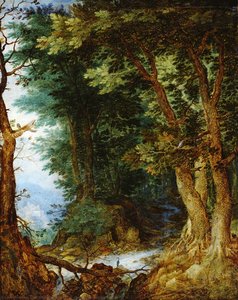
- Paysage avec une cascade (OriginalUniqueArt.com) : Un témoignage de sa capacité à évoquer des émotions à travers les paysages, présentant une scène naturelle sereine mais puissante.
Influences et Développement
Tout en étant indéniablement influencé par l'héritage de son père, Jan Brueghel l'Ancien s’est également inspiré des tendances artistiques contemporaines. L'essor de l'art baroque en Flandre a considérablement impacté son style, conduisant à une plus grande emphase sur le drame, l'émotion et les détails opulents. Il a collaboré étroitement avec Peter Paul Rubens, l’un des artistes les plus influents de l’époque, échangeant des idées et des techniques qui ont affiné davantage sa propre approche. Son développement a également vu en lui un passage au-delà des œuvres purement basées sur le paysage vers des compositions plus complexes intégrant des éléments allégoriques et des composants détaillés de natures mortes.
Héritage et Importance Historique
Jan Brueghel l'Ancien a laissé une marque durable dans le monde de l’art, consolidant sa place en tant que figure importante du mouvement baroque flamand. Son attention méticuleuse aux détails, ses palettes de couleurs vibrantes et ses compositions innovantes continuent d’inspirer les artistes aujourd’hui. Il est particulièrement reconnu pour avoir ouvert la voie à de nouveaux genres tels que les peintures de guirlandes florales et les paysages paradisiaques, élargissant ainsi les possibilités d'expression artistique. Son œuvre reflète l'esprit de la Contre-Réforme, intégrant des motifs religieux aux côtés d’un intérêt croissant pour l’observation scientifique et la représentation précise du monde naturel. Son influence s’est étendue au-delà de sa propre vie, impactant les générations suivantes de peintres flamands et contribuant à la riche tapisserie de l'histoire de l'art européen.

Jan Brueghel l'Ancien
1568 - 1625 , Belgique
En bref
- Artistes Influencés:
- Jan Brueghel le Jeune
- Jan van Kessel
- Artistes Influents: ["Pieter Bruegel l'Ancien"]
- Date De Décès: 1625
- Date De Naissance: 1568
- Lieu De Naissance: Bruxelles, Belgique
- Mouvement Artistique: Baroque flamand
- Nationalité: Flamande
- Nom Complet: Jan Brueghel l'Ancien
- Oeuvres Notables:
- Le Triomphe de Neptune
- Nature morte aux fleurs
- Paysage avec cascade
Articles similaires

Mastering Drama and Light: A Definitive Guide to the Flemish Baroque Art Movement
Explore the dramatic brilliance of the Flemish Baroque movement. Discover how masters like Peter Paul Rubens utilized chiaroscuro and dynamic composition to redefine art history through light, shadow, and unparalleled emotion.

The Majesty of Flemish Baroque: A Definitive Guide to Drama, Color, and Grandeur in 17th-Century Masterpieces
Explore the grandeur of Flemish Baroque art. Uncover the dramatic legacy of Peter Paul Rubens and the mastery of light and color. Discover museum-grade, hand-painted oil reproductions and custom commissions at OriginalUniqueArt.com—where history meets fine craftsmanship.

L'Huile sur Toile : Exploration Historique et Technique d'un Médium Artistique Intemporel
Explorez l'histoire fascinante de la peinture à l'huile, des techniques ancestrales aux maîtres flamands comme Van Eyck. Découvrez les secrets des pigments, liants et glacis pour comprendre cet art intemporel.

The Dramatic Flourish: Exploring the Baroque Movement's Enduring Legacy in Art History
Explore the dramatic world of Baroque art! Discover iconic artists like Caravaggio & Rubens, defining techniques, and its lasting impact on art history. Expert insights for collectors & enthusiasts at OriginalUniqueArt.
Jan Brueghel the Elder: A Master of Flemish Landscape & Allegory – Exploring Innovation & Influence
Explore the captivating world of Jan Brueghel the Elder, a Flemish Baroque master renowned for his stunning landscapes & allegorical paintings. Discover his collaborations with Rubens and lasting artistic legacy.