

 Aperçu en situation
 Envoyer
 Partager
 Détails de l'œuvre
 Guide
Guide

 Télécharger l'image
 Articles similaires
 Radiographie
 Diaporama
 Statistiques
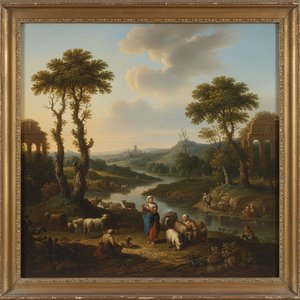
Italian Landscape
 Oil On Canvas
- WallArt
- Italianate Landscape
 31.0 x 40.0 cm
 Fitzwilliam College
 Lire la suite
Giclées et impressions d'art
Impressions giclées ou sur toile de qualité musée, avec une production rapide et des finitions au choix. ( Commander la reproduction peinte à la main Passer au format numérique)




P118B €10

P118H €10

P118W €10

P438Z €10

P508JH €12

P508YH €12

P805H €10

P805Z €10

P919BZ €10

P919G €10

P919XJ €10

P959ZH €10

P968JZ €12

W106C €8

W218G €10

W218JH €8

W218Y €10

W307PJ €10

W316G €10

W316PJ €8

W316Y €10

W398PJ €8

W4111J €10

W500HY €15

W500JH €15

W692G €12

W849H €8

W940BG €15

W953PJ €8




Choisissez parmi nos formats prédéfinis qui respectent les proportions originales de l’œuvre.

Saisissez la largeur et la hauteur souhaitées pour qu'elles s'adaptent à votre cadre ou à votre mur. Une impression peut être recadrée, mais jamais agrandie au-delà de l'image originale ; ainsi, un format de forme différente entraînera la perte d'une partie de l'image. Nous vous envoyons une maquette numérique pour approbation avant toute impression. L'image présentée sur cette page ne montre pas le recadrage réel — seule la maquette le permet.
Livraison dans le monde entier () en 2 semaines au lieu des 4/5 semaines habituelles. (26 octobre)

Livraison express gratuite dans le monde entier

Toile de lin de qualité supérieure

Assurance transport complète

Garantie de remboursement des droits de douane

Garantie de fidélité des couleurs

Politique de retour de 100 jours (uniquement en cas de défaut)

Garantie de remboursement à 100%

Offre de tarifs dégressifs
 L'option verre n'est disponible que pour les dimensions inférieures à 110 cm.

Italian Landscape
Giclées et impressions d'art
Format de la reproduction
-


Prix total
€ 70
A Glimpse of Italian Pastoral: Jan Asselijn’s “Italian Landscape”
Jan Asselijn's "Italian Landscape," painted circa 1625-1652, isn’t merely a depiction of a picturesque vista; it’s an invitation to step into a carefully constructed world of serene beauty and subtle drama. This oil on canvas transports the viewer to a hypothetical Italian landscape – a deliberate choice by Asselijn that speaks volumes about the evolving artistic sensibilities of the Dutch Golden Age. The painting, now housed in collections like Bonhams, exemplifies the influence of both the Venetian masters and the burgeoning tradition of “pure” landscape painting emerging from Italy itself.
Asselijn’s style is distinctly characterized by a meticulous attention to detail and a masterful command of atmospheric perspective. He leans heavily into the techniques pioneered by Bamboccio – a contemporary painter known for his evocative, almost dreamlike landscapes – creating an image that feels both familiar and subtly unsettling. The composition unfolds with deliberate grace: a modest, classically-inspired building anchors the left foreground, its geometric solidity providing a grounding element against the undulating hills and hazy distance. The artist skillfully employs a muted palette of browns, ochres, and blues, avoiding bright colors to emphasize the painting’s contemplative mood. This restrained approach allows the subtle shifts in tone – from the dark shadows cast by distant trees to the luminous highlights reflecting off water – to create a remarkably convincing sense of depth and atmosphere.
The Influence of Venetian Masters and Italianate Tradition
Asselijn's work is deeply rooted in the artistic currents flowing through Italy at the time. He was profoundly influenced by the Venetian landscape painters, particularly those who favored a looser, more atmospheric style than their predecessors. However, unlike many of his contemporaries who simply copied Italian scenes directly, Asselijn imbued them with a distinctly Dutch sensibility – a focus on light, texture, and a carefully considered composition. This blending of influences is evident in the painting’s balanced structure, its subtle use of color, and its overall sense of quiet contemplation.
Furthermore, “Italian Landscape” reflects the broader trend toward what became known as "Italianate landscape" within Dutch art circles. This style sought to emulate the idealized landscapes depicted by artists like Claude Lorrain, who had established a dominant visual language for representing Italian scenery in Northern Europe. Asselijn’s painting isn't a literal transcription of an Italian vista; rather, it’s a carefully constructed fantasy – a “imaginary Italian Landscape” as described in some historical sources – designed to evoke the spirit and beauty of Italy while adhering to Dutch artistic conventions.
Symbolism and Emotional Resonance
Beyond its technical merits, "Italian Landscape" is rich in symbolic meaning. The solitary building, often interpreted as a villa or farmhouse, suggests themes of rural life, tranquility, and perhaps even isolation. The distant mountains, shrouded in mist, evoke a sense of mystery and the sublime – a recognition of nature’s power and grandeur. The figures scattered across the foreground, riding horses and walking along the riverbank, add a touch of human presence to the scene, reminding us of our connection to the natural world.
The painting's overall effect is one of profound serenity and contemplative beauty. It invites the viewer to slow down, to appreciate the subtle details of the landscape, and to lose themselves in its timeless atmosphere. It’s a testament to Asselijn’s skill as an artist – his ability to capture not just the appearance of a scene but also its emotional essence.
A Reproduction for Today's Spaces
Reproductions of “Italian Landscape” offer a beautiful addition to any interior space. The painting’s calming colors and evocative imagery create a sense of tranquility and sophistication, making it ideal for living rooms, bedrooms, or studies. The detailed depiction of the landscape invites contemplation and provides a visual connection to the natural world – a welcome respite from the stresses of modern life. Consider framing this piece in a classic wooden frame to further enhance its timeless appeal.
Questions et réponses
Quelle palette et quelle émotion "Italian Landscape" associe-t-il ?
La palette Dark de «Italian Landscape» de Jan Asselin s'harmonise avec son ton émotionnel Melancholic. La couleur est l'un des moyens par lesquels une œuvre transmet une émotion.
Quel sujet et quelle atmosphère «Italian Landscape» de Jan Asselin associe-t-elle ?
«Italian Landscape» met en scène landscape, figures, ruin, italy, asselijn, pastoral, tranquility, scenic, et l'atmosphère qui s'en dégage est Calm.
«Italian Landscape» de Jan Asselin est-elle une œuvre lumineuse ou sombre ?
Dans l'ensemble, « Italian Landscape » présente une luminosité de shadow. La luminosité perçue décrit si l'œuvre paraît claire ou sombre.
Biographie de l'artiste
A Life Forged in Landscape: The World of Jan Asselijn
Born Jean Asselin around 1610 in Dieppe, France, Jan Asselijn’s life unfolded against the backdrop of a turbulent era – the waning years of religious conflict and the burgeoning dawn of the Dutch Golden Age. His family, Huguenots fleeing persecution, relocated to Amsterdam in 1621, immersing young Jean into a city brimming with artistic ambition and intellectual ferment. This pivotal move immediately exposed him to the transformative influence of landscape painting, which was rapidly departing from traditional conventions toward more expressive depictions of nature imbued with emotion and atmosphere. He began his artistic training under Jan Martszen the Younger, honing his skills in battle scenes – an area favored by artists of the time – before discovering his true passion: capturing the grandeur and drama of both natural vistas and animal life. This fascination would become a cornerstone of his distinctive style, shaping his approach to composition and color for decades to come.The Italianate Embrace & The Bentvueghels
Like many ambitious Northern European painters seeking refinement during this period, Asselijn undertook a pilgrimage to Italy around 1635 – a journey that fundamentally altered his artistic trajectory. He joined the celebrated *Bentvueghels*, a collective of Dutch and Flemish artists residing in Rome who championed an unprecedented ethos: painting directly from observation, rejecting studio practice altogether. This unconventional fellowship fostered a spirit of experimentation and satire, encouraging members to adopt bold nicknames and challenge established artistic norms. Within this vibrant community, Asselijn earned the moniker “Krabbetje” (little crab) due to a congenital deformity affecting his hand – an acknowledgement of physical limitations that paradoxically fueled his creativity. He absorbed the lessons of masters like Pieter van Laer (*Bamboccio*) and Claude Lorraine, whose depictions of Roman peasant life and landscapes profoundly impacted Asselijn’s evolving aesthetic sensibilities. This immersion in Italian artistic culture solidified his mastery of light and color—qualities that would become hallmarks of his oeuvre.Mastering Light & Symbolism: Key Works
Upon returning to Amsterdam around 1640, Asselijn continued to produce paintings characterized by remarkable clarity and technical precision. His landscapes stand apart for their luminous quality – a testament to his profound understanding of atmospheric perspective and tonal modulation. He excelled in portraying dramatic scenes of battle and historical events, demonstrating the influence of Rembrandt’s masterful use of chiaroscuro. However, it was Asselijn's depictions of animal life that cemented his reputation as one of the era’s foremost naturalists. The Threatened Swan, completed around 1647, remains his most iconic work—a painting that transcends mere visual representation to become a potent symbol of Dutch resilience during the siege of Leiden against Spanish forces. The swan's defiant posture and protective embrace of its eggs resonated deeply with contemporary anxieties about national defense and served as inspiration for later artistic interpretations. Other notable achievements include Cavalry Charge at Sunset, showcasing his early training in battle scenes with dynamic energy, and evocative portrayals of rural life—such as *Drovers with Cattle under an Arch of the Colosseum in Rome*, which skillfully blend Italianate landscapes with meticulous animal studies. Finally, The Breach of Saint Anthony’s Dike near Amsterdam exemplifies Asselijn's ability to capture a moment of national crisis – reflecting the ever-present vulnerability posed by water and demonstrating the ingenuity required for Dutch land reclamation efforts.Influence & Legacy: A Lasting Impression
Jan Asselijn’s artistic legacy extends far beyond his own prolific output. He was admired by contemporaries like Rembrandt, who even created etchings depicting Asselijn at work—a gesture that subtly acknowledged the artist's physical disability. Furthermore, he served as a mentor to Frederik de Moucheron, another influential Dutch landscape painter who championed the Italianate style and disseminated its principles throughout Europe. Asselijn’s innovative approach to light and atmosphere profoundly impacted subsequent generations of artists—ushering in an era of greater naturalism and emotional depth within landscape painting. His works are now housed in prestigious institutions worldwide – including the Rijksmuseum in Amsterdam – ensuring that his artistic vision continues to inspire awe and admiration centuries after his death in 1652. He remains a testament to the transformative power of observation, dedication, and artistic ambition—a cornerstone figure within the annals of Dutch art history.
Jan Asselin
1610 - 1652 , France
L'essentiel de l'artiste
- Artistic Movement Or Style: Italianate landscape
- Artists Who Influenced This Artist:
- Esaias van de Velde
- Bamboccio
- Rembrandt
- Date Of Birth: c. 1610
- Date Of Death: October 1, 1652
- Full Name: Jean Asselin
- Nationality: Dutch
- Notable Artworks:
- The Threatened Swan
- Hangout in Italy
- Cavalry Charge at Sunset
- Place Of Birth: Dieppe, France
Articles connexes

Mastering Light & Land: An Art Historian's Guide to the Dutch Golden Age Landscape
Explore the breathtaking mastery of Dutch Golden Age landscapes. From Italianate light to atmospheric realism, discover the techniques of 17th-century masters and learn how to bring these timeless, museum-quality masterpieces into your home through expert oil reproductions.

L'Âge d'Or Néerlandais : 10 Chefs-d'œuvre Incontournables pour Décorer avec Art et Histoire
Plongez au cœur de l'Âge d'Or néerlandais ! Découvrez 10 chefs-d'œuvre intemporels de Rembrandt, Vermeer et autres maîtres hollandais. Explorez leur histoire, technique & trouvez l'inspiration déco sur

Golden Light & Dutch Skies: The Timeless Magic of Dutch Golden Age Landscapes
Discover the breathtaking beauty of Dutch Golden Age landscapes. Explore the mastery of light, chiaroscuro, and 17th-century realism through an expert art history lens, celebrating the enduring legacy of the Dutch Masters for discerning collectors and art lovers.

Golden Light & Dutch Skies: Bringing the Magic of Dutch Golden Age Landscapes into Your Home
Transform your home with the breathtaking light of Dutch Golden Age landscapes. Discover how hand-painted oil reproductions of masterworks like Ruisdael and Vermeer bring timeless elegance, atmosphere, and soulful texture to modern interiors. Elevate your space with museum-quality art.
Nicolaes Berchem: Dutch Golden Age Pastoralism & the Evolution of Landscape Painting
Explore the captivating world of Nicolaes Berchem, a leading Dutch Golden Age painter. Discover his idyllic landscapes, masterful technique & lasting influence on art history. Learn more at OriginalUniqueArt.


