

 Aperçu en situation
 Envoyer
 Partager
 Détails de l'œuvre
 Guide
Guide

 Télécharger l'image
 Articles similaires
 Radiographie
 Diaporama
 Statistiques
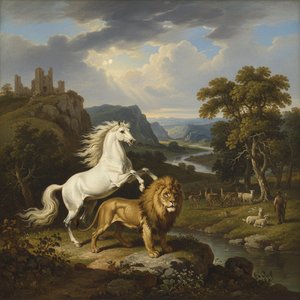
Gloucestershire Old Spot
 Oil On Panel
- Romantic Landscape
 1805
1805 30.0 x 38.0 cm
 Yale Center for British Art
 Lire la suite
Giclées et impressions d'art
Impressions giclées ou sur toile de qualité musée, avec une production rapide et des finitions au choix. ( Commander la reproduction peinte à la main Passer au format numérique)




P118B €10

P118H €10

P118W €10

P438Z €10

P508JH €12

P508YH €12

P805H €10

P805Z €10

P919BZ €10

P919G €10

P919XJ €10

P959ZH €10

P968JZ €12

W106C €8

W218G €10

W218JH €8

W218Y €10

W307PJ €10

W316G €10

W316PJ €8

W316Y €10

W398PJ €8

W4111J €10

W500HY €15

W500JH €15

W692G €12

W849H €8

W940BG €15

W953PJ €8




Choisissez parmi nos formats prédéfinis qui respectent les proportions originales de l’œuvre.

Saisissez la largeur et la hauteur souhaitées pour qu'elles s'adaptent à votre cadre ou à votre mur. Une impression peut être recadrée, mais jamais agrandie au-delà de l'image originale ; ainsi, un format de forme différente entraînera la perte d'une partie de l'image. Nous vous envoyons une maquette numérique pour approbation avant toute impression. L'image présentée sur cette page ne montre pas le recadrage réel — seule la maquette le permet.
Livraison dans le monde entier () en 2 semaines au lieu des 4/5 semaines habituelles. (25 octobre)

Livraison express gratuite dans le monde entier

Toile de lin de qualité supérieure

Assurance transport complète

Garantie de remboursement des droits de douane

Garantie de fidélité des couleurs

Politique de retour de 100 jours (uniquement en cas de défaut)

Garantie de remboursement à 100%

Offre de tarifs dégressifs
 L'option verre n'est disponible que pour les dimensions inférieures à 110 cm.

Gloucestershire Old Spot
Giclées et impressions d'art
Format de la reproduction
-


Prix total
€ 70
James Ward’s Gloucestershire Old Spot: A Romantic Vision of Rural England
James Ward (1769-1859) stands as a pivotal figure in British Romantic landscape painting, often overshadowed by his more celebrated contemporaries yet undeniably influential in shaping the aesthetic sensibilities of his era. This monumental oil on panel depiction – “Gloucestershire Old Spot” – exemplifies Ward’s distinctive approach: capturing not merely visual beauty but also an idealized representation of pastoral life and imbued with subtle symbolic resonance. Let's delve into what makes this artwork so remarkable.A Masterstroke of Genre Painting
Initially, Ward’s artistic trajectory mirrored that of his brother-in-law George Morland, focusing on genre scenes depicting everyday rural life – farmers tending their livestock, bustling market squares, and convivial gatherings around hearth fires. However, by the early 1800s, Ward decisively shifted towards a grander scale, embracing monumental landscapes inspired by Rubens’ masterful compositions. This stylistic evolution is powerfully evident in “Gloucestershire Old Spot,” where Ward abandons Morland's intimate perspective for a panoramic vista that commands attention and invites contemplation. The painting skillfully blends observation with imagination, presenting a scene brimming with activity yet underpinned by an overarching sense of serenity.Technique and Composition: Rubensian Influence
Ward’s technique owes considerable debt to Rubens—a conscious decision reflecting his admiration for the Flemish master's ability to convey emotion through dramatic lighting and masterful brushwork. Notice the thick impasto – heavily textured paint application – particularly prominent in the pig’s coat, creating a palpable physicality that transcends mere representation. This textural richness contributes significantly to the painting’s atmospheric depth, simulating the hazy light of a Gloucestershire afternoon. The composition is carefully balanced, guiding the viewer's eye across the canvas from left to right, punctuated by figures and dogs strategically positioned within the landscape. The placement of the central pig amidst the expansive field underscores its importance as both subject matter and symbolic emblem—representing fertility, prosperity, and the harmonious relationship between humanity and nature.Symbolism Within Pastoral Beauty
Beyond its technical prowess, “Gloucestershire Old Spot” resonates with deeper symbolic meanings characteristic of Romantic art. The idyllic setting – a sunlit Gloucestershire meadow populated by livestock and people – embodies the Romantic ideal of unspoiled wilderness untouched by industrial progress. The pig itself is not merely an animal; it symbolizes abundance and fecundity—a visual shorthand for the promise of future generations. Furthermore, the presence of dogs adds to the narrative complexity, representing loyalty, guardianship, and companionship. They serve as silent witnesses to the unfolding drama of rural life, reinforcing Ward’s overarching message about the beauty and sanctity of the natural world.A Legacy Enduring Through Reproduction
Today, “Gloucestershire Old Spot” resides in the Yale Center for British Art's collection, a testament to Ward’s enduring artistic legacy. Reproductions offer an opportunity to experience this masterpiece firsthand—to appreciate its textural brilliance and immerse oneself in the evocative atmosphere of Victorian England. OriginalUniqueArt.com presents exceptional quality reproductions that faithfully capture the essence of Ward’s vision, allowing art lovers everywhere to bring a piece of Romantic landscape painting into their homes.Questions et réponses
Quelle taille est recommandée pour "Gloucestershire Old Spot" dans un(e) Living Room ?
Pour une Living Room, nous suggérons un format d'impression de Large pour « Gloucestershire Old Spot ».
«Gloucestershire Old Spot» de James Ward utilise-t-il des contrastes marqués ou des harmonies douces ?
La composition chromatique de «Gloucestershire Old Spot» de James Ward allie un contraste Balanced à une harmonie Strong Color Unity.
Où puis-je acheter une reproduction peinte à la main de «Gloucestershire Old Spot» de James Ward ?
«Gloucestershire Old Spot» est disponible en tant que une reproduction à l'huile peinte à la main sur toile de lin. Vous pouvez passer commande sur sa page Reproduction peinte à la main, avec un choix de formats disponibles.
Biographie de l'artiste
James Ward : Une Vie dans l'Art Britannique
James Ward (1769-1859) était un peintre britannique de premier plan, renommé pour ses captivantes peintures animalières, ses paysages romantiques et ses portraits perspicaces. Bien qu’il ait souvent été éclipsé par ses contemporains, son style unique et son talent ont considérablement influencé le développement de l'art britannique au XIXe siècle.
Jeunesse et Formation
Né le 23 octobre 1769 à Londres, au Royaume-Uni, James Ward était le frère cadet du graveur William Ward. Ses premières inclinations artistiques ont été encouragées dans un environnement familial créatif. Bien qu’il ait reçu une certaine formation formelle, son développement a été largement autodirigé et fortement influencé par l'observation et la pratique.
Développement Artistique & Influences
La carrière de Ward est conventionnellement divisée en deux périodes distinctes concernant les influences. Initialement, jusqu’environ 1803, son œuvre ressemblait fortement à celle de son beau-frère, George Morland, caractérisée par des scènes de genre et un intérêt pour la vie quotidienne. Par la suite, il a été profondément inspiré par le maître baroque Pierre Paul Rubens, adoptant une composition plus dynamique, une palette de couleurs riches et une utilisation dramatique de la lumière et de l'ombre.
Œuvres Notables & Style Artistique
Le style singulier de Ward le distinguait de nombreux contemporains. Il excellait dans divers genres, notamment la peinture historique, le portrait, le paysage et l’art animalier. Parmi ses œuvres les plus célébrées figurent :
- Gordale Scar (1814/15) : Considérée comme son chef-d'œuvre, cette représentation dramatique d'un goulet de Yorkshire illustre les qualités sublimes du romantisme anglais.
- Le Voleur de Cerfs (1823) : Commandée par Theophilus Levett, cette peinture met en valeur la compétence de Ward dans la narration et la représentation animale.
- John Levett Chassant à Wychnor, Staffordshire (1817) : Un portrait d'un de ses mécènes, démontrant sa capacité à capturer à la fois le ressemblance et l’atmosphère.
Ses peintures se caractérisent par une attention méticuleuse aux détails, en particulier dans le rendu des animaux, combinée à une sensibilité romantique qui met l'accent sur la beauté et la puissance de la nature.
Commandes & Expositions
Ward a bénéficié du mécénat de figures importantes comme Theophilus Levett, ce qui lui a valu de nombreuses commandes. Il exposait régulièrement son travail à la Royal Academy, obtenant une reconnaissance pour son talent et son originalité. Son admission en tant que membre en 1811 a confirmé sa position au sein de l'establishment artistique britannique.
Vie Tardive & Héritage
Ward a continué à peindre avec productivité jusqu’à un accident vasculaire cérébral en 1855 qui a entravé sa carrière. Il est décédé le 17 novembre 1859 dans une relative pauvreté malgré son succès antérieur.
Malgré les difficultés financières qu'il a rencontrées plus tard dans sa vie, l’influence de James Ward sur l'art britannique reste indéniable. Son mélange unique de réalisme et de romantisme a ouvert la voie aux générations futures de peintres animaliers et d'artistes paysagistes. Ses œuvres sont aujourd'hui conservées dans des collections prestigieuses telles que Tate Britain et le Yale Center for British Art.
Importance Historique
James Ward occupe une position importante dans la transition du néoclassicisme au romantisme dans l’art britannique. Il a comblé le fossé entre la peinture de genre traditionnelle et l'intérêt croissant pour le paysage et le naturalisme, laissant derrière lui un héritage d'œuvres captivantes qui continuent d'inspirer et de ravir.

James Ward
1769 - 1859 , Royaume-Uni
L'essentiel de l'artiste
- Artistic Movement Or Style: Romantisme
- Artists Or Movements Influenced By This Artist: ['James M. Ward']
- Artists Who Influenced This Artist:
- George Morland
- Pierre Paul Rubens
- Date Of Birth: October 23, 1769
- Date Of Death: November 17, 1859
- Full Name: James Ward
- Nationality: Britannique
- Notable Artworks:
- Gordale Scar
- Le Voleur de Cerfs
- Place Of Birth: Londres, Royaume-Uni
Articles connexes

James Abbott McNeill Whistler : Les 25 Œuvres Maîtresses d'un Précurseur de l'Art Moderne
Plongez dans l'univers de James Abbott McNeill Whistler : découvrez ses 25 œuvres les plus emblématiques, des nocturnes aux portraits saisissants. Explorez son esthétisme unique et trouvez l'inspiration déco avec OriginalUniqueArt.com.

Munnings : Les 25 Œuvres Maîtresses du Cavalier Anglais | OriginalUniqueArt
Plongez dans l'univers vibrant d'Alfred Munnings ! Découvrez les 25 œuvres maîtresses du peintre anglais, icônes de l'art équestre et de l'impressionnisme britannique. Tableaux de chevaux, paysages idylliques… Trouvez votre inspiration déco sur OriginalUniqueArt.com.
James Ward: A Study in British Romantic Landscape and Animal Painting
Explore the captivating world of James Ward (1769-1859), a master of British Romantic landscape & animal painting. Discover his iconic 'Gordale Scar' and exquisite portraits – a timeless art investment. Learn about his influences, style, and enduring legacy.

Les 10 Chefs-d'œuvre du Paysage Romantique : Artistes et Décor d'Intérieur
Plongez dans l'émotion du Romantisme avec les 10 plus beaux paysages de Friedrich, Turner & Delacroix. Découvrez leur histoire et trouvez l'inspiration déco idéale sur OriginalUniqueArt.com !
Animalia : L'empreinte durable des animaux dans l'art et le design d'intérieur
Explorez l'histoire fascinante de la représentation animale dans l'art et le design d'intérieur. Découvrez le symbolisme, les tendances et comment intégrer l'image animale chez vous avec .


