

 Aperçu en situation
 Envoyer
 Partager
 Détails de l'œuvre
 Guide
Guide

 Télécharger l'image
 Articles similaires
 Radiographie
 Diaporama
 Q&A
Q&A Statistiques
Eagle, a Celebrated Stallion
 Oil On Canvas
- WallArt
- Romantic Landscape
 1809
1809- 19th Century
 91.0 x 122.0 cm
 Yale Center for British Art
 Lire la suite
Reproduction à l'huile faite à la main
Huile sur toile peinte à la main, avec cadre et dimensions personnalisés, réalisée sur commande par nos artistes. ( Passer au format impression Passer au format numérique)




P118B €10

P118H €10

P118W €10

P438Z €10

P508JH €12

P508YH €12

P805H €10

P805Z €10

P919BZ €10

P919G €10

P919XJ €10

P959ZH €10

P968JZ €12

W106C €8

W218G €10

W218JH €8

W218Y €10

W307PJ €10

W316G €10

W316PJ €8

W316Y €10

W398PJ €8

W4111J €10

W500HY €15

W500JH €15

W692G €12

W849H €8

W940BG €15

W953PJ €8




Choisissez parmi nos formats prédéfinis qui respectent les proportions originales de l’œuvre.

Saisissez la largeur et la hauteur souhaitées, pour s'adapter à votre cadre ou à votre mur. Cette œuvre est peinte à la main ; ainsi, pour un format de forme différente, l'artiste peut peindre un peu plus autour du tableau ou réduire légèrement les bords — c'est vous qui choisissez. Nous vous envoyons une maquette numérique pour approbation avant que la peinture ne commence. L'image présentée sur cette page ne reflète pas le résultat réel — seule la maquette le fait.
Après la commande, l’équipe OriginalUniqueArt.com contactera le client par e-mail pour recueillir ses instructions et lui fournira une maquette d’aperçu
Livraison dans le monde entier () en 3 à 4 semaines au lieu des 5 semaines habituelles. (29 octobre). Aucun compromis sur la qualité.

Livraison express gratuite dans le monde entier

Toile de lin de qualité supérieure

Assurance transport complète

Garantie de remboursement des droits de douane

Garantie de fidélité des couleurs

Politique de retour de 100 jours (uniquement en cas de défaut)

Garantie de remboursement à 100%

Offre de tarifs dégressifs
 L'option verre n'est disponible que pour les dimensions inférieures à 110 cm.

Eagle, a Celebrated Stallion
Technique de reproduction
Format de la reproduction
-


Prix total
€ 264
The Spirit of Equestrian Majesty
In the realm of British Romanticism, few images capture the raw, untamed essence of nature as profoundly as James Ward’s “Eagle, a Celebrated Stallion.” This masterpiece is not merely a portrait of an animal; it is a visceral encounter with power and grace. The painting presents a magnificent brown and white stallion standing prominently in a verdant field, its head lifted toward the heavens in a moment of sublime alertness. As the eye wanders through the composition, one discovers other horses resting in the distance, adding a sense of depth and pastoral life to the scene. The atmosphere is thick with emotion, driven by a dramatic, cloudy sky that casts shifting lights and shadows across the landscape, enveloping the subject in a cinematic, almost spiritual glow.
Ward’s technique serves as a bridge between meticulous realism and an almost prophetic atmospheric sensitivity. He employs a masterful blend of tonal painting and detailed rendering, particularly evident in the way he captures the muscular tension and texture of the horse's coat. There is a palpable energy in his brushwork that anticipates the fluidity of later movements, allowing the viewer to feel the very breath of the animal. The interplay of light through the heavy clouds creates a sense of movement within the stillness, making the field feel alive with the quiet drama of the natural world.
Symbolism and the Romantic Vision
Beyond its physical beauty, “Eagle, a Celebrated Stallion” functions as a profound meditation on virtue and strength. Within the context of the era, the name "Eagle" and the horse's noble posture evoke themes of vigilance, nobility, and dominion. The stallion becomes an emblem of much more than biological reality; it represents a soaring spirit that mirrors the Romantic fascination with the sublime. The landscape itself—a tranquil yet powerful setting—symbolizes the harmonious, albeit wild, connection between all living things. For the discerning collector or interior designer, this work offers a commanding presence that transcends mere decoration.
To possess a reproduction of this work is to invite a sense of historical grandeur and emotional depth into a space. It provides an anchor of classical elegance, suitable for those seeking to evoke the sophisticated atmosphere of a traditional gallery or a refined contemporary study. The painting’s ability to communicate both the quietude of a pastoral afternoon and the thundering potential of a powerful beast ensures that it remains a timeless centerpiece, inspiring contemplation and awe in any setting.
Questions et réponses
Quelles sont les dimensions de l'œuvre originale « Eagle, a Celebrated Stallion » ?
«Eagle, a Celebrated Stallion» mesure 91 x 122 cm dans sa forme originale. Les dimensions originales constituent une référence utile lors du choix de la taille d'une reproduction.
Quelle technique a été utilisée pour «Eagle, a Celebrated Stallion» de James Ward ?
James Ward a utilisé la technique du Oil On Canvas pour « Eagle, a Celebrated Stallion ». Cette technique définit la nature matérielle de l'œuvre originale.
À quel mouvement artistique appartient « Eagle, a Celebrated Stallion » ?
«Eagle, a Celebrated Stallion» de James Ward appartient au mouvement Romantic Landscape. Ce mouvement apporte le contexte stylistique de l'œuvre.
Biographie de l'artiste
James Ward : Une Vie dans l'Art Britannique
James Ward (1769-1859) était un peintre britannique de premier plan, renommé pour ses captivantes peintures animalières, ses paysages romantiques et ses portraits perspicaces. Bien qu’il ait souvent été éclipsé par ses contemporains, son style unique et son talent ont considérablement influencé le développement de l'art britannique au XIXe siècle.
Jeunesse et Formation
Né le 23 octobre 1769 à Londres, au Royaume-Uni, James Ward était le frère cadet du graveur William Ward. Ses premières inclinations artistiques ont été encouragées dans un environnement familial créatif. Bien qu’il ait reçu une certaine formation formelle, son développement a été largement autodirigé et fortement influencé par l'observation et la pratique.
Développement Artistique & Influences
La carrière de Ward est conventionnellement divisée en deux périodes distinctes concernant les influences. Initialement, jusqu’environ 1803, son œuvre ressemblait fortement à celle de son beau-frère, George Morland, caractérisée par des scènes de genre et un intérêt pour la vie quotidienne. Par la suite, il a été profondément inspiré par le maître baroque Pierre Paul Rubens, adoptant une composition plus dynamique, une palette de couleurs riches et une utilisation dramatique de la lumière et de l'ombre.
Œuvres Notables & Style Artistique
Le style singulier de Ward le distinguait de nombreux contemporains. Il excellait dans divers genres, notamment la peinture historique, le portrait, le paysage et l’art animalier. Parmi ses œuvres les plus célébrées figurent :
- Gordale Scar (1814/15) : Considérée comme son chef-d'œuvre, cette représentation dramatique d'un goulet de Yorkshire illustre les qualités sublimes du romantisme anglais.
- Le Voleur de Cerfs (1823) : Commandée par Theophilus Levett, cette peinture met en valeur la compétence de Ward dans la narration et la représentation animale.
- John Levett Chassant à Wychnor, Staffordshire (1817) : Un portrait d'un de ses mécènes, démontrant sa capacité à capturer à la fois le ressemblance et l’atmosphère.
Ses peintures se caractérisent par une attention méticuleuse aux détails, en particulier dans le rendu des animaux, combinée à une sensibilité romantique qui met l'accent sur la beauté et la puissance de la nature.
Commandes & Expositions
Ward a bénéficié du mécénat de figures importantes comme Theophilus Levett, ce qui lui a valu de nombreuses commandes. Il exposait régulièrement son travail à la Royal Academy, obtenant une reconnaissance pour son talent et son originalité. Son admission en tant que membre en 1811 a confirmé sa position au sein de l'establishment artistique britannique.
Vie Tardive & Héritage
Ward a continué à peindre avec productivité jusqu’à un accident vasculaire cérébral en 1855 qui a entravé sa carrière. Il est décédé le 17 novembre 1859 dans une relative pauvreté malgré son succès antérieur.
Malgré les difficultés financières qu'il a rencontrées plus tard dans sa vie, l’influence de James Ward sur l'art britannique reste indéniable. Son mélange unique de réalisme et de romantisme a ouvert la voie aux générations futures de peintres animaliers et d'artistes paysagistes. Ses œuvres sont aujourd'hui conservées dans des collections prestigieuses telles que Tate Britain et le Yale Center for British Art.
Importance Historique
James Ward occupe une position importante dans la transition du néoclassicisme au romantisme dans l’art britannique. Il a comblé le fossé entre la peinture de genre traditionnelle et l'intérêt croissant pour le paysage et le naturalisme, laissant derrière lui un héritage d'œuvres captivantes qui continuent d'inspirer et de ravir.

James Ward
1769 - 1859 , Royaume-Uni
L'essentiel de l'artiste
- Artistic Movement Or Style: Romantisme
- Artists Or Movements Influenced By This Artist: ['James M. Ward']
- Artists Who Influenced This Artist:
- George Morland
- Pierre Paul Rubens
- Date Of Birth: October 23, 1769
- Date Of Death: November 17, 1859
- Full Name: James Ward
- Nationality: Britannique
- Notable Artworks:
- Gordale Scar
- Le Voleur de Cerfs
- Place Of Birth: Londres, Royaume-Uni
Articles connexes

Constable : Les 25 Chefs-d'Œuvre du Maître Anglais | OriginalUniqueArt
Plongez dans l'univers de John Constable avec les 25 œuvres incontournables du maître anglais. Découvrez l'histoire, la technique et l'émotion derrière ses paysages romantiques. Reproductions de qualité muséale sur OriginalUniqueArt.com.

Les 10 Chefs-d'œuvre du Paysage Romantique : Artistes et Décor d'Intérieur
Plongez dans l'émotion du Romantisme avec les 10 plus beaux paysages de Friedrich, Turner & Delacroix. Découvrez leur histoire et trouvez l'inspiration déco idéale sur OriginalUniqueArt.com !
Animalia : L'empreinte durable des animaux dans l'art et le design d'intérieur
Explorez l'histoire fascinante de la représentation animale dans l'art et le design d'intérieur. Découvrez le symbolisme, les tendances et comment intégrer l'image animale chez vous avec .

Munnings : Les 25 Œuvres Maîtresses du Cavalier Anglais | OriginalUniqueArt
Plongez dans l'univers vibrant d'Alfred Munnings ! Découvrez les 25 œuvres maîtresses du peintre anglais, icônes de l'art équestre et de l'impressionnisme britannique. Tableaux de chevaux, paysages idylliques… Trouvez votre inspiration déco sur OriginalUniqueArt.com.
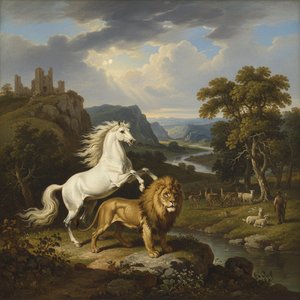
James Ward: A Study in British Romantic Landscape and Animal Painting
Explore the captivating world of James Ward (1769-1859), a master of British Romantic landscape & animal painting. Discover his iconic 'Gordale Scar' and exquisite portraits – a timeless art investment. Learn about his influences, style, and enduring legacy.


