
 Aperçu en situation
 Envoyer
 Partager
 Détails de l'œuvre
 Guide
Guide

 Télécharger l'image
 Articles similaires
 Radiographie
 Diaporama
 Questions et réponses
 Statistiques
Caryatids


 Lire la suite
Giclées et impressions d'art
Impressions giclées ou sur toile de qualité musée, avec une production rapide et des finitions au choix. ( Commander la reproduction peinte à la main Passer au format numérique)




P118B €10

P118H €10

P118W €10

P438Z €10

P508JH €12

P508YH €12

P805H €10

P805Z €10

P919BZ €10

P919G €10

P919XJ €10

P959ZH €10

P968JZ €12

W106C €8

W218G €10

W218JH €8

W218Y €10

W307PJ €10

W316G €10

W316PJ €8

W316Y €10

W398PJ €8

W4111J €10

W500HY €15

W500JH €15

W692G €12

W849H €8

W940BG €15

W953PJ €8




Choisissez parmi nos formats prédéfinis qui respectent les proportions originales de l’œuvre.

Saisissez la largeur et la hauteur souhaitées pour qu'elles s'adaptent à votre cadre ou à votre mur. Une impression peut être recadrée, mais jamais agrandie au-delà de l'image originale ; ainsi, un format de forme différente entraînera la perte d'une partie de l'image. Nous vous envoyons une maquette numérique pour approbation avant toute impression. L'image présentée sur cette page ne montre pas le recadrage réel — seule la maquette le permet.
Livraison dans le monde entier () en 2 semaines au lieu des 4/5 semaines habituelles. (10 novembre)

Livraison express gratuite dans le monde entier

Toile de lin de qualité supérieure

Assurance transport complète

Garantie de remboursement des droits de douane

Garantie de fidélité des couleurs

Politique de retour de 100 jours (uniquement en cas de défaut)

Garantie de remboursement à 100%

Offre de tarifs dégressifs
 L'option verre n'est disponible que pour les dimensions inférieures à 110 cm.

Caryatids
Giclées et impressions d'art
Format de la reproduction
-


Prix total
€ 73
The Enduring Grace of Stone: Exploring Jacques Sarazin’s Caryatids
Jacques Sarazin's "Caryatids," a striking black and white photograph capturing the sculpted figures from 1641, offers a profound glimpse into the heart of French Baroque art. More than mere architectural supports, these twin female forms embody a complex interplay of classical ideals, dynamic movement, and subtle emotional resonance. The image itself – meticulously detailed and bathed in carefully considered light – invites us to contemplate not just the sculpture’s physical form but also the artistic vision that brought it to life.
The composition immediately establishes a sense of monumental beauty. Sarazin's design draws heavily on the ancient Greek tradition, specifically referencing the Caryatids of the Erechtheion on the Acropolis in Athens. The figures stand with an almost unnerving stillness, yet their drapery – cascading folds and swirling lines – suggests a hidden vitality. This tension between static form and implied movement is characteristic of Baroque sculpture, where the artist sought to capture not just the appearance but also the *feeling* of the subject.
A Roman-Influenced Master: Jacques Sarazin’s Artistic Journey
Born in Noyon in 1592, Jacques Sarazin was a pivotal figure in the evolution of French sculpture. His early training under Nicolas Guillain instilled a deep respect for classical principles, but his sojourn in Rome proved transformative. Returning to France with an understanding of the Baroque’s dramatic flair, he skillfully adapted these influences to the more restrained tastes of the French court, laying the groundwork for Louis XIV's opulent aesthetic. Sarazin wasn’t simply a craftsman; he was a bridge between classical restraint and burgeoning dynamism – a key figure in shaping the style that would define an era.
His time in Rome profoundly impacted his work. He studied the surviving fragments of ancient sculpture, particularly those from the Erechtheion, and incorporated these observations into his designs. This dedication to accuracy is evident in the Caryatids’ proportions and drapery, which are remarkably faithful to classical models. However, Sarazin wasn't a slavish imitator; he infused his work with a distinctly French sensibility, creating figures that possess both elegance and power.
Technique and Detail: The Art of Stone Carving
The photograph reveals the extraordinary skill of Sarazin’s workshop. The stone itself is rendered with remarkable texture – every ripple in the fabric, every subtle curve of a muscle, is painstakingly captured. This level of detail speaks to the meticulous craftsmanship involved in creating these monumental figures. The technique employed was traditional stone carving, utilizing tools and methods honed over centuries. Note the careful attention paid to the interplay of light and shadow; this dramatic effect not only defines the forms but also creates a sense of volume and depth, drawing the viewer into the sculpture’s world.
The figures' faces, though idealized, possess a quiet dignity. Subtle variations in expression – a slight tilt of the head, a subtle curve of the lips – hint at an inner life, suggesting that these are not merely decorative supports but rather embodiments of grace and strength. The symmetrical composition reinforces this sense of balance and harmony, reflecting the classical ideals that informed Sarazin’s work.
Symbolism and Context: A Monument to Architectural Grandeur
The Caryatids themselves represent a fascinating intersection of architectural function and artistic expression. Originally intended as pilasters supporting the Pavillon de l'Horloge at the Louvre Palace, they served both a practical purpose – providing structural support – and an aesthetic one – enhancing the building’s grandeur. Sarazin’s design was inspired by six figures from the Caryatid Porch of the Erechtheion, a testament to the enduring influence of ancient Greek art. The choice of this motif speaks to Sarazin's commitment to classical ideals and his desire to create works that were both beautiful and meaningful.
The story of the Caryatids is also one of collaboration – a reflection of the royal patronage system prevalent during Louis XIII’s reign. Sarazin oversaw the project, but much of the actual carving was carried out by his skilled assistants, Gilles Guérin, Philippe de Buyster, and Thibaut Poissant. This highlights the importance of apprenticeships and the transmission of artistic knowledge within Sarazin's workshop – a crucial element in shaping the future of French sculpture.
Today, reproductions of Jacques Sarazin’s Caryatids offer a captivating window into a pivotal moment in art history. They are more than just images; they are invitations to contemplate the enduring power of beauty, grace, and human artistry.
Questions et réponses
Dans quel mouvement et à quelle époque s'inscrit «Caryatids» de Jacques Sarazin ?
« Caryatids » appartient au mouvement Baroque Classicism, et son créateur a œuvré à l'époque L'époque moderne.
Quelle couleur domine dans « Caryatids » ?
Putty (#c4c4c4) est la couleur dominante de «Caryatids» de Jacques Sarazin.
«Caryatids» de Jacques Sarazin est-elle une œuvre lumineuse ou sombre ?
Dans l'ensemble, « Caryatids » présente une luminosité de bright. La luminosité perçue décrit si l'œuvre paraît claire ou sombre.
Biographie de l'artiste
Un sculpteur de rois et un pont vers le Baroque
Jacques Sarazin, né à Noyon en France en 1592, occupe une position fascinante dans l'évolution de la sculpture française. Il n'était pas un simple artisan exécutant des commandes ; il fut une figure pivot qui absorba le style baroque naissant lors de son séjour romain pour l'adapter avec brio aux goûts plus retenus de la cour de France, jetant ainsi les bases de la grandeur esthétique de Louis XIV. Son voyage commença aux côtés de son frère, tous deux apprentis au sein de l'atelier de Nicolas Guillain à Paris — une fondation imprégnée de principes classiques qui resterait centrale à l'identité artistique de Sarazin tout au long de sa carrière. Cette formation initiale instilla un respect profond pour la forme et la proportion, des qualités qui distingueraient son œuvre même lorsqu'il embrasserait des éléments baroques plus dynamiques.Rêverie romaine et forge artistique
L'année 1610 marqua un tournant décislant avec l'arrivée de Sarazin à Rome. Il ne s'agissait pas d'un simple déplacement géographique, mais d'une immersion au cœur même de l'innovation artistique. Travaillant sous la direction d'un artiste français nommé Anguille, il gagna rapidement en reconnaissance, obtenant un emploi auprès du Cardinal Aldobrandini à la Villa Aldobrandini à Frascati. C'est là que le talent de Sarazin commença véritablement à s'épanouir. Une amitié particulièrement significative se noua avec Domenichino, menant à des projets collaboratifs tels que le maître-autel de Sant'Andrea della Valle — un témoignage de la compétence croissante de Sarazin et de sa capacité à s'intégrer harmonieusement dans les cercles artistiques établis. Sa polyvalence s'étendait au-delà des collaborations de grande envergure ; il fit preuve de sa maîtrise des bas-reliefs en stuc pour San Lorenzo in Miranda, démontrant une adaptabilité remarquable qui s'avérerait inestimable à son retour en France. L'expérience romaine ne consistait pas seulement à acquérir une technique ; il s'agissait d'absorber une atmosphère, de comprendre la puissance de la composition dramatique et de l'expression émotionnelle — des éléments qui infuseraient subtilement ses œuvres ultérieures.Triomphe parisien et patronage royal
Le retour de Sarazin à Paris en 1628 coïncida avec un mariage de fortune — une union avec une nièce du célèbre peintre Simon Vouet. Cette connexion s'avéra déterminante, favorisant un partenariat artistique étroit qui permit de réaliser de nombreuses commandes prestigieuses pour des hôtels particuliers et des châteaux dans toute la région d'Île-de-France, notamment à Maisons-Laffitte. Pour répondre aux exigences de ces projets ambitieux, Sarazin établit un vaste atelier, formant une équipe d'assistants talentueux comprenant Gilles Guérin, Philippe de Buyster et Gérard van Opstal — créant ainsi, de fait, une école de sculpture qui diffuserait son style pendant des générations. Son succès ne passa pas inaperçu auprès de la cour royale. François Sublet de Noyers, ministre de Louis XIII et mécène éclairé des arts, reconnut le talent exceptionnel de Sarazin, menant à ce qui est sans doute sa réalisation la plus célèbre : la décoration du grand portail et de la coupole de la façade ouest de la cour intérieure du Louvre.Les Caryatides du Louvre et un héritage durable
Les caryatides qui ornent l'étage d'attique du Louvre ne sont pas de simples éléments décoratifs ; elles représentent un dialogue profond avec l'antiquité classique, et plus précisément avec le style de Michel-Ange. Sarazin ne se contentait pas de copier ; il interprétait, insufflant aux formes antiques une sensibilité distinctement française. Cette commande consolida sa réputation de sculpteur emblématique de l'époque et démontra sa capacité à traduire de grandes visions artistiques en une réalité tangible. Au-delà du Louvre, Sarazin continua de recevoir des commandes de la Reine et se fit le fervent défenseur de la création de l'Académie Royale de Peinture et de Sculpture — reconnaissant l'importance d'institutionnaliser la formation artistique et d'élever le statut des artistes au sein de la société française. Son ultime projet majeur, le mausolée pour le cœur du Prince de Condé dans l'église jésuite de la rue Saint-Antoine, resta inachevé à sa mort en 1660, mais fut achevé par son élève, Pierre Le Gros l'Ancien, assurant ainsi son impact durable. Le style de Sarazin — un mélange harmonieux de rigueur classique et de dynamisme baroque — a défini un moment crucial de l'histoire de l'art français. Il n'était pas simplement un artiste de son temps ; il a aidé à le façonner, laissant derrière lui un héritage qui continue d'inspirer l'émerveillement et l'admiration des siècles plus tard. Son œuvre incarne la grandeur et la sophistication de la cour française, faisant de lui un véritable maître du Style Louis XIV.
Jacques Sarazin
1592 - 1660 , France
L'essentiel de l'artiste
- Artistic Movement Or Style: Baroque, Louis XIV
- Artists Or Movements Influenced By This Artist: ['Simon Vouet']
- Artists Who Influenced This Artist:
- Nicolas Guillain
- Domenichino
- Date Of Birth: 1592
- Date Of Death: 1660
- Full Name: Jacques Sarazin
- Nationality: Francais
- Notable Artworks:
- Caryatides Louvre
- Naples vue Pausilippe
- Château de Pau view
- Place Of Birth: Noyon, France
Articles connexes
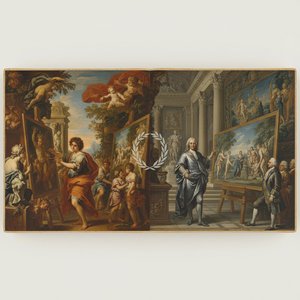
Simon Vouet: A Baroque Master's Journey from Italian Influence to French Classicism
Explore the life & art of Simon Vouet, a pivotal French Baroque painter who introduced Italian styles to France. Discover his masterpieces and lasting influence on 17th-century art.

The Enduring Form: Exploring Themes & Techniques in Sculpture Across Historical Periods
Explore the rich history of sculpture from ancient masterpieces to contemporary innovations. Discover key techniques, influential artists & investment potential for discerning art collectors.
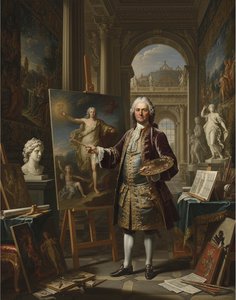
Charles Le Brun: Master of French Baroque Classicism & His Enduring Legacy
Explore the life & art of Charles Le Brun, master of French Baroque Classicism. Discover his royal commissions, influence on Versailles, and enduring legacy through detailed analysis & stunning artworks.

Baroque Classicism: The Grandeur of Order and Drama in 17th-Century Art History
Explore the profound elegance of Baroque Classicism. Discover how 17th-century masters synthesized dramatic emotion with classical order through the lens of the Counter-Reformation and the works of legends like Carlo Maratta and Andrea Sacchi.

Les 10 Chefs-d'œuvre Bronzes Qui Ont Révolutionné la Sculpture | OriginalUniqueArt
Plongez dans l'univers fascinant des 10 sculptures en bronze les plus emblématiques de l'histoire de l'art. Rodin, Degas et autres maîtres révélés ! Découvrez leur histoire, leurs techniques et trouvez l'œuvre parfaite pour sublimer votre intérieur sur OriginalUniqueArt.com.